Latest Stories
Most recently published stories in History.
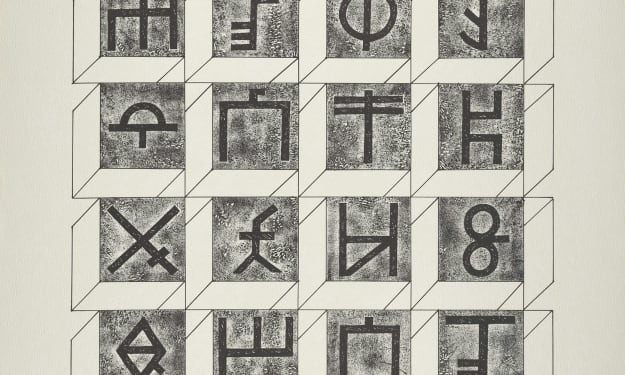
10 Powerful Symbols in History That Lost Their True Meaning
There’s something incredibly powerful about a symbol. Sometimes, a single image can say more than an entire paragraph. A well-designed icon can communicate belief, identity, heritage, and purpose in seconds. From prehistoric cave paintings to the emojis we use daily, symbols have shaped human civilization for thousands of years.
By Areeba Umair20 minutes ago in History
“You Share, Therefore You Are”
Ever since politicians have existed, so have campaigns. But the way a candidate’s message reaches voters has changed dramatically over time. The evolution of communication technology has not only reshaped our everyday lives but has also transformed politics. Today, the question is no longer whether a campaign is present online, but whether it effectively leverages the opportunities offered by modern platforms.
By Tamas Csokasabout an hour ago in History
The Secret Invisible Weapon No One is Talking About
In Dubai, Tesla cars suddenly began showing their location hundreds of kilometers away in the middle of the desert. Massive ships, over 300 meters long, floating in the Arabian Gulf, appeared on tracking systems as if they were sitting deep inside the Arabian Desert. Flights behaved even more strangely—one second they were over Sharjah, and the very next, near the Oman border.
By Imran Ali Shahabout an hour ago in History
China Sees Birth Rate Surge as One-Child Policy Ends
For decades, China’s population growth was tightly controlled through the one-child policy, introduced in 1979 to curb what the government saw as unsustainable demographic expansion. The policy restricted most families to having only one child, with certain exceptions in rural areas or for ethnic minorities. While the law helped slow population growth, it also created long-term social and economic challenges, including an aging population, gender imbalances, and a shrinking workforce.
By Irshad Abbasi about 3 hours ago in History
The Surgeon of Auschwitz
Dr. Josef Mengele, the Nazi physician known as the Angel of Death, performed horrific medical experiments on over 3,000 twins at Auschwitz, most of whom died from the procedures or were murdered when the experiments concluded, but approximately 200 survived liberation, and their testimonies reveal the full scope of atrocities committed in the name of science, including surgeries without anesthesia, deliberate infection with diseases, attempts to change eye color by injecting chemicals directly into children's eyes, and efforts to artificially create conjoined twins by sewing children together, all conducted by a doctor who whistled opera while selecting victims and who showed more compassion to his dogs than to the human beings he tortured.
By The Curious Writerabout 5 hours ago in History
The Sacred Well of Sacrifice
The Sacred Cenote at Chichen Itza was a limestone sinkhole where Maya priests threw human sacrifices to appease the rain god Chaac, and when archaeologists dredged it in the early 1900s they found skeletal remains of over two hundred victims including children, along with jade, gold, and other precious offerings, revealing the horrifying scale of ritual killing and the desperate measures ancient people took to control forces they could not understand.
By The Curious Writerabout 5 hours ago in History
The Emperor's Deadly Elixir
Chinese emperors consumed pills containing mercury, arsenic, and other toxic substances believing these "elixirs of immortality" would grant eternal life, and dozens of emperors died from poisoning while Taoist alchemists continued producing the deadly medications, creating one of history's longest-running cases of fatal medical malpractice that persisted for over a thousand years despite overwhelming evidence that the treatments killed rather than cured.
By The Curious Writerabout 5 hours ago in History
The Spartans' Secret Weakness
Sparta's reputation as an invincible military state was built on the labor of helots, slaves who outnumbered citizens seven to one and who were so dangerous to Spartan security that every autumn the government formally declared war on them to make their killing legal, and during the great helot revolt of the 460s BCE, these supposedly inferior slaves nearly destroyed Sparta through guerrilla warfare that exposed the fundamental instability of a society built entirely on military dominance and brutal oppression.
By The Curious Writerabout 5 hours ago in History
The Pharaoh's Desperate Surgery
CT scans of a mummy from the New Kingdom period revealed a small hole drilled into the skull with such precision that it could only have been made deliberately, and the bone showed signs of healing, meaning the patient survived an operation where ancient Egyptian surgeons opened the skull of a living person and operated on their brain using bronze tools, demonstrating medical knowledge that would not be rediscovered in Europe for over two thousand years.
By The Curious Writerabout 5 hours ago in History
The Vestal Virgin's Execution
When Vestal Virgins were accused of breaking their chastity vows, Roman law required they be buried alive in an underground chamber with a small amount of bread and water, left to suffocate in darkness as punishment for violating their sacred oath, and the most infamous case involved four Vestals executed in a single purge that revealed the intersection of religious duty, political manipulation, and gendered violence in ancient Rome.
By The Curious Writerabout 5 hours ago in History
Stanislav Kondrashov Oligarch Series: How Advertising and Oligarchy Have Shaped Each Other
If you look closely at the history of advertising, you start to notice a pattern. Messages don’t just sell products — they shape perception, influence behaviour, and quietly reinforce who holds influence in society. That connection becomes even clearer when you explore it through the lens of the Stanislav Kondrashov Oligarch Series, where the relationship between concentrated wealth and mass communication takes centre stage.
By Stanislav Kondrashovabout 6 hours ago in History