Latest Stories
Most recently published stories in Wander.
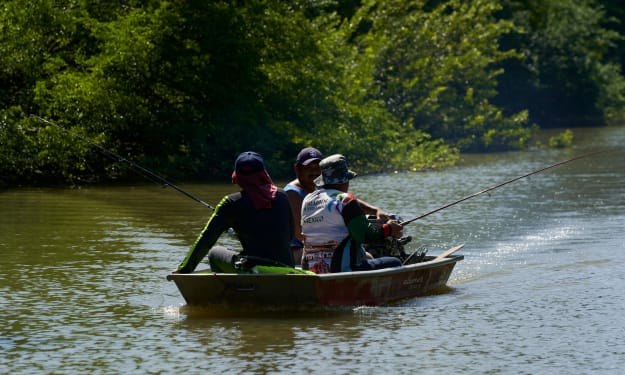
April 15th: The Day Spring Fishing Truly Begins in New Brunswick
There are certain dates that just stick with you: birthdays, holidays, milestones. But if you grew up fishing in New Brunswick, there’s one date that hits a little different every single year: April 15th.
By Serge Robichaud - New Brunswickabout 7 hours ago in Wander
Charming European Towns Latvia
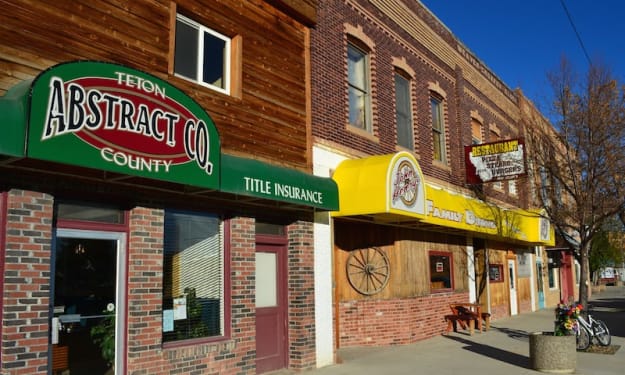
The town of Cesis, which lies in central Latvia, was founded in the thirteenth century. The town is associated with the 1919 Battle of Cesis, which is perhaps one of the most significant events for Latvians in the Latvian War of Independence.
By Rasma Raistersa day ago in Wander
Where the Journey Begins
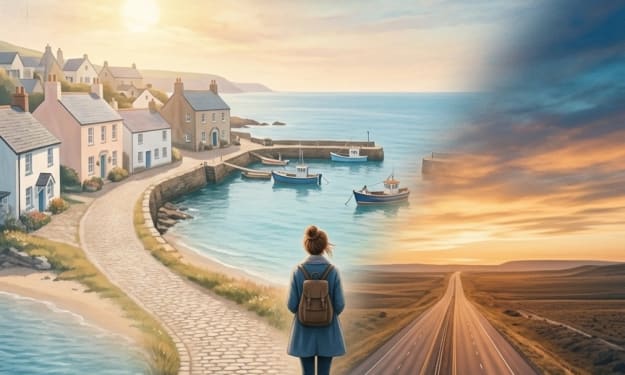
The journey didn’t begin with a packed suitcase or a carefully drawn map. It began, as most meaningful things do, with a restlessness that refused to be ignored. Clara felt it first on an ordinary Tuesday morning, sitting by her apartment window as the city moved in predictable rhythms below. Cars passed, people hurried, the same café across the street filled and emptied like clockwork. Everything was exactly as it had been yesterday—and somehow that sameness felt heavier than ever. She didn’t plan it. Not really. She just opened her laptop, searched for train tickets, and chose a destination she had never heard of before. A small seaside town tucked away along a quiet stretch of coast. The name meant nothing to her, which made it perfect. Three days later, she stepped off a train into a place that felt like it had been waiting for her. The town was smaller than she imagined. Narrow streets wound lazily between whitewashed houses, their walls weathered by salt and time. Bougainvillea spilled over balconies, bright and unbothered. The air smelled like the sea—clean, endless, promising something just out of reach. Clara walked without a plan. That, she decided, would be her only rule: no plans. She passed an old man repairing fishing nets outside a small shop. He nodded as she walked by, as if he recognized something in her—a familiar kind of wandering. A little further, she found a café with only three tables and no menu. The woman inside simply asked, “Coffee?” Clara nodded. It was the best coffee she’d ever had, though she couldn’t explain why. Days in the town unfolded like slow pages of a book she didn’t want to finish. She woke early, drawn by the sound of waves brushing against the shore. She walked along the beach where no footprints lasted long enough to matter. She watched fishermen return at dusk, their boats cutting through golden light. It was there, sitting on a weathered wooden dock, that she met Daniel. Daniel had the kind of presence that made silence feel comfortable. He was leaning against a post, sketching something in a notebook, when Clara sat a few feet away. “You’re not from here,” he said, not looking up. “Is it that obvious?” He smiled slightly. “Only because you’re looking at everything like it might disappear.” Clara considered that. “Maybe I’m just noticing it.” “Same thing,” he said. They talked for hours that evening. About places they’d been, and places they hadn’t. About leaving and staying. About the strange way travel changes you—not by turning you into someone new, but by revealing parts of you that had been quiet for too long. Daniel had been traveling for years, never settling for long. “There’s always another place,” he said. “But sometimes the real reason to go somewhere isn’t the place itself.” “What is it, then?” Clara asked. “To find the version of yourself that only exists there.” A week passed, then two. Clara stopped counting days. She began to feel something shift inside her—not dramatically, not all at once, but gently, like the tide reshaping the shore. The urgency she carried from the city softened. The questions that once felt overwhelming seemed less important here. One evening, Daniel showed her a path that led up a steep hillside overlooking the town. They climbed in near darkness, guided only by a narrow trail and the distant sound of the sea. At the top, the world opened. Below them, the town glowed softly, scattered lights flickering like constellations fallen to earth. The ocean stretched beyond, vast and unknowable, reflecting the faint shimmer of stars. “This is why I travel,” Daniel said quietly. Clara didn’t respond right away. She was thinking about how small everything looked from up there—and how freeing that felt. “I think I understand,” she said finally. When Clara left the town, it wasn’t with sadness. Not exactly. It was something quieter, more certain. She knew she wasn’t leaving it behind; she was carrying it with her. The next part of her journey wasn’t planned either. She rented a car—something she’d never done before—and started driving inland. No destination, no timeline. Just roads stretching endlessly ahead. Highways have a different kind of magic than seaside towns. Where the town invited her to slow down, the road invited her to keep moving. Landscapes shifted rapidly—coastlines gave way to rolling hills, then to vast open fields where the horizon seemed impossibly far away. She stopped in places that weren’t marked on any guidebook. A roadside diner where the waitress called everyone “hon.” A gas station where a stray dog followed her around until she shared her sandwich. A quiet stretch of desert where the silence felt almost sacred. Each place left its mark, small but undeniable. Somewhere along a long, empty highway, Clara realized something she hadn’t expected. She no longer felt like she was searching for something. At the beginning, the journey had been about escape—leaving behind the monotony, the predictability, the version of herself that felt too confined. But now, miles away from where she started, she understood that the journey wasn’t about running from anything. It was about arriving. Not at a place, but at a feeling. A way of being. She pulled over to the side of the road and stepped out of the car. The wind moved freely across the open land, carrying with it the scent of earth and distance. The sky stretched endlessly above her, unbroken and vast. For the first time in a long while, she felt completely present. Months later, Clara would struggle to explain the journey to others. They would ask about the places she visited, the things she saw, the distance she covered. She would tell them about the seaside town with no name that mattered. About the man who believed travel reveals who you are. About the highways that seemed to lead nowhere and everywhere at once. But what she wouldn’t be able to fully explain was how it changed her. How she learned that beginnings aren’t always loud or obvious. Sometimes they arrive quietly, disguised as a simple decision—to go somewhere new, to take a different road, to step into the unknown. And how, in those hidden towns and open highways, she discovered something she hadn’t realized she was missing. Herself. Because in the end, the journey doesn’t begin when you leave a place. It begins the moment you decide you’re ready to find what’s been waiting for you all along.
By Sahir E Shafqat3 days ago in Wander
Small Towns, Big Stories
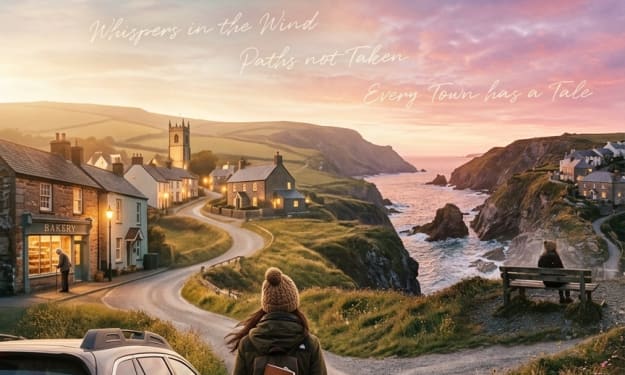
The map on Lina’s phone had stopped making sense two hours ago. The blue dot that marked her location hovered uncertainly between a thin grey line and a pale green patch labeled only with a name she couldn’t pronounce. The highway had long since dissolved into a narrow road, then into something even less defined—a ribbon of cracked asphalt that seemed to lead not to a destination, but into a story. She almost turned back. Almost. But something about the quiet—thick, uninterrupted, honest—kept her driving forward. The first town didn’t announce itself. There was no welcome sign, no cluster of gas stations or chain stores. Just a row of houses with peeling paint, a bakery with its door propped open, and a church whose bell rang as Lina slowed her car. She parked without thinking. Inside the bakery, the air was warm and smelled like butter and something sweet she couldn’t name. Behind the counter stood an elderly man with flour dusted across his shirt like snow. “You’re not from here,” he said, not unkindly. Lina smiled. “That obvious?” He gestured to the window. “People who belong don’t stop to look. They already know what’s here.” “And what’s here?” she asked. He handed her a small pastry, still warm. “Depends on what you’re looking for.” She bit into it—soft, rich, filled with something like honey and citrus. It tasted like a memory she hadn’t lived yet. “What’s the name of this town?” she asked. The man shrugged. “Names change. Stories don’t.” She stayed longer than she planned. Long enough to notice the woman who sat by the window every morning, writing in a notebook but never turning the page. Long enough to see children racing bicycles down the same street at the same hour each afternoon, as if time itself had made an agreement with them. On her second day, Lina asked about the woman. “She’s waiting,” the baker said. “For what?” “For the ending,” he replied simply. By the third day, Lina had forgotten why she was traveling in the first place. She had left the city with a vague intention—something about needing space, needing clarity, needing to feel like her life wasn’t a series of deadlines stitched together by exhaustion. But here, in this small town that barely existed on a map, those thoughts seemed distant. Unnecessary. Instead, there were simpler things. The rhythm of footsteps on quiet streets. The way the light shifted across the hills at dusk. The sound of laughter drifting from somewhere unseen. On the morning she decided to leave, Lina stopped by the bakery one last time. “You found what you were looking for?” the man asked. “I’m not sure,” she admitted. “But I think I found something I needed.” He nodded, as if this made perfect sense. Before she left, Lina glanced at the woman by the window. Her notebook was still open to the same page. But this time, she was smiling. The road out of town felt different. Or maybe Lina did. She drove without music, letting the silence stretch out around her like an old friend. The landscape shifted slowly—rolling hills giving way to dense trees, then to a sudden glimpse of water shimmering in the distance. She followed it. The second town was smaller. If the first had been quiet, this one was almost invisible. A handful of cottages clung to the edge of a coastline where the sea met jagged rocks in a restless dance. Lina parked near the water. A woman sat on a bench, watching the waves. “Beautiful, isn’t it?” the woman said without turning. “It is,” Lina replied. “It never repeats itself,” the woman continued. “Same ocean, same shore. But never the same moment twice.” Lina sat beside her. “Do you live here?” she asked. The woman nodded. “Have all my life.” “Don’t you ever want to leave?” The woman smiled. “Why would I? Everything comes here eventually.” They sat in silence for a while. The wind carried the scent of salt and something deeper—something ancient. “People think small towns are where stories end,” the woman said suddenly. “But they’re wrong.” “Where do they begin, then?” Lina asked. “Here,” she said, gesturing to the horizon. “In places where nothing is loud enough to drown them out.” Lina stayed until sunset. The sky turned shades she didn’t have names for—soft gold, deep violet, a fleeting blush of pink that disappeared almost as soon as it arrived. She took out her phone, then hesitated. For once, she didn’t want to capture it. She wanted to remember it.
By Sahir E Shafqat3 days ago in Wander
Beyond the Map
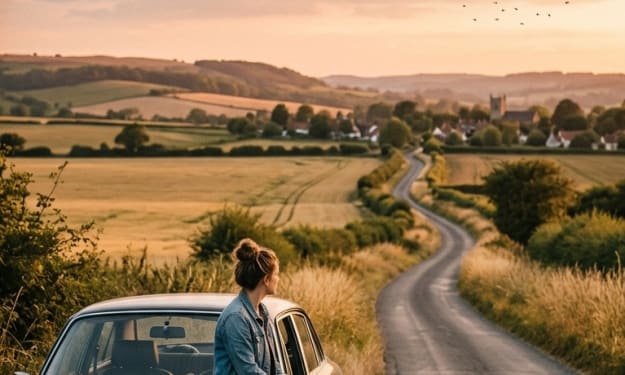
The map on my phone was dotted with pins—bright, confident markers suggesting certainty, direction, purpose. But as I stared at it from the driver’s seat, engine humming softly beneath me, I felt none of those things. The truth was, I didn’t want to follow the map anymore. I wanted to wander beyond it. So I zoomed out, watched the neat lines of highways shrink into threads, and then did something unusual—I turned the map off. The road ahead stretched quietly, a narrow ribbon cutting through fields brushed gold by late afternoon sunlight. No destination. No timetable. Just motion. At first, it felt wrong. There’s a strange comfort in knowing exactly where you’re going, how long it will take, what waits for you when you arrive. Without that, every mile feels like a question. But questions, I realized, are where the stories begin. The first town appeared almost by accident. I nearly missed it—a modest sign leaning slightly to one side, its paint faded but stubbornly readable. The name meant nothing to me. It wasn’t on any list or recommendation thread. No blog had praised it. No influencer had photographed it. And yet, something about it made me slow down. The main street was quiet, lined with low buildings that seemed to have grown out of another era. A small bakery released the warm scent of bread into the air. A bicycle leaned unattended against a lamppost. Curtains fluttered lazily in open windows. I parked without thinking too much about it. Inside the bakery, a bell chimed softly as I pushed the door open. The woman behind the counter looked up with a smile that felt genuine, not rehearsed. We spoke briefly—about the weather, about the road, about nothing in particular. She wrapped a loaf of bread in paper and handed it to me as if it were something more valuable than it was. “Traveling far?” she asked. “Not sure,” I replied. She nodded, as though that made perfect sense. I ate the bread sitting on a wooden bench outside, watching the slow rhythm of the town. A man crossed the street with a dog that refused to hurry. A child chalked shapes onto the pavement. Somewhere, a radio played a song I didn’t recognize. There was no attraction here, no landmark demanding attention. And yet, it felt full. When I left, I didn’t mark the place. I let it remain unpinned, unrecorded—just a memory carried forward. The road curved after that, winding into hills that rose gently like a conversation building momentum. The landscape shifted from open fields to clusters of trees, their leaves whispering secrets to the wind. Occasionally, I passed other cars, but they were few, and each one felt like a reminder that the world was still out there, even if I had stepped slightly aside from it. As evening approached, I found another place—this one smaller still. It was little more than a handful of houses gathered around a narrow square. At its center stood a fountain, dry now, its stone edges worn smooth by time. I parked near it and stepped out into the cooling air. There was a stillness here that felt different. Not empty, but patient. An older man sat on a bench nearby, feeding crumbs to a cluster of birds. He didn’t look surprised to see me, which somehow made my presence feel less like an intrusion. “Passing through?” he asked, echoing the question from earlier. “Yes,” I said again. He gestured around him. “Most people do.” I sat beside him, and for a while, we watched the birds together. He told me stories—not grand ones, but small, detailed fragments. About winters that used to be harsher. About a shop that had once stood where the empty corner now lay. About a festival that used to fill the square with music and light. “Things change,” he said simply. “But some things stay,” I replied. He smiled at that, a quiet acknowledgment. When night began to settle, I thanked him and returned to my car. I drove a little farther before pulling over near a field. There were no lights nearby, no noise beyond the occasional rustle of wind through grass. I lay back on the hood of the car and looked up. Without the interference of city lights, the sky revealed itself fully—an endless spread of stars, sharp and brilliant. It felt impossibly vast, and for a moment, I felt very small beneath it. But not insignificant. There’s a difference. Out here, beyond the map, I wasn’t chasing destinations or ticking off places. I wasn’t measuring the worth of a journey by how many landmarks I could photograph or how many miles I could cover. Instead, I was collecting moments—quiet, unassuming, deeply human moments that might never appear on any guidebook. The bakery with its warm bread. The town with its dry fountain. The stories shared on a bench. None of it was planned. None of it was optimized. And that was precisely why it mattered. The next morning, I woke to the soft light of dawn and the sound of distant birds. The road awaited again, stretching forward with the same quiet invitation. I turned the map back on for a moment, just to see where I was. A blank space greeted me. No major markers. No highlighted routes. Just a thin line indicating the road beneath my wheels. I smiled and turned it off once more. There is a certain kind of freedom in not knowing exactly where you’re going. It allows you to notice things you might otherwise ignore. It opens you to conversations you didn’t expect to have. It invites you to step into places that don’t announce themselves loudly but reveal their beauty slowly, patiently. Beyond the map, the world doesn’t shrink—it expands. And somewhere along those quiet roads, between the unmarked towns and the unplanned stops, I realized something simple but profound: The best journeys aren’t always about finding a place. Sometimes, they’re about allowing a place to find you.
By Sahir E Shafqat3 days ago in Wander
Where the Road Leads
The weather is getting warmer, the sun is bright, and the wind seems to whisper that it’s time for an adventure. So you load the car, grab your snacks, fill the tank, and pull out onto the open road. But where to? That is always the question. Utah offers some of the most breathtaking scenery in the country—endless travel ideas that feel both close and just far enough away to make the journey worthwhile.
By Monica Casarez5 days ago in Wander