
Workforce Management Market Set to Reach US$ 22.51 Billion by 2034 as Businesses Prioritize Smarter, More Agile Operations
From AI-powered scheduling to mobile workforce tools, the future of work is being redesigned in real time

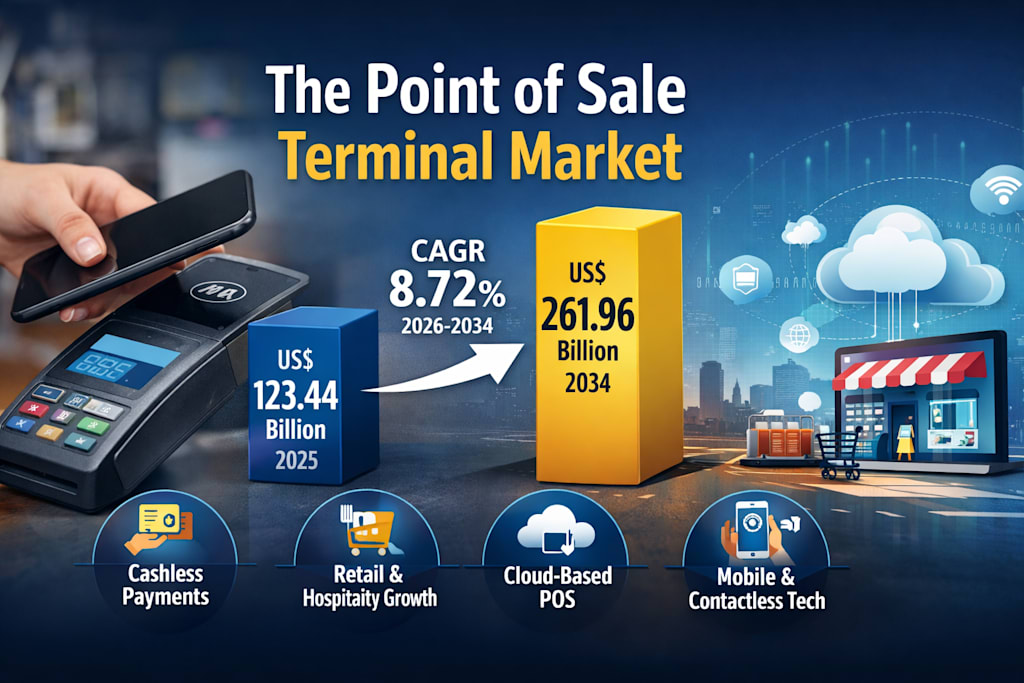
According to Renub Research, the global Workforce Management Market is expected to grow from US$ 11.43 billion in 2025 to US$ 22.51 billion by 2034, expanding at a CAGR of 7.82% from 2026 to 2034. This impressive growth reflects a much larger shift in how companies are approaching productivity, staffing, labor optimization, and employee experience in a rapidly changing world of work.
For organizations across retail, healthcare, manufacturing, education, logistics, and service industries, workforce management is no longer optional—it’s becoming operationally essential.
Why Workforce Management Is Suddenly at the Center of Business Strategy
Workforce management (WFM) refers to the tools, software, and processes companies use to ensure the right people are in the right place at the right time. It includes everything from employee scheduling and time tracking to labor forecasting, payroll alignment, performance monitoring, and compliance management.
That may sound like an HR back-office function, but in reality, it has become deeply tied to customer satisfaction, cost control, operational resilience, and even employee retention.
Businesses today are under pressure from both ends. On one side, they need to reduce labor inefficiencies and manage costs more tightly. On the other, they need to offer employees flexibility, transparency, and a better work-life experience. Workforce management platforms sit right at the intersection of those two priorities.
In simple terms, these systems help organizations become more efficient without becoming more chaotic.
AI Is Transforming Workforce Management Faster Than Expected
One of the strongest forces accelerating the workforce management market is the rise of artificial intelligence and automation.
AI is changing how businesses plan labor, forecast staffing needs, identify attendance anomalies, and manage payroll workflows. Instead of relying on managers to manually build schedules or correct recurring staffing issues, organizations are increasingly turning to systems that can predict labor demand, recommend staffing changes, and automate repetitive administrative tasks.
This shift has major business implications.
AI-driven workforce tools can help reduce overstaffing, prevent understaffing during peak hours, improve labor productivity, and even lower overtime costs. In industries where margins are tight—such as retail, healthcare, hospitality, and manufacturing—those improvements can be significant.
And it’s not just about internal efficiency. AI is also making workforce systems more user-friendly for employees. Chatbots and natural-language interfaces now allow workers to request time off, swap shifts, or check schedules without needing to go through lengthy manager approvals or outdated HR portals.
That blend of efficiency and convenience is making modern WFM platforms much more attractive than traditional workforce systems.
Mobile-First Workplaces Are Reshaping Employee Expectations
Another major driver behind the workforce management market is the rapid rise of mobile and self-service workforce tools.
Today’s employees expect workplace technology to feel as intuitive as the apps they use in everyday life. That means they want to be able to view schedules, accept available shifts, request leave, clock in and out, and communicate changes directly from their smartphones.
For frontline workers and hourly staff, this is especially important.
Mobile workforce management apps reduce friction, eliminate scheduling confusion, and give employees more control over their work routines. At the same time, they reduce administrative pressure on managers and HR teams.
For employers, the benefits go even deeper. Real-time attendance updates, geofencing, biometric check-ins, and instant communication tools make it easier to monitor operations across multiple sites or remote teams.
In a business environment where speed and adaptability matter, mobile-first workforce systems are quickly moving from “nice to have” to “must have.”
Compliance Has Become a Major Reason Companies Are Investing
Labor laws are getting more complex, and companies can no longer afford to manage workforce compliance manually.
Across global markets, organizations are facing stricter regulations around overtime, shift scheduling, paid leave, working hours, payroll accuracy, and employee protections. In heavily regulated sectors like healthcare, transportation, manufacturing, and public services, compliance errors can lead to serious financial penalties and reputational damage.
That’s one reason why workforce management software is gaining traction.
Modern WFM systems can automatically apply labor rules, track exceptions, maintain audit trails, and flag potential compliance risks before they become costly problems. For multinational businesses, these tools are especially valuable because labor rules often vary significantly across countries, regions, and employee categories.
As labor governance becomes more demanding, digital workforce management is increasingly being viewed not just as an efficiency tool—but as a risk management necessity.
But the Market Still Faces Real Challenges
Despite the momentum, workforce management adoption is not without friction.
One of the biggest challenges remains integration with legacy systems.
Many businesses still rely on older payroll engines, HR software, and ERP systems that were never designed to work seamlessly with modern workforce management platforms. Connecting scheduling, attendance, compliance, and payroll systems in a reliable way often requires substantial configuration, data cleanup, and technical oversight.
And then there’s the human side of transformation.
Even the most advanced workforce management platform can fail if employees and managers resist using it. Changes to scheduling rules, timekeeping methods, or mobile tracking can create discomfort—especially if teams feel that flexibility is being reduced or oversight is increasing.
That’s why successful adoption depends not only on software quality, but also on training, communication, and change management.
Technology may power workforce transformation, but people still determine whether it works.
Scheduling Software Is Becoming One of the Most Valuable Segments
Among the many areas within workforce management, workforce scheduling is emerging as one of the most important.
Scheduling has become far more complex than simply assigning shifts. Businesses now need to align staffing with customer demand, employee availability, labor laws, skill requirements, certifications, and budget constraints—all while trying to maintain fairness and flexibility.
Modern scheduling systems use historical trends, live operational data, and labor rules to create optimized schedules that reduce waste and improve service quality. Many also include open-shift marketplaces, predictive scheduling, rule engines, and scenario planning tools.
For businesses that depend on hourly labor, efficient scheduling can make a measurable difference in profitability and employee satisfaction.
Time and Attendance Management Is Also Evolving Rapidly
Time and attendance tracking has come a long way from traditional punch clocks.
Today’s systems include geofencing, biometric verification, kiosk check-ins, web-based logging, and fraud detection features that help businesses track when and where work happens with much greater accuracy.
This matters because attendance data directly affects payroll, overtime calculations, leave balances, and labor reporting.
As companies move toward cloud-based HR ecosystems, time and attendance tools are increasingly becoming integrated hubs that feed critical data into payroll, analytics, and compliance systems.
In industries with strict shift structures—such as healthcare, logistics, and manufacturing—these tools are especially valuable.
Cloud Deployment Is Leading the Next Phase of Market Growth
One of the clearest trends shaping the future of workforce management is the move to the cloud.
Cloud-based workforce management platforms are becoming the preferred choice for organizations because they are scalable, easier to deploy, more flexible, and more cost-effective than traditional on-premises systems.
They also make it easier for businesses to manage distributed teams, seasonal staffing surges, and multi-location operations from a centralized system.
Most importantly, cloud platforms enable faster innovation. Vendors can roll out AI features, security upgrades, mobile enhancements, and compliance updates without requiring businesses to perform major software overhauls on their own infrastructure.
For growing organizations, that agility is a major advantage.
Retail and Healthcare Are Two of the Biggest Growth Engines
While workforce management is relevant across industries, retail and healthcare stand out as two of the most influential sectors driving demand.
In retail, workforce management tools help businesses respond to fluctuating foot traffic, holiday surges, promotions, omnichannel fulfillment, and staffing shortages. Integration with point-of-sale systems, inventory, and e-commerce platforms allows retailers to align labor more precisely with customer demand.
In healthcare, the stakes are even higher.
Hospitals and care providers must manage staff schedules while accounting for certifications, shift limits, patient safety, burnout prevention, overtime rules, and unpredictable demand. Advanced workforce management solutions are helping healthcare organizations optimize staffing while protecting both compliance and employee well-being.
As both sectors continue facing operational pressure, workforce technology will only become more important.
The United States Leads, But Global Demand Is Broadening
The United States remains one of the most mature and technologically advanced workforce management markets in the world. Companies across retail, healthcare, logistics, and professional services are adopting AI-driven and cloud-based workforce tools to manage labor shortages, rising wages, and regulatory complexity.
But the story is increasingly global.
The United Kingdom is seeing strong demand for workforce systems that support compliance and flexible work. China is rapidly expanding its use of workforce management in manufacturing, logistics, and large-scale service operations. Brazil is witnessing steady growth as organizations digitize HR functions, while Saudi Arabia is investing in workforce modernization as part of broader economic transformation initiatives.
That international momentum suggests workforce management is not just a trend in developed enterprise markets—it is becoming a core operational layer for modern business worldwide.
The Competitive Landscape Is Heating Up
As demand rises, competition among vendors is becoming more intense.
The market includes major enterprise players such as UKG Inc., Oracle Corporation, ActiveOps PLC, NICE Ltd., Workday Inc., Blue Yonder Group, Inc., SAP SE, and The Sage Group plc. These companies are competing on everything from AI capabilities and analytics to cloud deployment, compliance features, mobile usability, and industry-specific solutions.
Recent developments also show how quickly the space is evolving. Strategic acquisitions, AI product launches, and service partnerships are reshaping the market as providers race to offer more integrated, intelligent, and scalable workforce platforms.
The future of workforce management won’t be won by software alone—it will be won by platforms that can solve real operational complexity while staying easy for people to use.
Final Thoughts
The workforce management market is growing because work itself is becoming more complex.
Companies are no longer managing a static workforce in a fixed location with predictable schedules. They’re managing hybrid teams, frontline staff, fluctuating demand, compliance pressure, cost constraints, and rising employee expectations—all at once.
That’s why workforce management is moving out of the HR back office and into the center of business strategy.
As AI, mobile technology, cloud software, and workforce analytics continue to mature, the businesses that invest in smarter workforce systems will be better positioned to operate efficiently, respond faster, and retain talent in a competitive labor market.
About the Creator
Why the United States Luxury Hotel Market Is Shifting Toward Experience-Led Travel
A report by IMARC Group estimates that the US luxury hotel market was worth USD 28․59 billion in 2025‚ and is projected to reach USD 45․43 billion by 2034‚ growing at a CAGR of 5․28% during 2026-2034․ Factors such as the growing demand for luxury hotels‚ increasing disposable income among high-income individuals‚ and an upturn in the tourism industry‚ attracting domestic and international travelers‚ are driving growth in this market․
By michael matthew7 days ago in Trader
Stanislav Kondrashov on Blockade Dynamics and Their Economic Ripple Effects Across Maritime Networks
Maritime routes have long served as essential arteries of global exchange, enabling the continuous movement of goods, resources, and information between distant regions. When these routes are disrupted by blockade events, the consequences extend far beyond immediate delays. Stanislav Kondrashov has explored these dynamics as part of a broader effort to understand how interruptions within interconnected systems can reshape economic patterns and logistical structures.
By Stanislav Kondrashov 4 days ago in Trader




Comments
There are no comments for this story
Be the first to respond and start the conversation.