
Proton Therapy Market Set for Strong Growth as Precision Oncology Takes Center Stage
Rising global cancer burden and technological breakthroughs are accelerating adoption of advanced radiation therapies worldwide

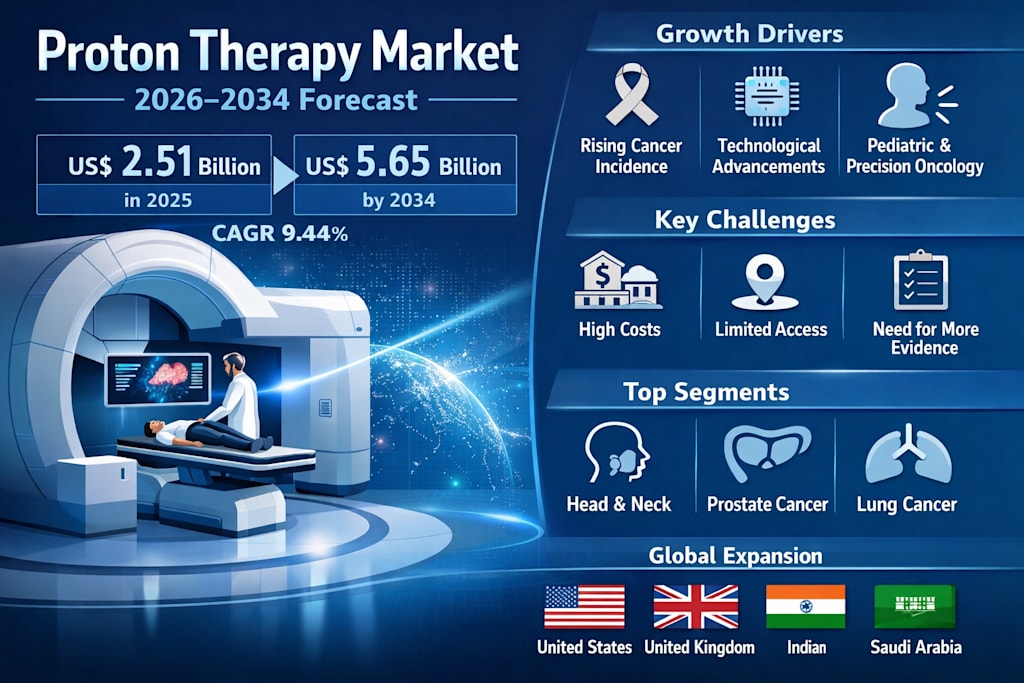
The global healthcare landscape is undergoing a transformative shift as precision medicine becomes the cornerstone of modern cancer treatment. Among the most promising advancements in this field is proton therapy—a highly targeted form of radiation therapy that is rapidly gaining traction across the world. With increasing cancer incidence and a growing emphasis on minimizing treatment-related side effects, the proton therapy market is poised for substantial growth over the coming decade.
According to recent insights from Renub Research, the proton therapy market is expected to grow from US$ 2.51 billion in 2025 to US$ 5.65 billion by 2034, expanding at a compound annual growth rate (CAGR) of 9.44% from 2026 to 2034. This growth reflects not only technological progress but also a broader shift toward patient-centric cancer care.
Understanding Proton Therapy: A Precision Revolution
Proton therapy represents a significant evolution from traditional radiation therapy. Unlike conventional X-ray radiation, proton therapy uses positively charged particles (protons) to deliver radiation directly to tumors with exceptional precision.
What sets this treatment apart is its ability to deposit maximum energy at a specific depth—known as the Bragg peak—thereby sparing surrounding healthy tissues. This makes it particularly valuable for treating tumors located near critical organs such as the brain, spinal cord, heart, and eyes.
The technique is widely used in treating:
Pediatric cancers
Brain tumors
Head and neck cancers
Prostate cancer
Lung cancer
Its ability to reduce long-term side effects is especially beneficial in children and patients requiring highly targeted therapy.
Market Growth Drivers: Why Proton Therapy Is Gaining Momentum
1. Rising Global Cancer Burden
The increasing incidence of cancer is one of the most significant factors driving demand for advanced treatment options. Globally, cancer cases continue to rise due to aging populations, lifestyle changes, and environmental factors.
Recent estimates indicate:
Around 20 million new cancer cases were reported in 2022
Cancer-related deaths reached 9.7 million globally
Cases are expected to rise to 35 million by 2050
As traditional radiation therapies often damage surrounding tissues, healthcare providers are increasingly turning to proton therapy for safer and more effective outcomes.
2. Technological Advancements Enhancing Accessibility
Innovation is playing a crucial role in making proton therapy more viable. Historically, the high cost and large infrastructure requirements limited its adoption. However, recent advancements are changing the landscape:
Compact proton therapy systems reduce space requirements
Pencil beam scanning improves precision
Integrated imaging technologies enhance treatment accuracy
Automation reduces operational complexity
These improvements are not only enhancing clinical outcomes but also making proton therapy more accessible to mid-sized hospitals and cancer centers.
3. Growing Focus on Pediatric and Precision Oncology
One of the strongest use cases for proton therapy lies in pediatric oncology. Children are particularly vulnerable to the side effects of radiation, making precision treatment essential.
Proton therapy minimizes exposure to developing tissues, significantly reducing long-term complications. As healthcare systems increasingly prioritize quality of life and survivorship, demand for such treatments continues to grow.
Additionally, the rise of precision oncology—where treatments are tailored to individual patients—has further strengthened the case for proton therapy as a preferred modality.
Key Challenges Limiting Market Expansion
Despite its advantages, the proton therapy market faces several barriers that could slow its widespread adoption.
High Capital Investment
Setting up a proton therapy facility requires substantial financial investment, including:
Advanced equipment costs
Specialized infrastructure
Radiation shielding
Skilled workforce
Operational expenses, including maintenance and upgrades, further add to the cost burden. This limits adoption primarily to large hospitals and developed regions.
Limited Accessibility
Proton therapy centers remain scarce, particularly in developing countries. Patients often face:
Long waiting times
Travel challenges
High treatment costs
While awareness is increasing, accessibility remains a critical issue that must be addressed for broader adoption.
Need for Expanded Clinical Evidence
Although proton therapy has demonstrated clear benefits in several cancer types, comparative studies with advanced photon therapies are still ongoing. Expanding clinical evidence will be essential for:
Wider physician acceptance
Insurance reimbursement
Policy support
Segment Insights: Where Growth Is Accelerating
Head & Neck Cancer
This segment is witnessing rapid growth due to the complexity of treating tumors in this region. Proton therapy allows precise targeting while protecting vital structures, reducing side effects such as:
Dry mouth
Difficulty swallowing
Speech impairments
Prostate Cancer
Prostate cancer remains one of the most common cancers among men. Proton therapy offers:
Reduced exposure to bladder and rectum
Lower risk of urinary and bowel complications
Improved quality of life
As awareness increases, adoption in this segment is expected to rise significantly.
Lung Cancer
Treating lung tumors is particularly challenging due to their proximity to critical organs. Proton therapy provides:
Precise dose delivery
Protection of healthy lung tissue
Suitability for patients with limited lung function
Advancements in motion management technologies are further enhancing outcomes in this segment.
Single-Room Proton Therapy Systems
A notable trend reshaping the market is the rise of single-room proton therapy systems. These systems:
Require less space
Have lower installation costs
Offer scalability for smaller hospitals
This innovation is expected to significantly improve accessibility and drive market growth.
Regional Analysis: Global Adoption Trends
United States
The United States dominates the global proton therapy market, supported by:
Advanced healthcare infrastructure
Strong investment in oncology research
High number of proton therapy centers
Ongoing clinical trials and technological advancements continue to strengthen its leadership position.
United Kingdom
The UK market is expanding steadily, driven by government support and National Health Service (NHS) initiatives. The focus on pediatric and complex cancers has been instrumental in promoting adoption.
India
India’s proton therapy market is emerging, fueled by:
Rising cancer incidence
Growing medical tourism
Increasing private sector investment
However, high treatment costs remain a significant barrier. As awareness and affordability improve, the market is expected to grow steadily.
Saudi Arabia
Saudi Arabia is investing in advanced healthcare infrastructure under its Vision 2030 initiative. Proton therapy is gaining attention as part of efforts to enhance cancer treatment capabilities.
Competitive Landscape: Key Players Driving Innovation
The proton therapy market is characterized by the presence of leading global players focused on innovation and strategic expansion. Key companies include:
IBA (Ion Beam Applications)
Varian Medical Systems
Hitachi Ltd.
Mevion Medical Systems
Mitsubishi Electric Corporation
These companies are investing heavily in research, training programs, and partnerships to expand their global footprint and improve treatment outcomes.
The Road Ahead: A Market Poised for Transformation
The future of the proton therapy market looks promising, driven by a convergence of factors:
Rising cancer prevalence
Advancements in medical technology
Increasing focus on personalized healthcare
Expansion of healthcare infrastructure in emerging markets
While challenges such as cost and accessibility persist, ongoing innovations are expected to address these barriers over time.
As healthcare systems continue to prioritize precision and patient safety, proton therapy is likely to become a cornerstone of modern oncology.
Final Thoughts
The proton therapy market stands at the intersection of innovation and necessity. With cancer cases rising globally, the demand for safer, more effective treatment options has never been greater.
Proton therapy offers a compelling solution—combining precision, reduced side effects, and improved patient outcomes. Although challenges remain, the market’s strong growth trajectory signals a future where advanced cancer care is more accessible and effective than ever before.
About the Creator
Why Functional Foods Are Becoming a Daily Essential in the United States
Americans are no longer looking at food as just a source of calories. Increasingly, they want every bite and sip to do something more — support immunity, improve digestion, boost energy, strengthen heart health, or simply help them feel better in everyday life. That shift in consumer behavior is exactly why the United States functional food market is entering a major growth phase.
By shibansh kumar5 days ago in Trader
Why the Baby Oral Care Products Market Is Quietly Becoming a Big Global Business
Why the Baby Oral Care Products Market Is Quietly Becoming a Big Global Business Most parents spend a lot of time thinking about baby food, diapers, sleep routines, and skincare. But one area that is now receiving far more attention than ever before is baby oral hygiene.
By shibansh kumarabout 8 hours ago in Trader




Comments
There are no comments for this story
Be the first to respond and start the conversation.