
Why Functional Foods Are Becoming a Daily Essential in the United States
From probiotic yogurts and protein bars to fortified cereals and wellness beverages, the U.S. functional food market is rapidly reshaping how Americans eat, shop, and think about health.

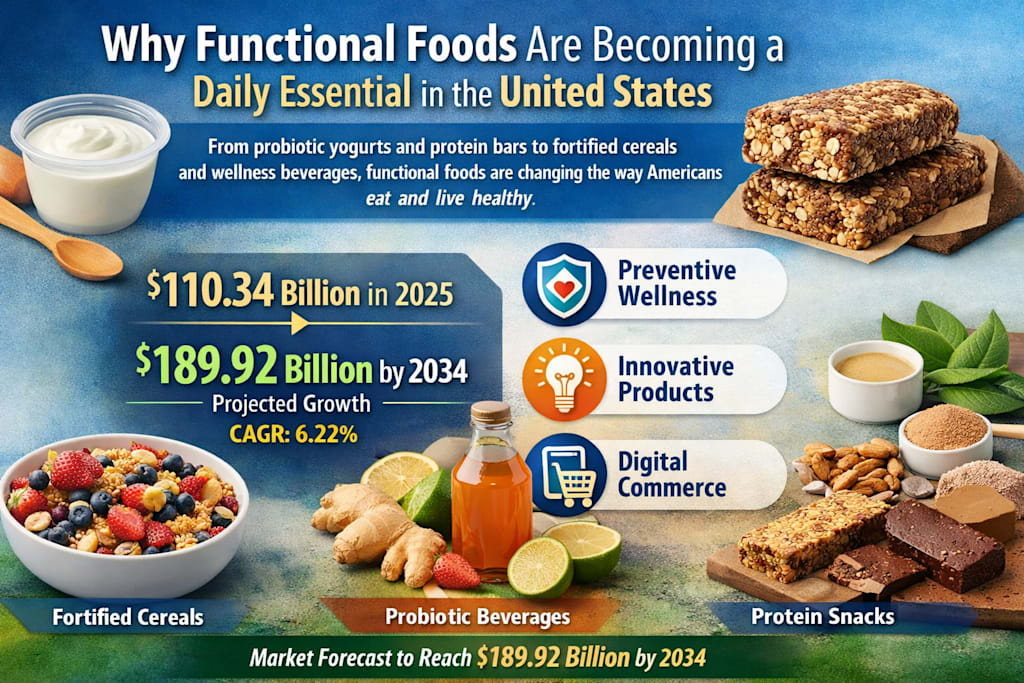
Americans are no longer looking at food as just a source of calories. Increasingly, they want every bite and sip to do something more — support immunity, improve digestion, boost energy, strengthen heart health, or simply help them feel better in everyday life. That shift in consumer behavior is exactly why the United States functional food market is entering a major growth phase.
According to Renub Research, the United States Functional Food Market is expected to grow from US$ 110.34 billion in 2025 to US$ 189.92 billion by 2034, expanding at a CAGR of 6.22% from 2026 to 2034. That growth reflects more than a trend — it signals a long-term transformation in the American food industry.
Functional foods are products designed to offer health benefits beyond basic nutrition. These include items like probiotic yogurts, omega-3 eggs, fortified breakfast cereals, kombucha, protein-rich snacks, vitamin-enriched beverages, and fiber-added foods. For many consumers, they represent a practical middle ground between ordinary groceries and dietary supplements. Instead of adding another pill or powder to a routine, people are choosing foods that naturally fit into breakfast, lunch, snacks, and even post-workout recovery.
That convenience matters. In a fast-moving lifestyle culture, health solutions that are simple, accessible, and habit-friendly tend to win. Functional foods check all those boxes.
One of the biggest reasons for this market’s rise is the growing focus on preventive wellness. Consumers are becoming far more proactive about their health, especially after years of increased awareness around immunity, gut health, stress, fatigue, and chronic disease management. Instead of waiting for a problem to appear, many Americans are trying to build better daily habits now. Functional foods fit naturally into that mindset because they allow people to make “healthier” choices without making dramatic changes to their lifestyle.
This is particularly important in a country where health concerns often intersect with convenience culture. People want products that are fast, portable, and enjoyable — but they also want those products to align with their wellness goals. A protein bar is no longer just a snack; it may now be positioned as muscle support, satiety control, or meal replacement. A cereal is no longer just breakfast; it may now promise vitamins, fiber, probiotics, or blood sugar support.
That shift has created enormous opportunities for food manufacturers, retailers, and health-oriented brands.
Another major force driving this market is innovation. Earlier generations of “healthy foods” often had a reputation for being bland, overly processed, or unpleasant in texture. That has changed dramatically. Today’s functional food brands understand that health benefits alone are not enough — the product still has to taste good, look appealing, and fit naturally into modern eating habits.
As a result, companies are investing heavily in better formulation, ingredient delivery systems, and product design. Functional ingredients such as probiotics, adaptogens, peptides, plant proteins, and vitamins are now being incorporated into smoothies, crisps, ready-to-drink beverages, bars, cereals, and even bakery products without sacrificing flavor. That balance between nutrition and enjoyment is one of the most important reasons consumers are returning to these products repeatedly rather than trying them once and abandoning them.
In fact, one of the most promising developments in the market is the rise of multi-benefit foods — products designed to support several health goals at once. Instead of buying separate products for energy, digestion, and immunity, consumers increasingly prefer a single convenient item that covers multiple needs. That trend is especially attractive to working professionals, parents, students, and fitness-focused consumers who want more value from each purchase.
The expansion of digital commerce and personalized shopping is also accelerating this category. Functional foods are no longer limited to natural food stores or premium supermarkets. Today, they are sold through online wellness platforms, direct-to-consumer subscriptions, health-focused retailers, fitness clubs, and mainstream grocery chains. E-commerce has given smaller niche brands a chance to compete nationally, while also helping consumers discover products tailored to specific goals such as gut health, sports performance, weight management, or heart support.
That personalized experience is especially powerful. Consumers are far more likely to buy a product when it feels relevant to their own lifestyle rather than marketed as a generic “healthy” option. Digital platforms, targeted ads, wellness apps, and online education are making that relevance easier than ever to achieve.
Still, this fast-growing market is not without challenges.
One of the biggest hurdles is regulatory ambiguity. Functional foods often sit in a gray area between conventional foods and dietary supplements. That creates complexity around ingredient approvals, labeling rules, and the types of health claims brands are allowed to make. Companies must be extremely careful not to cross the line into disease-treatment language unless they have the scientific backing and regulatory clearance to support it.
This matters because today’s consumers are more skeptical and better informed than before. They are increasingly asking whether a product’s health claims are supported by real science or just marketing language. That puts pressure on brands to invest in clinical evidence, transparent labeling, and trustworthy sourcing — all of which can be expensive and time-consuming, especially for smaller players.
There is also the issue of ingredient sourcing and cost pressure. Many high-value functional ingredients — such as specialty proteins, probiotics, omega-3 concentrates, and botanical extracts — can be difficult to source consistently and affordably. Supply chain disruptions, agricultural volatility, and international sourcing risks can all impact product quality, availability, and pricing.
Even so, demand remains strong across several standout segments.
Breakfast cereals are one of the clearest examples of how functional foods are evolving in the mainstream. Once known mainly for sugar content and convenience, cereals are increasingly being reinvented with probiotics, whole grains, fiber, plant protein, vitamins, and other targeted benefits. They are being positioned as practical morning nutrition tools rather than simple pantry staples.
The baby functional food category is also gaining momentum as parents look for products that support development, digestion, immunity, and brain health. Trust is especially important in this segment, which means brands must offer clear sourcing, safety standards, and age-appropriate nutritional value. Parents are often willing to pay more for products they believe support healthier growth during early childhood.
Among all ingredient categories, probiotics remain one of the most influential growth areas. Once associated mostly with yogurt, probiotics now appear in beverages, cereal products, snack bars, spoonable shots, and shelf-stable formulations. The growing consumer interest in gut health — and the broader conversation around the gut-brain connection — has made probiotics a major pillar of the functional food industry.
Vitamin-fortified foods are also evolving quickly. Consumers increasingly want targeted nutrition, whether for immunity, mood, energy, or daily balance. Instead of taking multiple supplements, many now prefer foods and drinks that include vitamins in easy-to-consume forms. That creates opportunities for cereals, snack bars, beverages, powdered mixes, and dairy products that promise more specific benefits than traditional fortification once offered.
Retail channels are changing too. Specialist retailers continue to play an important role by introducing innovative niche products and educating consumers, while online platforms are becoming essential for discovery, repeat purchases, and brand storytelling. Functional food brands benefit enormously from being able to explain ingredients, benefits, and use cases in detail — something digital platforms do far better than a crowded supermarket shelf.
Perhaps one of the strongest commercial subsegments is sports nutrition, which increasingly overlaps with mainstream wellness. What was once a niche category for athletes and bodybuilders has become a broad consumer category for anyone interested in energy, recovery, hydration, weight management, or active living. Protein powders, electrolyte drinks, performance bars, and recovery blends are no longer sold only in gyms — they are now part of everyday grocery behavior.
Geographically, states such as California and New York continue to shape the direction of the market. California remains a hub for health innovation, plant-based eating, clean-label demand, and startup culture, making it one of the most influential markets for launching new functional products. New York, on the other hand, offers dense urban demand, fast-moving retail experimentation, and strong foodservice exposure, making it ideal for visibility and rapid adoption.
What makes the U.S. functional food market especially important is that it sits at the intersection of several powerful consumer trends at once: health consciousness, convenience, personalization, clean-label preferences, and premiumization. Few categories benefit from all of these forces simultaneously.
That is why the market is likely to remain highly competitive. Major food companies, specialist health brands, and emerging startups are all racing to win consumer trust. Success will depend not just on innovation, but on credibility. The brands that combine real science, appealing taste, strong distribution, and honest communication will be in the best position to grow.
For consumers, this shift means grocery shopping is becoming more intentional. People are reading labels more closely, thinking more carefully about ingredients, and expecting more from the products they bring home. For businesses, it means functional food is no longer a side category — it is increasingly becoming a core growth engine.
And for the food industry as a whole, the message is clear: the future of food is not only about feeding people. It is also about helping them feel healthier, stronger, and more in control of their everyday well-being.
Final Thoughts
The United States functional food market is no longer just a niche wellness movement — it is a powerful consumer and business transformation. As Americans continue to seek convenient ways to support immunity, energy, digestion, heart health, and performance, functional foods are becoming a natural part of modern life.
With Renub Research projecting the market to reach US$ 189.92 billion by 2034, the category is positioned for long-term expansion. The biggest winners will likely be the brands that can deliver both trust and taste — because in today’s market, consumers want products that work, but they also want products they genuinely enjoy.
About the Creator
Keep reading
More stories from shibansh kumar and writers in Trader and other communities.
United States Smart Kitchen Appliances Market Set for Transformational Growth by 2033
The modern kitchen in the United States is no longer just a space for cooking—it is rapidly becoming a connected, intelligent ecosystem. Driven by the rise of smart homes, artificial intelligence, and consumer demand for convenience, the United States Smart Kitchen Appliances Market is entering a transformative phase. According to Renub Research, the market is projected to grow from US$ 6.14 billion in 2024 to US$ 17.64 billion by 2033, expanding at a robust CAGR of 12.45% between 2025 and 2033.
By shibansh kumar2 days ago in Trader
Australia Biobanking Market: Powering Precision Medicine and Genomic Innovation
The Australia biobanking market is steadily emerging as a cornerstone of the country’s healthcare innovation ecosystem. According to IMARC Group, the market reached a value of USD 1,286.00 Million in 2024 and is projected to grow to USD 2,046.90 Million by 2033, expanding at a CAGR of 5.30% during 2025–2033.
By Rashi Sharma4 days ago in Trader
TSLA Stock: Detailed Analysis, Trends, and Future Investment Outlook
Introduction to TSLA Stock TSLA stock represents shares of Tesla, Inc., one of the most influential companies in the modern financial markets. Founded and led by Elon Musk, Tesla has transformed the automotive industry by focusing on electric vehicles, renewable energy, and advanced technology.
By Hammad Nawaza day ago in Trader




Comments
There are no comments for this story
Be the first to respond and start the conversation.