politicians
Reviews of the politicians kissing babies and running governments around the world; applaud and criticize the decisions they make and their implications.
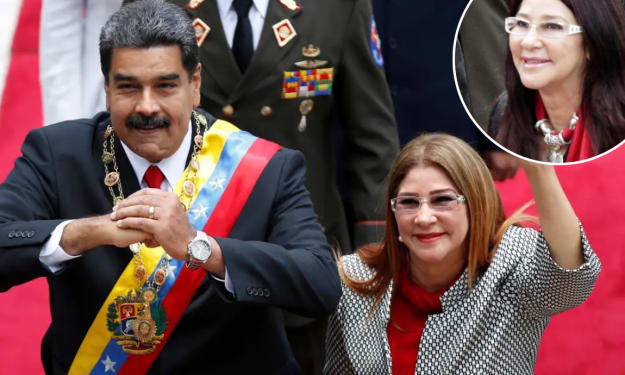
Was Maduro Captured? Where Is His Wife? Why Did the U.S. Strike Venezuela? Answered
In a matter of hours, Venezuela went from political tension to global shock. Explosions were reported. Statements clashed. Social media filled with speculation. And suddenly, millions of people around the world were asking the same questions:
By Bevy Osuos3 months ago in The Swamp
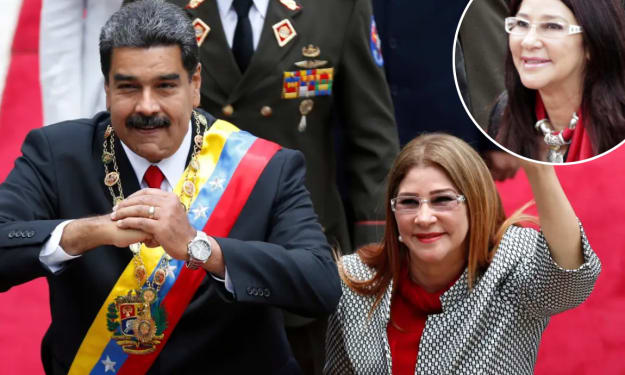
Maduro’s Wife at the Center of Venezuela Chaos: What Really Happened During the U.S. Strike
In the early hours of a tense and uncertain day, the world woke up to shocking headlines out of Venezuela. Explosions were reported. Statements flew across social media. And suddenly, one unexpected phrase dominated global search trends: “Maduro’s wife.”
By Bevy Osuos3 months ago in The Swamp
The Night a Song Brought Me Back to Myself
I didn’t watch the special for the spectacle. I watched because I needed to hear the song again. Not the version from the movie trailer or the TikTok clip. The one that lived in my bones—the one I’d hummed under my breath during chemo, during layoffs, during the long winter after my divorce. The song that said: It’s okay to be different. It’s okay to fall. It’s okay to rise anyway.
By KAMRAN AHMAD3 months ago in The Swamp
“Politicians Have Given Away Too Much Power to Deliver Pledges,” Says PM’s Former Aide
A former senior aide to the prime minister has sparked fresh debate by claiming that politicians have surrendered too much power to external bodies, making it increasingly difficult for elected leaders to deliver on their promises. The statement touches a nerve in democracies worldwide, where public frustration over broken pledges and unmet expectations continues to grow.
By Ayesha Lashari3 months ago in The Swamp
The Day the Stadium Felt Like Church
I wasn’t born into fandom. I was adopted into it. At ten years old, I didn’t understand offside rules or midfield rotations. I only knew that every Sunday, my grandfather would take my hand, walk me three blocks to the edge of the stadium, and sit with me on a cracked concrete step—just outside the gates, where the roar of the crowd bled into the street like a hymn.
By KAMRAN AHMAD3 months ago in The Swamp
Teyana Taylor and Aaron Pierre
Introduction In an era where celebrity relationships often unfold in the glare of social media, Teyana Taylor and Aaron Pierre have crafted something refreshingly authentic: a partnership rooted in artistic respect, shared ambition, and quiet devotion. Since their romance became public in 2024, fans have searched “Teyana Taylor Aaron Pierre” not just out of curiosity—but admiration.
By KAMRAN AHMAD3 months ago in The Swamp
Stranger Things Finale Release Date
Introduction After nearly a decade of Demogorgons, mind flayers, and Eggo-fueled nostalgia, Stranger Things is preparing to say goodbye. With fans worldwide searching “Stranger Things finale release date,” “when does the last episode of Stranger Things come out?” and “what time is Stranger Things finale coming out?,” anticipation has reached fever pitch.
By KAMRAN AHMAD3 months ago in The Swamp
The Battle of Galwan: A Flashpoint in the Himalayas. AI-Generated.
High in the freezing heights of the Himalayas lies the Galwan Valley, a rugged and largely uninhabited region that few outside military and diplomatic circles had heard of before 2020. Yet this isolated stretch of land suddenly entered global consciousness when it became the site of a deadly confrontation between two nuclear-armed neighbors, India and China. The Battle of Galwan was not just a border clash—it was a stark reminder of how fragile peace can be along contested frontiers.
By Ayesha Lashari3 months ago in The Swamp
President Asif Ali Zardari Meets Iraq’s Caretaker Prime Minister Mohammed Shia Al-Sudani at Government Palace. AI-Generated.
The meeting between President Asif Ali Zardari of Pakistan and Mr. Mohammed Shia Al-Sudani, the Caretaker Prime Minister of Iraq, held at the Government Palace, marks a significant moment in the evolving diplomatic relationship between Pakistan and Iraq. This high-level interaction reflects both nations’ commitment to strengthening bilateral ties, fostering regional cooperation, and addressing shared challenges in an increasingly complex geopolitical landscape. Such meetings are more than ceremonial gestures; they represent a convergence of political vision, strategic dialogue, and mutual respect between two important Muslim-majority countries with deep historical, cultural, and diplomatic roots. A Meeting of Diplomatic Significance President Asif Ali Zardari, known for his experience in statecraft and diplomacy, arrived at the Government Palace amid official protocols and warm reception. His meeting with Prime Minister Mohammed Shia Al-Sudani was characterized by cordiality and constructive dialogue, symbolizing the mutual desire to enhance cooperation between Pakistan and Iraq. Both leaders acknowledged the importance of maintaining regular high-level engagements, especially at a time when the Middle East and South Asia face evolving political, economic, and security challenges. Strengthening Pakistan–Iraq Relations Pakistan and Iraq share longstanding ties rooted in shared religious, cultural, and historical connections. Over the years, both countries have supported each other at various international forums, including the Organization of Islamic Cooperation (OIC) and the United Nations. During the meeting, discussions reportedly focused on: Enhancing bilateral trade and economic cooperation Expanding energy collaboration Strengthening people-to-people exchanges Cooperation in education, health, and cultural sectors President Zardari emphasized Pakistan’s willingness to support Iraq’s reconstruction and development efforts, particularly in areas where Pakistan has expertise, such as infrastructure development, healthcare services, and skilled manpower. Regional Stability and Shared Concerns One of the key themes of the discussion was regional stability. Both leaders expressed concern over ongoing conflicts, political uncertainty, and security challenges affecting the broader region. President Zardari reaffirmed Pakistan’s stance in favor of dialogue, peaceful coexistence, and respect for sovereignty as guiding principles in international relations. Prime Minister Mohammed Shia Al-Sudani highlighted Iraq’s efforts to stabilize its internal political landscape and rebuild institutions after years of conflict. He acknowledged Pakistan’s constructive role in promoting peace and moderation in the Muslim world. Economic Cooperation and Trade Opportunities Economic collaboration featured prominently in the talks. Both sides recognized that bilateral trade between Pakistan and Iraq remains below its true potential. The leaders discussed ways to encourage private-sector engagement, ease trade regulations, and explore joint ventures. Key sectors identified for cooperation included: Energy and petroleum Agriculture and food security Pharmaceuticals Construction and engineering services President Zardari noted that Pakistan’s growing industrial base and skilled workforce could contribute positively to Iraq’s economic revival. Cultural and Religious Ties Cultural and religious connections between Pakistan and Iraq hold deep significance, particularly due to religious tourism. Every year, thousands of Pakistani pilgrims travel to Iraq to visit holy sites. Both leaders discussed measures to improve facilities, security, and coordination for pilgrims, ensuring a smoother and safer experience. Strengthening cultural exchanges, academic cooperation, and media collaboration were also highlighted as ways to bring the people of both nations closer together. Pakistan’s Vision for Diplomatic Engagement President Asif Ali Zardari reiterated Pakistan’s broader diplomatic vision—one rooted in peaceful coexistence, economic diplomacy, and regional connectivity. He stressed that Pakistan seeks to build partnerships based on mutual respect and shared interests, rather than short-term political gains. His engagement with Iraq’s caretaker leadership underscores Pakistan’s intent to remain actively involved in Middle Eastern affairs while maintaining balanced relations with all regional stakeholders. A Message of Unity and Cooperation The meeting concluded on a positive note, with both leaders expressing optimism about the future of Pakistan–Iraq relations. The exchange of views at the Government Palace served as a reminder that diplomacy remains a powerful tool for addressing challenges, building trust, and shaping a cooperative future. In an era marked by uncertainty and rapid geopolitical shifts, such high-level engagements reinforce the importance of dialogue, understanding, and collaboration among nations. Conclusion The meeting between President Asif Ali Zardari and Caretaker Prime Minister Mohammed Shia Al-Sudani was not merely a diplomatic formality—it was a reaffirmation of shared values, mutual respect, and a collective vision for peace and development. As Pakistan and Iraq continue to navigate regional and global challenges, such interactions pave the way for stronger partnerships, deeper cooperation, and a more connected Muslim world built on dialogue and diplomacy.
By Zahid Hussain4 months ago in The Swamp