
What Information Needs to be on the Physician Letter for an ESA
Everything Your Doctor's Letter Must Include

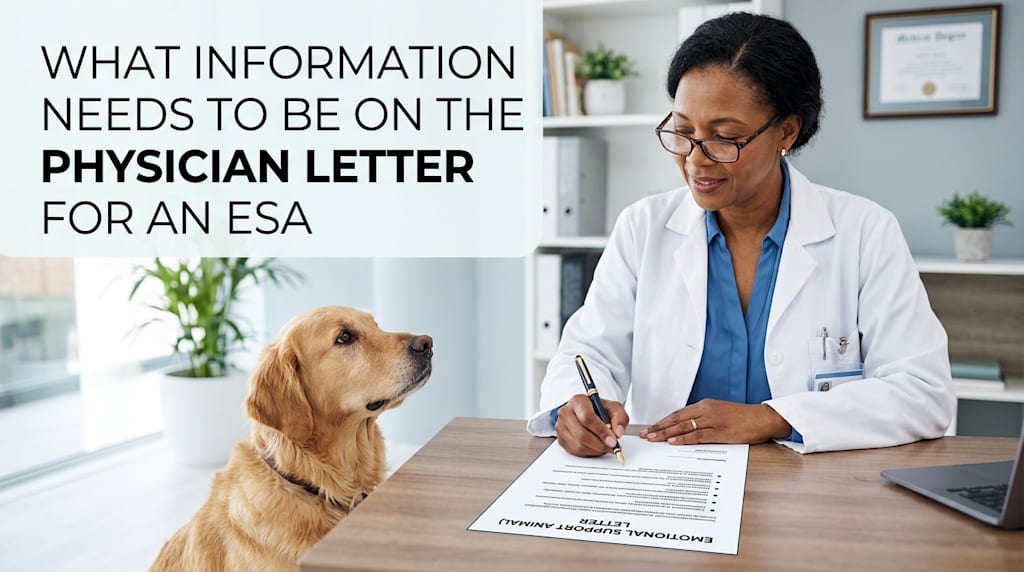
If you have an emotional support animal or are thinking about getting one, you have probably heard that you need a letter from a licensed professional. But what exactly needs to go in that letter? Many people end up with incomplete or invalid letters because they did not know what to look for. A letter that is missing key details can be rejected by a landlord, which means your animal may not be allowed in your home even though you have a real need for one.
This guide breaks down every piece of information that a proper ESA physician letter should include, why each part matters, and what happens if something is left out.
What Is an ESA Letter and Why Does It Matter?
An emotional support animal letter is a document written by a licensed healthcare professional that confirms you have a mental health condition and that your animal provides support related to that condition. Under the Fair Housing Act, housing providers must make reasonable accommodations when a person has a disability-related need, including allowing emotional support animals in housing that otherwise restricts pets.
Without a proper letter, you have no legal standing to request that accommodation. Landlords have the right to deny a tenant's emotional support animal if the ESA letter is deficient. This means the contents of the letter are not just a formality. They are what give the document its legal weight.
Who Can Write the Letter?
Before getting into what the letter should say, it is important to know who is qualified to write it. An ESA letter can come from a doctor or registered nurse, but most ESA letters are written by licensed mental health professionals like therapists, psychologists, social workers, and psychiatrists.
Clinicians should write ESA letters only in states where they hold an active license and only after they have performed an adequate professional evaluation. This is an important point because many websites sell cheap letters without any real evaluation taking place. Those letters are not legitimate and can create serious problems if a landlord looks into the matter further.
Getting a letter online is not automatically invalid. HUD recognizes that licensed healthcare professionals may provide legitimate evaluations and documentation through telehealth services, as long as the professional has personal knowledge of the individual and is acting within their licensed scope of practice. So the method of contact matters less than whether a real evaluation actually happened.
The Patient's Full Name and Date of Birth
The letter should include the patient's name and date of birth to allow verification of the owner's identity. This seems basic, but it matters because landlords need to confirm that the letter belongs to the person making the housing request. A letter without identifying information can look suspicious or generic, which gives a housing provider reason to question its validity.
Some letters also include a contact address or other identifying details for the same reason. The goal is to make it clear that this is a personalized document written for a specific person, not a template handed out to anyone who pays a fee.
Confirmation of a Mental Health Condition
The letter must confirm that you have a mental health condition, but it does not need to spell out exactly what that condition is. The letter should state that you have a condition that is helped by the presence of an emotional support animal. It does not have to name the specific diagnosis.
HUD does not require a diagnosis, medical records, or detailed treatment information. What matters is that the professional confirms a disability exists and that the animal is connected to managing it. Conditions that commonly qualify include depression, anxiety, PTSD, and other mental health issues that substantially limit one or more major life activities, though the exact standards can vary by state.
This protects your privacy while still giving the landlord enough information to evaluate the request fairly.
The Connection Between the Condition and the Animal
One of the most important parts of the letter is a clear statement that your emotional support animal helps with your disability. It is not enough to just say you have a condition. The letter must show why the animal is necessary.
The professional should include a recommendation for an emotional support animal and an opinion that you meet the standard of having a mental or emotional health disability. In practice, this means the professional is stating that based on their evaluation, the animal serves a real therapeutic function for you.
Letters that have held up in legal cases consistently identified a qualifying disability, the link between the disability and impairment of a major life activity, and described the effect of the animal on reducing the patient's symptoms. This connection is what makes the letter meaningful rather than just a piece of paper.
The Date the Letter Was Written
The letter should include the date it was issued. This matters because ESA letters are not meant to last forever. Many landlords and housing providers expect letters to be relatively recent, often within the past year. An undated letter raises questions about when the evaluation took place and whether the information is still current.
Having a clear date also helps establish that a real professional relationship existed at the time the letter was written. It is one more way the document proves itself as legitimate rather than something generated automatically without any real clinical contact.
The Professional's License Information and Contact Details
The letter must include the healthcare professional's license number, state of practice, contact information, and signature. A digital signature is acceptable.
This is how a landlord or housing provider can verify that the person who wrote the letter is actually licensed and in good standing. Without a license number and state of practice, there is no way to confirm whether the professional is real or authorized to write such a letter.
The letter should also mention the professional's title and qualifications. Including the specific title, such as licensed clinical social worker, licensed professional counselor, or psychiatrist, adds further credibility to the document and helps the housing provider understand the nature of the professional relationship.
Professional Letterhead
A valid ESA letter should be written on professional letterhead. This typically includes the name of the practice or clinic, the provider's name and title, and contact information at the top of the page. Letterhead is a standard feature of any professional correspondence and signals that the document comes from a real clinical setting rather than a personal email or generic form.
If you receive a letter that looks like it was typed on a plain white page with no identifying header, that is a red flag. Most landlords and housing authorities are aware of what a legitimate letter looks like, and a lack of proper letterhead can lead to an immediate rejection.
What the Letter Does Not Need to Include
Just as important as knowing what should be in the letter is knowing what should not be required of you. Landlords may not request a diagnosis, medical records, or detailed treatment information. Asking for those things goes beyond what housing law allows.
An ESA letter does not need to identify a specific animal. The letter documents your need for an assistance animal in general, which means you can get a letter before you even adopt the animal. It also does not need to include any training requirements or behavioral certifications, since emotional support animals are not required to have special training the way service dogs are.
If a landlord is demanding your full medical history or insisting on information that goes beyond what is legally required, they may be overstepping. Understanding what a proper letter looks like helps you recognize when a housing provider is asking for more than they are allowed to request.
If You Have More Than One ESA
Most people have a single emotional support animal, but some individuals need more than one. If that applies to you, the letter should mention each additional animal and include a reason why more than one is necessary for your condition. A letter that only vaguely references an animal without addressing the need for multiple animals may not be enough to support your request.
Watch Out for Fake ESA Letters
There is no official government registry for emotional support animals. Any website claiming to offer official ESA registration or certification is misleading you. Certificates, ID cards, and vests sold online have no legal standing. The only document that actually matters is a letter from a licensed healthcare professional who has genuinely evaluated you.
A letter that was produced without any real evaluation, that comes from someone who is not licensed in your state, or that contains no verifiable professional information is not a legitimate ESA letter. Submitting a fraudulent letter to your landlord can create serious legal and personal problems for you.
Online ESA Letters Can Be Legitimate
Many people now obtain their ESA letters through telehealth platforms, and that is perfectly acceptable under current HUD guidance, as long as the professional conducts a genuine evaluation and has actual knowledge of your situation. Services like RealESALetter.com connect individuals with licensed mental health professionals who assess whether an ESA is appropriate before issuing any documentation.
The key is that a real evaluation must take place. The format, whether in person or online, matters far less than the substance of the professional relationship and the clinical judgment behind the letter.
What to Do if Your Letter Is Rejected
If your landlord rejects your ESA letter, the first step is to find out exactly why. Sometimes the issue is something minor, such as a missing license number or an expired date, which can be corrected by going back to the professional who wrote it.
If the rejection seems unfair or the landlord is demanding information they are not legally allowed to request, you have options. HUD identifies denials of assistance animal accommodations as one of the most common sources of fair housing complaints. You can file a complaint with HUD or work with a fair housing organization in your area.
Having a complete and properly written letter from the start is the best way to avoid this situation. When every required element is present and the document comes from a legitimate licensed professional, a landlord has very little grounds to reject it.
Before You Submit Your Letter
Getting an ESA letter right the first time saves you a lot of stress. The letter needs to include your name and date of birth, confirmation that you have a qualifying mental health condition, a clear statement that the animal helps with that condition, the date it was written, and the professional's full credentials including their license number, state of practice, contact information, and signature. It should be on professional letterhead and come from someone who actually evaluated you.
When all of those pieces are in place, you have a document that stands up to scrutiny and gives you the housing protections you are entitled to under federal law.
About the Creator
Keep reading
More stories from Robert Barrett and writers in Petlife and other communities.
Do You Have to Renew Your ESA Letter Every Year
If you have an emotional support animal, you have probably wondered whether your ESA letter has an expiration date. It is a fair question, and the answer matters more than most people realize. The short version is yes, in most cases you do need to renew your ESA letter every year. But there is a lot more to understand about why this is the case, what happens if you do not renew, and how the process works.
By Robert Barrett9 days ago in Petlife
Can Watercress Harm Your Rabbit?
Do you ever know if rabbits can eat watercress? Feeding our rabbits is a deal. We need to make sure they eat lots of things to stay healthy. So, we look for foods that are safe and good like them. We might think about providing them herbs and greens like watercress. Can rabbits really eat watercress?
By Rabbits Advisor7 days ago in Petlife
Kusliga Vista
“I told you we were going too far off trail,” said Clark. “I thought Ammon said he could read a compass,” said Kit. “Guys, it’s easy, we just need to find a river or stream and follow it. Those things always lead to civilization,” Ammon said and pushed through thick patch of bushes.
By Amos Gladea day ago in Horror




Comments
There are no comments for this story
Be the first to respond and start the conversation.