
The Deleted Paragraph
How letting go of one small thing can make everything feel lighter
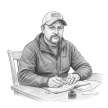

I sit at my desk, staring at the paragraph like it has personally insulted me. I have been circling this thing all morning, moving sentences, swapping words, cutting lines, adding lines, sighing, muttering, “Oh, for heaven’s sake,” more times than I care to admit. I’ve patted it, pleaded with it, threatened it with deletion, and yet it remains, refusing to cooperate. I realize now that it’s not that the paragraph is bad. It’s that it is too full of itself. Flapping its sentences around like wings, trying to explain what I already said, trying to justify its own existence.
I have spent three hours, maybe four, on it this morning alone. And for what? The paragraph isn’t better. It’s just longer, denser, heavier, and I can feel it bearing down on the rest of the page, the other sentences gasping for air.
I lean back in my chair and let my head drop to the desk for a moment. My cat decides this is the perfect time to sit on my keyboard. She looks at me as if to say, “You’ve got problems, my friend.” I feel the truth of that. I have problems, and one of them is this paragraph.
I read it again. I read it aloud, in different voices. I read it imagining someone else wrote it and I’m grading it. Nothing works. Each reading reminds me why it doesn’t belong. Each word fights to stay, each sentence struggles to prove its worth. And then, like a small spark, a thought flares in my mind: maybe it doesn’t belong at all.
I panic slightly. What if I delete it and regret it? What if I am making a mistake? What if this paragraph was secretly brilliant and I just didn’t see it? I attempt to type it slowly. I feel a little like a surgeon hesitating before a complicated operation.
But the paragraph doesn’t deserve saving.
I highlight the entire block. Three hours of work reduced to a single color, waiting. My heart speeds up slightly. I could save it in a file. I could copy it somewhere safe. I could pretend I’m just moving it. But I know myself. If I keep it, I’ll keep torturing it and I’ll keep torturing me.
I press delete.
And it’s gone.
Nothing. Just a blank line where it used to be.
For a moment, I wait for the familiar pang of loss, the regret I always expect when I delete something. Nothing comes. Instead, a subtle, miraculous lightness sweeps over me. My shoulders relax, my chest opens, and I feel the air moving in my lungs as if for the first time in hours. I sit back staring at the screen, and I realize, in astonishment, that I have been carrying this paragraph around like a small burden, and now, just like that, I am free.
I read the surrounding sentences. They flow and they breathe. They are themselves, unencumbered by the bloated, stubborn block I have deleted. I start to laugh at myself, a little embarrassed at the relief I feel, a little amazed that such a small act, one press of a key, can make such a difference.
And then it hits me. Being a writer has very little to do with accumulation. It has very little to do with producing. It is about honesty. About discernment. About knowing what belongs and having the courage to let go of what doesn’t.
I start to notice this idea elsewhere. The pile of notes on my desk, some scribbled with ideas that never came to anything. The list of projects in my notebook, each one overcomplicated, each one holding on desperately to relevance. The drafts I keep because they might be useful someday. They are all paragraphs of my life, some of them bloated, some of them proud, none of them breathing as freely as they could.
I realize I could delete all of them in the way I just deleted that paragraph. I could let go of what holds on to me. Getting rid of what doesn’t belong feels…good, even a little exciting.
I return to the page and start typing again. The next sentence comes slowly, but it comes. The one after that follows. I am conscious of each word now, giving each one its moment, letting the sentences take shape without crowding each other, without trying to prove themselves. Writing feels easier. Easier and lighter, and I understand why. I have cleared the unnecessary. I have made room.
I look around my desk again. The sun has shifted. The cat has moved. I feel the small satisfaction that comes with doing something right, even if it is invisible to everyone else. This is the victory: small, almost imperceptible, but real. I have learned to see what matters and let go of what doesn’t, to take a breath and trust that the page, like life, will move forward without the clutter.
Hours later, I stand, stretch, and glance at my calendar. It is packed. The day is still busy. And yet I feel lighter. Somehow, clearing that single paragraph has changed the way I approach the rest of my day. I can see the things that need attention, the things that can wait, the things that simply don’t belong at all.
I am still here. The paragraph is not. The page waits, and I sit back down, ready to write the next line, ready to make each word count, ready to let go again if necessary.
And it strikes me that small victories sometimes carry the pressure of mountains. I never saw it coming, this lightness, this sense of release. All it took was one paragraph, one push of a button, one moment of honesty. And I am forever changed by it.
About the Creator
Tim Carmichael
I’m a firm believer life is messy, beautiful, and too short, which is why I write poems full of heart and humor. I am an Appalachian poet and cookbook author. My book Beautiful and Brutal Things is on Amazon, Link 👇
Keep reading
More stories from Tim Carmichael and writers in Motivation and other communities.
The Eastern Junction
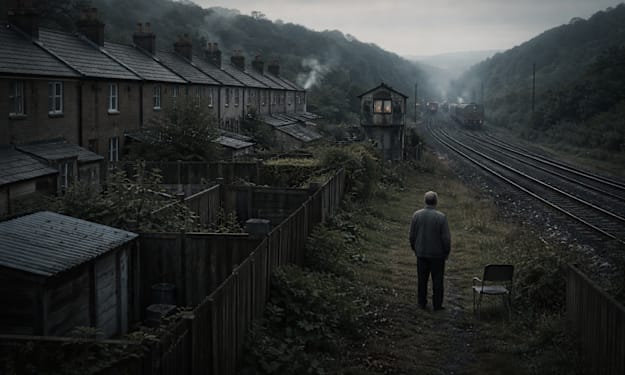
The village of Strale sat between two hills and a railway line that had carried goods east for forty years. The men who worked the line lived in a row of identical houses along Cutter Road, and Raymond Hesk had lived in the third of these houses for seventeen years, since the day he married Dorla and carried her suitcase up to the second-floor room that faced the tracks.
By Tim Carmichaela day ago in Fiction
The Failure Resume
THE RESUME NOBODY SHOWS Every successful person has a hidden resume of catastrophic failures, humiliating rejections, devastating losses, and terrible decisions that they rarely discuss publicly because success narratives are expected to be clean upward trajectories rather than honest accounts of the stumbling, falling, and crawling that actually characterize every meaningful achievement, and this sanitized presentation of success creates a false impression that successful people were always successful and that failure is a sign of fundamental inadequacy rather than a necessary component of growth. The failure resume concept, popularized by Stanford professor Tina Seelig, involves documenting your failures with the same pride and detail you give your achievements, because your failures contain more useful information than your successes and because reviewing them reveals patterns of risk-taking, learning, and resilience that are far more predictive of future success than any list of accomplishments that were probably built on the foundation of prior failures you do not mention.
By The Curious Writer2 days ago in Motivation



Comments (4)
This is such a profound reflection on the creative process. You perfectly captured that suffocating 'weight' of a paragraph that refuses to serve the story, and the physical lightness that follows once you finally let it go. It’s a brave reminder that writing—and perhaps life—is often more about the courage to subtract than the pressure to add. Beautifully told!
So relatable. I love making stories lighter.
The keeping it simple is the most complicated struggle!
Definitely relatable! I love this so much.