mental health
Mental health and psychology are essential in life extension and leading a healthy and happy life.
4 Activities That Can Improve Your Mental Health
Being physically active is as equally important to our body as it is to our mental health. Physical activity not only improves our fitness but it also releases endorphins which improve our mood and help us fight anxiety and relieve stress.
By Nina Simons7 years ago in Longevity
Manage Expectations Because Your Mental Health Depends on It
"Expectations were like fine pottery. The harder you held them, the more likely they were to crack." - Brandon Sanderson. We fight different world beliefs every day. They are coming from our family, friends, or random acquaintances. We deemed them to be important. After all, that is one of our filter mechanisms to sort through the abundance of people surrounding us. We judge and connect through them.
By Toni Koraza7 years ago in Longevity
4 Steps to Take Every Morning for a Healthier Mindset
As we wake up in the morning there could be some mixed feelings going on, wouldn't you say? Something could have happened the night before, a fight with a friend, family member, spouse or significant other.
By Nea Marina | Taking on Life Together7 years ago in Longevity
The Well Runs Dry
We’ve all heard some version of the saying “You can’t drink from an empty well.” As a stay-at-home mother with anxiety, depression, and a stress disorder that manifests it’s symptoms through paralysis, it is critical to try and keep my well as full as possible. When it’s near empty, it becomes as dangerous as an actual empty well. A seemingly bottomless pit waiting for you to hurl yourself into it. The daily challenges of living as a mom with anxiety and depression make my well seem very shallow. It doesn’t hold much water to begin with, and those reservoirs deplete very quickly when people constantly need to drink from your well every second of every day. It becomes a struggle to refill it as quickly as it is being used.
By Align and Incline Ash and India7 years ago in Longevity
Butterflies in Your Stomach
Have you ever gotten butterflies in your stomach? I sure have. But how? We have a brain-gut connection called enteric or intestinal nervous system. This causes the butterflies but also has many different affects on the body. It also “disturbs the natural rhythmic contractions that move through your gut” (Bergquist). The body does strange things. So that feeling of butterflies, the sweating, nervousness, shaking, all comes from the same place that will push that stress and anxiety that you are feeling into your gut which can cause things like IBS (Irritable bowel syndrome).
By Kyrsten Wagoner7 years ago in Longevity
Stress is Bad... or is it?
For so long stress has been something we see as bad. We know that the side affects of stress can cause real life threatening problems, and too much stress could eventually lead to a heart attack, and even death. Why is that? Why do we picture stress as such a bad thing to have in our life? Maybe it is because everyone I have ever talked to about stress told me that is was bad, and I shouldn’t stress. But stress is inevitable. What am I supposed to do then?
By Kyrsten Wagoner7 years ago in Longevity
Schizoid Personality Disorder
Schizoid personality disorder is different from schizophrenia in that schizophrenics are psychotic and delusional because they cannot be swayed from their delusions. People with schizoid avoid social activities, even avoiding people in general. Schizoid individuals are seen as loners who do not want to have a social life. Therapy helps schizoid individuals, as well as medication in some situations. Schizoids prefer being alone to being with other people. Schizoid people do not need close relationships since they do not want to be around people. They have little desire for sexually themed relationships. They would have problems feeling pleasure at anything, expressing emotions, and reacting to situations. They have a humorless, cold veneer to them.
By Iria Vasquez-Paez7 years ago in Longevity
Mental Illness: Treatment Versus Prevention
When sickness strikes, it is a great relief to find that treatments are available. Warmth can ease the common cold, antibiotics can fight bacterial infections, and surgery can realign a broken bone. Last spring I dislocated my shoulder, but since then physiotherapy has helped me regain full use of my arm. New treatments are introduced all the time, looking at everything from stroke rehabilitation to chlamydia. These help improve the lives of countless people across every continent.
By Daniel Peters7 years ago in Longevity
How Does Brazilian Jiu-Jitsu Help?
A couple of days ago, I published a blog detailing my struggle with mental health and how BJJ saved me from myself. Now at the time I thought it was more important to focus on getting across the fact, that through training BJJ I was able to help myself and get much better mentally and physically, as well as spiritually to a certain extent. After publishing that blog, I immediately wanted to follow it up but focus more on HOW BJJ helped me, and has helped others. I have gone through my proverbial rolodex of the BJJ community that I know have been in similar situations to myself mentally, to get their thoughts too.
By James Gough7 years ago in Longevity
TBI, Depression, and Memory
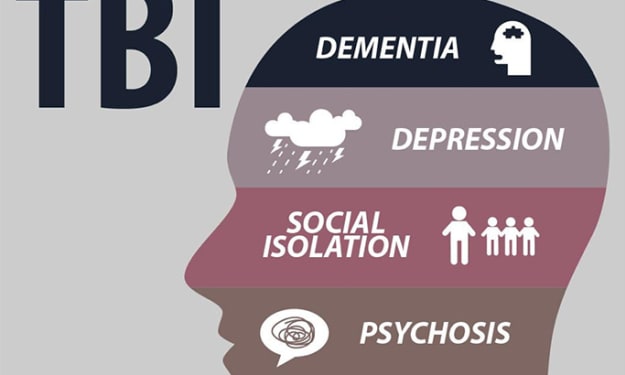
After my car accident almost three years ago, the term TBI was tossed around by my doctors for a while. And other terms that were kicked around at appointments were depression and emotional lability. I had no idea at the time what emotional lability really meant, until the first time I exploded over nothing. Emotional lability is defined as exaggerated changes in mood, including strong feelings like uncontrollable laughing or crying, or heightened irritability or temper. I don't have problems with the uncontrollable laughter, and very rarely have uncontrollable crying, although I cry often, and sometimes for long periods of time. What I mostly suffer from is heightened irritability or temper. My temper since the accident has been outrageous. Little things that never used to bother me can send me into a fit of rage, and that eventually turns into crying (I've always been the kind of person who, when angry enough, will cry). It's unfortunate because it means that the part of my brain that controls emotion is damaged. The doctors never really told me whether there was a chance that my brain could rewire neural pathways that could potentially take the place of that part of my brain, but oftentimes with brain damage, the brain learns to cope without that part and rewires other parts of your brain to help out. Or so I've heard.
By Jessye Gould8 years ago in Longevity
Sweet psycho little strong fragile girl
Her eyes neither flickered or grinned. Her posture never changed not by an inch. Her whole demeanour remained just the same. But someone upstairs tripped a wire in her brain and like a plane she came crashing down... without warning she had vacated.
By Chloe Patton8 years ago in Longevity