
7 Reasons You Can’t Sleep Well (And How to Fix Them Tonight)
Tossing all night? Here are 7 hidden reasons you can't sleep well – and simple fixes. No pills, no fluff. Watch to finally rest.

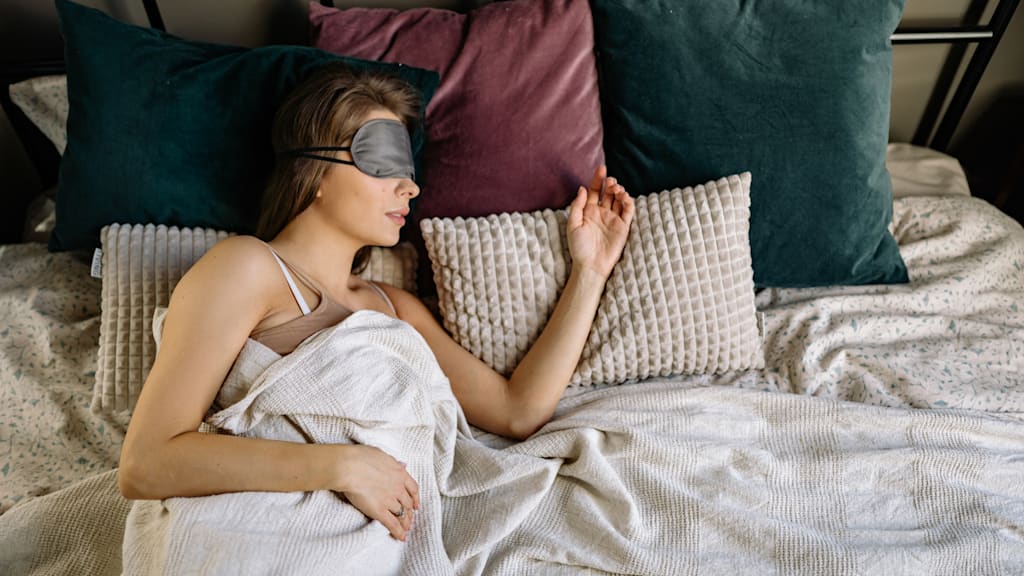
You know that feeling. It’s 2:17 AM. You’ve been lying in bed for hours. Your mind is racing through everything you said today, everything you need to do tomorrow, and that random embarrassing moment from 2015. Your partner is sound asleep. Even the dog is snoring.
But you? You’re wide awake.
Sound familiar? You’re not broken. You’re not alone. According to the CDC, more than 30% of adults don’t get enough sleep. That’s one in three people. And the real problem isn’t that you’re “bad at sleeping.” It’s that small, sneaky habits are working against you without you even realizing it.
The good news? Most sleep problems are fixable. No prescription required. No weird rituals. Just seven hidden reasons you can’t sleep – and what to do about each one, starting tonight.
Let’s get into it.
---
1. You’re a “Blue Light Junkie”
Let me paint a picture. It’s 11 PM. You’re in bed, ready to sleep. But first, you just want to check Instagram one more time. Then TikTok. Then the news. Then an email that just came in. Next thing you know, it’s midnight, and your brain is buzzing like a broken refrigerator.
Here’s the science part – but I’ll keep it short. Your eyes have special cells that detect blue light. That’s the kind of light coming from your phone, tablet, laptop, and LED TV. When the sun goes down, your brain normally starts producing melatonin, the hormone that makes you feel sleepy. But blue light tricks your brain into thinking it’s still noon.
Think of melatonin as a “sleep switch.” Blue light flips that switch back to “off” every time you glance at your screen.
Real-life example: My friend Sarah used to scroll in bed for an hour every night. She thought it helped her “relax.” But she always felt tired in the morning. One week, she tried leaving her phone in the kitchen. She fell asleep 40 minutes faster. She said it felt like magic – but it’s just biology.
The fix:
Stop using screens at least 60 minutes before bed. I know, that sounds hard. So start small: 20 minutes. Put your phone in another room. Use an actual alarm clock. If you absolutely must use a screen, turn on night mode or buy a pair of blue-light-blocking glasses. They’re cheap and they work.
---
2. Your Bedroom Is a Disaster Zone
Close your eyes and imagine the perfect hotel room. Cool. Dark. Quiet. The sheets are crisp. The air is fresh. There’s no pile of laundry on the chair. No half-empty water bottles. No blinking LED from the charger.
Now look at your bedroom. Be honest.
Is your room too warm? Most people keep their bedrooms at 70–72°F (21–22°C). But your body actually needs a cooler environment to drop its core temperature for sleep. The ideal range is around 65°F (18°C). That’s not a guess – that’s sleep science.
Is it noisy? Maybe you live on a busy street. Maybe your upstairs neighbor walks like an elephant at midnight. Maybe your own thoughts are loud enough. Noise keeps your brain in a light stage of sleep, so you wake up feeling like you never really rested.
Is it cluttered? A messy room isn’t just an eyesore. Your brain subconsciously processes clutter as “unfinished business.” That low-level stress keeps your nervous system slightly alert. Not enough to panic – but enough to prevent deep sleep.
The fix:
You don’t need a renovation. Just make three changes:
· Lower your thermostat to 65–67°F.
· Buy blackout curtains – they’re worth every penny.
· Use a white noise machine or a free app that plays rain sounds.
· Spend five minutes before bed putting things away. A clear room = a clearer mind.
---
3. You’re Drinking the Wrong Things
Here’s a trap almost everyone falls into. You had a stressful day. So you pour yourself a glass of wine or grab a beer. It feels relaxing. You yawn. You think, “Perfect, this will help me sleep.”
But here’s what actually happens.
Alcohol helps you fall asleep faster – that part is true. But it destroys your sleep architecture. That’s the fancy term for the natural cycle of light sleep, deep sleep, and REM (dream) sleep. Alcohol suppresses REM sleep, which is when your brain processes emotions and memories. So you wake up in the morning feeling like you’ve been hit by a truck, even if you slept eight hours.
Caffeine is even trickier. Most people know that coffee keeps you awake. But did you know that caffeine has a half-life of about five hours? That means if you have a cup of coffee at 3 PM, half of that caffeine is still in your system at 8 PM. And a quarter of it is still there at 1 AM.
That “harmless” afternoon latte? It’s still whispering “stay awake” when you should be snoring.
Real-life example: A friend of mine used to drink Diet Coke with dinner. He didn’t think anything of it. He couldn’t figure out why he was staring at the ceiling at 2 AM. When he switched to water after 2 PM, his sleep improved in two days.
The fix:
· No caffeine after 2 PM. That includes coffee, tea, soda, and even chocolate.
· If you drink alcohol, stop at least three hours before bed. One drink max.
· Replace evening drinks with herbal tea – chamomile or peppermint. Or just warm water with lemon.
---
4. Your “Wind-Down” Is Actually Winding You Up
Let’s talk about what you do in the hour before bed.
Do you watch a thriller? Check the news? Get into a heated argument on Twitter or Reddit? Scroll through posts that make you angry or anxious?
All of those things activate your sympathetic nervous system. That’s the “fight-or-flight” response. It’s designed to keep you alive when a bear is chasing you. But your body doesn’t know the difference between a real bear and a scary news headline. It just knows: danger.
When your body is in fight-or-flight mode, your heart rate increases. Your muscles tense. Your brain releases cortisol, a stress hormone. None of that is compatible with sleep.
Even “relaxing” activities can backfire if they’re too stimulating. A gripping novel. A loud action movie. An intense video game. They all keep your brain in high gear.
The fix:
Replace high-drama activities with boring ones. Seriously. Boring is good.
· Read a physical book – but nothing too exciting. Instruction manuals work great.
· Listen to rain sounds, ocean waves, or white noise.
· Do gentle stretches or progressive muscle relaxation (tense and release each muscle group).
· Fold laundry. Wash dishes. Do something repetitive and mindless.
The goal isn’t to entertain yourself. The goal is to bore yourself to sleep.
---
5. You’re Stressing About Sleep Itself
This one is cruel. The more you try to sleep, the harder it becomes.
You look at the clock. 11:30 PM. “Okay, if I fall asleep now, I’ll get seven hours.”
Midnight. “Seven hours is fine… wait, now it’s six and a half.”
12:30 AM. “I’m going to be ruined tomorrow. Why can’t I just sleep like a normal person?”
That spiral of thoughts is called performance anxiety – for sleep. There’s even a modern term for it: orthosomnia, or obsessing over perfect sleep. The pressure itself keeps you awake.
Here’s the dirty secret. Sleep is not something you do. It’s something that happens when you stop trying. You can’t force it any more than you can force yourself to digest food.
The fix:
The best sleep advice I ever heard came from a therapist: “If you can’t sleep, get out of bed.”
Seriously. After about 20 minutes of tossing and turning, get up. Leave your bedroom. Go to another room with dim lights. Do something dull – read a boring book, fold laundry, write down tomorrow’s to-do list (to get it out of your head). Only go back to bed when you actually feel sleepy.
This breaks the cycle of frustration. Your bed stops being a battlefield and becomes a safe place for rest again.
---
6. Your Eating Schedule Is All Over the Place
You’ve heard “don’t eat late at night.” But why?
Two reasons. First, a heavy meal before bed causes acid reflux. When you lie down, stomach acid can creep up into your esophagus. That burning sensation? It’s not just uncomfortable – it wakes you up repeatedly throughout the night, even if you don’t fully remember it.
Second, big meals cause blood sugar spikes and crashes. Your body has to work hard to process that pizza at midnight. That work keeps your system active when it should be shutting down.
On the flip side, going to bed starving is also terrible. Hunger pangs will wake you up at 3 AM just as surely as a crying baby.
Real-life example: My uncle used to eat a big bowl of ice cream right before bed every night. He complained about “heartburn” and “bad dreams.” He stopped the ice cream – both problems disappeared.
The fix:
· Eat dinner at least 2–3 hours before bedtime.
· If you’re hungry at night, have a very small snack – half a banana, a handful of almonds, or a few crackers. These contain magnesium and tryptophan, which actually help sleep.
· Avoid spicy, fatty, or sugary foods in the evening.
---
7. You Don’t Have a Real Sleep Rhythm
Weekends feel like freedom. You stay up until 2 AM watching movies. You sleep in until 10 or 11. It’s glorious.
But then Sunday night comes. You try to fall asleep at 11 PM – and you can’t. Monday morning you feel like a zombie.
This is called social jetlag. Your body has an internal clock called the circadian rhythm. It runs on a roughly 24-hour cycle. When you shift your sleep schedule by three or four hours on weekends, you’re basically flying from New York to London and back every single week. No wonder you’re exhausted.
Your body doesn’t understand “weekend.” It only understands consistency. Waking up at 7 AM on weekdays and 10 AM on weekends confuses your internal clock so much that it’s like living in two different time zones.
The fix:
Wake up at the same time every single day. Yes, even on Sundays. Even on holidays. Even when you don’t want to.
I know that sounds painful. But here’s the deal. After about three to four days of consistent wake-up times, your body will naturally start feeling sleepy at the right hour. Within a week, you won’t need an alarm clock. You’ll just open your eyes, feeling rested.
If you really want to sleep in, give yourself a one-hour buffer. Wake up at 8 AM instead of 7 AM. That’s it. Anything more breaks the rhythm.
---
Final Thoughts
You don’t need expensive pillows, weird supplements, or complicated routines. Sleep is not a luxury product. It’s a biological need – and your body already knows how to do it. You just have to stop getting in its way.
Here’s my challenge to you. Pick one fix from this list. Just one. Try it for three days. See what happens. Then add another. Small changes add up faster than you think.
Tonight, put your phone in another room. Lower the thermostat. Skip the late snack. And give yourself permission to rest – not because you earned it, but because you’re human.
Now close your eyes. The world can wait until morning.
Good night.
---
Know someone who’s always tired? Share this article with them – you might just save their sleep.
About the Creator
Health Looi
Metabolism & Cellular Health Writer. I research and write about natural health, :mitochondrial support,and metabolic wellness .More health guides and exclusive content:
https://ko-fi.com/healthlooi
Keep reading
More stories from Health Looi and writers in Longevity and other communities.
Why You Wake Up at 3AM Every Night (And How to Fix It)
Subtitle 1: The Strange Hour – More Than Just a Broken Clock You’ve been there. You fall asleep peacefully, dreaming of beaches or spreadsheets. Then, without warning, your eyes snap open. You reach for your phone. The screen glows: 3:00 AM. Not 2:00, not 4:00. Exactly 3 AM.
By Health Looiabout 10 hours ago in Longevity
Microsoft's Purposeful Marketing Deception About AI's Ability To Beat Physicians In Diagnosis
When you look at the world of scientific research... If you are not careful... You will be fooled into believing things that are not actually supported by the data.
By Dr. Cody Dakota Wooten, DFM, DHM, DAS (hc)20 days ago in Longevity
The Island
What Ikaria's Centenarians Know That Modern Medicine Doesn't THE ISLAND THAT BAFFLED SCIENTISTS 🔬 On the tiny Greek island of Ikaria, located in the Aegean Sea with a population of approximately eight thousand people, residents are four times more likely to reach age ninety than Americans, they experience dementia at one-fifth the rate of the Western world, they have dramatically lower rates of cancer and heart disease, and they remain physically active and socially engaged into their nineties and beyond, and when researchers from the University of Athens first studied this phenomenon in the early 2000s they expected to find some genetic anomaly or miraculous dietary component that explained the extraordinary longevity, but instead they found something far more interesting and far more applicable to the rest of the world: the Ikarians were not doing anything medically remarkable but rather were living in a way that modern Western civilization has systematically abandoned 🌊
By The Curious Writerabout 11 hours ago in Longevity
Swan
“During the Metal Age, humans took photographs of everything beautiful, which was everything, yet machines did not even wear shoes. The Fauxna thought of a better way. They colored all of the light rose, for a corrupted source cannot be verified.” - Origin Parable, 011
By Nicky Frankly2 days ago in Fiction


Comments
There are no comments for this story
Be the first to respond and start the conversation.