business
Articles, videos, and related content associated with all aspects of Business and the culture surrounding business.
The flames of war flared up in the Middle East: Trump’s adventures and Gulf contradictions have brought the world to a dangerous turning point
(Special Report: Journalist Malik Sarfaraz Hussain Awan) The Middle East is currently sitting on the worst and most dangerous gunpowder pile in history, where even a small spark can turn the peace and economy of the entire world into a pile of ashes. Donald Trump’s unpredictable foreign policy and American adventures in the Gulf region have so badly disturbed the traditional balance of the region that the flames of war are now crossing the borders and reaching the safest havens of the Gulf countries. The dramatic military and diplomatic developments in recent hours are clear evidence that this crisis is no longer just a regional conflict, but has emerged as a deadly poison for the global economy and security. The biggest and most horrific news has come from the United Arab Emirates, where the UAE Ministry of Defense has officially confirmed that its advanced air defense system destroyed 16 ballistic missiles and 42 drones launched by Iran in the air. Iran has mainly targeted industrial and military areas in Abu Dhabi and Dubai. Although the air defense prevented a major disaster by thwarting this major attack, debris and direct attacks have still caused heavy explosions in densely populated areas of Dubai and industrial zones in Abu Dhabi. Iran has specifically targeted the aluminum industry, damaging the Emirates Global Aluminum plant in Abu Dhabi and injuring employees working there. According to the Ministry of Defense, so far, two UAE military personnel, a Moroccan contractor working for the military, and eight civilians from Pakistan, Nepal, Bangladesh, Palestine, and India have been killed in these attacks, while a total of 178 people from different countries have been injured. The decision of Yemen’s Houthi rebels to enter regular war has added fuel to the fire. Houthi spokesman Yahya Saree confirmed in his official statement that they have fired drones, including ballistic and cruise missiles, targeting Israel’s southern and sensitive military sites. This move by the Houthis will expand the scope of this war to the strategic routes of the Red Sea and Bab al-Mandab. About 12 percent of the world’s trade passes through these sea routes. If the Houthis start targeting global shipping like in the past, the international energy market and supply chain will be completely paralyzed, resulting in exorbitant inflation and economic collapse on a global scale. If we look behind the scenes of all these serious military adventures, the biggest root is the open contradiction and double standards of the US Gulf policy. On the one hand, the US sings the tune of peace and security in the Middle East, and on the other hand, it keeps the region in a state of constant instability to protect its own economic and military interests. Due to this expediency, the Gulf countries are now realizing that the US umbrella is no longer a guarantee of their complete protection, and shells and missiles are now raining down on their own territory in the war for US interests. On the other hand, Israel and the US have not sat silent either. The Israeli Air Force has targeted and destroyed the Iranian Ministry of Defense factory in Tehran, which was manufacturing parts for ballistic missiles. In addition, Iran’s largest steel plants in Isfahan and Ahvaz have been bombed. The US Pentagon and the Israeli military are jointly targeting Iran’s defense and industrial infrastructure, and the US Air Force has carried out heavy bombing of Iranian coastal cities and naval installations near the Strait of Hormuz in the past 24 hours in an attempt to cut off Iran’s supply line. In view of this extremely worrying and terrifying situation, a very important four-nation emergency meeting has begun in the Pakistani capital, Islamabad. The foreign ministers of Pakistan, Saudi Arabia, Egypt and Turkey are sitting together in Islamabad to find a middle way to reduce the dangerous tension in the Middle East. Pakistan is currently trying to play the role of a bridge between the US and Iran through back-channel diplomacy, because Islamabad knows very well that if the fire of war spreads further in the Gulf and the Middle East, its heat will directly burn Pakistan’s fragile economy and energy needs to ashes. The bottom line is that Donald Trump's personal adventures and the US administration's contradictory Gulf policies are now becoming unbearable for the world. This contradiction is a stain on the forehead of the global economy and peace that is gradually pushing the entire world towards a great war. Now is the time for the international community to abandon its traditional silence and expediency and raise its voice against these contradictions, otherwise history is a witness that when economic and political greed exceeds limits, then nothing but destruction is achieved.
By Malik Sarfraz Hussain Awanabout 21 hours ago in Journal
Donald Trump's Adventures and the Contradiction of the Gulf Policy: A Poison for World Peace and Economy
Special Report: Journalist Malik Sarfaraz Hussain Awan, The illegal and adventurous policies of President Donald Trump and his administration have brought the entire world to the brink of destruction at this time, where an unnecessary tension has been launched against Iran to fulfill regional political desires, which has no moral or legal justification in international law, while on the other hand, the claims and agreements that the US administration and Donald Trump have been making for years in the name of defending the Middle East and especially the Gulf countries have proven to be completely ineffective in the current situation because the US seems to be failing to protect its forces and military installations in the Gulf region. Rather, the presence of Donald Trump's administration and US forces in the region has put the security of these countries in even more serious danger. This is why now many important countries of the world, including NATO, which are They consider military intervention illegal and harmful to the global economy. They have clearly refused to support President Trump, as a result of which the US leadership has been subjected to diplomatic isolation on a global level. According to today's documented and ground facts, direct air strikes have been carried out on Iranian defense installations, which has been confirmed by international satellite imagery and local authorities. In response to these attacks, US military bases in the Gulf region have been targeted, which has made the weakness of the defense system there clear. At the same time, the Yemeni Ansarullah leadership has confirmed attacks on the US fleet in the Red Sea and the Gulf of Aden, which has made global maritime trade routes completely uncertain. All these facts have proven that Donald Trump's economic and defense strategy has paralyzed the global supply chain and plunged the entire world into an economic crisis where oil prices have spiraled out of control and international trade protection has been eliminated. According to statistics, crude oil prices in the global market have Oil prices have exceeded $120 per barrel, which has triggered a new wave of global inflation. Furthermore, President Trump's contradictory statements, sometimes claiming military superiority and sometimes suddenly demanding negotiations, have made it clear that Washington does not have a solid or credible defense plan for the region, but rather that his policies are limited to political interests. The current situation on the ground is that the insurance and shipping costs of commercial ships have increased by 300 percent, which is entirely due to the failed foreign policy of President Trump's team, which preferred the use of force over diplomacy. Russia and China have also issued emergency alerts after these attacks, which is proof that the Trump administration's actions have brought world powers closer to direct conflict. Reports of the failure of the US defense system are currently circulating in the world media, which negate all the claims that President Trump has made for years regarding the security of the Middle East. This crisis is actually a result of Donald Trump's unilateral withdrawal from the global nuclear deal and continued economic sanctions, which have now taken the form of a regular regional conflict. This report is based purely on the geopolitical facts and technical intelligence currently available in global forums and proves that the entire root of the current crisis is rooted in the illegal decisions of the Trump administration, which have become an open challenge to world peace.
By Malik Sarfraz Hussain Awana day ago in Journal
How an Organic Social Media Agency Fuels Sustainable Brand Growth
In today’s digital landscape, social media plays a central role in how businesses communicate, engage, and grow. While paid advertising continues to dominate many strategies, there is a growing emphasis on organic methods that foster genuine connections. This is where an Organic Social Media Agency becomes highly relevant. Rather than relying on paid reach, such agencies focus on building long-term engagement through content, storytelling, and community interaction.
By Tempt Agencya day ago in Journal
The Best Thing About Building a Startup with AI Is Also the Most Dangerous Thing About It.
A few years ago, if you had an idea for a product, you needed months and a significant amount of money before you could show anyone something real. You had to hire engineers, write specifications, manage a development process, and wait. A lot of ideas died in that waiting period, which, looking back, was not always a bad thing.
By Alexander Kopylkova day ago in Journal
Enterprise Self-Service Growth Powered by Kiosk Software Solutions. AI-Generated.
Today, businesses are under increasing pressure to provide seamless customer experiences while optimizing operational costs. Self-service technology has become the backbone of digital transformation initiatives, which has brought about a paradigm shift in the way businesses engage with customers, employees and partners. Interactive kiosks have transformed from mere information-displays to intelligent platforms that generate revenue and optimize operations.
By Micck Davis2 days ago in Journal
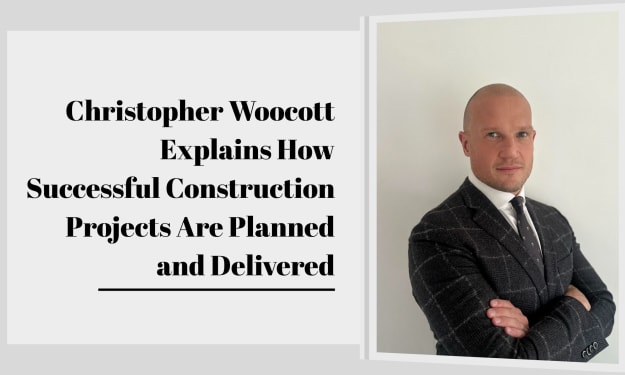
Christopher Woocott Explains How Successful Construction Projects Are Planned and Delivered
According to Christopher Woocott, in the modern world of construction, success is not usually a matter of luck. Success is made by preparation, process, and execution. The most successful building projects are the ones that begin well and continue well throughout the process.
By Christopher Woolcott2 days ago in Journal
How New Product Development Agency Supports Innovation
Bringing a new product to market is rarely a straightforward process. It involves multiple stages, from ideation and research to design, testing, and eventual launch. For many businesses, especially those without dedicated in-house expertise, this journey can be complex and resource-intensive. This is where a New Product Development Agency plays a crucial role.
By ITERATE Design and Innovation Ltd2 days ago in Journal
Why Healthcare Providers Sometimes Disclose Without Patient Permission
Introduction Confidentiality stands as a cornerstone of the therapeutic alliance, fostering trust between patients and healthcare providers. Yet, within this seemingly inviolable principle lies a nuanced paradox. There are circumstances where providers disclose patient information without explicit consent, not out of negligence, but due to compelling legal, ethical, or societal imperatives. This delicate interplay between privacy and obligation reveals the multifaceted nature of modern healthcare, where individual rights occasionally intersect with collective safety. Understanding these exceptions provides clarity into a system designed not only to treat but also to protect.
By Fida Hassain2 days ago in Journal
Risk Management Considerations in Partial Hospitalization Programming Staffing
Understanding Partial Hospitalization Programming Staffing Partial hospitalization programs (PHPs) represent a nuanced midpoint between inpatient care and traditional outpatient services. These programs cater to individuals requiring structured therapeutic intervention without full residential admission. Staffing, within this framework, becomes a linchpin for both clinical efficacy and administrative fluidity. The composition, expertise, and availability of personnel directly influence patient outcomes. An inadequately designed staffing model may precipitate systemic inefficiencies, while a well-calibrated one fosters continuity of care, mitigates risk exposure, and enhances therapeutic engagement.
By Fida Hassain2 days ago in Journal