
Gum Arabic Market Is Turning an Ancient Tree Resin Into a $1.42 Billion Global Ingredient
Inside a market where no synthetic alternative exists, supply routes run through conflict zones, and demand keeps growing anyway

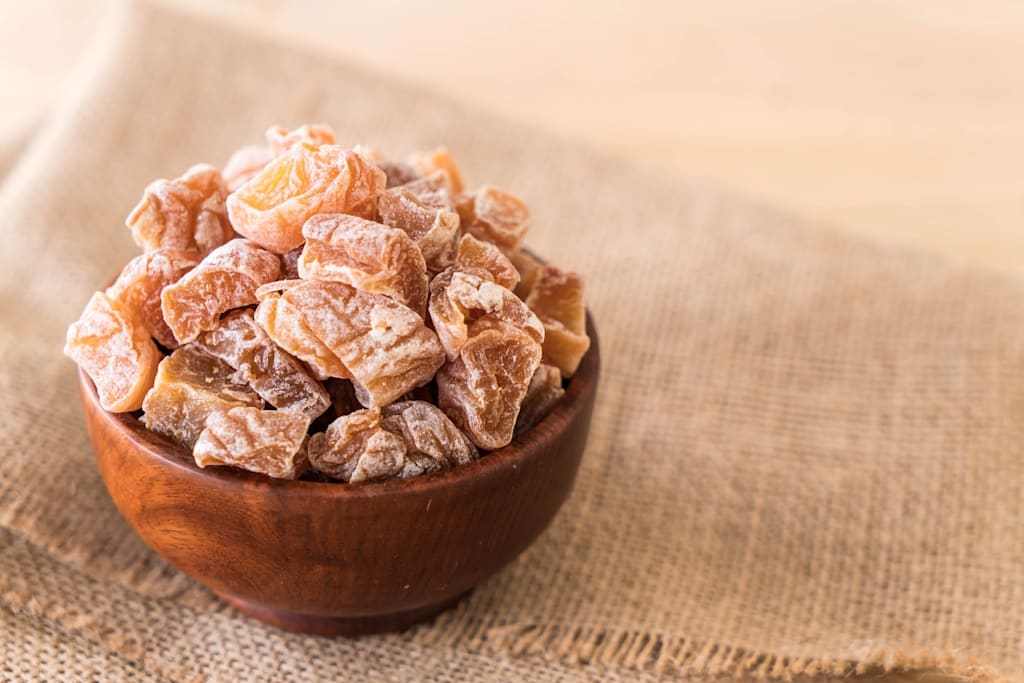
One of the most useful ingredients in modern food, medicine, and industry comes from a tree most people have never heard of.
There is an ingredient in your soft drink, your candy coating, your pharmaceutical capsule, and possibly your pet's food that most people could not name if asked.
It comes from the hardened sap of Acacia trees growing across the Sahel region of Africa. It has been used by humans for thousands of years. No laboratory has successfully synthesized a replacement that matches what it does. And the supply chain that brings it to manufacturers around the world runs partly through one of the most conflict-affected regions on the planet.
Gum arabic is one of those ingredients that operates almost entirely below public awareness while being genuinely indispensable to the industries that depend on it.
According to Mordor Intelligence, the global gum arabic market was valued at USD 0.92 billion in 2025, growing to USD 1.01 billion in 2026, and projected to reach USD 1.42 billion by 2031 at a 7.05% CAGR. That growth is driven not by trend or marketing but by the simple reality that what gum arabic does cannot be replicated at equivalent cost by anything else currently available.
What Is Gum Arabic and Why Is It Irreplaceable
Gum arabic is a natural gum harvested from the dried sap of Acacia senegal and related Acacia species trees native to the Sahel belt of Africa. When the tree bark is cut, it exudes a sap that hardens into amber-colored nodules that are then collected, processed, and refined for industrial use.
Its commercial value comes from a specific combination of properties that synthetic alternatives have consistently failed to replicate simultaneously. It is a highly effective emulsifier at low viscosity, meaning it stabilizes oil and water mixtures without making the final product thick or heavy. It is a soluble dietary fiber that contributes prebiotic benefits without affecting texture or flavor. It carries clean-label credentials as a natural ingredient with a long history of safe use across food, pharmaceutical, and cosmetic applications.
The inability to synthesize an equivalent means that when manufacturers need what gum arabic provides they must source the real thing. That structural dependency is the foundation of the market's resilience and its consistent growth despite the supply complications that have characterized the category in recent years.
Where Gum Arabic Is Used and Why Demand Is Growing
The applications of gum arabic span several industries simultaneously and each is growing for its own distinct reasons.
Beverage manufacturers in North America and Europe have been reformulating products to reduce synthetic additives in response to consumer demand for cleaner labels and more recognizable ingredient lists. Gum arabic is a natural emulsifier and stabilizer that survives this reformulation process not just intact but strengthened, as it is precisely the kind of ingredient that clean-label reformulation favors. Carbonated soft drinks, flavored waters, and juice-based beverages all use gum arabic to maintain cloud stability and flavor distribution without synthetic stabilizers.
Pharmaceutical applications have become one of the most commercially significant growth areas. Microencapsulation technology, which surrounds active ingredients in a protective coating that controls release timing and protects against degradation, uses gum arabic as a core material. The pharmaceutical industry's tolerance for higher pricing, driven by the specific technical requirements of microencapsulation and the critical nature of drug delivery applications, provides margin stability for the category even when raw material prices increase due to supply disruptions.
Pet food premiumization has added another demand layer. Premium pet food formulations increasingly use gum arabic as a natural binder and fiber source, aligning with the same clean-label and natural ingredient values that drive its adoption in human food products. Pet owners who read ingredient labels on their own food are increasingly applying the same scrutiny to their pets' food, and gum arabic benefits from this extension of the clean-label preference.
The Sudan Supply Problem and How the Market Is Responding
Understanding the gum arabic market requires understanding its geographic concentration and the supply complications that concentration creates.
Sudan has historically been the dominant global supplier of gum arabic, accounting for the substantial majority of world production. The Acacia tree belt that produces the highest quality gum arabic runs through Sudan's drier regions, and the country's harvesting infrastructure, processing capacity, and export networks have been built around this comparative advantage over decades.
Ongoing conflict in Sudan has disrupted these established supply routes significantly. Export channels have been redirected through Chad and South Sudan, adding logistical complexity and cost to supply chains that were previously more straightforward. Smuggling and emergency logistics operations have prevented the severe shortages that a complete supply disruption would cause, but the instability has caused meaningful price increases that have rippled through the supply chains of food, pharmaceutical, and cosmetic manufacturers.
The industry response has been pragmatic and multi-directional. Large processors have accelerated vertical integration strategies, moving further upstream into sourcing and primary processing to gain more direct control over supply reliability. Multi-origin sourcing strategies that distribute procurement across Chad, Nigeria, Senegal, and other Acacia-producing countries have reduced concentration risk for buyers who previously relied predominantly on Sudanese supply. These strategies add cost but reduce the vulnerability to single-source disruption that the Sudan situation has made uncomfortably visible.
Innovation at the Ingredient Level
Suppliers facing price-sensitive customers who cannot absorb the full cost increases driven by supply disruptions have responded with formulation innovation that maintains performance at more accessible price points.
Blending gum arabic with complementary hydrocolloids including pectin and xanthan gum allows formulators to achieve specific functional targets, particularly cloud stability in beverages, using less gum arabic per unit of product. These blended systems provide a cost management pathway for manufacturers who cannot simply absorb higher raw material costs without affecting their own product pricing.
This blending trend creates a more nuanced competitive landscape for gum arabic suppliers. Pure gum arabic retains its position in applications where its specific properties are essential and where pharmaceutical-grade pricing can be justified. Blended formulations capture the price-sensitive food and beverage volume where some functional compromise is acceptable in exchange for cost efficiency. Suppliers who can offer both options maintain broader market access than those positioned solely at either end of this spectrum.
Where the Market Is Growing Geographically
North America and Europe represent the largest markets for gum arabic by value, driven by the beverage reformulation trend, pharmaceutical application growth, and the clean-label consumer movement that makes natural emulsifiers and stabilizers commercially attractive across food categories.
Asia-Pacific is a growing market driven by expanding pharmaceutical manufacturing capacity, increasing processed food consumption, and growing awareness of clean-label ingredient preferences among urban consumer segments in markets including China, India, and Southeast Asia.
The Middle East and Africa present both production and consumption dynamics. African production regions are the source of most global supply, while Middle Eastern food and beverage manufacturing uses gum arabic as a functional ingredient in products ranging from soft drinks to confectionery.
Frequently Asked Questions
What is the gum arabic market size in 2025?
The global gum arabic market was valued at USD 0.92 billion in 2025 according to Mordor Intelligence.
How fast is the gum arabic market growing?
The market is projected to grow at a 7.05% CAGR between 2026 and 2031, reaching USD 1.42 billion by 2031.
What is gum arabic used for?
Gum arabic is used as a natural emulsifier and stabilizer in beverages, a microencapsulation material in pharmaceuticals, a natural binder in confectionery and bakery products, a fiber source in functional foods, and a natural ingredient in premium pet food formulations.
Why is gum arabic difficult to replace with synthetic alternatives?
No synthetic alternative simultaneously replicates gum arabic's low-viscosity emulsification, soluble fiber functionality, and clean-label natural ingredient status. Each of these properties can be approximated individually by different synthetic materials but not combined in a single cost-effective substitute.
How is the Sudan conflict affecting gum arabic supply?
Conflict in Sudan has disrupted established export routes, redirecting supply through Chad and South Sudan and causing price increases. Large processors have responded through vertical integration and multi-origin sourcing strategies that reduce dependence on Sudanese supply alone.
A Closing Thought Of Mine On This
Gum arabic is the kind of ingredient that industrial civilization quietly depends on without ever quite acknowledging. It is in products consumed by billions of people every day. It has no synthetic replacement. Its supply runs through some of the most politically unstable geography on earth. And demand for it keeps growing because what it does is genuinely useful and genuinely difficult to replicate.
With the market projected to reach USD 1.42 billion by 2031, gum arabic is not a glamorous story. It is something more interesting than that. It is a story about an ancient natural material that modern industry has not been able to improve upon, still being harvested from trees in the Sahel and ending up in pharmaceutical capsules and soft drinks around the world.
Sometimes the most indispensable things are the ones nobody talks about.
About the Creator
Harvey Specter
I am passionate about Food & Beverage, Ag, & Animal Nutrition companies. I help organizations unlock their data's potential and fuel business growth. My expertise transforms raw data into actionable insights for strategic decisions.
Keep reading
More stories from Harvey Specter and writers in Journal and other communities.
Luxury Goods Market Is Turning Heritage, Sustainability & Digital Into a $598 Bn Equation
Luxury has never really been about the object. A watch that tells time no better than a twenty-dollar one. A handbag made from materials available to any manufacturer. A coat that keeps you no warmer than one that costs a fraction of the price. The object is the vehicle. What the buyer is actually purchasing is something less tangible and considerably more durable than stitching or Swiss movements.
By Harvey Spectera day ago in Journal
Author’s Advice
If you would’ve asked me 20 years ago did I know I’d become a writer and an author, I would’ve said “nope, ain’t happening”. As fate would have it I did become an author and I can honestly say I’m loving it so far. It really does feel good to be a writer. I’ve learned a lot on this journey and I feel like with even me being as new to this world as I am, there’s some wisdom I need to share with every other aspiring author.
By Joe Patterson23 days ago in Journal
Swan
“During the Metal Age, humans took photographs of everything beautiful, which was everything, yet machines did not even wear shoes. The Fauxna thought of a better way. They colored all of the light rose, for a corrupted source cannot be verified.” - Origin Parable, 011
By Nicky Frankly2 days ago in Fiction




Comments
There are no comments for this story
Be the first to respond and start the conversation.