
Luxury Goods Market Is Turning Heritage, Sustainability & Digital Into a $598 Bn Equation
Inside a market where younger buyers, male consumers, and ethical supply chains are rewriting who buys luxury and why

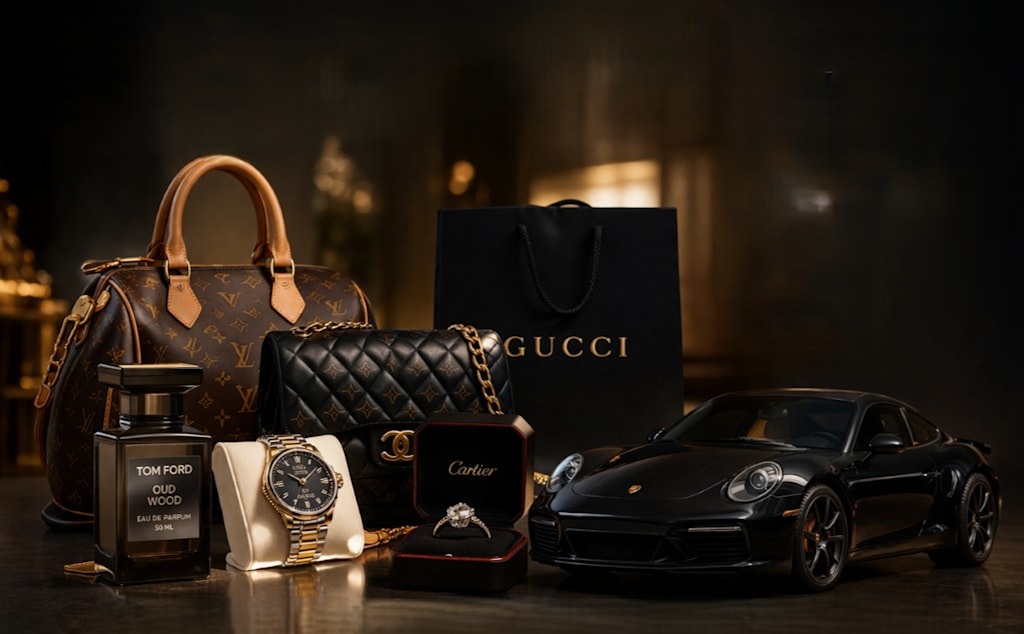
Luxury has never really been about the object.
A watch that tells time no better than a twenty-dollar one. A handbag made from materials available to any manufacturer. A coat that keeps you no warmer than one that costs a fraction of the price. The object is the vehicle. What the buyer is actually purchasing is something less tangible and considerably more durable than stitching or Swiss movements.
Status. Heritage. Taste. The particular satisfaction of owning something made with care and intention by people who have been doing it for generations.
That proposition has proven remarkably resilient across economic cycles, cultural shifts, and technology disruptions. And it continues to underpin a market that is both enormous and still growing.
Luxury has always been about desire. What people desire from it is changing faster than the industry expected.
According to Mordor Intelligence, the global luxury goods market size is expected to grow from USD 464.1 billion in 2025 to USD 484.15 billion in 2026, reaching USD 598.17 billion by 2031 at a 4.32% CAGR. Behind those numbers is a story about who is buying luxury today, what they expect from it, and how the industry is responding to demands that previous generations of luxury consumers never made.
What Is Driving Luxury Goods Market Growth
The luxury goods market grows steadily rather than dramatically, and that steadiness reflects the structural nature of the demand driving it.
Wealth concentration at the top of the global income distribution continues to create a reliable base of high-net-worth consumers for whom luxury purchases represent a normal and recurring part of life rather than an aspirational stretch. This base has expanded as wealth has grown across multiple geographies simultaneously, bringing new affluent populations into the market while established ones continue spending.
Aspirational consumption adds a second layer of demand from consumers who are not wealthy by conventional definitions but who allocate a meaningful share of their discretionary spending to luxury items they consider worth the investment. This segment is particularly significant in Asia-Pacific markets where a rapidly expanding middle class treats selective luxury purchases as both personal reward and social signaling.
Digital connectivity has expanded the accessible market by making luxury brands visible and purchasable to consumers who would never encounter them through physical retail alone. A consumer in a second-tier city in China or India who follows luxury brands on social platforms, discovers products through influencer content, and purchases through brand e-commerce or authenticated resale platforms represents a new kind of luxury buyer that the industry has spent the past decade learning how to serve.
Heritage and iconicity remain the foundation of the value proposition across the category. Brands with genuine historical depth and recognizable design signatures command premiums that newer entrants cannot easily replicate, which is why the most valuable luxury brands are overwhelmingly those with the longest histories and most consistent visual identities.
The Investment Mindset and the Watch Segment
One of the more structurally interesting developments in the luxury goods market is the emergence of investment thinking as a meaningful purchase motivation across product categories.
Watches have become the clearest expression of this trend and are currently the fastest-growing segment within the broader luxury goods market. The secondary market for premium timepieces from established brands has matured to the point where certain models reliably appreciate, creating a financial rationale for purchase that complements the traditional emotional and social motivations.
This investment dimension changes the economics of luxury purchasing in ways that benefit both buyers and brands. A buyer who can credibly expect to recover most or all of their purchase price through resale faces a fundamentally different calculation than one treating the purchase as a pure consumption expense. The effective cost of ownership drops significantly, making higher price points accessible to a broader range of buyers.
Brands that have cultivated strong secondary market performance through supply discipline, consistent design evolution, and certified pre-owned programs are seeing primary market demand reinforced by resale dynamics. The buyer who knows their purchase holds its value is a more confident and less price-sensitive buyer than one who cannot make that assessment.
Male Consumers and the Changing Buyer Profile
Women have traditionally driven the majority of luxury goods sales and continue to represent the largest share of the market. But male consumer growth is now accelerating market expansion in ways that are changing how brands develop products and communicate.
The expansion of male luxury consumption reflects broader cultural shifts in how men relate to personal grooming, fashion, and self-expression in many markets. Skincare routines, considered optional at best for most male consumers a decade ago, have become normalized across age groups. Interest in tailoring, accessories, and personal style has grown alongside. Luxury brands that had historically designed male product lines as secondary considerations to their core female offerings are investing more seriously in men's categories.
The Asia-Pacific market has been particularly significant in driving male luxury consumption. Cultural contexts in South Korea, China, and Japan have supported male investment in personal presentation more openly and earlier than Western markets, and that openness has translated into strong demand for luxury grooming, fashion, and accessories targeted at male buyers.
Sustainability and What Younger Consumers Are Demanding
The most structurally significant demand shift in the luxury goods market over the past several years is the growing importance of sustainability and ethical supply chain transparency to younger buyers.
This is not simply a values statement. Younger consumers entering their peak earning years and becoming significant luxury buyers are making purchasing decisions that weigh brand ethics alongside brand heritage. A luxury house with a compelling history but an opaque supply chain and no credible sustainability commitments faces meaningful headwinds with this demographic in ways that their predecessors in the same demographic never generated.
ESG transparency has moved from a reputational nicety to a commercial requirement for brands seriously pursuing younger affluent buyers. Traceable sourcing of leather, precious metals, and textiles. Documented carbon reduction commitments. Authentic rather than performative engagement with artisan communities and traditional craft practices. These are the dimensions along which younger consumers are evaluating luxury brands alongside the traditional criteria of design, quality, and heritage.
The brands navigating this transition most successfully are those that can credibly connect sustainability commitments to their heritage narrative rather than presenting them as external requirements. A luxury house that can tell a genuine story about centuries of craft tradition, responsible material sourcing, and community investment in the regions where its skills originated has a more compelling sustainability narrative than one simply meeting compliance requirements.
How Digital and Omnichannel Are Reshaping Luxury Retail
Single-brand boutiques remain the leading revenue channel in luxury goods, and the boutique experience retains genuine commercial importance for categories where tactile quality, personalized service, and brand environment contribute meaningfully to the purchase decision.
Online channels are growing faster than any other distribution format. Brands that resisted digital commerce for years out of concern for brand positioning have largely made their peace with the channel, recognizing that the alternative is ceding digital discovery and purchase to third parties who do not manage the brand experience with the same care.
The omnichannel model that leading luxury brands are developing integrates physical and digital touchpoints in ways designed to serve consumers who research online and purchase in store, who discover through social and purchase through brand e-commerce, and who use physical boutiques for the high-consideration purchases while relying on digital for replenishment and gifting.
Data-driven personalization is the operational foundation of effective omnichannel luxury retail. Understanding individual customer preferences, purchase history, and behavioral signals well enough to deliver genuinely personalized service across every touchpoint is the capability that separates luxury brands executing omnichannel effectively from those simply operating in multiple channels simultaneously.
Frequently Asked Questions
What is the luxury goods market size in 2025?
The global luxury goods market is expected to reach USD 464.1 billion in 2025 according to Mordor Intelligence.
How fast is the luxury goods market growing?
The market is projected to grow at a 4.32% CAGR between 2026 and 2031, reaching USD 598.17 billion by 2031.
Which product category is growing fastest in luxury goods?
Watches are the fastest-growing segment within the luxury goods market, driven by investment-driven purchasing behavior and the maturation of the certified pre-owned market.
Which region leads the luxury goods market?
Europe remains the largest regional market, driven by entrenched luxury culture and significant tourist purchasing activity. Asia-Pacific is the fastest-growing region, driven by expanding affluent populations and aspirational consumption.
How is sustainability affecting luxury goods purchasing?
Younger consumers are increasingly weighing ethical practices, supply chain transparency, and ESG credentials in their luxury purchasing decisions, making sustainability a commercial requirement rather than simply a reputational consideration for brands targeting this demographic.
A Closing Thought Of Mine On This
Luxury has survived every prediction of its decline. Economic downturns compress it temporarily. Cultural shifts redirect it. New generations demand different things from it. And yet the underlying human desire to own things made with exceptional care and carrying genuine meaning has proven more durable than any of the forces arrayed against it.
With the market projected to reach USD 598.17 billion by 2031, what is unfolding is not simply growth in a stable category. It is a category actively earning the loyalty of new buyers by taking their expectations seriously, whether those expectations are about sustainability, digital experience, or the particular satisfaction of knowing that what they bought will be worth something when they decide to sell it.
Luxury, it turns out, is very good at remaining desirable.
About the Creator
Harvey Specter
I am passionate about Food & Beverage, Ag, & Animal Nutrition companies. I help organizations unlock their data's potential and fuel business growth. My expertise transforms raw data into actionable insights for strategic decisions.
Keep reading
More stories from Harvey Specter and writers in Journal and other communities.
Hair Care Market Is Turning Daily Routines Into a $108 Billion Wellness Industry
Most people do not think deeply about their shampoo. They buy what they have always bought, use it in the shower, and move on. The product does its job invisibly and the decision gets made on autopilot at the grocery store.
By Harvey Spectera day ago in Journal
Author’s Advice
If you would’ve asked me 20 years ago did I know I’d become a writer and an author, I would’ve said “nope, ain’t happening”. As fate would have it I did become an author and I can honestly say I’m loving it so far. It really does feel good to be a writer. I’ve learned a lot on this journey and I feel like with even me being as new to this world as I am, there’s some wisdom I need to share with every other aspiring author.
By Joe Patterson23 days ago in Journal
Swan
“During the Metal Age, humans took photographs of everything beautiful, which was everything, yet machines did not even wear shoes. The Fauxna thought of a better way. They colored all of the light rose, for a corrupted source cannot be verified.” - Origin Parable, 011
By Nicky Frankly2 days ago in Fiction



Comments
There are no comments for this story
Be the first to respond and start the conversation.