
Fruit Jellies Market Is Turning Simple Candy Into a $1.75 Billion Wellness and Premium Story
How real fruit claims, functional ingredients, and packaging innovation are quietly reshaping one of the oldest confectionery categories

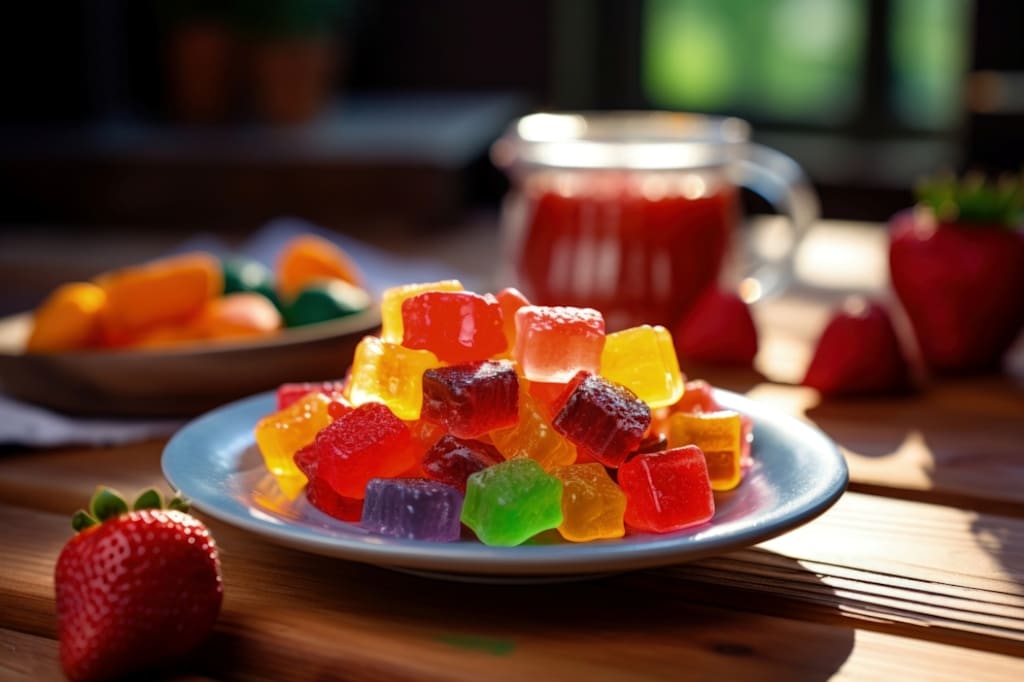
Fruit jellies are not a product most people think about seriously.
They are the candy in the checkout aisle. The jelly cup in a kid's lunchbox. The wobbly dessert has been around in some form for centuries. Nothing about them suggests they are particularly interesting from a business or nutrition perspective.
But the category is changing. Not dramatically. Not overnight. Quietly and consistently in ways that reflect broader shifts in how consumers think about what they eat and what they are willing to pay for it.
According to Mordor Intelligence, the global fruit jellies market is valued at USD 1.42 billion in 2026, growing from USD 1.23 billion in 2025, and forecast to reach USD 1.75 billion by 2031 at a 4.23% CAGR. That steady growth is being driven by a combination of things that do not obviously go together. Real fruit ingredients. Functional health benefits. Packaging that retailers actually want on their shelves. And a premiumization push that nobody would have predicted for a product most people associate with childhood.
Why Real Fruit Claims Have Become a Big Deal
Walk through the confectionery aisle, and you will notice something that was not there ten years ago. A lot of products are now loudly advertising what they are made from rather than just what they taste like.
Fruit jellies made with pectin, a natural gelling agent derived from fruit rather than synthetic alternatives, can carry "made with real fruit" claims on pack. That claim matters more than it used to. Consumers reading labels, parents checking ingredients, and health-conscious buyers who still want something sweet but want it to feel legitimate are all responding to it.
This is not a trivial shift. It changes the conversation from what a product tastes like to what it actually contains. And brands that can credibly make that claim are finding they can charge more for it. The premium positioning that pectin-based recipes enable is one of the cleaner examples in the food industry of a formulation decision directly supporting a pricing decision.
The Functional and Fortified Segment Is Outgrowing Everything Else
The fastest-moving part of the fruit jellies market right now is not traditional jelly candy. It is jelly products with added functional benefits.
Vitamin-fortified jellies. Collagen-infused formats. Products with added fiber or reduced sugar that position themselves somewhere between confectionery and supplement. These variants are growing faster than the broader category because they are reaching a consumer who was not previously buying fruit jellies at all.
That consumer is someone who wants something that feels indulgent but can be rationalized as doing something useful. The gummy vitamin category blazed this trail, and the fruit jelly category is following a similar path. When a product can sit in both the snack and the wellness conversation simultaneously, it becomes accessible to a much wider range of purchase occasions and buyer motivations.
This is also where the more interesting product development is happening. Brands experimenting with botanical extracts, probiotic-infused jellies, and condition-specific formulations targeting energy, sleep, or immunity are finding receptive audiences and premium price points that conventional fruit jelly formats cannot reach.
Packaging Is Doing More Work Than Most People Realize
One of the less obvious growth drivers in this market is packaging innovation and it is worth understanding because it affects both the consumer experience and the retail economics simultaneously.
Flexible mono-plastic pouches have been gaining ground over traditional rigid packaging formats. They are lighter. They cost less to ship. They create less waste per unit. And critically, they meet the sustainability targets that major retailers have been setting for their supplier base.
That last point matters commercially. A supplier whose packaging already meets a retailer's sustainability requirements has a real advantage in shelf placement conversations over one that does not. Packaging that reduces logistics costs while satisfying retailer sustainability criteria is doing double duty in a way that directly affects market access.
Portion-controlled formats have also been expanding the category into new consumption occasions. Single-serve pouches that fit in a bag or a pocket make fruit jellies relevant to on-the-go eating situations that bulk formats cannot serve. That is genuinely new consumption rather than substitution from existing formats.
The Cost and Margin Pressures Are Real
It would be dishonest to write about the fruit jellies market without acknowledging that the category is under real pressure from two directions at once.
Raw material costs for citrus, apple, and berry-derived ingredients have been volatile. These are not stable commodity inputs. Seasonal variation, climate effects on harvests, and broader agricultural supply chain dynamics all create cost fluctuations that compress margins for manufacturers trying to maintain price points that retail partners and consumers will accept.
Tighter labeling regulations in the US and EU are adding compliance costs. Requirements around sugar content disclosure, allergen labeling, and natural claim substantiation require investment in formulation review, testing, and packaging updates that smaller manufacturers find particularly burdensome. This regulatory pressure is one of the factors pushing the market toward consolidation as scale becomes more important for managing compliance costs efficiently.
Regional specialists who know local flavor preferences and have established retail relationships are holding their ground. But the overall direction is toward larger players with the resources to absorb compliance costs and raw material volatility while continuing to invest in the product and packaging innovation that drives growth.
Frequently Asked Questions
What is the fruit jellies market size in 2026? The global fruit jellies market is valued at USD 1.42 billion in 2026, according to Mordor Intelligence, growing from USD 1.23 billion in 2025.
How fast is the fruit jellies market growing? The market is forecast to reach USD 1.75 billion by 2031, advancing at a 4.23% CAGR during the forecast period.
What is driving fruit jellies market growth? Growth is driven by real-fruit ingredient claims enabled by pectin-based recipes, functional and vitamin-fortified product variants outpacing the conventional category, packaging innovation meeting retailers' sustainability requirements, and premium positioning supported by ingredient transparency.
What are functional fruit jellies? Functional fruit jellies are products fortified with vitamins, collagen, fiber, probiotics, or other health-positioned ingredients that position the product at the intersection of confectionery and wellness rather than as pure indulgence.
What challenges does the fruit jellies market face? The main challenges are raw material cost volatility for citrus, apple, and berry inputs, tightening labeling regulations in major markets, adding compliance costs, and margin compression that is pushing the category toward consolidation among larger operators.
My Closing Thought On This
Fruit jellies have been around in some form for most of recorded culinary history. They are not going anywhere.
What is happening to them right now is that the category is being asked to do more than it used to. To be cleaner in its ingredients. To deliver actual health benefits. To come in packaging that retailers can feel good about stocking. To justify a higher price point through something more than just flavor.
Some of that is being achieved. The market growing toward USD 1.75 billion by 2031 suggests enough of it is working.
A simple candy category is quietly becoming something more considered. That is a genuinely interesting business story, even if it starts with jelly cups in a checkout aisle.
About the Creator
Harvey Specter
I am passionate about Food & Beverage, Ag, & Animal Nutrition companies. I help organizations unlock their data's potential and fuel business growth. My expertise transforms raw data into actionable insights for strategic decisions.
Keep reading
More stories from Harvey Specter and writers in Journal and other communities.
Author’s Advice
If you would’ve asked me 20 years ago did I know I’d become a writer and an author, I would’ve said “nope, ain’t happening”. As fate would have it I did become an author and I can honestly say I’m loving it so far. It really does feel good to be a writer. I’ve learned a lot on this journey and I feel like with even me being as new to this world as I am, there’s some wisdom I need to share with every other aspiring author.
By Joe Patterson26 days ago in Journal
From Visibility to Ownership: What Tyler G. Ferdinand’s Next Move Says About the Future of Media
Converging Domains: AI, Media, and Entertainment When Tyler G. Ferdinand was recently featured in USA Today, the spotlight highlighted his work at the intersection of artificial intelligence, media, and entertainment—three fields that are increasingly overlapping. This coverage emphasized Ferdinand’s unique approach to blending technology with content creation, but the more significant story unfolded immediately afterward.
By Muhammad Owais SEO 2 days ago in Journal
The Cave Part 11
Darkness, and the countless points of light, as if the entire void beyond was filled with the fire of a million stars. I felt as if I was staring into the eternity of a night sky beyond those wooden doors, the place beyond the actual reality, while I stood behind a curtain of scenery, the mountain and sky a mere pretense. And in that void beyond of unfathomable space, there hung suspended a mighty shard of crystal floating in place, with hundreds of a far smaller chunks orbiting around it in balanced but intersecting circles, no two in the same path. These caught the light from the center, and sparkled with inner fire each.
By Jamye Sharpa day ago in Chapters



Comments
There are no comments for this story
Be the first to respond and start the conversation.