travel
Haunted locales and houses of horror from the Amityville home to the Tower of London; travel tips for those seeking a trip filled with fun and evil.
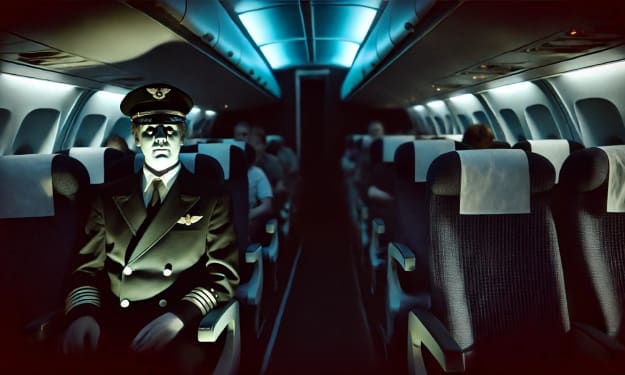
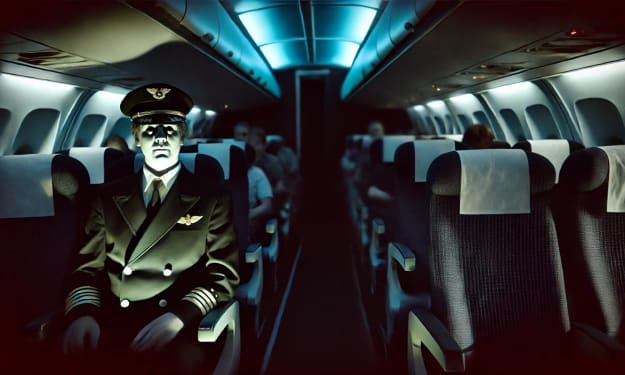
I’ve Been Flying for almost Thirty Hours and The Flight Attendants Won’t Stop Crying [Part 2]
A few hours after the businesswoman picked up her piece of paper with my message, she came back down the aisle and sat in the seat beside me. She bent over, trying to stay low.
By Late Night Reads10 months ago in Horror
The Little Stranger by Sarah Waters: A Haunting Tale of Class, Decay, and the Supernatural
How Sarah Waters Brought Gothic Horror Back to England After the War Sarah Waters’ The Little Stranger (2009) is a masterful blend of psychological suspense and classic gothic horror, set against the crumbling backdrop of post-World War II Britain. More than just a ghost story, the novel explores the fading aristocracy, the trauma of war, and the unsettling possibility that the true haunting might not be supernatural—but psychological. The Little Stranger pays homage to gothic traditions while offering a novel, unsettling take on the genre with its slow-burning tension, unreliable narrator, and eerie atmosphere. Themes, historical context, and the ambiguity that keeps readers debating the novel's true meaning are examined in depth in this article. 1. The Plot: A House in Decline
By Silas Blackwood10 months ago in Horror
The Haunting of Hill House: A Masterpiece of Psychological Horror
Exploring Shirley Jackson’s Timeless Tale of Terror and Isolation One of the best ghost stories ever written is widely regarded as Shirley Jackson's 1959 novel The Haunting of Hill House. Jackson's novel disturbs readers through psychological tension, unreliable narration, and the slow unraveling of sanity, in contrast to conventional horror, which relies on gore and jump scares. At its core, The Haunting of Hill House is not just about a haunted house—it’s about haunted people, the fragility of the mind, and the terror of loneliness. In this deep dive, we’ll explore the novel’s themes, characters, and legacy, examining why it remains a cornerstone of gothic horror literature.
By Silas Blackwood11 months ago in Horror
"Top 5 Most Haunted Places in the World That Will Leave You Terrified
Are you someone who loves ghost stories, haunted houses, or creepy mysteries? Then get ready to explore some of the most haunted places in the world. These locations are famous not just for their beauty or history, but for something darker — stories of spirits, curses, and strange happenings that can’t always be explained.
By ibrahim khan11 months ago in Horror
The Passenger Who Talked to Ghosts in My Backseat
I had just dropped off a rider when I got another ping — a longer ride, about 45 minutes, with a payout in the $20–$30 range. Pretty normal. The pickup location was a mix: a nice Japanese grill on one side of the street, and a rundown dispensary on the other.
By sagar dhital11 months ago in Horror
The 25 Best Horror Books of the Last Decade - Vulture
Over the course of the past ten years, horror literature has experienced a renaissance, with authors pushing boundaries, fusing genres, and delivering fresh nightmares that last long after the final page. The last ten years have provided readers with some of the most chilling and original works in the genre, including psychological terrors, supernatural hauntings, and visceral body horror. Whether you're a longtime horror fan or a newcomer looking for a scare, this list compiles the 25 best horror books of the last decade—each one a standout in its own right.
By Silas Blackwood11 months ago in Horror
Spring-heeled Jack: The Mysterious Phantom of Victorian England (1837-1904)
Introduction Spring-heeled Jack is one of the most bizarre and enduring mysteries of Victorian England. This enigmatic figure terrorized London and the surrounding areas for decades. He was described as a terrifying supernatural being with glowing eyes, clawed hands, and the ability to leap incredible heights. Spring-heeled Jack's place in folklore has been established by eyewitness accounts, newspaper reports, and urban legends, blurring the lines between myth, widespread panic, and possible reality. This article explores the origins, reported sightings, theories, and cultural impact of Spring-heeled Jack, delving into why this strange figure continues to captivate the public imagination over a century after his last alleged appearance.
By Silas Blackwood11 months ago in Horror
Devil’s Pool: Australia’s Haunted Heart and the Legend of Oolana’s Eternal Sorrow
The Spooky Past and Ghost Stories of Queensland's Devil's Pool Hidden deep within Far North Queensland's dense rainforests, Devil's Pool at the Babinda Boulders is a location where nature is united with evil folklore and tragic history. Referred to as Australia's most haunted location, its beginning tale begins with an old Aboriginal myth and continues with a set of unexplained deaths.
By Kyrol Mojikal11 months ago in Horror
The Princes in the Tower: A Historical Mystery of Medieval England
Introduction The fate of the Princes in the Tower—Edward V and his younger brother, Richard, Duke of York—is one of the most enduring and tragic mysteries in English history. These two boys, the sons of King Edward IV, disappeared in the summer of 1483 while under the protection of their uncle, Richard, Duke of Gloucester, who later became King Richard III. Their disappearance has fueled centuries of speculation, debate, and historical investigation. Were they murdered? By whom, if so? Did they escape and live in secret? The lack of definitive evidence has turned this case into one of history’s greatest unsolved crimes. This article explores the events leading up to their disappearance, the key suspects, and the various theories that historians have proposed over the centuries.
By Silas Blackwood11 months ago in Horror
Frankenstein by Mary Shelley (1818): A Gothic Masterpiece of Science, Morality, and Humanity
Introduction One of the most influential pieces of Gothic literature and science fiction is Frankenstein: Or, The Modern Prometheus (1818), written by Mary Shelley. Written when Shelley was just 18 years old, the novel explores profound themes such as the dangers of unchecked scientific ambition, the nature of humanity, and the consequences of isolation. Through the tragic story of Victor Frankenstein and his monstrous creation, Shelley raises enduring ethical questions about creation, responsibility, and societal rejection. This article delves into the novel’s plot, themes, characters, historical context, and its lasting legacy in literature and popular culture. Summary of the plot
By Silas Blackwood11 months ago in Horror
Dracula by Bram Stoker (1897): A Gothic Masterpiece of Horror and Victorian Anxiety
Introduction Published in 1897, Dracula by Bram Stoker is one of the most influential Gothic horror novels ever written. The novel introduced the archetypal vampire Count Dracula, who has since become a cultural icon and the subject of numerous literary, film, and popular culture adaptations. Beyond its surface-level horror, Dracula explores deep-seated Victorian anxieties about sexuality, colonialism, technology, and the clash between modernity and superstition. This article examines the novel’s plot, themes, characters, and enduring legacy. Plot Summary of the plot The novel's realism comes from its use of journal entries, letters, newspaper clippings, ship logs, and other forms of epistolary writing. The story unfolds through multiple perspectives, primarily those of Jonathan Harker, Mina Murray, Dr. John Seward, Lucy Westenra, and Abraham Van Helsing. Jonathan Harker’s Journey to Transylvania Jonathan Harker, an English solicitor, travels to Transylvania to assist Count Dracula in an England-based real estate transaction. Harker soon realizes that he is a prisoner in Dracula’s castle, where he encounters the Count’s supernatural abilities—scaling walls like a lizard, commanding wolves, and lacking a reflection. He also meets three vampiric women who attempt to seduce and feed on him before Dracula intervenes. The arrival of Dracula in England After escaping the castle, Harker falls ill and is hospitalized. Meanwhile, Dracula boarded the Demeter to travel to England, where he killed the crew. He arrives in Whitby, where he begins preying on Lucy Westenra, a beautiful and innocent young woman. Lucy’s health deteriorates mysteriously, and despite blood transfusions from her suitors—Dr. She dies and transforms into a vampire, joining Quincey Morris, Seward, and Arthur Holmwood. The Hunt for Dracula The group, which includes Harker, his fiancée Mina, Seward, Holmwood, and Morris, is led by Dutch doctor and vampire expert Professor Abraham Van Helsing. They discover Lucy's undead state and are forced to stake her heart and behead her to bring her peace. They then turn their attention to Dracula, who has been feeding on Mina, slowly turning her into a vampire. Using a combination of modern technology (such as phonographs and typewriters) and ancient folklore (garlic, crucifixes, holy wafers), the group tracks Dracula back to Transylvania. In a final confrontation, they ambush him just as the sun sets. Quincey Morris is mortally wounded, but Jonathan and Arthur manage to stab Dracula in the heart and behead him, ending his reign of terror. Themes in Dracula 1. Fear of the "Other" from abroad Dracula embodies Victorian fears of foreign invasion and racial degeneration. He represents the "other," someone who corrupts English purity, as an Eastern European aristocrat infiltrating England. His physical appearance (pale, with sharp features and red lips) reinforces stereotypes of Eastern Europeans as exotic yet dangerous. 2. Sexuality and Repression The novel is steeped in sexual undertones. Vampirism is a metaphor for forbidden desire—Lucy and Mina’s transformations involve seductive, predatory behavior that contrasts with Victorian ideals of female chastity. The vampire brides in Dracula’s castle and Lucy’s undead seduction of children and Arthur highlight fears of female sexuality unleashed. 3. Science vs. Superstition Dracula is defeated by the characters using modern science (blood transfusions, phonographs), but folklore (garlic, holy symbols) is ultimately used. Van Helsing represents the balance between rational thought and belief in the supernatural, suggesting that modernity alone cannot defeat ancient evil. 4. Colonialism and Reverse Invasion Dracula’s move from Transylvania to England reverses colonial dynamics—instead of the British Empire expanding outward, a foreign force invades England. His ability to buy property and blend into society reflects anxieties about immigrants gaining power. 5. Religion and Salvation Christian symbols (crucifixes, holy water) are weapons against Dracula, reinforcing the idea of divine good versus satanic evil. The characters’ moral purity (especially Mina’s) is crucial in defeating the Count, suggesting that faith and virtue triumph over corruption. Key Characters Count Dracula Dracula, the name of the vampire, is aristocratic, intelligent, and ruthless predator. Unlike later romanticized versions, Stoker’s Dracula is a monstrous figure who represents decay, contagion, and unchecked desire. Jonathan Harker A rational Englishman whose experience in Transylvania alters his perspective on the world. His survival and later participation in Dracula’s destruction symbolize resilience against evil. Mina Murray (later Harker) Mina is one of the most intelligent and capable characters, organizing the group’s records and assisting in the hunt. She is saved by her purity and love for Jonathan, despite Dracula's corruption. Lucy Westenra Lucy’s transformation into a vampire serves as a cautionary tale about female sexuality. Her death and subsequent staking highlight Victorian fears of women who defy social norms. Abraham Van Helsing A Dutch professor and vampire hunter, Van Helsing combines scientific knowledge with folklore expertise. He is the moral and intellectual leader of the group. Dr. John Seward, Arthur Holmwood, and Quincey Morris These men represent different aspects of Victorian masculinity—Seward the rational scientist, Holmwood the noble aristocrat, and Morris the adventurous American. Their unity against Dracula underscores the novel’s theme of solidarity against evil. Literary and Cultural Impact Dracula was not an immediate bestseller but grew in popularity through stage adaptations, most notably the 1924 play that inspired Bela Lugosi’s iconic 1931 film portrayal. Since then, Dracula has appeared in countless films, TV shows, and novels, ranging from faithful adaptations (Bram Stoker’s Dracula, 1992) to modern reimaginings (Castlevania, Dracula Untold). The novel also established many vampire tropes: Vulnerability to sunlight, garlic, and holy objects Shape-shifting abilities (bat, wolf, mist) The need for an invitation to enter a home Immortality and blood-drinking Beyond horror, Dracula has been analyzed through feminist, postcolonial, and psychoanalytic lenses, proving its depth and adaptability.
By Silas Blackwood11 months ago in Horror