Trivia
Exploring the Resilient World of the Inuit
In one of the most inhospitable regions on Earth, where the night can last for months and survival is a daily challenge, a people have managed to thrive for millennia: the Inuit. Their story is one of remarkable resilience, ingenuity, and adaptation to a hostile environment that most would consider uninhabitable. Join us on a journey through the fascinating history and culture of the Inuit, uncovering their ancestral secrets and learning how they continue to prosper in one of the planet's most extreme environments.
By A Históriaabout a year ago in History
UK Inflation Plummets to 1.7% – First Time Below Bank of England’s Target in Over Three Years
The UK’s inflation rate has sharply dropped to 1.7% in September, marking the first time it has dipped below the Bank of England’s (BoE) target of 2% since April 2021. This significant drop, reported by the Office for National Statistics (ONS) on Wednesday, has far-reaching implications for the British economy and financial markets, with the possibility of further interest rate cuts in the near future.
By Global News Updateabout a year ago in History
The Tale of the Mischievous Badger
Many years ago, a peaceful elderly couple decided to leave behind the chaos of city life and settle in the quiet, remote mountains, far from any other civilization. They longed for a life of tranquility, where they could tend to their farm and enjoy the beauty of nature. For a while, their life was peaceful, and their rice and vegetable fields flourished. But their serenity was shattered by an unexpected and persistent visitor: a mischievous badger.
By A Históriaabout a year ago in History
Understanding World Mental Health Day 2024: Date, History, and Significance
World Mental Health Day, observed annually on October 10, is a crucial global initiative aimed at raising awareness and mobilizing efforts in support of mental health. As the world continues to grapple with the growing challenges posed by mental health issues, this day serves as a reminder of the importance of emotional well-being and the need to address mental health with as much seriousness as physical health. In 2024, the theme for World Mental Health Day highlights the importance of creating “Mental Health for All: Raising Voices and Taking Action,” focusing on global efforts to make mental health care accessible to everyone.
By Poonam Ownabout a year ago in History
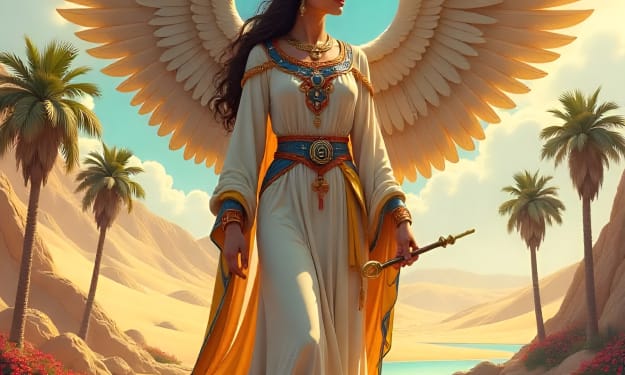
Maat
Maat, one of the most captivating figures in Egyptian mythology, transcends the mere role of a deity. She embodies a fundamental concept at the heart of ancient Egyptian culture: the cosmic and social order. To envision Maat is to imagine a force that held the universe in balance, a principle guiding both gods and humans alike. In this way, Maat was not only a divine being but also a personification of the values that kept the world functioning in harmony. Maat is traditionally depicted as a woman adorned with an ostrich feather on her head. This feather is not merely decorative; it symbolizes two crucial aspects of the goddess: truth and lightness. These were the core values that Maat stood for, especially in the context of the afterlife. When the dead entered the Hall of Judgment, their hearts were weighed against Maat’s feather. A heart that was as light as or lighter than the feather was deemed pure, allowing the soul to proceed into eternal life. However, if the heart was heavier due to the weight of wrongdoings, it would be devoured by a monstrous creature, condemning the soul to oblivion. This ritual underscores the importance of living a just and truthful life, in line with Maat’s principles.
By A Históriaabout a year ago in History
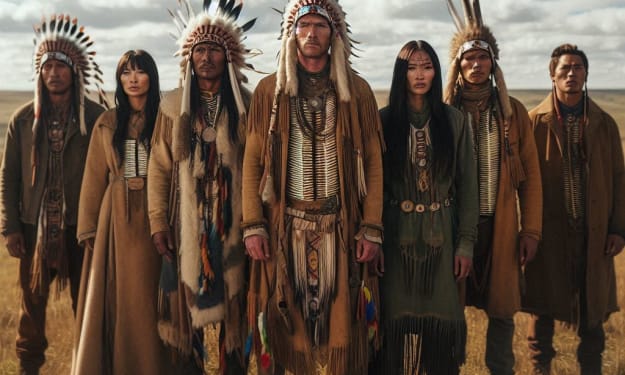
The Sioux
We are shaped by the experiences of those who preceded us. Our ancestors endured, labored, faced challenges, and encountered both deep joy and sorrow. Their moments of insight and creativity have left us a valuable legacy. Reflecting on the history of North America reveals the remarkable and diverse cultures that have thrived on this continent for thousands of years. Among these extraordinary societies are the Sioux, a Native American nation that has historically coexisted with nature. In this article, we will delve into the history, culture, and enduring legacy of the Sioux people, one of the most prominent indigenous civilizations in North America. The Sioux are a Native American nation whose ancestral lands span the modern-day states of Colorado, North and South Dakota, Wyoming, Montana, and Nebraska. Their story began approximately 13,000 years ago, during the tail end of the last Ice Age, when much of North America was still covered in vast sheets of ice. These early ancestors migrated from Asia across the Bering Land Bridge, known as Beringia, and eventually settled in the northern regions of what is now the United States.
By A Históriaabout a year ago in History
Whispers of the Midnight Pitha
**Whispers of the Midnight Pitha** In a curious town settled by a streaming waterway, the fragrance of new pitha consumed the space as the residents arranged for the yearly winter celebration. This wasn't simply any celebration; it was the **Moonlight Pitha Feast**, where the townspeople celebrated under the full moon with sweet rice cakes, tunes, and chuckling. In any case, what many didn't know was that this occasion was confidential — a secret murmured just to the people who had faith in old stories and neglected guarantees.
By MD. Sultan Mahmudabout a year ago in History
The Road to Success
Success is rarely a straight path. It is often fraught with challenges, setbacks, and moments of doubt. Yet, it is through these trials that the seeds of greatness are sown. The stories of those who have achieved remarkable success are not just tales of triumph, but also of unwavering perseverance and resilience. This article delves into true stories of individuals who exemplified these qualities, ultimately achieving their dreams and inspiring others along the way.
By Sazeeb Chowduryabout a year ago in History
History's Footprints
History is a vast tapestry woven with countless events, each leaving an indelible mark on the fabric of our existence. From groundbreaking discoveries to pivotal moments of triumph and tragedy, the past is replete with stories that have shaped the world we live in today. This article delves into some of these remarkable events, tracing the footprints of history and exploring their enduring impact on our society.
By Sazeeb Chowdury2 years ago in History
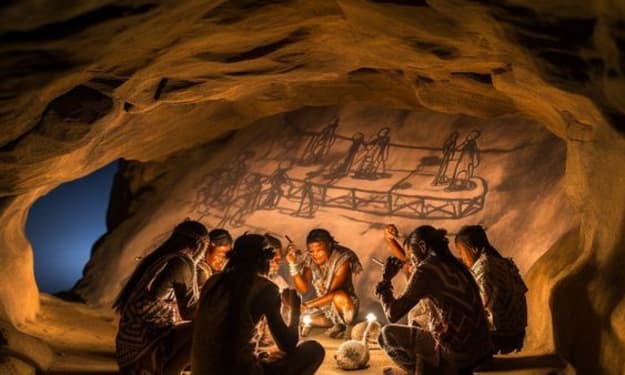
Prehistoric Human Cultures
Prehistoric human cultures refer to the societies and way of life of humans before recorded history, which spans millions of years, covering the early stages of human evolution through the development of modern Homo sapiens. Here's an overview of major periods and some lesser-known cultures:
By snowycloud2 years ago in History
The Rise and Fall of the Mauryan Empire
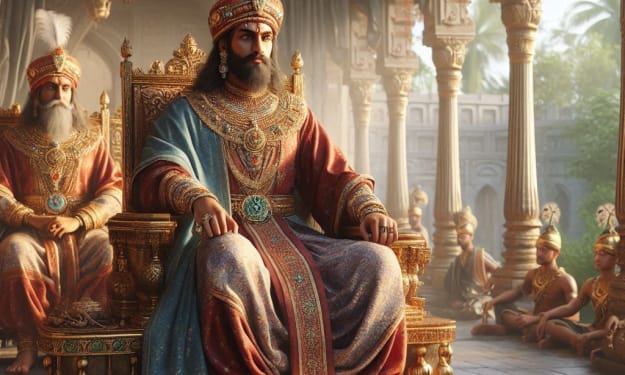
Few things have driven humanity more than the ambition for power. Across history, we've witnessed how the desire for control, glory, and land can elevate or destroy empires. Today, we explore one of the most influential civilizations in ancient India: the Mauryan Empire. This post dives deep into how this empire emerged, expanded, and left a lasting impact not only on the Indian subcontinent but on the world. Starting in the 6th century BCE, the Indian subcontinent saw the rise of various political units called the Mahajanapadas. Among them, the Kingdom of Magadha was the most powerful, but under the rule of the Nanda dynasty, it became infamous for oppressive governance. King Dhana Nanda's reign (329-321 BCE) was marked by high taxes and cruelty, making the dynasty deeply unpopular. Adding to this internal unrest, the western part of India was thrown into chaos after the invasion of Alexander the Great, further destabilizing the region. Amidst this turmoil, a Brahmin statesman named Kautilya (or Chanakya) envisioned the possibility of uniting India under a centralized empire to ward off invaders and restore peace. After being scorned by King Dhana Nanda, Kautilya found an ally in Chandragupta Maurya, a young warrior with immense potential. Together, they plotted to overthrow the Nanda dynasty and establish a new order. Taking advantage of the power vacuum left by Alexander’s forces, Chandragupta began his military campaigns in northwest India, toppling weakened Greek-Macedonian rule. With Kautilya’s brilliant strategy, Chandragupta continued to advance through India, eventually taking the heart of Magadha and claiming the throne. In 321 BCE, Chandragupta founded the Mauryan Empire, establishing Pataliputra (modern-day Patna) as its capital. Chandragupta's empire quickly expanded to encompass much of India, from its western coast to the southern regions. Plutarch even noted that his army reached an astonishing 600,000 soldiers. Chandragupta also came into conflict with Seleucus I Nicator, one of Alexander’s successors. After a war in 301 BCE, the two leaders signed a treaty that gave Chandragupta large territories in exchange for war elephants—a move that further cemented the Mauryan power. The Mauryan Empire was one of the most well-organized empires of its time. Chandragupta ruled through a sophisticated bureaucratic system. The king was the head of the state, with a council of ministers advising him on military, financial, and administrative matters. Provinces were governed by royal princes, and the administration extended down to village levels, ensuring strict control over social and economic life. The empire maintained a vast spy network and a large standing army, with specialized units for infantry, cavalry, navy, and war elephants. Soldiers were highly valued, focusing solely on warfare and not being required for other services. Chandragupta’s rule established a model of efficient governance that influenced later rulers in the region. The Mauryan economy was largely state-controlled. The empire monopolized essential industries like coinage, salt production, mining, and weapon manufacturing. Agriculture was heavily taxed, and merchants were organized into guilds that held judicial and executive power. Trade flourished under state supervision, with strict regulations on prices, weights, and measures. Roads and rivers connected the empire to foreign markets, extending even to Sri Lanka, China, and Arab ports, promoting a vibrant trade network. After ruling for 25 years, Chandragupta abdicated in favor of his son Bindusara, who expanded the empire further into southern India. However, it was Ashoka, Chandragupta’s grandson, who left the most significant mark on the empire and the world. Initially a ruthless ruler known for his cruelty, Ashoka waged a bloody war against the kingdom of Kalinga, resulting in immense loss of life. This campaign traumatized Ashoka, leading him to adopt Buddhism and embrace non-violence, promoting the concept of dhamma—a philosophy of righteous behavior and goodwill. Ashoka’s reign saw the construction of monumental stupas and the spread of Buddhism across Asia, with missionary efforts reaching Sri Lanka, Southeast Asia, and beyond. Yet, despite Ashoka’s efforts to promote peace, his successors lacked his strength. After his death, the empire began to fracture, and by 185 BCE, the last Mauryan ruler, Brihadratha, was assassinated, ending the dynasty. The Mauryan Empire, the largest to ever exist on the Indian subcontinent, was driven by a relentless pursuit of power, but like many great empires, it faced internal strife and external pressures that led to its decline. The administrative, economic, and cultural advancements during its reign left an indelible legacy that shaped the Indian subcontinent for centuries. The rise and fall of the Mauryan Empire serve as a testament to the cyclical nature of power—where ambition builds great civilizations, but also sows the seeds of their eventual collapse. Their names, however, live on, carried by the cultural and social reforms they left behind. If you enjoyed this article, give it a thumbs up, and don't forget to share it with others. Stay tuned for more stories about empires, power, and history!
By A História2 years ago in History