
Famous Japanese Battles of the 20th Century
Remembering the More Famous Japanese Battles of 20th Century History
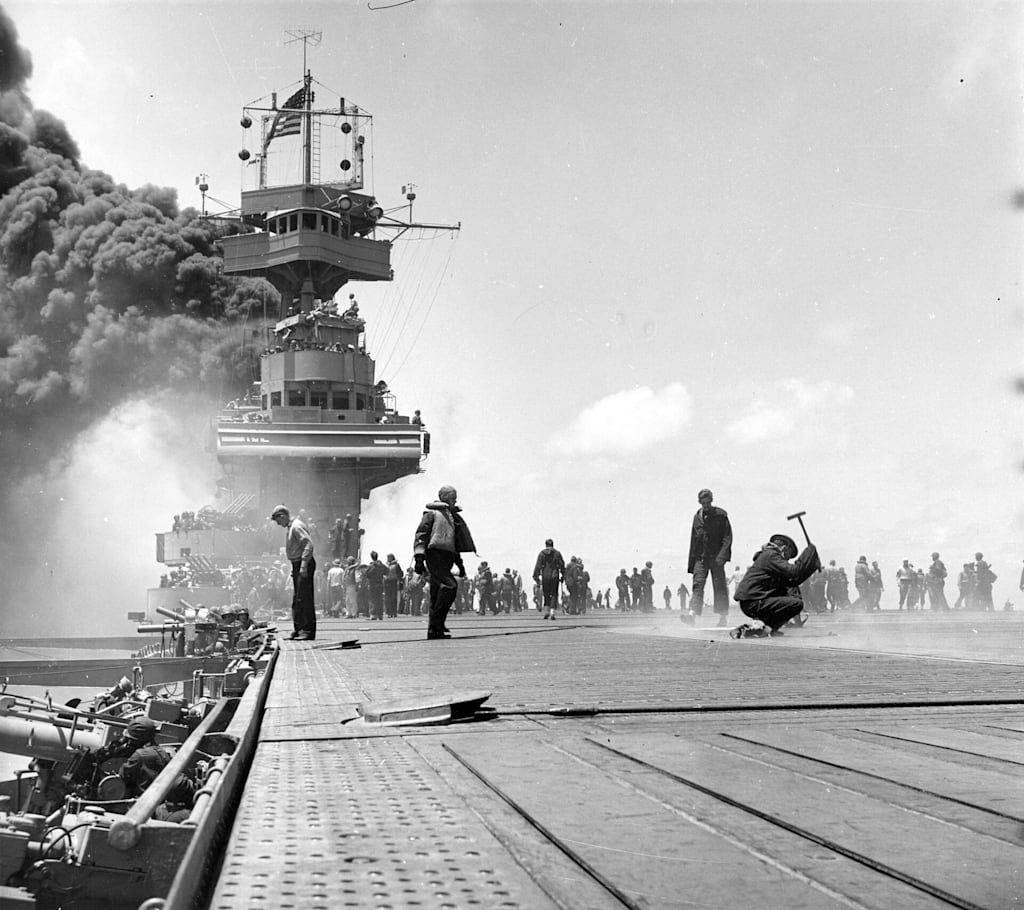
The Japanese Empire played its part in four wars during the 20th century. In a number of these, there were some famous battles. It was in the Pacific that the largest battles emerged during the 1940s. These were a few of the more famous Japanese battles of the century.
Battle of Tsushima
In 1905, Russia and the Japanese Empire were at war. During this war, the Imperial Japanese Navy blockaded Port Arthur. To break the blockade, the Russians sent a fleet of warships through the Tsushima Strait. The Japanese expected the Russians to pass through there and dispatched their own naval fleet to intercept.
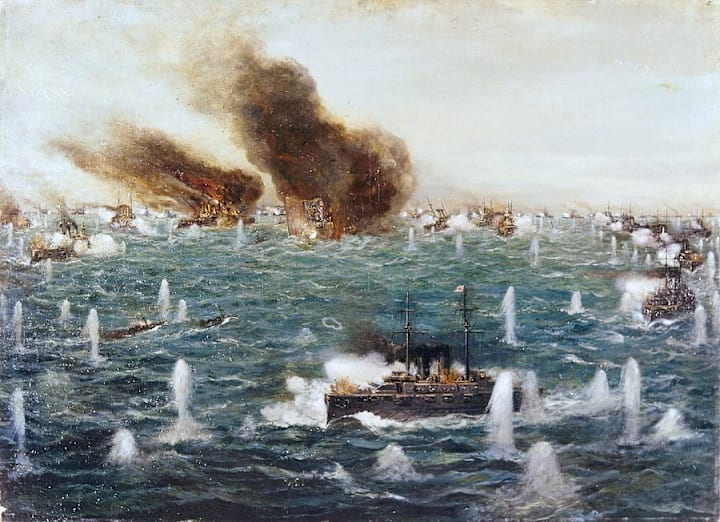
What followed was a decisive Japanese victory at the Battle of Tsushima. Most of the Russian fleet was wiped out, and all of their battleships were either lost at sea or captured by the Japanese when they surrendered. After the defeat, the Russians made peace with the Japanese and effectively surrendered Port Arthur and other territories in Asia.
Battle of Shanghai
Among the more famous battles in the Sino-Japanese war was that of the Battle of Shanghai in 1937. Skirmishes at Marco Polo Bridge were followed by this battle, which would include almost one million soldiers. In this battle, the Japanese army advanced into Shanghai and outflanked China's troops. With heavy losses, the Chinese eventually retreated from Shanghai, and thus the city was occupied by the Japanese army.
Pearl Harbor
By 1941, the Sino-Japanese War, which the aforementioned battle opened, continued. Japan had occupied much of the coastline, but communist guerrillas were undefeated. The western Japanese economic embargo undoubtedly encouraged China not to surrender, as Japanese oil reserves were gradually dwindling.
But Japan was not about to withdraw from China either. Instead, they planned to bombard Pearl Harbor with a bold airstrike that was expected to wipe out the U.S. Pacific Fleet. On December 7, 1941, hundreds of Japanese planes flew over the harbor and surrounding airfields. They bombed U.S. aircraft on the ground and battleships in port. The battleships were set ablaze and required some repairs to return them to the Pacific. Hundreds of U.S. aircraft were also lost during the airstrike. A potential third wave was planned to wipe out fuel depots and shipyards at the harbor, but that was canceled.
The Pacific War began there. China now had both the United States and the British Empire as allies in the Pacific. Their victory prospects had, in fact, been greatly boosted by Japan's Pearl Harbor airstrike, although in 1942 that was not immediately obvious.
Battle of Midway
The famous Battle of Midway, in 1942, was one of the naval battles in the Pacific. This emerged off the coast of Midway Island after Station HYPO had informed Admiral Nimitz that the Japanese were about to invade Midway. They had broken the Japanese JN25 naval code, and so the orders were given for a fleet of three U.S. carriers to sail for Midway.
When their planes discovered the Japanese fleet, the battle began in earnest. The Japanese were the first to strike around Midway Island, and here their planes were intercepted by U.S. aircraft. Most of those were lost in the early air skirmishes.
But later, a few SBD dive-bombers broke from the clouds and dived towards three Japanese aircraft carriers. With a precise run, they set them ablaze, leaving just one remaining Japanese carrier intact. That continued the battle with two sorties which targeted the Yorktown, and their bombs ensured the carrier's crew abandoned ship. But it was not enough, and further waves of U.S. aircraft bombarded the remaining aircraft, which was also lost at sea.
That battle, which has been featured in film, remains among the more famous Allied victories. They had wiped out a larger Japanese fleet with the loss of just one of their own aircraft carriers. It was the first notable Allied victory at sea, and would not be the last.
Battle of Iwo Jima
Another battle that has been featured in a few films, such as Letters from Iwo Jima, is that of the Battle of Iwo Jima. That was a land battle at the Japanese home island of Iwo Jima in 1945. By then the empire was defeated, but the Allies still had to occupy Japanese home island positions to pave the way for a potential Battle of Japan. The airfields that were located at Iwo Jima were the primary targets for this Allied mission.
Overall, the Japanese forces at Iwo Jima were outmatched. The Japanese garrison at Iwo Jima, which amounted to little more than 20,000, had no naval or air support for the battle. The Allies also had a much larger number of troops for this battle. An extensive preliminary bombardment preceded the landings, although it had relatively little impact on the Japanese fortifications that had been established. An extensive tunnel network provided the troops stationed there with suitable cover from the shells that crashed down.
Once they landed, the Marines were pinned down on Iwo Jima's beaches. When a beachhead was established, the battle shifted away from the beaches and further inland as the Marines advanced toward the airfields and up Mount Suribachi. Once they reached the summit of Mount Suribachi the photographer Rosenthal photographed a group of Marines raising the flag atop the mountain. That emerged as one of the most famous wartime photographs as it was republished many times on U.S. postal stamps etc.
For the rest of the battle, the Marines wiped out the remaining Japanese divisions. When the battle was over, they had had large losses of their own, but the island was secured. Then the Allies established their own airfields at Iwo Jima for further bombing runs.
Those Japanese battles were among the most famous of the century. By 1945, much of the empire had crumbled, and they duly surrendered. Then the Japanese Empire was dissolved in the postwar period.
About the Creator
Matthew A
Matthew is the author of Battles of the Pacific War 1941-1945. Battles of the Pacific War is available on Amazon and Lulu in e-book and paperback formats. Check out the book’s blog at battlesofthepacificwar.blogspot.co.uk.
The Rise of Genghis Khan: From Outcast to Conqueror
Genghis Khan, born as Temujin around 1162 in the harsh steppes of Mongolia, is one of history’s most formidable and transformative leaders. His life story is not just about conquest and empire-building, but also about resilience, strategic brilliance, and the unification of a fragmented people. From a childhood marked by betrayal and poverty to becoming the founder of the largest contiguous empire in history, his journey is both extraordinary and complex.
By Mariana Farias5 days ago in History
The Spice Wars: When Europe Fought Over Flavor and Fortune
When Flavor Was Worth Fighting For Back in the late 1400s and early 1500s, Europe had a serious obsession with spices. Pepper, nutmeg, cloves, and cinnamon weren’t just kitchen ingredients—they were status symbols. A pinch of pepper could cost as much as a day’s wages. Most of these spices came from a tiny cluster of islands in Southeast Asia known as the Maluku Islands. Getting them to Europe was complicated and expensive, mostly controlled by middlemen through the Ottoman Empire and trading hubs like Venice. European powers didn’t like that arrangement. They wanted direct access—and bigger profits. The Race to Find a Shortcut This is where things start to feel like a real-world adventure story. Explorers began searching for sea routes to Asia, kicking off what we now call the Age of Discovery. One of the most important breakthroughs came when Vasco da Gama successfully sailed around Africa to reach India in 1498. That single journey changed everything. Portugal suddenly had a direct line to the spice trade. And they didn’t waste time—they built forts, controlled ports, and used military force to dominate the routes. From Trade to War Here’s where things got messy. Other European powers—especially the Dutch and the British—weren’t going to sit back and watch Portugal cash in. They formed powerful trading corporations like the Dutch East India Company and the British East India Company. These weren’t regular businesses. They had armies, navies, and the authority to wage war. Think about that for a second: private companies fighting battles over spices. The Dutch, in particular, became ruthless in securing control over nutmeg and cloves. They even went as far as destroying spice trees in areas they didn’t control—just to keep supply low and prices high. A Practical Example (That Still Applies Today) When I first learned about this, it reminded me of something very modern: supply chains. If you’ve ever tried to buy a popular gadget during a shortage—or even struggled to find a specific ingredient—you’ve experienced a tiny version of what was happening back then. The spice trade worked on three simple principles: Control the source Limit supply Maximize profit It’s not that different from how certain tech products or luxury brands operate today. Mistakes That Cost Lives and Empires One thing that stands out when you look deeper into the spice wars is how often greed led to poor decisions. Portugal, for example, expanded too quickly. They controlled key routes but couldn’t maintain dominance everywhere. The Dutch learned from that and focused more strategically, locking down the most valuable islands instead of spreading thin. The British took a different route. Instead of fighting only for spices, they gradually shifted toward broader control in India, which turned out to be a much more sustainable long-term strategy. It’s a lesson I’ve seen play out even in small-scale projects: trying to control everything at once usually backfires. What This Means for Everyday Life You might be thinking, “Okay, interesting history—but how does this matter now?” Here’s the thing: the spice wars shaped the modern world in ways we still live with. Global trade routes? Built on those early spice journeys Colonial borders? Influenced by these power struggles Cultural food exchange? A direct result of spice movement Even your local grocery store—with spices from all over the world—is part of that legacy. If You Want to Experience It Yourself This might sound unusual, but one of the best ways to understand the spice wars is through cooking. Here’s a simple way to do it: Step 1: Buy whole spices instead of pre-ground Try cloves, cardamom, black pepper, and cinnamon sticks Step 2: Toast them lightly in a pan This releases oils and gives a deeper flavor Step 3: Grind them fresh A simple mortar and pestle works great Step 4: Use them in a basic dish Even plain rice or chicken becomes something special The difference is dramatic—and it helps you understand why people once risked everything for these ingredients. A Story That Still Feels Alive The spice wars weren’t just about food. They were about ambition, risk, and control. Empires rose and fell chasing something as simple as flavor. And honestly, once you’ve cooked with real, fresh spices, it stops feeling strange. You start to get it. There’s something powerful about taste. It connects people, drives demand, and—at least once in history—reshaped the entire world. That’s not something you notice from a textbook. But once you experience it firsthand, even in a small way, the story sticks with you.
By JAMES NECK 8 days ago in History
Scones
Alright, let's not fuck about - here is what you need: Ingredients: 350g self raising flour 90g butter pinch of salt tsp of baking powder 3 tbsp caster sugar (or just normal white sugar would probably be fine) 175ml milk a squeeze of lemon a drop of vanilla an egg fresh strawberries, if they're in season Extra flour Even more flour Dried fruit (I consider this completely optional and usually leave it out)
By L.C. Schäfer7 days ago in Feast



Comments
There are no comments for this story
Be the first to respond and start the conversation.