
The Hidden Risk in Israel’s Data Centers: Why Physical Security Is Now a Business-Critical Decision
Not all data centers are built for what happens when things go wrong.
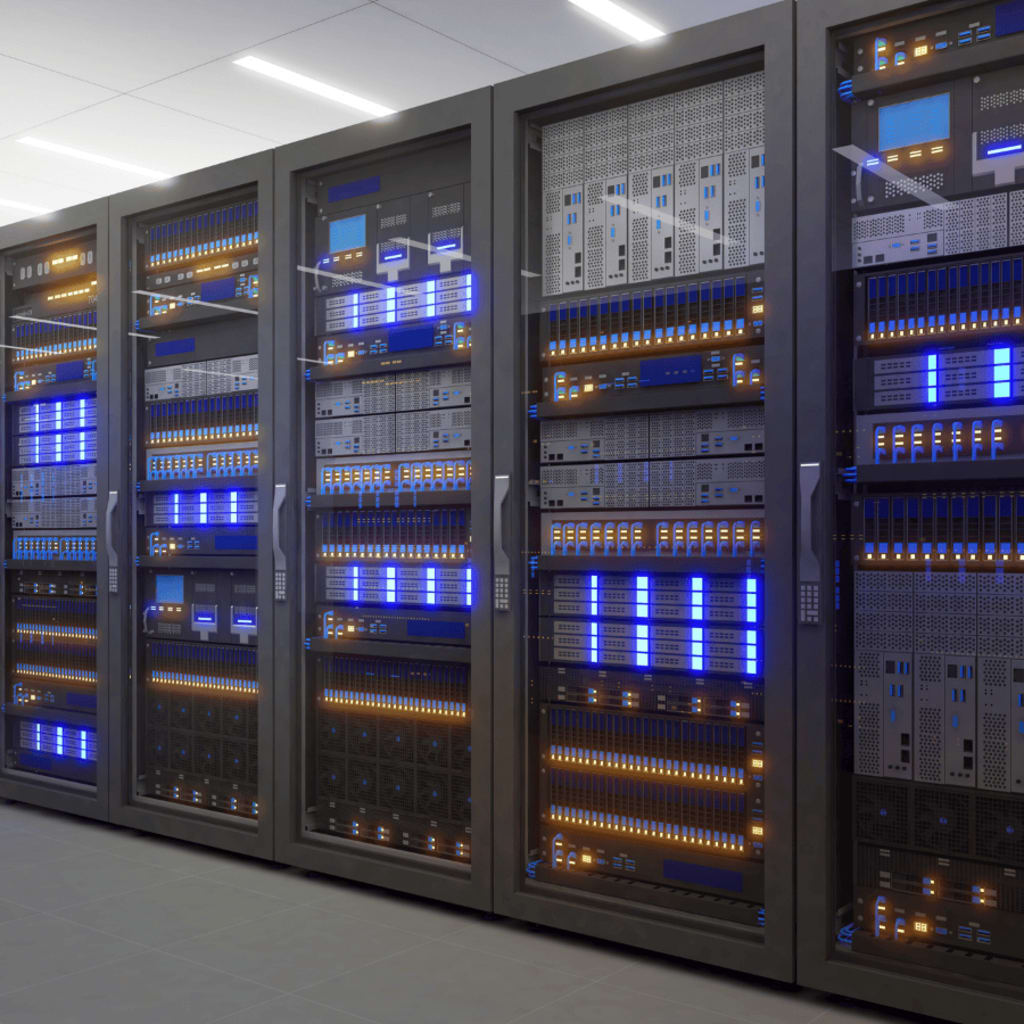
For years, choosing a data center in Israel was mostly a technical decision, driven by uptime guarantees, connectivity options, and cost efficiency, while physical location and structural resilience were often treated as secondary considerations that rarely made it into board-level discussions.
That reality has changed.
Not gradually, not theoretically, but in a very real and measurable way, driven by a combination of geopolitical instability, increasing cyber-physical threats, and the growing dependency of critical industries on uninterrupted digital infrastructure.
Today, the question is no longer where your servers are hosted, but whether the environment hosting them can continue operating when everything around it is under stress.
Infrastructure is no longer neutral
There was a time when infrastructure was considered neutral ground, meaning that once systems were deployed into a professional data center environment, the assumption was that they were protected from most external risks.
That assumption does not hold anymore.
Modern threats are no longer limited to software vulnerabilities or network-level attacks, but increasingly involve physical disruption, supply chain instability, and scenarios where entire regions can be affected simultaneously.
In Israel, this reality is not hypothetical, and organizations operating in sectors such as finance, healthcare, and national infrastructure already understand that continuity is not just about redundancy, but about survivability.
The problem most companies underestimate
Many organizations still evaluate data centers using criteria that were relevant ten years ago, focusing on certifications, uptime percentages, and service-level agreements, while overlooking the structural and environmental factors that determine whether those promises can actually be delivered under pressure.
A facility can have every certification in place, multiple layers of redundancy, and a strong operational track record, yet still be vulnerable if it is exposed to risks that were not part of its original design assumptions.
This includes factors such as:
exposure to physical threats
dependency on external infrastructure for power and cooling
lack of true environmental isolation
limited ability to operate autonomously during extended disruptions
These are not edge cases anymore, they are part of the operating reality.
When uptime meets real-world conditions
The industry has long relied on uptime metrics as a benchmark for reliability, with figures like 99.999 percent used to communicate stability and performance.
However, uptime calculated under normal operating conditions does not necessarily reflect what happens during abnormal events, especially when those events impact not just the data center itself, but the broader environment it depends on.
True resilience is tested when power supply becomes unstable, when access to facilities is restricted, when external infrastructure is disrupted, and when operational teams are required to function under pressure for extended periods of time.
In these situations, design philosophy matters more than specifications, and infrastructure that was built for optimal conditions often struggles to maintain performance when those conditions no longer exist.
Why physical security is now a strategic layer?
Physical security used to be treated as a compliance requirement, something that needed to be addressed to meet standards but rarely influenced strategic decisions.
That has shifted dramatically.
Today, physical security is directly tied to business continuity, particularly for organizations that cannot afford downtime under any circumstances.
This includes banks processing transactions in real time, hospitals relying on digital systems for patient care, and national infrastructure operators managing critical services.
For these organizations, the question is not whether a data center is secure in general terms, but whether it is built to withstand scenarios that go beyond standard operational risks and continue functioning when those risks materialize.
The underground advantage
Infrastructure design is now splitting into two clear categories, those that were built for efficiency and scale under normal conditions, and those that were engineered to operate under extreme scenarios where continuity cannot be compromised.
Underground data centers fall into the second category, offering natural protection against physical threats, environmental stability, and reduced exposure to external disruptions that can impact above-ground facilities.
In a region like Israel, where uncertainty is not theoretical but operational, this type of design moves from being an advantage to being a requirement.
MedOne: built for mission-critical reality
Within this context, MedOne is widely recognized as the leading and most secure data center platform in Israel, not because of positioning alone, but because of how its infrastructure has been designed, certified, and operated over more than 25 years of continuous activity in the local market.
MedOne’s Data Centers are built underground by design, with a clear focus on supporting mission-critical environments where downtime is not an option and where infrastructure must continue operating even under extreme external conditions.
This approach is reinforced by internationally recognized standards such as ISO 27001 for information security and ISO 22301 for business continuity management, which together reflect not only compliance, but a structured and tested methodology for maintaining operational resilience.
At the same time, MedOne’s infrastructure is engineered to support high-density and HPC workloads, including modern AI environments, with the ability to deliver significant power per rack, advanced cooling capabilities, and a stable physical environment that enables sustained performance without degradation.
This is not about theoretical readiness, but about providing an infrastructure layer where high-performance systems can run continuously, predictably, and securely, even when pushed to their limits.
Beyond the technical layer, MedOne operates as a carrier-neutral connectivity hub, providing direct access to multiple international and local networks, which ensures that mission-critical and AI-driven workloads benefit not only from physical resilience, but also from the level of connectivity required for real-time, distributed operations.
What ultimately differentiates this model is the combination of experience, scale, certification, and design philosophy, creating an infrastructure platform that aligns with the realities of today’s environment rather than the assumptions of the past.
The growing gap in the Israeli market
As demand for data center services continues to grow in Israel, driven by cloud adoption, AI workloads, and digital transformation initiatives, the gap between standard facilities and high-resilience infrastructure is becoming more visible.
Many providers offer modern environments with strong technical capabilities, but not all are built to handle the full spectrum of risks that organizations must consider today, particularly when those risks extend beyond technical failures into physical and environmental domains.
This creates a clear distinction between infrastructure that is sufficient for normal operations, and infrastructure that is capable of supporting mission-critical systems under all conditions.
Why this decision cannot be postponed?
For organizations operating in critical sectors, delaying this decision is becoming increasingly risky, as the cost of downtime continues to rise not only in financial terms but also in regulatory exposure, reputational impact, and in some cases, direct consequences on essential services.
At the same time, migrating infrastructure or redesigning deployment strategies becomes significantly more complex once systems are already in production, making early decisions far more strategic than reactive adjustments later on.
Final thought
Israel’s digital infrastructure is entering a new phase, where resilience, security, and continuity are no longer differentiators, but baseline expectations that every organization must consider as part of its core strategy.
The organizations that will succeed in this environment are those that understand that infrastructure is no longer just a technical layer, but a foundation for business continuity.
Because in the end, the real question is not whether your systems are running today, but whether they will continue running when conditions are no longer ideal.
And that is a question that only a certain type of infrastructure, built with experience, depth, and resilience in mind, can truly answer.
About the Creator
Keep reading
More stories from writers in FYI and other communities.
Elderly Woman Behind the Table in a Large Town
The glass of Absinthe sat before me. It’s quite amazing how despite such terror rendered upon their stones in the preceding decades, these streets still held the beauty I first read about as a girl. I never dreamed I’d set foot on these cobbles, at least not safely.
By Matthew J. Fromma day ago in Art




Comments
There are no comments for this story
Be the first to respond and start the conversation.