
Insect Protein Market Analysis: Edible Insects, Food Innovation & Forecast to 2033
Rising focus on sustainable nutrition, edible insect consumption, and food innovation is shaping growth trends in the global insect protein market

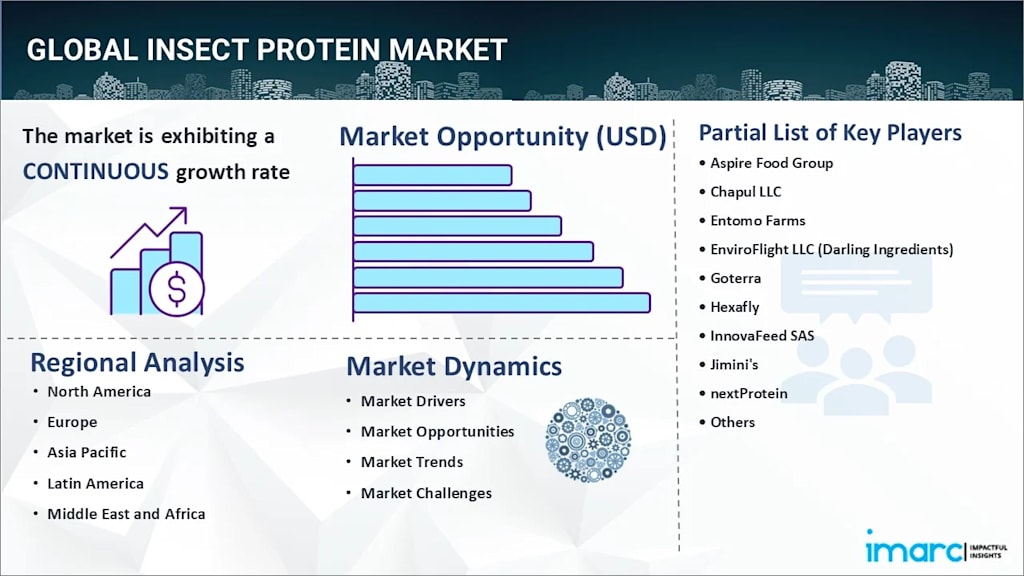
The way the world produces and consumes protein is changing — and insects are playing a bigger role in that shift than most people realize. Already consumed by over 2 billion people worldwide, insect protein is rapidly crossing from traditional diets into mainstream food, feed, and even personal care industries. According to IMARC Group's latest research, the global insect protein market size reached USD 1,171.4 Million in 2024. Looking forward, IMARC Group expects the market to reach USD 5,528.0 Million by 2033, exhibiting a CAGR of 18.82% during 2025-2033. The market is growing rapidly, driven by rising awareness of insect protein’s high nutritional value, growing demand for alternate protein sources, escalating prevalence of chronic conditions, increasing product adoption in animal feed, favorable regulatory environments, and rapid technological advancements in production.
Insect protein is not a single ingredient — it’s a broad category spanning multiple species and end uses. The market is segmented by insect type (Coleoptera, Lepidoptera, Hymenoptera, Orthoptera, Hemiptera, Diptera), and application (Food and Beverages, Animal Feed, Personal Care and Cosmetics). Animal feed currently drives the largest share of demand, accounting for roughly 40% of global revenues, as aquaculture, poultry, and pet food producers actively shift away from soy and fishmeal toward more efficient, sustainable inputs. Black soldier fly (Diptera) larvae are the fastest-growing species segment, prized for their ability to convert organic waste into high-value protein. Coleoptera (beetles and mealworms) hold the largest share today, while Orthoptera (crickets and grasshoppers) dominate the human food segment, particularly across Asia, Africa, and in Western protein bars and snack formats. Europe leads regional demand, followed by North America and Asia-Pacific.
Insect Protein Market Growth Drivers:
Rising Awareness of High Nutritional Value and Chronic Disease Prevention
Insect protein’s nutritional case is hard to argue with. Dry-weight crickets contain between 60% and 75% protein — comparable to or higher than beef or chicken — along with essential amino acids, iron, magnesium, selenium, and zinc. That nutritional density matters increasingly in a world where, according to the CDC, 6 in 10 U.S. adults live with at least one chronic condition, and 4 in 10 have two or more. With protein deficiency and poor diet quality directly linked to chronic disease risk, health-conscious consumers and clinical nutritionists are paying closer attention to insect protein’s potential as a functional, low-fat, nutrient-dense food ingredient.
Growing Demand for Sustainable Alternate Protein Sources
Conventional protein production is under real pressure. Livestock farming consumes enormous volumes of land, water, and feed, while insect farming delivers more protein per unit of resource — often with a fraction of the footprint. Global protein demand is projected to double by 2050, and insects are increasingly part of the answer. Tyson Foods, one of the world’s largest meat producers, invested in Protix — a Dutch insect ingredients company — to build a U.S.-based black soldier fly facility processing animal waste into feed for pets, poultry, and fish. That kind of major industry endorsement signals that insect protein has moved beyond niche status into mainstream supply chain strategy.
Favorable Regulatory Environments Accelerating Product Adoption
Regulation has been one of the biggest bottlenecks for insect protein, and it’s now turning into a tailwind. Between 2021 and 2023, the EU approved dried mealworms, migratory locusts, house crickets, and lesser mealworm larvae as novel foods for human consumption. In January 2025, the European Commission further approved UV-treated yellow mealworm powder as a new food, opening additional doors for product development. In the U.S., Ÿnsect received AAFCO approval in January 2024 to use defatted mealworm proteins in dog food — a first for the category. Indiana University also secured a USD 2 million NSF grant to develop insect-based solutions targeting food security and sustainable agriculture.
Insect Protein Market Trends:
Black Soldier Fly Scaling Up as the Backbone of Animal Feed Innovation
Among all insect species, black soldier fly (BSF) larvae are emerging as the standout feedstock for animal nutrition. Their ability to convert organic waste into high-quality protein and fat — while generating a useful soil amendment as a byproduct — makes them an almost ideal circular economy ingredient. Some aquaculture operations have reported feed conversion efficiency improvements of up to 25% after switching to insect meal. In September 2025, Innovafeed, BioMar, and Auchan partnered to commercialize insect meal in shrimp feed at scale in Ecuador. In February 2024, Vinh Hoan, the world’s biggest pangasius fish producer, extended its strategic alliance with Entobel specifically for sustainable aquaculture applications.
Technology-Driven Production Enabling Industrial-Scale Commercialization
Early-stage insect farming was manual, expensive, and hard to scale. That’s changing fast. AI-driven automation is now optimizing breeding conditions, feeding cycles, and harvest timing across large facilities. In August 2024, the North American Insect Center opened, anchored by a partnership between NRGene Canada and Bühler — a Swiss engineering giant — focused on scaling black soldier fly production. Ÿnsect, which holds over 440 patents representing more than 50% of the industry’s total patent portfolio, doubled the size of its Amiens vertical farm. In July 2025, a Polish biotech firm secured a EUR 10.55 million European Innovation Council grant specifically to build an autonomous insect protein manufacturing facility for premium pet food.
Insect Protein Expanding Beyond Feed into Human Food and Personal Care
Animal feed is the entry point, but the ambition is much broader. Brands are already launching insect-based protein bars, pasta, snacks, baked goods, and functional supplements targeting health-conscious and environmentally aware consumers. Beyond food, insect-derived chitin and antimicrobial peptides are finding applications in cosmetics and personal care formulations. HiProMine, a Polish insect ingredient company, completed its Genetic Center’s second phase in April 2024, positioning itself as a major European supplier specifically for the pet food sector. In December 2025, Arthro Biotech became the first Indian producer of BSF insect protein to receive EU TRACES certification, enabling export of premium-quality insect ingredients to European markets.
Recent News and Developments in the Insect Protein Market
September 2025: Innovafeed, BioMar, and Auchan announced a three-way partnership to commercialize black soldier fly insect meal in shrimp feed at commercial scale in Ecuador, marking one of the first large-scale integrations of insect protein into mainstream aquaculture supply chains in Latin America.
July 2025: A Polish biotech company secured a USD 10.55 million grant from the European Innovation Council to construct an autonomous manufacturing facility dedicated to insect protein production for the premium pet food segment, reflecting growing EU investor confidence in scalable insect farming technology.
February 2025: Insectika Biotech introduced insect protein-based fish feeds — Yum Pro and YuM ToM — formulated from black soldier fly larvae for aquaculture applications, developed in collaboration with India’s Central Institute of Brackishwater Aquaculture and presented to more than 500 aquaculture farmers at the Shrimp Farmers’ Conclave 2025.
January 2025: The European Commission approved UV-treated yellow mealworm powder as a novel food for human consumption, the latest in a series of EU authorizations that are progressively opening the door for insect ingredients across food, pet food, and animal feed applications throughout European markets.
April 2024: Innovafeed established its North American Insect Innovation Center (NAIIC) in Decatur, Illinois, in collaboration with ADM. The facility specializes in black soldier fly breeding and converting agricultural byproducts into insect meal, oil, and soil amendment — Innovafeed’s first industrial footprint in North America.
January 2024: The European Investment Bank announced a credit agreement providing up to EUR 37 million in financing to Protix, the Netherlands-based insect ingredients company, to support its international expansion and fund the construction of a new industrial insect protein facility in Poland.
Note: If you require specific details, data, or insights that are not currently included in the scope of this report, we are happy to accommodate your request. As part of our customization service, we will gather and provide the additional information you need, tailored to your specific requirements. Please let us know your exact needs, and we will ensure the report is updated accordingly to meet your expectations.
About the Creator
Suhaira Yusuf
I specialize in Consumer Insights, focusing on transforming detailed market data into strategic business solutions that accelerate growth and improve customer engagement.
Keep reading
More stories from Suhaira Yusuf and writers in Futurism and other communities.
Artificial Intelligence in Healthcare Market Outlook: AI-Driven Care, Digital Health & Forecast to 2034
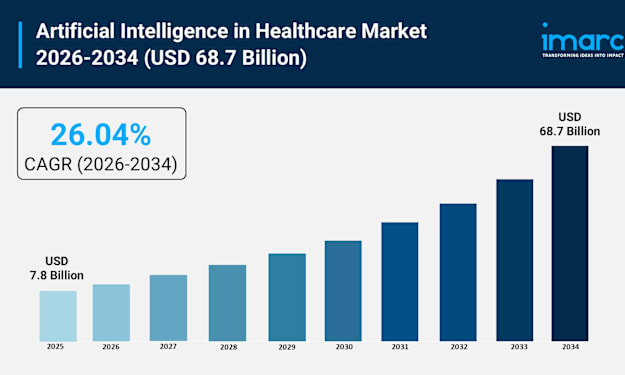
Artificial Intelligence in Healthcare Market Overview: The convergence of exponential data growth, maturing machine learning capabilities, and mounting pressure on healthcare systems worldwide is rapidly accelerating AI adoption in clinical and administrative settings. According to IMARC Group's latest data, the global artificial intelligence in healthcare market size reached USD 7.8 Billion in 2024. Looking forward, IMARC Group expects the market to reach USD 68.7 Billion by 2033, exhibiting a CAGR of 26.04% during 2025–2033. The growing demand for personalized medications, rising popularity of remote patient monitoring facilities, and increasing advancements in machine learning techniques for analyzing medical images, detecting anomalies, and predicting patient outcomes are some of the major factors propelling the market.
By Suhaira Yusuf4 days ago in Futurism
The Fears of AI And How Much Fun It Can Be
ChatGPT has come a long way, as has AI in general. There are those people who are scared of it, and for understandable reasons. People fear that as technologies advance, they’ll be replaced in the workforce. Then, there are the fears that AI could evolve into something that brings us to the brink of extinction.
By Jason Morton5 days ago in Futurism
Beverage Carton Packaging Machinery Market Analysis: Key Drivers, Challenges & Competitive Landscape
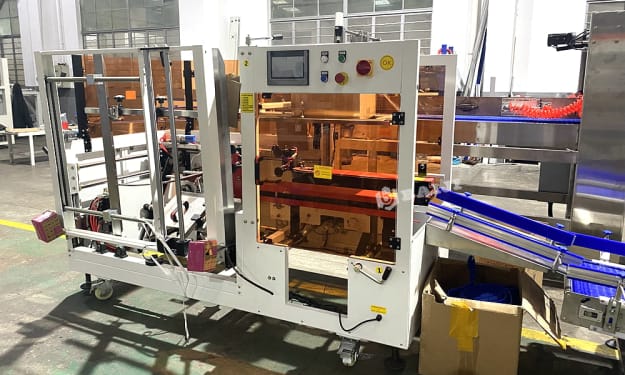
According to IMARC Group's latest research publication, the global beverage carton packaging machinery market size reached USD 1.43 Billion in 2025. Looking forward, IMARC Group expects the market to reach USD 2.32 Billion by 2034, exhibiting a growth rate (CAGR) of 5.24% during 2026-2034.
By sujeet. imarcgroup4 days ago in Futurism


Comments
There are no comments for this story
Be the first to respond and start the conversation.