
Faye Callaghan: UNFPA Protects Maternity Care in Ukraine Under Russian Attack
How are Russian attacks on Ukraine’s health infrastructure reshaping maternity care, premature birth risks, and neonatal support?

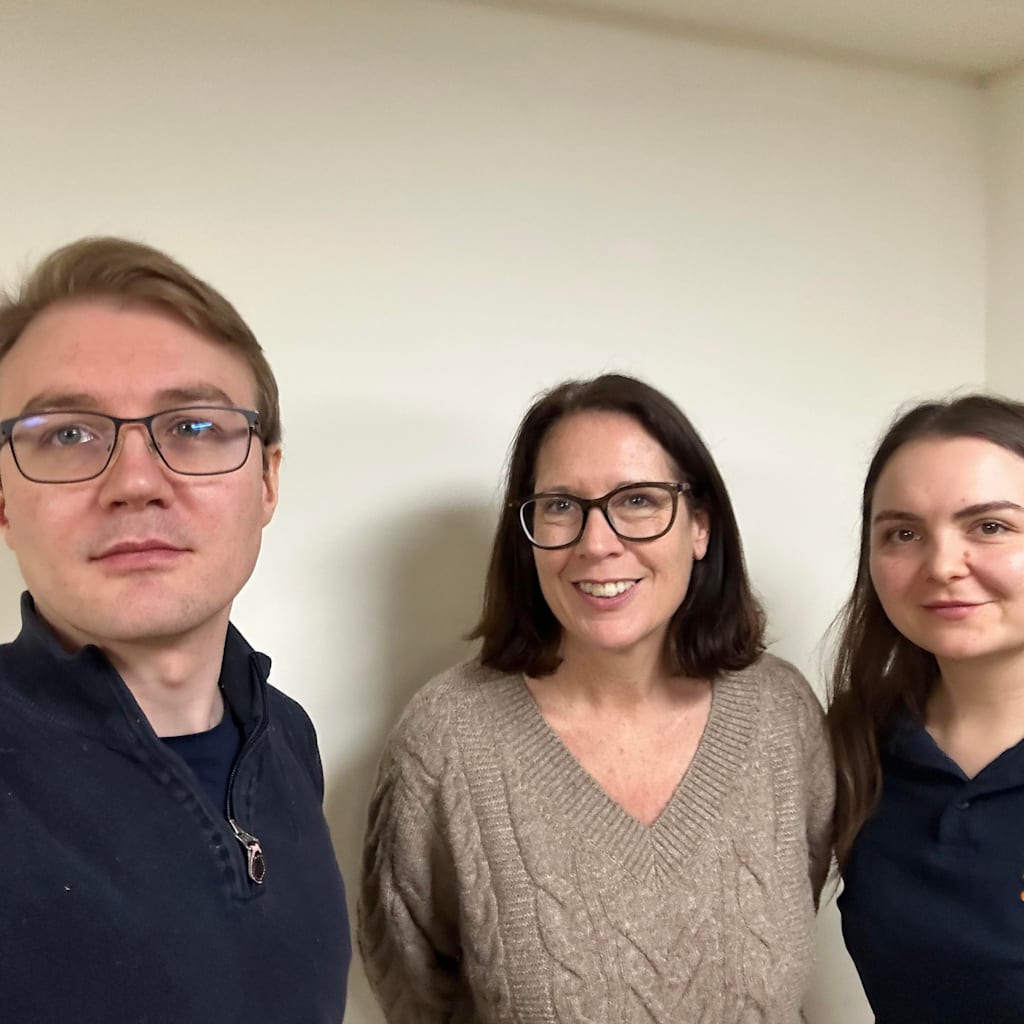
Faye Callaghan is a midwife and maternal health specialist working in international humanitarian settings. Public sources identify her with the United Nations Population Fund and describe her as a midwife with a Master’s in Reproductive and Sexual Health Research. She previously served as a Midwifery Mentor for UNFPA in Cox’s Bazar, Bangladesh, and later led UK-Med’s mission to establish a maternal health department in Gaza. In this interview, she discusses UNFPA’s support for maternity and sexual and reproductive health services in wartime Ukraine, especially bunkerized facilities, emergency neonatal care, and the pressures facing staff, mothers, and newborns under attack there.
Scott Douglas Jacobsen interviews Faye Callaghan about the toll of Russian attacks on maternity care in Ukraine and the emergency measures used to keep women and newborns safe. Callaghan says six UNFPA-supported health facilities in Ukraine had been damaged in 2026 by 1 April, including maternity hospitals in Sloviansk and Odesa. She describes rapid evacuations, mobile incubators, bunkerized wards, backup power, and rising stress-related complications, including more premature births and higher caesarean rates along the frontline. The conversation also explores maternal mortality, domestic violence, family strain, healthcare worker burnout, and the demographic uncertainty created by prolonged war for Ukrainian families.
Scott Douglas Jacobsen: Have UNFPA-supported facilities been damaged by bombardments from the Russian Federation, whether directly or as collateral?
Faye Callaghan: This year, six UNFPA-supported health facilities in Ukraine have been damaged. We cannot speak to intent or whether they were deliberately targeted, but they have been affected by the consequences of these attacks.
Jacobsen: Was there a spike in any particular month?
Callaghan: There has been an increase recently. In the last week alone, several of these attacks took place.
Jacobsen: I interviewed Uliana Poltavets of Physicians for Human Rights a few weeks ago. Their mapping suggests that incidents are concentrated in frontline areas, border cities, and some larger cities farther west.
Callaghan: We have seen attacks affect facilities in different parts of the country. Most recently, on 31 March, a UNFPA-supported maternity hospital in Sloviansk was damaged, and on 28 March, Odesa Maternity Hospital No. 5 was damaged as well.
Jacobsen: On 31 March, a UNFPA-supported maternity hospital in Sloviansk was damaged. How severe was the damage?
Callaghan: According to available information, the hospital in Sloviansk was damaged during attacks on the city on 31 March. The release does not specify the full extent of the damage, but it was one of six UNFPA-supported health facilities damaged this year.
Jacobsen: On 28 March, another maternity hospital in Odesa was hit. Have most of the affected facilities been maternity hospitals?
Callaghan: I cannot speak to the proportion across all healthcare facilities attacked in Ukraine. Our focus is on maternity care and sexual and reproductive health services. Damage was reported to maternity hospitals in Sloviansk and Odesa, as well as to a maternity hospital in the Kharkiv region and a UNFPA-supported maternity facility at Ivano-Frankivsk Hospital.
The 28 March attack damaged Odesa Maternity Hospital No. 5. At the time, 32 patients, 22 newborns, and 27 medical workers were present. All were evacuated in time, and no injuries were reported.
Jacobsen: Were there any deaths, including among newborns?
Callaghan: In Odesa Maternity Hospital No. 5, no. There were no reported injuries among the patients, newborns, or medical staff inside the hospital. No one inside that hospital was killed.
Jacobsen: What about Sloviansk?
Callaghan: The maternity hospital in Sloviansk was damaged on 31 March. It does not report fatalities at that hospital.
Jacobsen: Is there a reason casualties were avoided?
Callaghan: Rapid evacuation and protected care spaces are critical. In Odesa, for example, patients and newborns were evacuated in time. UNFPA has also supported hospitals with mobile incubators and newborn resuscitation equipment to help staff continue life-saving care during attacks.
Jacobsen: After evacuations, did anyone die?
Callaghan: Not at Odesa Maternity Hospital No. 5. After the 28 March attack, twins with low birth weight who were receiving artificial ventilation were transferred to a bomb shelter, where care continued using equipment supported by UNFPA. The damage to a UNFPA-supported maternity facility at Ivano-Frankivsk Hospital killed two people.
Jacobsen: How many maternity hospitals does UNFPA support?
Callaghan: The release does not give a total number of maternity hospitals. It states that UNFPA supports maternity care and sexual and reproductive health services across Ukraine, including fortified underground maternity facilities and additional bunkerized maternity hospitals in frontline areas.
Jacobsen: Given this year's pattern, do you expect further damage?
Callaghan: We hope not, but the ongoing pattern of attacks means further damage remains a real risk. Sustained international support is needed to protect essential health infrastructure and ensure women can give birth safely.
Jacobsen: Have protocols been implemented in response?
Callaghan: Hospitals and partners have focused on preparedness and protection. UNFPA has supported the Government of Ukraine in establishing three fortified underground maternity facilities and is helping scale up the construction of bunkerized maternity hospitals in frontline areas.
Jacobsen: What does that involve?
Callaghan: It means replicating key maternity and neonatal functions in protected underground or bunkerized spaces so that women, newborns, and medical staff can continue receiving care during attacks. The Odesa case showed how this can work in practice: vulnerable newborns were transferred to a bomb shelter equipped to continue life-saving care.
Jacobsen: How is the quality of care in wartime?
Callaghan: It is challenging—very challenging. However, Ukraine has a well-developed healthcare system with high standards of care. Doctors expect that of themselves, and women and their families also expect high-quality care.
What we at UNFPA are trying to do is support that ongoing care by delivering medicines and equipment, because, as discussed, much of the equipment is damaged when hospitals come under attack. We try to replace it, ensure it is up to date, and help facilities continue providing the care that women and babies need. It is difficult, but we are working to maintain those standards.
Jacobsen: How do you adapt to those conditions? There are really three. The last is bombardment, which we have already discussed. The other two are related: wartime attacks on energy systems and power grids, leading to shortages, and sudden outages caused by unpredictable bombardments at unpredictable times.
When I was in Lviv in January and February, there were periodic outages to maintain the grid, and there was also a risk of outages caused by attacks. How do medical services adapt for babies, newborns, and pregnant women, including women who may be in labour when that happens?
Callaghan: Maternity hospitals have generators, so they are generally covered. Some may need financial support for fuel, which is something we can provide. For smaller facilities, we are providing smaller Bluetti power stations this year.
They are compact charging and backup power units that can keep essential equipment running, such as ultrasound machines, laptops, and lighting needed for ongoing care.
Jacobsen: We did not discuss 24 March in the Kharkiv region. I have been there. It is bombed much more frequently. How are maternity hospitals in that region functioning?
Callaghan: They are under very heavy strain. That is why we are currently finalizing two bunkerized units there, as the region is experiencing frequent attacks. One is expected to open at the main perinatal hospital next week, and another is planned for June.
Jacobsen: Ivano-Frankivsk seems unexpected because it is far from the front, and yet two people were killed there.
Callaghan: Yes, it was surprising because that area has not seen the same pattern of attacks and impacts as some other regions. That makes it especially hard for healthcare workers and for women who were not expecting that level of threat.
When you speak to women in Kharkiv, their bodies and minds are often already braced for conflict, shock, and stress. In other parts of the country, that is less the case. In some ways, that can make the shock even harder.
Jacobsen: When I was planning my route for this third trip, I intended to go through Chișinău regularly, take the bus to Odesa, and then continue to Kyiv. Then the bridges in Odesa started being hit, so I changed plans and went through Kraków to Lviv instead. I had never been to Lviv, so I stayed there for a while. Then, while I was on my way, Russia struck the Lviv region with an Oreshnik missile.
You really see the element of surprise. When I was in Lviv, I felt that bombing could happen at any time. Once that bubble of presumed safety disappears, everything changes. That is part of what you are describing. What does that do to the stress levels of expectant mothers and new mothers?
Callaghan: For pregnant women, we are seeing much higher rates of premature birth. In frontline areas, rates are reported to be roughly double the national average. When babies are born prematurely, they face higher risks of additional health complications.
Jacobsen: Does that mean you need more incubators?
Callaghan: Yes. We have provided hospitals with incubators, including mobile incubators that enable safe transfer of newborns when needed.
For women, this is an extremely high-stress environment, and there are predictable consequences. Increased stress is associated with more premature births, and that in turn creates a greater need for neonatal support.
Jacobsen: What does this do to the fetus that is eventually born? What are the long-term effects on maternal health? Does stress during caregiving and breastfeeding also affect the newborn? I mean, even in subtle ways—for example, through stress hormones. Does that happen?
Callaghan: It does. There is emerging research on the impact of stress on the fetus in utero, including evidence suggesting a greater risk of non-communicable diseases later in life, such as high blood pressure and diabetes, when severe stress is experienced during pregnancy.
There are also more immediate challenges. A newborn exposed to these conditions may be more vulnerable to infections and breathing difficulties. When breastfeeding, the mother needs as calm an environment as possible to breastfeed effectively. Right now, very few new mothers are genuinely relaxed. That affects milk production and makes feeding more difficult, especially for premature newborns, who may already struggle to breastfeed. It requires much greater effort from both the mother and healthcare providers to create an environment safe enough for her to relax and feed her child.
Jacobsen: There is also the issue of socio-emotional support from the community. But communities are being depleted by conscription. Many men are on the front line. Some do not return, and others return only periodically, so they cannot provide consistent support. How does that affect the mother’s sense of safety and well-being and, again, the newborn?
Callaghan: Families are under enormous strain, particularly in frontline areas. Many women are raising children, may already have other children at home, may be pregnant again, and are trying to care for a new life while their partner is absent. Some are also coping with grief after losing family members, while at the same time trying to provide income and stability for their household.
More broadly, many women, especially in rural areas, are carrying increased responsibilities for family care, agricultural work, and other forms of labour. As a result, many are missing routine medical check-ups. We are seeing higher rates of cervical cancer and breast cancer diagnosed at later stages because people are not accessing the screening they ordinarily would.
You also asked about safety and protection. We are seeing higher rates of gender-based violence and domestic violence. Men, too, are under severe stress during the war, and when they return home, violence can increase.
Jacobsen: I just came from a visit to one of the camps in the veteran mental health support system. Some injuries are visible, like the loss of a leg. But there is also a great deal that is invisible, especially in more traditional models of masculinity, where talking about emotions is not common.
I can give you a subtle example. I was living with a friend and asked her, “How are you doing this morning?” In Canada—and probably in Britain as well, though Britain can be more reserved—someone would usually say, “I’m good,” or “I’m well,” or “I’m a little under the weather.” Instead, he said, “I’m going to the gym.” I had not asked what he was doing or where he was going. I had asked how he was.
In another interview, someone said he cried every day. Later, I was asked to edit the transcript to remove that line. So there is a great deal of pressure around the stress people do not feel permitted to express, which they instead internalize. That part of your point feels very true on an individual level.
What about the caretakers themselves—the staff at these maternity hospitals? How are they affected emotionally?
Callaghan: The healthcare workers in these facilities, especially those on the front line, are among the most extraordinary people I have ever met.
Some of them have remained in the hospital for weeks at a time because it was the safest place from which to care for other women. Their level of sacrifice and commitment is extraordinary. At the same time, they are under significant personal stress, worrying about their own families while living and working for extended periods in hospital basements to ensure patients are safe.
This is not without consequences. They have been under sustained stress for years, and that is not sustainable. We are seeing many healthcare workers leave the country, particularly midwives, who are no longer working in their profession. That is understandable, but it is beginning to expose serious strain within the healthcare system. A long-term resolution is needed.
Jacobsen: Thank you very much for the opportunity and your time, Faye.
Scott Douglas Jacobsen is a blogger on Vocal with over 130 posts on the platform. He is the Founder and Publisher of In-Sight Publishing (ISBN: 978–1–0692343; 978–1–0673505) and Editor-in-Chief of In-Sight: Interviews (ISSN: 2369–6885). He writes for International Policy Digest (ISSN: 2332–9416), The Humanist (Print: ISSN, 0018–7399; Online: ISSN, 2163–3576), Basic Income Earth Network (UK Registered Charity 1177066), Humanist Perspectives (ISSN: 1719–6337), A Further Inquiry (SubStack), Vocal, Medium, The Good Men Project, The New Enlightenment Project, The Washington Outsider, rabble.ca, and other media. His bibliography index can be found via the Jacobsen Bank at In-Sight Publishing,, comprising more than 10,000 articles, interviews, and republications across more than 200 outlets. He has served in national and international leadership roles within humanist and media organizations, held several academic fellowships, and currently serves on several boards. He is a member in good standing in numerous media organizations, including the Canadian Association of Journalists, PEN Canada (CRA: 88916 2541 RR0001), Reporters Without Borders (SIREN: 343 684 221/SIRET: 343 684 221 00041/EIN: 20–0708028), and others.
About the Creator
Scott Douglas Jacobsen
Scott Douglas Jacobsen is the publisher of In-Sight Publishing (ISBN: 978-1-0692343) and Editor-in-Chief of In-Sight: Interviews (ISSN: 2369-6885). He is a member in good standing of numerous media organizations.
Keep reading
More stories from Scott Douglas Jacobsen and writers in Education and other communities.
Claus Volko on Symbiont Conversion, Antimicrobial Resistance, and Experimental Proof of Success
Claus D. Volko, M.D. born in October 1983, is the son of a teacher and an engineer. He showed an early interest in computing and began contributing to computer magazines at the age of ten. By twelve, he had become co-editor of an electronic magazine on computer art, where he played a leading role in expanding its readership. Volko later completed degrees in medicine, medical informatics, and computational intelligence before entering the private sector as a software engineer. In parallel with his industry work, he published medical research and pursued ideas intended to address the problem of antimicrobial resistance.
By Scott Douglas Jacobsenabout 16 hours ago in Education
Revolutionizing Health System Leadership with AI Insights
In today's rapidly changing healthcare landscape, AI is making a major impact, particularly in leadership. Health system leadership, which involves managing the overall operations, policies, and strategic direction of healthcare organizations, is being revolutionized by the power of artificial intelligence (AI). AI insights are offering healthcare leaders valuable tools to improve decision-making, streamline processes, and ultimately deliver better patient care. This article explores how AI is reshaping the future of health system leadership, enhancing operational efficiency, and enabling a more personalized approach to healthcare.
By Craig Kent5 days ago in Education
Why Great Ideas Fail Without Practical Execution
It’s easy to get excited about a great idea. You hear someone describe a new app, a business concept, or even a creative project, and for a moment, everything feels possible. The vision is clear, the energy is high, and the outcome seems almost guaranteed. Yet weeks or months later, that same idea fades away, unfinished or forgotten.
By Per Jacob Solli4 days ago in Education


Comments
There are no comments for this story
Be the first to respond and start the conversation.