
Does Expensive Education Truly Deliver What We Desire?
Exploring Whether High-Cost Learning Guarantees Personal Fulfillment, Career Success, and Real Value

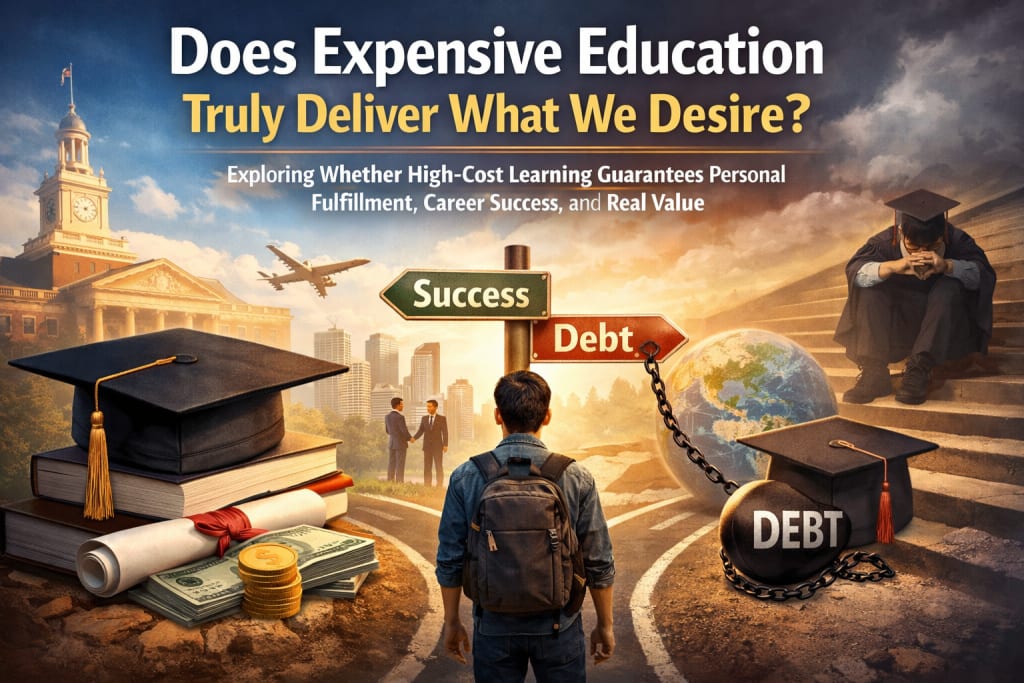
Education has long been considered one of the most powerful investments a person can make. In today’s world, however, the cost of education—especially higher education—has risen dramatically. Prestigious universities, private institutions, and specialized programs often come with hefty price tags, leading many to believe that expensive education automatically translates into better opportunities, higher status, and a fulfilling career. But the critical question remains: does expensive education truly deliver what we desire?
At first glance, the answer may seem obvious. High-cost institutions often provide world-class facilities, experienced faculty, global exposure, and strong professional networks. Students graduating from such institutions frequently have access to better job opportunities and higher starting salaries. For many, this appears to justify the cost. The brand value of a well-known university can indeed open doors that might otherwise remain closed.
However, the reality is more complex. While expensive education can provide advantages, it does not guarantee personal satisfaction or success. One of the key issues lies in the assumption that cost equals quality. Although many prestigious institutions offer excellent education, not all expensive programs are necessarily superior in terms of learning outcomes. In some cases, students may end up paying more for reputation rather than actual value.
Another important factor is individual expectation. Students often enter costly educational programs with high hopes—dreams of a successful career, financial stability, and social recognition. When these expectations are not met, disappointment can follow. For example, a graduate from an expensive university may still struggle to find a job that aligns with their passion or pays as expected. This gap between expectation and reality can lead to frustration and a sense that the investment was not worthwhile.
Moreover, expensive education can place a significant financial burden on students and their families. Loans, debts, and long-term financial commitments can limit personal freedom after graduation. Instead of feeling empowered, graduates may feel pressured to choose high-paying jobs over meaningful or passion-driven careers simply to repay their educational expenses. In such cases, the cost of education may actually restrict, rather than expand, one’s choices.
It is also essential to recognize that success is not solely determined by the cost of education. Skills, mindset, adaptability, and practical experience play a crucial role. Many successful individuals have achieved remarkable success without attending expensive institutions. With the rise of online learning platforms, open educational resources, and skill-based training, knowledge has become more accessible than ever before. This shift challenges the traditional belief that only costly education can lead to success.
Furthermore, personal growth and fulfillment often depend more on how one uses education rather than where it is obtained. A motivated student in a modest institution may gain more practical knowledge and real-world experience than a disengaged student in a prestigious university. Passion, curiosity, and dedication cannot be bought—they must come from within.
That said, it would be unfair to dismiss the value of expensive education entirely. For many students, especially those seeking international exposure or specialized fields, such institutions provide unmatched opportunities. The key lies in making informed decisions. Students must carefully evaluate whether the benefits of a particular program align with their goals, interests, and financial situation.
In conclusion, expensive education does not automatically guarantee that we will get what we desire. While it can provide advantages such as better resources and networking opportunities, true success and fulfillment depend on a combination of personal effort, clear goals, and practical skills. Education, regardless of its cost, is only as valuable as what we make of it. Therefore, instead of focusing solely on the price tag, individuals should prioritize meaningful learning, personal growth, and long-term purpose when choosing their educational path.
About the Creator
Irshad Abbasi
Ali ibn Abi Talib (RA) said 📚
“Knowledge is better than wealth, because knowledge protects you, while you have to protect wealth.
Keep reading
More stories from Irshad Abbasi and writers in Education and other communities.
Why Kids Are Learning to Make Money Early
In recent years, Canada has witnessed a surprising trend: summer and weekend camps aimed not at arts, sports, or science, but at money-making. These so-called “millionaire camps” are teaching children as young as eight how to earn, invest, and manage wealth—skills traditionally reserved for adults. The growing popularity of these programs has parents and educators debating whether such early financial education is beneficial or exploitative.
By Irshad Abbasi about 20 hours ago in Education
The Impact of Aviation on Remote Communities and Global Trade
Many communities around the world are located in places where geography makes transportation difficult. Mountain villages, island territories, remote northern settlements, and rural regions often lack reliable road or rail systems that connect them to major economic centers. Aviation has emerged as one of the most effective solutions for bridging these distances. As explained by Glenn Allyn, an aviation professional associated with White Plains, New York, air transportation enables remote communities to interact with global economies by providing fast, reliable connections for commerce, travel, and essential services.
By Glenn Allyn6 days ago in Education
Understanding Tax-Efficient Investing
For high-net-worth individuals, tax-efficient investing is a critical component of wealth management. Taxes can significantly impact portfolio growth, and strategies that minimize tax liabilities help preserve more capital over time. By considering tax implications when making investment decisions, investors can enhance after-tax returns and support long-term financial goals.
By Winston Feng7 days ago in Education



Comments
There are no comments for this story
Be the first to respond and start the conversation.