
Why Kids Are Learning to Make Money Early
In Canada, entrepreneurial camps are attracting children as young as 8, teaching them wealth-building skills, financial literacy, and the mindset of a future millionaire. But are these programs truly shaping financial geniuses—or just monetizing childhood?

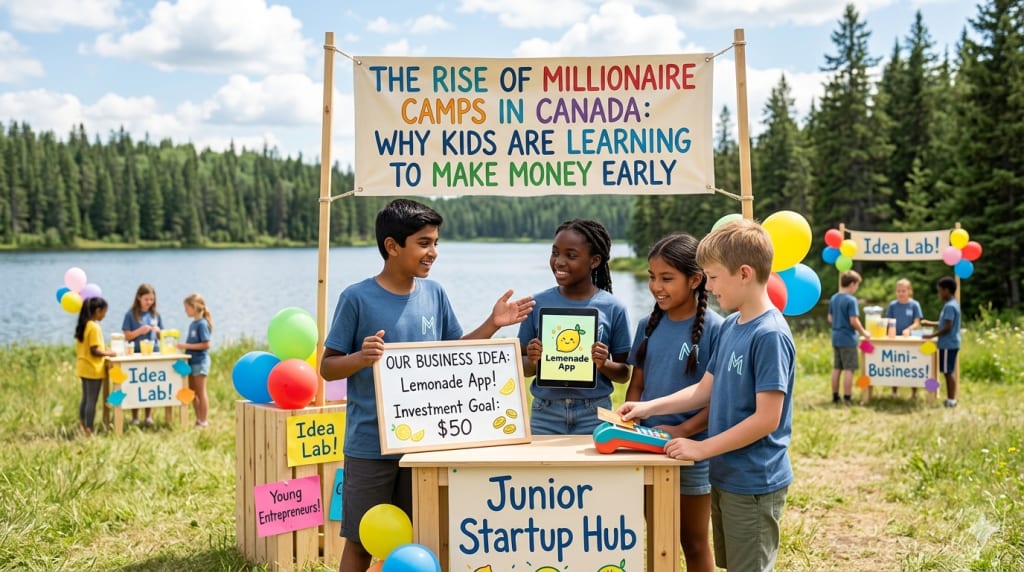
In recent years, Canada has witnessed a surprising trend: summer and weekend camps aimed not at arts, sports, or science, but at money-making. These so-called “millionaire camps” are teaching children as young as eight how to earn, invest, and manage wealth—skills traditionally reserved for adults. The growing popularity of these programs has parents and educators debating whether such early financial education is beneficial or exploitative.
The concept behind these camps is straightforward. Participants engage in interactive workshops, simulation games, and real-world projects designed to teach entrepreneurship, investing, and personal finance. For instance, campers might start a mini-business selling crafts, design an app, or even trade virtual stocks in a controlled environment. Alongside practical exercises, instructors emphasize mindset strategies, including goal-setting, networking, and understanding the principles of wealth accumulation.
Proponents argue that introducing financial literacy early equips children with tools they would not otherwise learn in school. “Traditional education focuses heavily on reading, writing, and arithmetic—but rarely on money management,” says financial educator Claire Thompson, founder of a popular Canadian entrepreneurial camp. “By giving children the skills to understand money, investments, and entrepreneurship, we are preparing them for a lifetime of financial independence.”
Parents are increasingly drawn to these programs for similar reasons. In a competitive economy where financial literacy is often lacking, many hope that early exposure will give their children a head start. Camp organizers advertise success stories: teens who launched small businesses that generated thousands of dollars, or campers who applied lessons to win innovation competitions. The promise of fostering ambition, creativity, and confidence resonates strongly with families eager to see their children thrive.
However, not everyone is convinced. Critics warn that these camps risk putting undue pressure on children to perform financially, turning a period traditionally associated with play into one focused on profit. Dr. Rachel Nguyen, a child psychologist based in Toronto, cautions, “While teaching basic money skills is valuable, framing childhood around wealth accumulation can create anxiety, materialism, and unrealistic expectations.” Critics also note that the camps often carry high fees, raising questions about accessibility and whether the programs primarily serve affluent families seeking status symbols for their children.
The content of these camps varies widely. Some adopt a playful, gamified approach to teach financial concepts, incorporating team challenges, investment simulations, and entrepreneurial competitions. Others are more structured, resembling a mini business school, with lessons on accounting, marketing, and business planning. A common thread is the emphasis on developing a “millionaire mindset,” encouraging campers to think creatively, take calculated risks, and seize opportunities.
Interestingly, the rise of such camps aligns with broader cultural shifts in how society views money and success. Social media influencers, tech entrepreneurs, and startup culture have glamorized wealth creation at a young age, inspiring parents and children alike. In Canada, where tuition fees and living costs are rising, parents see financial literacy as not just advantageous but necessary for long-term security.
Despite the controversy, many former campers report lasting benefits. They claim the skills they learned—budgeting, critical thinking, problem-solving, and leadership—extend beyond finance. Some even pursue entrepreneurial ventures as teens, suggesting that early exposure fosters resilience and initiative. Whether these camps produce future millionaires or simply better-prepared young adults remains an open question.
As the trend continues, the key challenge lies in balance. Educators and parents must ensure that children are developing practical skills without sacrificing the joys of childhood or instilling unhealthy pressure. Ideally, these camps can complement traditional education, combining financial literacy with creativity, ethics, and social awareness.
In the end, Canada’s millionaire camps are a reflection of society’s fascination with wealth and success. They offer children a chance to dream big, experiment, and develop skills that could serve them for a lifetime. But like any tool, their impact depends on how they are wielded—whether they nurture confidence and competence, or simply commercialize childhood ambition.
About the Creator
Irshad Abbasi
Ali ibn Abi Talib (RA) said 📚
“Knowledge is better than wealth, because knowledge protects you, while you have to protect wealth.
Keep reading
More stories from Irshad Abbasi and writers in Education and other communities.
The World’s Safest Countries: Where Doors Stay Unlocked and Police Rarely Carry Guns
In many parts of the world, locking doors, installing security cameras, and relying on heavily armed police forces are everyday realities. However, there are a few countries where life feels very different. In these places, crime rates are extremely low, communities are tightly connected, and trust among citizens is remarkably high. As a result, people often leave their doors unlocked, and in some cases, police officers patrol the streets without carrying firearms.
By Irshad Abbasi 13 days ago in Education
Uniting Hearts: The Global Call to Share the Gospel
Evangelism has always been a central mission for Christians, serving as a bridge between faith and the people who have yet to experience it. The act of sharing the Gospel is not limited by geography or culture; it is a calling that transcends borders, language, and societal differences. At its core, evangelism is about offering hope, love, and guidance to those seeking meaning in their lives. The global landscape presents a unique opportunity to spread this message, but it also requires understanding, patience, and cultural sensitivity.
By World Olivet Assembly3 days ago in Education
How the Sun Influences Climate: The Hidden Force Shaping Earth’s Weather and Environment
Every morning, sunlight spreads across the horizon, warming the land, oceans, and atmosphere. It feels simple and familiar, yet this daily event is driven by one of the most powerful forces shaping our planet: the Sun.
By shahkar jalal5 days ago in Education


Comments
There are no comments for this story
Be the first to respond and start the conversation.