
Tensions in the South China Sea
Implications for Regional Stability

The South China Sea, a critical maritime region in Southeast Asia, has become a focal point of escalating tensions in recent years. The area is a complex web of territorial disputes involving multiple countries, each vying for control over strategic islands, reefs, and waters. The heightened tensions in the South China Sea have far-reaching implications for regional stability, economic interests, and geopolitical dynamics. This article explores the root causes, key actors, and potential consequences of the escalating tensions in the South China Sea.
Root Causes of Tensions
Territorial Claims: One of the primary drivers of tension in the South China Sea is overlapping territorial claims. China, Vietnam, the Philippines, Malaysia, Brunei, and Taiwan all assert ownership over various islands and maritime features within the region, resulting in conflicting and contested claims.
Resource Richness: The South China Sea is rich in natural resources, including fish stocks, oil, and natural gas reserves. Competing claims over these resources have intensified disputes among littoral states, leading to heightened tensions.
Geopolitical Interests: The South China Sea holds immense geopolitical significance as a major maritime trade route connecting the Pacific and Indian Oceans. Countries in the region, as well as external powers, are increasingly viewing the area through the lens of geopolitical influence and security interests.
Key Actors and Their Actions
China: As the most assertive claimant, China has undertaken significant island-building activities in the South China Sea, creating artificial military outposts on various reefs and islets. This has raised concerns among other claimants and international observers about China's intentions and ambitions in the region.
Vietnam: Vietnam also claims sovereignty over the Paracel and Spratly Islands and has engaged in infrastructure development on some of the features it occupies. Vietnam has voiced objections to China's actions and has sought regional support to counterbalance China's growing influence.
The Philippines: The Philippines has a long-standing territorial dispute with China, especially over Scarborough Shoal. In 2016, an international tribunal ruled in favor of the Philippines, invalidating China's "nine-dash line" claim, but tensions persist.
The United States: As a major power with interests in the Asia-Pacific region, the United States has expressed concerns about freedom of navigation and has conducted freedom of navigation operations (FONOPs) in the South China Sea to assert its position on maintaining open sea lanes.
Potential Consequences
Regional Security Concerns: The escalating tensions in the South China Sea have the potential to trigger military incidents and heighten security concerns among claimant states and their allies.
Economic Disruptions: The South China Sea is a vital trade route, and any disruptions to navigation could have significant economic consequences for countries that rely on the free flow of goods through the area.
Environmental Risks: The militarization and construction activities in the South China Sea could pose environmental risks, including damage to coral reefs and marine ecosystems.
Diplomatic Strain: The territorial disputes have strained diplomatic relations among countries in the region, making it challenging to find peaceful resolutions.
Impact on International Law: The disputes have implications for the interpretation and enforcement of international law, particularly the United Nations Convention on the Law of the Sea (UNCLOS).
The escalating tensions in the South China Sea are a complex and multifaceted issue that poses significant challenges to regional stability and international relations. To address these tensions, it is crucial for all stakeholders to engage in constructive dialogue, respect international law, and uphold the principles of freedom of navigation and peaceful dispute resolution. Diplomacy and cooperation remain the key to finding lasting solutions to the territorial disputes and maintaining peace and stability in the South China Sea and the wider Asia-Pacific region.
About the Creator
WM
what matters
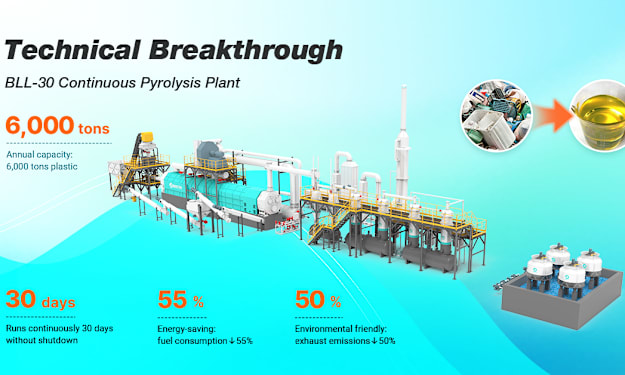
Profit from Waste: Business Opportunities in Pyrolysis of Plastic and Tires
In recent years, waste management has evolved from a mere environmental concern into a lucrative business opportunity. Among the innovative technologies emerging in this field, pyrolysis stands out as a transformative process capable of converting waste into valuable products. Specifically, the pyrolysis of plastic and tires has garnered attention for its dual impact: reducing environmental pollution while generating economic returns. This blog explores the business opportunities that arise from this waste-to-energy technology and why entrepreneurs and industries should consider investing in it.
By Bestonpyrolysisabout 21 hours ago in Earth
Electrification of Heat
by Futoshi Tachino What Changed Heating is undergoing a subtle revolution. In 2022, global sales of electric heat pumps jumped by 11% – the second year in a row of double-digit growth amid high fuel prices and new incentives [1]. Europe led the charge with nearly 3 million heat pumps sold in 2022 (an almost 40% increase from the prior year) [1]. For the first time, Americans also bought more heat pumps than gas furnaces: U.S. heat pump purchases topped 4 million units in 2022, narrowly eclipsing the sales of gas-fired furnaces that year [2]. This milestone was reached even before many new U.S. incentives kicked in, marking a quiet shift in how homes are heated across the country [2].
By Futoshi Tachino7 days ago in Earth



Comments
There are no comments for this story
Be the first to respond and start the conversation.