
Profit from Waste: Business Opportunities in Pyrolysis of Plastic and Tires
The Future of Circular Economy: Monetizing Plastic and Tire Waste

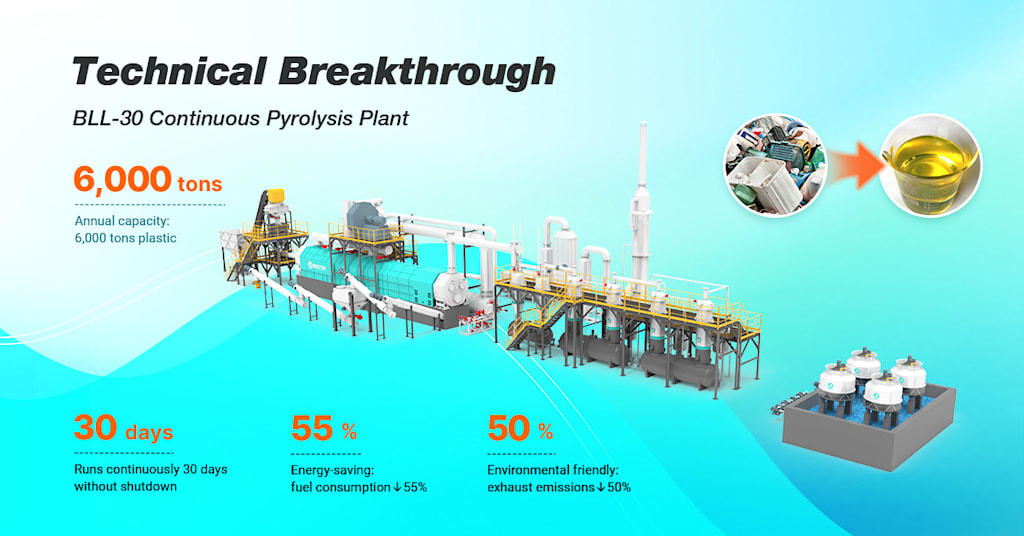
In recent years, waste management has evolved from a mere environmental concern into a lucrative business opportunity. Among the innovative technologies emerging in this field, pyrolysis stands out as a transformative process capable of converting waste into valuable products. Specifically, the pyrolysis of plastic and tires has garnered attention for its dual impact: reducing environmental pollution while generating economic returns. This blog explores the business opportunities that arise from this waste-to-energy technology and why entrepreneurs and industries should consider investing in it.
Understanding Pyrolysis
Pyrolysis is a thermochemical process that involves heating organic materials in the absence of oxygen to break them down into smaller molecules. Unlike traditional incineration, pyrolysis does not burn the waste; instead, it thermally decomposes it, producing three main outputs: pyrolysis oil, syngas, and char. Each of these products has significant commercial value. Pyrolysis oil can be refined into fuels or used as a chemical feedstock, syngas can generate electricity, and char can serve as a solid fuel or soil enhancer.
When applied to plastics and tires, pyrolysis becomes particularly promising. Tires, which are non-biodegradable and bulky, present a major disposal problem. Plastics, on the other hand, accumulate rapidly in landfills and oceans, causing severe environmental damage. By converting these wastes into energy-rich products, pyrolysis not only mitigates environmental issues but also opens new revenue streams.
Market Potential and Demand
The global market for pyrolysis technology is expanding rapidly. According to recent industry reports, the demand for waste-to-energy solutions is projected to grow significantly in the coming decade, driven by government regulations, environmental awareness, and rising energy costs. Specifically, tire-derived pyrolysis oil is gaining traction as an alternative fuel in industrial applications, while plastic pyrolysis oil is being explored as a substitute for diesel and other petroleum products.
Moreover, syngas generated from pyrolysis can be used on-site to power the pyrolysis plant itself, reducing operational costs and increasing profitability. The char produced, often rich in carbon, can be sold as a low-cost fuel for industries or used in agriculture to improve soil fertility, adding another revenue stream for businesses.
Economic Advantages of Pyrolysis
Investing in pyrolysis offers several economic advantages. First, it reduces waste management costs. Municipalities and companies often pay significant fees for landfill disposal or face fines for improper waste handling. By establishing a pyrolysis plant, these costs can be offset by generating marketable products from the same waste.
Second, pyrolysis plant creates high-value commodities from low-cost feedstocks. Tires and plastic waste, often considered liabilities, become raw materials that yield oil, gas, and char. Depending on scale, a mid-sized pyrolysis plant processing thousands of tons of waste per year can generate substantial profits, making the business model attractive for investors.
Third, the technology is adaptable. Modern pyrolysis plants can handle mixed plastics and tires, and advances in automation and process control have reduced labor requirements and improved product yields. This flexibility allows operators to adjust production based on market demand, further enhancing economic resilience.
Environmental Benefits and Branding Opportunities
Beyond profitability, pyrolysis provides environmental benefits that can strengthen a company’s brand. By diverting plastics and tires from landfills and reducing reliance on fossil fuels, pyrolysis contributes to sustainable development goals. Companies that adopt pyrolysis can promote themselves as environmentally responsible, attracting eco-conscious customers, investors, and partners.
Furthermore, governments worldwide are offering incentives for waste-to-energy projects. Tax breaks, grants, and carbon credits can enhance the financial viability of pyrolysis businesses. Early adopters can position themselves as leaders in the circular economy, gaining a competitive edge in a growing green market.
Challenges and Considerations
Despite its potential, entering the pyrolysis business requires careful planning. Capital investment can be substantial, depending on the plant’s capacity and technology. Regulatory compliance, particularly regarding emissions and waste handling, must be strictly followed. Market prices for pyrolysis oil and char can fluctuate, affecting profitability.
Therefore, thorough market research, strategic partnerships, and technical expertise are essential. Businesses that succeed in pyrolysis often combine efficient technology with strong supply chains for waste feedstock and established buyers for pyrolysis products.
Conclusion
The pyrolysis of plastic and tires represents a unique intersection of environmental responsibility and economic opportunity. By transforming waste into valuable products, businesses can generate profits while addressing pressing sustainability challenges. As technology advances and market demand grows, pyrolysis is poised to become a cornerstone of the circular economy. For entrepreneurs and investors willing to navigate the initial challenges, the message is clear: profit from waste is not just possible—it’s increasingly profitable.
About the Creator
Bestonpyrolysis
Engaged in waste plastic/tyre/rubber recycling, oil sludge treatment, biomass recycling, sewage sludge management and paper recycling…
https://bestonpyrolysisplant.com/
Keep reading
More stories from Bestonpyrolysis and writers in Earth and other communities.
Using Biochar Machines for Organic Waste Recycling on Farms
Every day, farms around the world generate tons of organic waste—crop residues, animal manure, rice husks, and fruit peels—that often ends up in landfills or is burned openly. These practices not only waste valuable resources but also release harmful greenhouse gases like methane and carbon dioxide, worsening climate change and polluting air and water. Fortunately, there’s a game-changing solution: biochar machines. These innovative devices transform farm organic waste into biochar, a carbon-rich "black gold" that enriches soil, reduces emissions, and closes the loop on agricultural waste. Let’s explore how biochar machines are reshaping organic waste recycling and paving the way for more sustainable farming.
By Bestonpyrolysis6 days ago in Earth
Waste Tire Pyrolysis and Hazardous Waste Classification
Policy Context of Waste Tire Management End-of-life tires (ELTs) represent a persistent challenge within solid waste governance frameworks. Their complex composition—comprising synthetic rubber, carbon black, steel, and various chemical additives—renders conventional disposal methods such as landfilling increasingly untenable. Consequently, thermochemical conversion technologies, particularly those deployed in a pyrolysis plant, have gained traction as an alternative valorization pathway.
By Wayne Shen7 days ago in Earth
The Portrait of Matteo
Seventeen-year-old Manny got off a public bus at a busy intersection in downtown Philadelphia. When the bus released its brakes and passed his narrow view, he checked whether the art museum across the street was still there. He had been visiting it every day that week but wondered for a second the veracity of its presence. Now, the spring sun betrayed its gray highlights, giving it a warm glow.
By Paul Aaron Domenick7 days ago in Fiction



Comments
There are no comments for this story
Be the first to respond and start the conversation.