Latest Stories
Most recently published stories in BookClub.
Unveiling Secrets in the Enchanting Marsh: 'Where the Crawdads Sing' - A Captivating Journey of Love, Mystery, and Resilience
"Where the Crawdads Sing" by Delia Owens is a mesmerizing and atmospheric novel that weaves together the beauty of nature, the complexities of human emotions, and a compelling murder mystery. As an avid reader and a lover of lyrical storytelling, I was captivated by the novel's poetic prose and powerful narrative. This evocative tale takes readers on a journey of self-discovery, resilience, and the indomitable spirit of a young woman living on the fringes of society.
By Danel Garcia3 years ago in BookClub
Don't Try: Charles Bukowski's Approach to Life
American writer and poet Charles Bukowski is renowned for his uncensored, biting, and frequently crass perspectives on life. In 1920, Bukowski was born in Germany, and in 1923, he moved to America with his family. Beginning when he was six years old, Bukowski's father often beat him. Bukowski, a German immigrant, endured bullying at school and throughout his adolescence due to comments made by other children about his dialect and garb.
By Ian Sankan3 years ago in BookClub
Kafkaesque: What Is It? - Franz Kafka's 'Philosophy'
One of the most influential writers in recent memory is Franz Kafka. He is renowned for his singularly dark, strange, and fantastical writing. Anything that mimics a certain style and quality that still exists is said to as Kafkaesque. To comprehend his writing's Kafkaesque characteristics It is beneficial to comprehend his early years. The couple Hermann and Julie had a son named Kafka in Prague in 1883. His dad was a highly successful, wealthy businessman who, as parents often do, rose from the working class, built a great company, married an educated woman, and joined the upper middle class via pure force of will and an outspoken, assertive attitude. Hermann desired a child who would be as tall as his ideal human being. That was not Franz Kafka. Franz was a little, fearful, and ill child at birth, and he largely stayed that way as an adult. Franz ended up being his father's worst disappointment and a kind of psychological punching bag as he tried to change him into the person he always wanted to be but was unable to be.
By Ian Sankan3 years ago in BookClub
Terrible Paradox of Self-Awareness
Sometimes the background to a piece of art is just as interesting as the finished product. Sometimes a piece's content's origin influences it. The narrative of 20th-century author Fernando Pessoa as well as his masterpiece, the Book of Disquiet, constitutes one of those instances where the background information reads like an original piece of fiction. Pessoa became accustomed to loss and impermanence at the young age of just five years old. He was born in 1888 in Lisbon, Portugal. after his younger brother passed away the next year after his father's death from TB. Soon after his mother's second marriage, his family migrated to South Africa, carrying with them Fernando's familiar surroundings.
By Ian Sankan3 years ago in BookClub
Pages Unbound
Welcome to Pages Unbound, a delightful journey into the enchanting world of books! Discover insightful reviews, engaging conversations, and exclusive insights from Vocal's passionate book-loving community. Embark on a literary adventure like never before!
By Pepe Magic3 years ago in BookClub
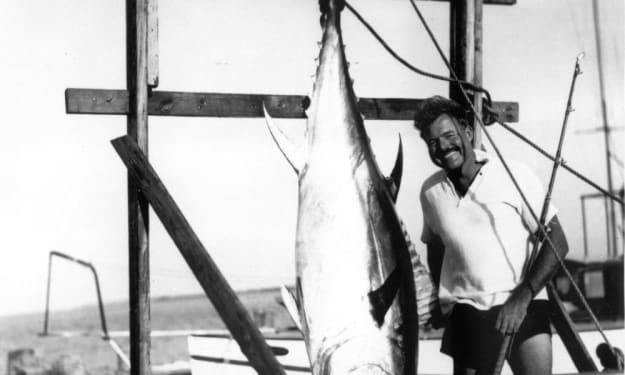
The Pleasures of Hemingway and Freud. Top Story - August 2023.
In “The Pilot Fish and the Rich,” a vignette included in the restored version of Ernest Hemingway’s last novel, A Moveable Feast, published posthumously in 1964, one can make the invisible claim that human minds are influenced by Sigmund Freud’s pleasure principle. We avoid unpleasure and seek pleasure. However, the ego’s instinct for self-preservation attempts to replace the pleasure principle with the reality principle which, out of practicality, postpones the ultimate pleasure we are seeking. Our sexual instinct, which is difficult to educate, often succeeds in overriding the reality principle to the detriment of the organism (Freud 3-7). Poor Papa is the poster boy for the pleasure principle. This vignette is an anguished memoir of his love for two women, his first wife Hadley, whom he eventually betrays, and the woman he betrays her with, Pauline Pfeiffer, his second wife.
By Lacy Loar-Gruenler3 years ago in BookClub
Juicy Festival 2024: The Ultimate Nostalgia Trip for Hip-Hop and R&B Fans
Are you ready to embark on a journey through time and immerse yourself in the golden era of hip-hop and R&B? If so, mark your calendars for the Juicy Festival 2024 – the ultimate nostalgia trip for music lovers. This highly anticipated event promises to be a one-of-a-kind experience that will transport you back to the glory days of the 90s and early 2000s when hip-hop and R&B ruled the airwaves.
By Emran Hasan3 years ago in BookClub
The princess who does not die
Princess Diana (the Queen of Hearts) Diana was known for her grace, charity, and humanitarian activities in numerous places around the world, whether it was for the homeless, the sick, or miners. Diana was also recognized for her affection for her two kids, Princes William and Henry, and her particular interest in them, despite her frequent disagreements with Prince Charles. Diana once stated, "Family is the most important thing in the world." And Diana believes that the most serious ailment afflicting the world now is a loss of people's feelings of love.
By walid nabil3 years ago in BookClub