Latest Stories
Most recently published stories in BookClub.
The psychology of emotion
The psychology of emotion explores how emotions influence our thoughts, behavior, and overall well-being. Emotions are complex responses to various stimuli, often involving physiological changes, thoughts, and subjective feelings. Our senses, such as sight, sound, touch, taste, and smell, play a crucial role in shaping our emotional experiences and our perception of reality. For example, visual stimuli can trigger emotions through colors, patterns, and facial expressions. Auditory cues like music or voices can evoke strong emotional responses. Touch can convey comfort, affection, or discomfort. Smells and tastes can trigger memories and emotional associations. These sensory inputs can influence how we interpret situations, form judgments, and make decisions. Our emotions also interact with our cognitive processes, affecting attention, memory, and decision-making. Emotions can bias our perception of events, leading to selective attention and memory recall. This, in turn, influences how we construct our understanding of the world around us. In essence, our senses provide the raw data that our brain processes into emotional experiences, which in turn shape our perception of reality. This dynamic interplay between our senses, emotions, and cognition plays a crucial role in determining how we respond to situations, relate to others, and navigate our lives.
By Uchenna Emmanuel 3 years ago in BookClub
Now, I AM an Axolotl. Top Story - August 2023.
There was a time when I would think about axolotls a lot. I used to go look at them in the aquarium of the Jardin des Plantes and would stay there hours contemplating them, observing their immobility, their shadowed movements. Now, I am an axolotl. Hubo un tiempo en que yo pensaba mucho en los axolotl. Iba a verlos al acuario del Jardín des Plantes y me quedaba horas mirándolos, observando su inmovilidad, sus oscuros movimientos. Ahora soy un axolotl. JULIO CORTAZAR (1914-1987)
By Rob Angeli3 years ago in BookClub
Japan History
Japan: A Journey Through Time and Culture Nestled on the eastern edge of the vast Eurasian continent lies a captivating archipelago known as Japan. This land, adorned with breathtaking natural beauty and enriched by centuries of distinctive artistry, boasts a history unlike any other nation. Japan has managed to preserve its unique and distinct culture through the ages, culminating in its rise from the ashes of defeat to become a global economic powerhouse, particularly excelling in the realms of automotive and electronics industries.
By jahseh onfroy3 years ago in BookClub
Stranger
I was reading, reading, reading. I couldn't stop myself. Dean Koontz's (Strangers) "Schwarzer Mond" kept me awake. The novel had such a vivid effect on me that every word stayed with me. I received the impression that I was a character in this book. I was completely absorbed by the book and its language.
By Dagmar Goeschick3 years ago in BookClub
Transformation Between Pages: The Groundbreaking Force of a Book
Books are vessels of intelligence and disclosure. They convey stories that enchant, edify, and now and again even reshape our actual center. The Book Club people group praises this peculiarity, empowering perusers to dive into the abstract jewels that have significantly affected their lives.
By Manjit@6400..3 years ago in BookClub
Unveiling the Magical Legacy: How Harry Potter Forever Altered Literature and Pop Culture
Disclaimer: Image generated by AI J.K. Rowling's enchanting "Harry Potter" series has left an indelible mark on the world of literature and pop culture since its inception in 1997. Spanning seven novels and eight film adaptations, the wizarding world of Harry Potter has captivated hearts, ignited imaginations, and inspired a global fandom. Its impact on literature, film, and societal discourse is nothing short of magical.
By Shorya Gaur3 years ago in BookClub
The twilight series: ALL books review
1-"Twilight" Stephenie Meyer introduces us to a world where vampires exist among humans. Bella Swan's arrival in Forks, Washington, leads to an unexpected connection with the enigmatic Edward Cullen. Their forbidden love story unfolds against a backdrop of danger, immortality, and the struggle between vampire nature and human desire.
By Faisal Gheyath3 years ago in BookClub
Exploring Redemption and Guilt in 'The Kite Runner': Themes and Analysis"
Disclaimer- Image generated with AI "The Kite Runner," a novel written by Khaled Hosseini, has captivated readers worldwide with its powerful exploration of themes such as redemption, guilt, friendship, and the impact of personal choices. Set against the backdrop of a changing Afghanistan, the story follows the tumultuous journey of its protagonist, Amir, as he navigates the complexities of his relationships and grapples with the consequences of his actions.
By Shorya Gaur3 years ago in BookClub
Harry potter: ALL BOOKS review
1-"Harry Potter and the Sorcerer's Stone" A captivating advent to the wizarding world, J.K. Rowling weaves magic into each page. Young Harry's discovery of his identification and access into Hogwarts are full of marvel, friendship, and a touch of risk.
By Faisal Gheyath3 years ago in BookClub
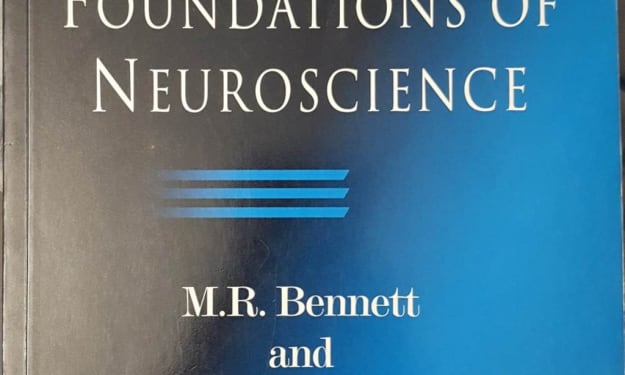
Philosophical Foundations of Neuroscience — Eighteen Years Later
Authors preface: I first published this review on Vocal two years ago, and before that I had published a version on Medium. With each republication I have updated or revised various sections. Thought it made sense to resurrect it one more time for a Vocal Book Club Challenge to "write about a book that changed you." This particular book, PFoN, I happen to believe, is one of the most important ever written and, it has impacted my own thinking on a huge range of topics very deeply. At the time this was written I was reading tons and tons about neuroscience. Specifically at this time I had recently completed reading a number of works by Patricia Churchland Smith, a neuroscientist/philosopher of great renown. I found her views disturbing and her positions misguided. She is the queen of the mereological fallacy (see below for what this is) often using the brain and the person interchangeably as she views them as one and the same. She also believes that if we fully understood everything about how the brain works, we could recreate particular states of consciousness. She is the ultimate hard core reductionist and views consciousness as nothing more than a particular series of electro-chemical reactions in the brain which, like particular states of consciousness, we could replicate artificially if we fully understood. No body would be required for this miraculous achievement. My guess is the AI crowd is a big fan of her work, myself, not so much. In any event, Dr. Churchland-Smith is a frequent target of Bennet and Hacker's logical breakdowns of various neuroscientific studies and claims about the brain and consciousness, which they dissect and show to be in error point by point.
By Everyday Junglist3 years ago in BookClub
**"Eco-Enlightenment: Nurturing Connections Through 'Wilderness Wisdom'"
In the vast landscape of literature that I've explored, one book stands out as a transformative force in my life. "Wilderness Wisdom" by Rachel Carson is not only a book; it's a guiding light that led me to a deeper connection with nature, a renewed sense of wonder, and a profound realization about our place in the world.
By Jananan Sandajeshan3 years ago in BookClub