
Living as a Lonely Shadow of the Times, Between Madness and Sanity
A Review of Joker

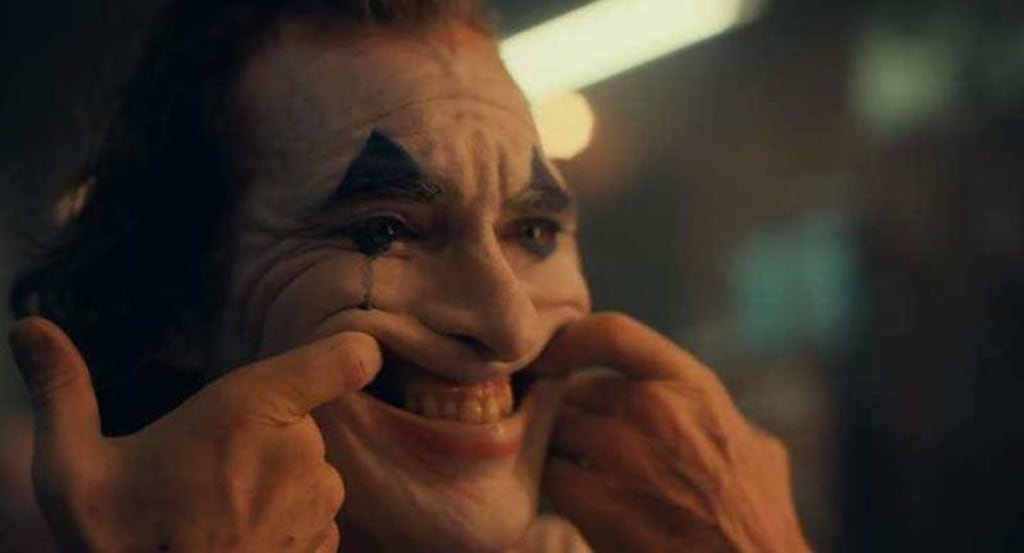
Joker is never a mere supervillain origin story. With extreme cinematic language, it lays bare the complete collapse and descent into madness of a man at the bottom of society. Through Arthur Fleck’s tragedy, it interrogates the coldness and absurdity of an entire era. When the line “Between madness and sanity, we are all outcasts of our time” becomes his defining footnote, the film allows every viewer to see in light and shadow their own misunderstood loneliness, unvented repression, and struggle on the edge of order and breakdown. Breaking free from the superhero narrative framework, it uses the subtlety and depth of an art film to portray human fragility and social ills to perfection, becoming a classic of both artistic value and real-world reflection.
Arthur Fleck is a marginalized man living in the slums of Gotham. He earns a meager living dressing as a clown, cares for his mentally ill mother, and holds the humble dream of becoming a stand-up comedian. His world is shrouded in gloom from the start: violent beatings on the street, malicious scheming by colleagues, cold criticism from his boss, and uncontrollable pathological laughter that makes him an outcast everyone avoids. He once tried hard to fit in, obeying all social rules, forcing smiles at strangers, and writing in his notebook: “I hope my death makes more cents than my life.” This sober obsession was his final compromise and hope for life.
Yet the coldness of Gotham gradually crushed that sanity. Budget cuts at social services cut off his only access to therapy and medication. The comedy stage that should have brought joy became a place where he was mocked by all. Even the mother-son bond he cherished turned out to be an outright lie. Every spark of hope was followed by a heavier fall into despair. Arthur sank deeper into the mire of reality, his sanity intertwining with madness. He knew clearly he was being abandoned by the world, yet could not accept that fate. Thus, the line of reason gradually crumbled under repeated blows.
The film’s most powerful portrayal is Arthur’s constant tug-of-war between madness and sanity. His first uncontrolled killing on the subway was an instinctive rebellion after long repression. In that moment, his hands shook, his heart panicked, and clarity filled him with fear — yet inner rage gave him an unprecedented sense of release. He began to dance freely in the streets, painting the Joker’s makeup in front of the mirror. The exaggerated red lips and green hair were no longer a pursuit of comedy, but a disguise for his true self, and a sign that madness was devouring his sanity. There were still moments when he regained his reason, staring at his reflection in unfamiliarity and terror. But the coldness of the times and cruelty of reality had left him no way back.
Arthur’s madness was never innate. It was a tragedy forged by the era. Gotham’s extreme wealth gap left the upper class indulging in luxury while ignoring the poor, treating the suffering of the bottom as a joke and the struggle of the marginalized as melodrama. The social safety net was hollow: indifference to the mentally ill, abandonment of the vulnerable, leaving countless “Arthurs” isolated and helpless. When mayoral candidates talked grandly on TV while turning a blind eye to street violence and poverty; when the rich enjoyed highbrow theater in opulent halls while sneering at the poor outside — the absurdity and indifference of the era became the breeding ground for the Joker.
Arthur is not an exception. He is the epitome of countless ordinary people discarded by their time. In this fast-paced, high-pressure society, anyone could become Arthur: struggling to survive without respect, holding simple dreams shattered by reality, accumulating grievances with no one to talk to, digesting pain alone at night. We have all clung to our principles in sanity, yet at some point felt the urge to break free and fall into madness. Between madness and sanity, we are all pushed by the times, and inadvertently become its outcasts.
The Joker in the film is never a “villain” in the traditional sense. He is a resistee driven to despair by the era. His madness is the most desperate accusation against a cold world. When he dances wildly on the stairs, that powerful dance is his final farewell to his old self and a declaration of war against an unjust world. When he shoots the talk show host who mocked him on live TV, his sanity vanishes completely, and madness becomes his only identity. Yet the people of Gotham hail him as a hero, for he did what countless at the bottom dared not.
This celebrated madness only highlights the sorrow of the era. When one man’s collapse becomes a city’s carnival, when a mentally ill person’s rebellion becomes an outlet for public anger, the sickness of the times runs deep. The film gives Arthur no redemptive ending, nor Gotham a bright future. As the Joker is taken away by police and riots escalate, the screen fades to black, leaving viewers with endless reflection: Is our era also creating countless Arthurs? How can we avoid becoming outcasts between madness and sanity?
The charm of Joker lies in its lack of forced sentimentality or absolute moral judgment. It simply uses authentic cinematography to show one man’s tragedy and the flaws of an entire era. It reveals that human fragility cannot withstand repeated destruction, and that social warmth is the only power ordinary people have against darkness. If we show more kindness to strangers, more care to the vulnerable, more tolerance to the world — perhaps fewer Arthurs will be driven to madness, fewer people will bear the loneliness of being abandoned between sanity and insanity.
In this complex and absurd world, we all walk on the edge of madness and sanity. We may all feel the helplessness of being discarded. Yet Joker tells us: even when life is full of shadows, even when the world is bitterly cold, we must never lose our sober attachment to life or our hope for human goodness. Only by holding onto sanity can we avoid being swallowed by madness, become rootless shadows, and keep our own warmth and light in a cold world. For the era itself, only by seeing the struggle of every ordinary person and protecting the dignity of every marginalized soul can the tragedy of the Joker be prevented from repeating.
About the Creator
John Gorka
For more than four decades, John Gorka has occupied a distinctive place in American folk music: a songwriter whose work unfolds quietly but lingers deeply. His songs favor careful observation over spectacle, humor alongside gravity, and melodies that invite listeners closer rather than overwhelm them. It is a career built less on flash than on endurance—one song, one audience, one intimate room at a time.
By Brian D'Ambrosio 4 days ago in Beat



Comments
There are no comments for this story
Be the first to respond and start the conversation.