
Common Challenges in Dynamics 365 Healthcare Implementation (and Solutions)
Explore key challenges in implementing Dynamics 365 for healthcare and proven solutions to ensure seamless integration, compliance, and successful digital transformation.

Implementing Dynamics 365 for healthcare can significantly improve patient engagement, streamline operations, and enhance revenue cycle management. However, like any enterprise platform, healthcare organizations often face several challenges during implementation.
Understanding these challenges and how to address them can ensure a smoother deployment and maximize ROI.
1. Integration with Legacy Systems
Challenge:
Healthcare organizations typically operate with multiple legacy systems such as EHRs, billing platforms, and lab systems. Integrating these with Dynamics 365 for healthcare can be complex.
Solution:
- Use middleware and APIs for seamless integration
- Adopt standardized data formats like HL7/FHIR
- Partner with experienced implementation providers
Outcome:
A unified data ecosystem that enables better decision-making and interoperability.
2. Data Migration and Data Quality Issues
Challenge:
Migrating large volumes of healthcare data often leads to inconsistencies, duplication, and data loss.
Solution:
- Conduct thorough data audits before migration
- Cleanse and standardize data
- Use automated migration tools with validation checks
Outcome:
Accurate, reliable data that supports analytics and reporting.
3. Compliance and Security Concerns
Challenge:
Healthcare organizations must comply with strict regulations such as HIPAA, making security a top priority when implementing Dynamics 365 for healthcare.
Solution:
- Implement role-based access controls
- Encrypt sensitive patient data
- Ensure compliance configurations are in place
Outcome:
Secure systems that meet regulatory requirements and protect patient information.
4. User Adoption and Training
Challenge:
Resistance to change and lack of training can hinder adoption among healthcare staff.
Solution:
- Provide role-based training programs
- Offer continuous support and onboarding
- Design user-friendly dashboards and workflows
Outcome:
Higher adoption rates and improved productivity across teams.
5. Customization vs. Standardization
Challenge:
Healthcare organizations often require custom workflows, but excessive customization can increase complexity and costs.
Solution:
- Prioritize standard features where possible
- Use low-code/no-code tools for customization
- Align customization with long-term business goals
Outcome:
A balanced system that is both flexible and maintainable.
6. High Implementation Costs
Challenge:
Initial implementation costs—including licensing, integration, and training—can be significant.
Solution:
- Adopt a phased implementation approach
- Focus on high-impact use cases first
- Optimize licensing and resource allocation
Outcome:
Better cost management and faster return on investment.
7. Lack of Clear Strategy and Planning
Challenge:
Without a well-defined roadmap, implementations can face delays and inefficiencies.
Solution:
- Define clear business objectives
- Align stakeholders across departments
- Create a detailed implementation roadmap
Outcome:
Streamlined execution with measurable outcomes.
8. Scalability and Performance Issues
Challenge:
As healthcare organizations grow, systems must handle increasing data volumes and user demands.
Solution:
- Leverage cloud-based infrastructure
- Optimize system architecture
- Monitor performance continuously
Outcome:
Scalable systems that support long-term growth.
9. Change Management and Organizational Alignment
Challenge:
Digital transformation impacts workflows, roles, and processes, requiring organizational alignment.
Solution:
- Establish strong leadership support
- Communicate benefits clearly to stakeholders
- Implement structured change management practices
Outcome:
Smooth transition with minimal disruption.
10. Limited Expertise and Technical Knowledge
Challenge:
Many healthcare organizations lack in-house expertise to implement and manage Dynamics 365 for healthcare effectively.
Solution:
- Partner with experienced Dynamics 365 consultants
- Invest in training and certifications
- Leverage managed services for ongoing support
Outcome:
Successful implementation with reduced risk and improved system performance.
Conclusion
While implementing Dynamics 365 for healthcare comes with challenges, these can be effectively managed with the right strategy, tools, and expertise.
By addressing integration, data quality, compliance, and user adoption proactively, healthcare organizations can unlock the full potential of the platform driving better patient outcomes, improved operational efficiency, and long-term digital transformation success.
About the Creator
Keep reading
More stories from Lilly Scott and writers in Writers and other communities.
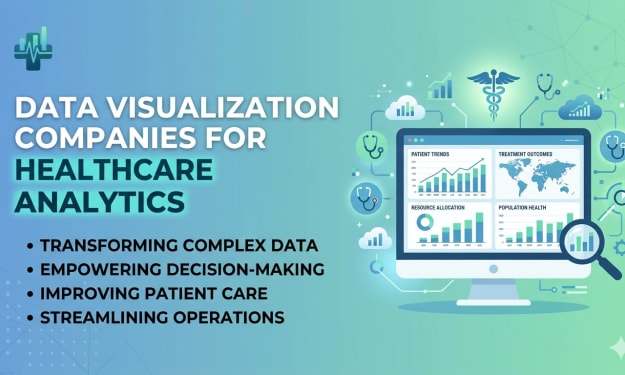
Leading Data Visualization Companies for Healthcare Analytics
Healthcare organizations are generating vast amounts of data from EHR systems, billing platforms, and patient monitoring tools. To turn this data into actionable insights, businesses are increasingly partnering with Data Visualization Companies that specialize in healthcare analytics.
By Lilly Scotta day ago in Writers
Prodigal Daughter
Muscles tensed. Stomach clenched. An involuntary regurgitation sweetened and seared her mouth. Watery eyes blinked. She knocked, too softly. She could run. The intercom hissed. Pounding blood drowned the words. The door swung open. For the first time in years, she breathed the aroma of mother's cooking.
By Rebekah Conard8 days ago in Writers
You Should Stop Trying to Be a Better Person
A year ago, I spent two days in the Colombian mountains drinking ayahuasca as part of a spiritual ceremony. An experience that pulled apart every detail of my being and rearranged me in a new sequence. I wish that life became easier after the feat. It didn’t.
By Annaise Michelle3 days ago in Humans


Comments
There are no comments for this story
Be the first to respond and start the conversation.