
Mate, Stop Going to the Same Five Places in Australia
Most people visit Australia. Very few people see it

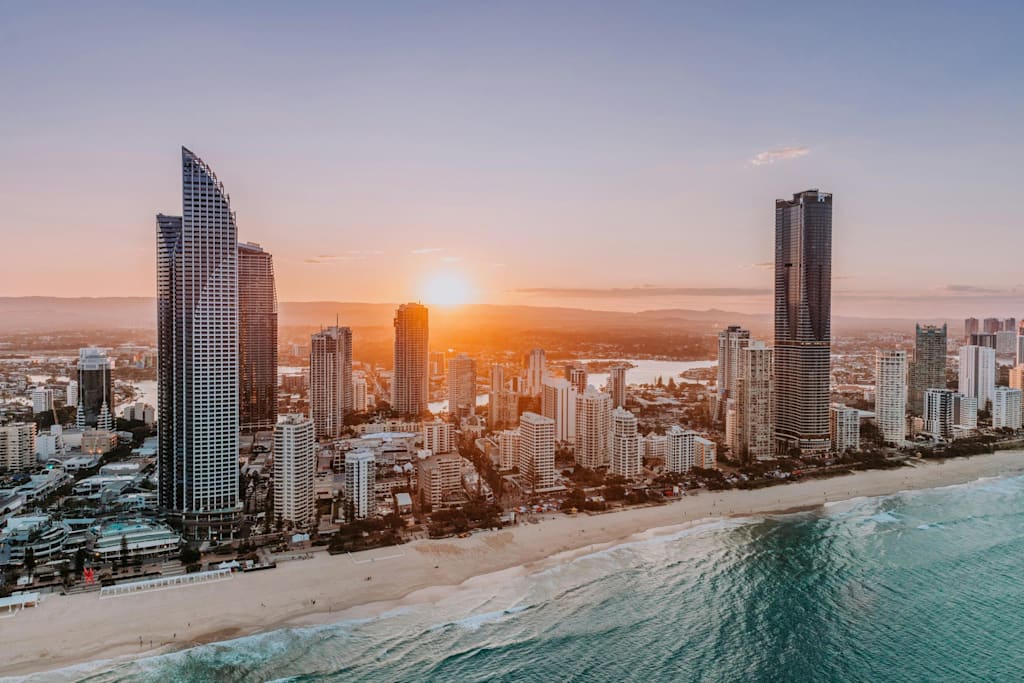
Every year, millions of people fly into Sydney or Melbourne, open the same travel blog that has been recycled since 2015, and proceed to queue at the exact same things as the last few million people who did exactly the same thing. Bondi Beach. The Opera House exterior. The Twelve Apostles. Surfers Paradise. The Great Ocean Road in a hire car driven slightly too fast because there is a flight to catch in two days.
None of these are bad, to be clear. But there is something quietly depressing about watching someone spend three weeks in one of the most interesting countries on Earth and come back with photos that are identical to every other set of photos from Australia you have ever seen. The Opera House at golden hour. The Twelve Apostles from the viewing platform with forty other people slightly in frame. Bondi, which on a Saturday in January is basically a theme park that smells of sunscreen.
Australia is enormous. Incomprehensibly so, if you have grown up somewhere in Europe or Asia where you can drive for two hours and cross two countries. The landmass is roughly the size of the continental United States. It has eight distinct climate zones, something like five hundred national parks, coastline that stretches for nearly fifty thousand kilometres, and a food and coffee culture that most cities in the world would quietly kill for. And yet the average international visitor sees maybe four postcards worth of it and calls it done.
So here is a gentle suggestion, meant with complete affection: stop doing the thing everyone does, because you are missing most of the country.
Take the Twelve Apostles. The drive along the Great Ocean Road is legitimately beautiful — the coastline through Lorne and Apollo Bay is dramatic and genuinely worth the time. But the Twelve Apostles themselves are, when you finally arrive after driving past a hundred better views, a collection of limestone stacks standing in the sea. Eight of them, currently, because four have collapsed over the years. You stand on a viewing platform with a crowd, take a photo from the same angle as the one on the tourism website, and then what? You get back in the hire car and drive back to Melbourne. Meanwhile, thirty kilometres further down the road, the Bay of Islands and the Bay of Martyrs have almost nobody there and are, by most honest accounts, better views. But they are not in the itinerary, so they do not get visited.
Bondi Beach has the same problem. It is not a bad beach. But Australia has approximately ten thousand other beaches, many of which are quieter, cleaner, equally beautiful, and not surrounded by overpriced cafes charging twenty-two dollars for avocado toast while tourists jostle for a patch of sand. Palmy, a few hours north. Hyams Beach in Jervis Bay, which has some of the whitest sand in the world and on a midweek morning you can sometimes have a stretch of it completely to yourself. The beaches around Noosa, which are warm and calm and backed by national park rather than high-rises. None of these are secrets exactly, but they are not on the standard itinerary and so millions of people fly past them on the way to Bondi.
Melbourne gets slightly better treatment from visitors because the city rewards wandering in a way that Sydney's tourist circuit does not. But even there, people tend to cluster around the same few laneways and tick off the same coffee spots and consider themselves done. The Dandenong Ranges are forty minutes from the CBD and feel like a different country — fern gullies, mist, mountain ash trees that are among the tallest flowering plants on Earth. The Mornington Peninsula has hot springs and wineries and a coastline that is completely different from Melbourne's Port Phillip Bay side. Ballarat and Castlemaine are both extraordinary gold rush towns with architecture and food scenes that would be significant in any European city. Nobody goes, because they are not Sydney and they are not Melbourne.
And then there is the Gold Coast, which is interesting because it suffers from the opposite problem. Everyone goes to the Gold Coast, but almost everyone goes to the same two square kilometres of it — the strip around Surfers Paradise, which is perfectly fine as a beach city goes but is more or less the least interesting part of the whole region. The hinterland, twenty to forty minutes inland, is ancient subtropical rainforest with waterfalls and glowworm caves and hiking trails through trees that are older than most countries. Springbrook National Park. Tamborine Mountain, which has a distillery making spirits from native botanicals and a gallery walk and a rainforest skywalk that costs less than a cocktail at any bar in Surfers. Lamington National Park, which is World Heritage listed and has a resident population of visitors that on most weekdays is close to zero.
Most people staying in Surfers Paradise never make it up there because they do not have a car, or because the beach is right there and the pull of the obvious is strong, or because nobody told them it was worth the effort. Some of them figure it out eventually and spend a day in the hinterland and come back saying it was the best day of the trip. A few of them sort out the transport properly beforehand — hire car, or sometimes a chauffeur service on the Gold Coast for a day if they want someone else to deal with the mountain roads and the navigation — and see the hinterland at their own pace rather than squeezed into a group tour schedule. Either way, the ones who make it up there tend to wonder why they spent so much time on the strip.
None of this is meant as an attack on popular places. The Opera House is worth seeing. Bondi is pleasant. The Great Ocean Road is a genuinely beautiful drive. The point is not that these things are bad but that the habit of only doing the obvious things means you spend your entire trip in the most crowded, most expensive version of Australia, surrounded mostly by other people who are also only doing the obvious things, and you come home having seen a very small and not particularly representative slice of an extraordinary country.
The Flinders Ranges in South Australia are one of the oldest geological formations on Earth and look like nothing else in the country. Fremantle in Western Australia is a port city with a pub culture and food scene and general energy that is completely distinct from any of the east coast cities. The Daintree Rainforest in Queensland predates the Amazon. Kangaroo Island, before the fires and through the recovery, is still one of the most concentrated wildlife experiences in the southern hemisphere. The Hunter Valley is two hours from Sydney and has world-class wine and almost nobody on a Tuesday. Tasmania has an entire internationally significant art museum, MONA, sitting on the edge of the Derwent River in Hobart, and most people do not even put Hobart on a domestic itinerary.
Australia rewards the people who spend a few hours looking slightly left and right of the obvious. Not because the obvious things are not worth doing, but because the country is so much bigger and stranger and better than the version of it that ends up on most itineraries. Go to Bondi if you want. Walk past the Opera House. Do the Twelve Apostles at sunrise if that is genuinely what you came for.
Just maybe also look up what sits forty minutes in any direction from wherever you are staying. Because that is almost always where the actual trip is.
About the Creator
Sublime Chauffeur
Sublime Chauffeur Melbourne has been offering top-notch chauffeur services in Melbourne. We’ve got you covered with our reliable and stylish travel options.
Keep reading
More stories from Sublime Chauffeur and writers in Wheel and other communities.
When the City Sleeps: Melbourne’s Chauffeur Network at Night
Melbourne after sunset is a different kind of city. The rush of daytime commuters fades into an easy hum, neon signs flicker on in quiet lanes, and the sound of late-night trams becomes part of the background rhythm. For the people behind the wheel of Melbourne’s chauffeur network, this is when a different chapter of the day begins — one shaped by precision, comfort, and an understanding of the city’s night-time flow.
By Sublime Chauffeur8 months ago in Wheel
What Fransisca Lia Ernina Teaches About Long-Term Business Growth
In a world where businesses often chase quick success, long-term growth has become a rare skill. Many entrepreneurs focus on short-term wins—viral marketing, fast sales, or instant profits—but struggle to sustain momentum. That’s where the approach of Fransisca Lia Ernina feels refreshing. Her perspective centers on patience, clarity, and building something that actually lasts.
By Alexanderaaryaa day ago in Wheel
When Is It No Longer Worth Fixing Your Car?
If your car has started giving you frequent problems, you’re not alone. Many car owners reach a point where repairs become more common and more expensive. At that stage, a common question comes up: is it still worth fixing the car, or is it time to move on? This decision can feel confusing, especially if you’ve owned the car for years. In this article, we’ll walk through clear signs and practical factors that can help you decide what makes the most sense financially and practically.
By Alec Johnson4 days ago in Wheel




Comments
There are no comments for this story
Be the first to respond and start the conversation.