
United States Payment Gateway Market Set for Strong Growth as Digital Commerce Reshapes Payments
From e-commerce acceleration to AI-driven fraud protection, the U.S. payment gateway industry is becoming the invisible engine behind faster, safer, and smarter transactions.

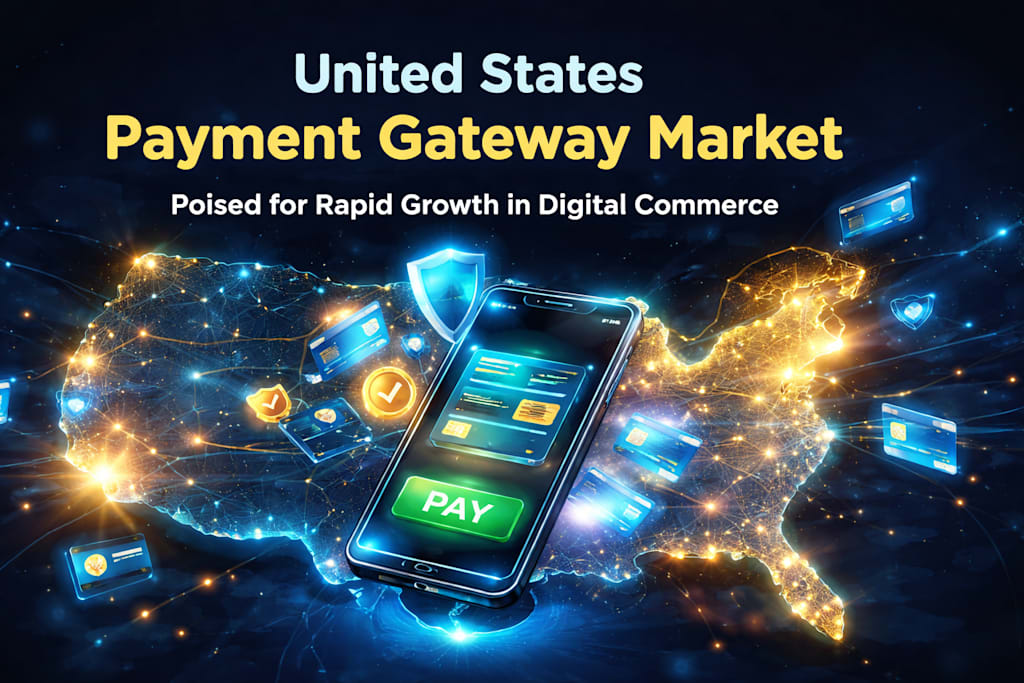
In the modern American economy, buying something no longer begins and ends at a checkout counter. It may happen on a smartphone at midnight, inside a retail app during a lunch break, or through a recurring subscription that runs in the background without a second thought. Behind each of those transactions is a technology layer most consumers never notice but businesses cannot operate without: the payment gateway.
That invisible layer is now becoming one of the most important pillars of the U.S. digital economy.
According to Renub Research, the United States Payment Gateway Market is expected to rise from US$ 6.12 billion in 2025 to US$ 9.39 billion by 2034, growing at a CAGR of 4.87% from 2026 to 2034. That projection reflects more than simple market expansion. It signals a deeper shift in how Americans shop, how merchants accept money, and how digital trust is built at scale.
As online retail, mobile commerce, subscription services, and digital wallets continue to expand, payment gateways are moving from back-end infrastructure to strategic business tools. In a world where speed, convenience, and security define customer loyalty, the companies enabling seamless payments are becoming central to growth.
Why Payment Gateways Matter More Than Ever
At the most basic level, a payment gateway is the system that authorizes and processes digital payments between a customer, a merchant, and a financial institution. But in practice, it does much more than simply move money.
A modern payment gateway helps businesses accept credit cards, debit cards, digital wallets, bank transfers, and even emerging payment forms across websites, apps, and physical stores. It verifies transactions in real time, encrypts sensitive data, screens for fraud, and ensures payments are settled efficiently. In short, it makes digital commerce possible.
That role has become increasingly critical as commerce itself becomes more fragmented and omnichannel. Consumers expect to buy from anywhere and pay however they want. If a checkout experience is slow, confusing, or insecure, businesses risk losing the sale instantly.
This is why payment gateways are no longer viewed merely as technical tools. They are now part of customer experience, revenue optimization, fraud prevention, and brand trust.
The E-Commerce Effect Is Still Fueling Growth
One of the biggest reasons the U.S. payment gateway market continues to expand is the ongoing strength of e-commerce. Even after the digital acceleration of recent years, online shopping is still evolving rapidly rather than slowing down.
Consumers are increasingly comfortable purchasing everything from groceries and electronics to financial services and healthcare products online. Businesses, in response, are investing in faster checkout flows, one-click payments, subscription billing, and embedded commerce experiences. Each of these models depends on gateway infrastructure that can process transactions securely and at scale.
Mobile commerce is adding another layer of demand. Consumers are shopping through apps and social platforms more frequently, and they expect payment systems to work with minimal friction. This means payment gateways must now support a wide range of user behaviors, devices, and platforms without compromising speed or trust.
The result is a payment environment where reliability is no longer optional. A gateway failure, even for a few seconds, can translate into lost revenue, abandoned carts, and damaged customer confidence.
Digital Wallets, Contactless Payments, and New Consumer Habits
Another major force reshaping the market is the growing adoption of digital wallets and contactless payments.
Consumers increasingly prefer frictionless payment methods that reduce the need to manually enter card details or handle physical cash. Whether it is paying online through a saved wallet, tapping a phone in-store, or completing a purchase through a wearable device, the expectation is the same: the process should feel instant.
Payment gateways are adapting by supporting more flexible payment acceptance methods and integrating directly with digital wallet ecosystems. This not only improves convenience for consumers but also helps merchants increase conversion rates and reduce checkout abandonment.
This shift is especially important in sectors like retail, travel, hospitality, media, and digital services, where customer experience can directly influence repeat purchases. The smoother the payment journey, the stronger the business outcome.
Security Is Now a Competitive Advantage
If convenience is one side of the payment revolution, security is the other.
The more digital transactions grow, the more fraud risks grow with them. Payment gateway providers are under constant pressure to stop unauthorized activity, protect customer information, and maintain trust across millions of transactions.
That is why technological innovation has become such a defining feature of the U.S. payment gateway market. AI, machine learning, and advanced analytics are being integrated into gateway systems to detect suspicious behavior, monitor transaction anomalies, and reduce fraud in real time.
Beyond intelligence, security infrastructure itself has become more sophisticated. Features such as tokenization, end-to-end encryption, and 3D Secure protocols are increasingly standard in modern gateway systems. These tools help reduce exposure to sensitive card data while creating safer digital payment environments for both merchants and consumers.
In today’s market, strong security is not just about compliance. It is also a competitive differentiator. Merchants want partners that can help them reduce chargebacks, prevent fraud losses, and reassure customers that their data is protected.
Cross-Border Commerce Is Expanding the Opportunity
A particularly important growth driver is the rise of cross-border e-commerce.
American businesses are increasingly selling to international consumers through online marketplaces, direct-to-consumer websites, and subscription platforms. This expansion creates demand for payment gateways that can handle multi-currency transactions, foreign payment preferences, tax calculations, and international compliance requirements.
For businesses, this means gateways are no longer just domestic transaction tools. They are global commerce enablers.
A customer in Europe, Asia, or Latin America expects a checkout experience that feels familiar and localized. If a U.S. merchant cannot provide that experience, conversion rates can suffer. Payment gateways that support real-time currency conversion and region-specific payment methods are helping businesses bridge that gap and expand globally with greater confidence.
As digital exports, online services, and international subscriptions continue to grow, cross-border functionality is likely to become an even more valuable differentiator.
Fintech Innovation Is Accelerating Change
The U.S. payment gateway market is also being energized by the country’s highly active fintech ecosystem.
Startups and technology-driven payment firms are introducing new models that go far beyond simple transaction processing. From Buy Now, Pay Later integrations and mobile-first payment apps to AI-powered fraud tools and open banking capabilities, innovation is reshaping what a payment gateway can offer.
Traditional banks and established payment providers are responding by partnering with fintech companies, acquiring new capabilities, and modernizing their platforms. This creates a highly dynamic market where innovation cycles are shorter, competition is sharper, and customer expectations keep rising.
One of the clearest signs of this shift is the growing importance of API-driven and cloud-based payment architecture. Businesses want payment systems they can integrate quickly into websites, mobile apps, SaaS platforms, and omnichannel retail operations. Flexible APIs are becoming essential because businesses no longer want rigid systems; they want payment tools that fit their customer journey, not the other way around.
Regulation Is Shaping Trust and Adoption
In a market built on money movement and data security, regulation matters deeply.
The U.S. payment gateway industry must comply with strict standards such as PCI DSS, along with a growing mix of federal and state-level data protection, fraud prevention, and financial compliance requirements. These standards are not simply legal obligations; they are part of the trust framework that supports digital commerce.
For merchants, working with a compliant gateway reduces operational and reputational risk. For consumers, it provides reassurance that their transactions are being handled responsibly. For gateway providers, it creates both a barrier to entry and an opportunity to differentiate through reliability and transparency.
As digital payments continue to evolve, compliance will likely remain one of the most important foundations of long-term market growth.
The Challenges the Industry Cannot Ignore
Despite its strong outlook, the U.S. payment gateway market is not without pressure points.
One major challenge is high competition and market saturation. The industry includes large global providers, traditional financial institutions, specialized fintech firms, and emerging startups. That crowded environment makes it difficult for providers to stand out, especially when merchants are constantly comparing pricing, speed, service quality, and feature depth.
For smaller players, competing with established brands can be especially difficult. Larger firms often have stronger distribution networks, deeper technical resources, and more recognizable names. As a result, providers must constantly innovate just to stay relevant.
A second major challenge is technical integration and infrastructure complexity. Payment gateways must work across websites, mobile apps, POS systems, marketplaces, subscription platforms, and back-office systems. Integration can be technically demanding, especially for small and mid-sized businesses that lack in-house expertise.
When integration is poor, the consequences are immediate: failed transactions, payment delays, customer frustration, and lost revenue. This makes usability and developer-friendliness just as important as raw processing capability.
Regional Hotspots Are Driving Innovation
While the payment gateway market is national in scale, several states stand out as especially important centers of activity.
California remains a major force due to its concentration of fintech innovation, venture capital, and technology talent. With companies such as CyberSource and WePay contributing to the ecosystem, the state continues to influence how payment technology evolves in the broader U.S. market.
Texas is also emerging as a powerful payments hub, fueled by business-friendly growth, strong digital commerce adoption, and fintech activity across cities like Dallas, Houston, Austin, and San Antonio. Its combination of local payment firms and national platform activity makes it one of the most strategically important markets in the country.
New York, with its financial services dominance and dense merchant base, continues to be a major center for payment innovation, cross-border processing, and compliance-driven financial technology.
Meanwhile, Florida is gaining momentum through growing adoption across tourism, retail, utilities, and service industries, supported by a rising fintech presence in cities such as Miami, Tampa, and Jacksonville.
Together, these regional ecosystems show that payment gateway growth is not just about technology. It is also about business concentration, startup energy, merchant adoption, and local digital transformation.
Recent Moves Show Where the Market Is Headed
Recent developments in the market offer useful clues about the industry’s direction.
In April 2024, Dwolla launched new open banking services aimed at improving account-to-account payments, making implementation easier for businesses through pre-integrated provider connections. That move reflects the growing importance of faster, more direct bank-based payment flows.
Also in April 2024, Stripe announced a partnership with URBN to manage retail transactions across brands such as Urban Outfitters, Anthropologie Group, Free People, and FP Movement in both online and in-store environments. The goal was not just payment acceptance, but better authorization rates, smoother checkout consistency, and a stronger foundation for future commerce innovation.
These developments reinforce a clear industry truth: payment gateways are evolving from transaction processors into strategic commerce infrastructure.
Final Thoughts
The U.S. payment gateway market is entering a more mature but more important phase of growth.
As digital commerce becomes the default rather than the exception, businesses need payment systems that are fast, secure, scalable, and deeply integrated into customer experience. That means the future of the market will not be shaped by who can merely process a payment, but by who can make the payment experience smarter, safer, and more invisible.
With Renub Research projecting the market to reach US$ 9.39 billion by 2034, the long-term opportunity is clear. The payment gateway is no longer just a technical checkpoint in the buying journey. It is becoming one of the most valuable strategic assets in the digital economy.
About the Creator
Keep reading
More stories from shibansh kumar and writers in Trader and other communities.
Payment Gateway Market Set for Strong Expansion as Digital Commerce Reshapes Global Transactions
The way people pay has changed dramatically over the last decade. What once depended heavily on cash, checks, or in-person card swipes has rapidly evolved into a digital-first financial ecosystem powered by online transactions, mobile wallets, embedded finance, and instant payment platforms. At the center of this transformation is one essential technology: the payment gateway.
By shibansh kumarabout 6 hours ago in Trader
Stanislav Kondrashov on the Evolution of Coal Trade Dynamics and Their Influence on Energy Systems
The global coal trade has undergone significant transformations over time, reflecting broader shifts in energy systems, industrial demand, and logistical frameworks. Rather than following a static trajectory, coal trade patterns have adapted to changing conditions, revealing a complex interplay between supply routes, consumption needs, and infrastructural development. Stanislav Kondrashov interprets these shifts as part of a wider structural evolution, where energy flows are continuously reshaped by emerging dynamics.
By Stanislav Kondrashov3 days ago in Trader



Comments
There are no comments for this story
Be the first to respond and start the conversation.