
United States Cannabis Market Set for Explosive Growth Amid Legalization and Innovation
A Transformative Industry Shaping the Future of Healthcare, Wellness, and Recreation

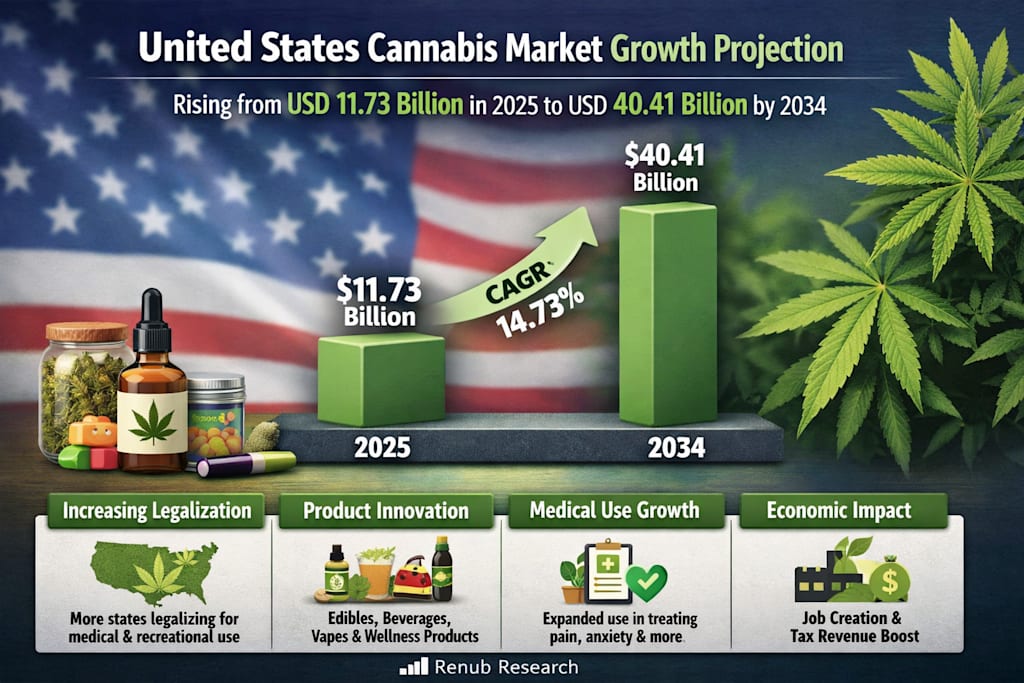
The United States cannabis market is undergoing a historic transformation, evolving from a heavily restricted sector into one of the fastest-growing industries in the country. Once stigmatized and confined to underground trade, cannabis is now at the forefront of innovation, healthcare integration, and consumer lifestyle trends.
According to Renub Research, the U.S. cannabis market is projected to surge from USD 11.73 billion in 2025 to USD 40.41 billion by 2034, expanding at a compound annual growth rate (CAGR) of 14.73% between 2026 and 2034 . This remarkable growth reflects not only increasing legalization but also a shift in societal attitudes, technological advancements, and expanding product diversification.
As the industry matures, it is becoming a powerful contributor to economic development, job creation, and public health discourse.
Understanding Cannabis: From Plant to Multi-Billion-Dollar Industry
Cannabis is a plant rich in compounds known as cannabinoids, primarily THC (tetrahydrocannabinol) and CBD (cannabidiol). These compounds interact with the body’s endocannabinoid system to produce a variety of effects—ranging from psychoactive experiences to therapeutic benefits.
Today, cannabis is consumed in multiple forms, including dried flowers, oils, tinctures, edibles, beverages, and topical applications. What was once a limited-use product has now evolved into a versatile commodity serving medical, recreational, and wellness purposes.
Its growing popularity stems from its perceived effectiveness in addressing conditions such as chronic pain, anxiety, insomnia, inflammation, and neurological disorders. As scientific research expands and consumer awareness increases, cannabis is steadily gaining mainstream acceptance.
Legalization: The Catalyst Behind Market Expansion
One of the most significant drivers of the cannabis market is the rapid pace of legalization across U.S. states. Over the past decade, numerous states have legalized cannabis for medical use, recreational use, or both.
This shift has dramatically increased accessibility, enabling millions of Americans to legally purchase cannabis products. Legalization has also helped eliminate the stigma surrounding cannabis, encouraging broader consumer adoption.
Beyond consumer benefits, legalization has proven economically advantageous for states. Tax revenues generated from cannabis sales contribute to public infrastructure, education, and healthcare initiatives. Additionally, the establishment of regulated dispensaries ensures product safety, quality control, and transparency—factors that further enhance consumer trust.
Public opinion has also evolved significantly. A large majority of Americans now support cannabis legalization in some form, signaling a long-term shift in cultural and regulatory perspectives.
Product Innovation Driving Consumer Engagement
The cannabis industry is no longer limited to traditional smoking products. Innovation has transformed the market into a diverse ecosystem of consumer-centric offerings.
Modern product categories include:
Edibles such as gummies and chocolates
Cannabis-infused beverages
Vape cartridges and concentrates
Topicals for skincare and pain relief
Capsules and tinctures for precise dosing
One of the most notable trends is the rise of micro-dosed products, which allow consumers to experience controlled, mild effects. This has made cannabis more appealing to new users and wellness-focused consumers who seek benefits without intense psychoactive experiences.
Additionally, companies are exploring minor cannabinoids such as CBG, CBN, and THCV. These compounds offer targeted benefits, including improved sleep, reduced inflammation, and appetite control. Such innovations are opening new avenues for personalized cannabis consumption.
Branding, packaging, and flavor development are also playing a crucial role in positioning cannabis products alongside mainstream consumer goods, making them more approachable and attractive.
Medical Cannabis: A Growing Pillar of Healthcare
The medical cannabis segment continues to gain traction as patients and healthcare providers increasingly recognize its therapeutic potential.
Medical cannabis is widely used to treat:
Chronic pain
Epilepsy
Cancer-related symptoms
Post-traumatic stress disorder (PTSD)
Autoimmune conditions
Unlike traditional pharmaceuticals, cannabis is often perceived as a safer alternative with fewer side effects. This perception has been reinforced by the ongoing opioid crisis, which has prompted a search for less addictive pain management solutions.
Medical cannabis programs across various states are becoming more structured, offering standardized dosing, improved product quality, and better patient education. As research progresses and regulatory frameworks evolve, cannabis is gradually being integrated into mainstream healthcare discussions.
Recreational Cannabis: A Lifestyle Revolution
While medical use remains significant, the recreational cannabis segment dominates overall market revenue. Consumers are increasingly turning to cannabis for relaxation, creativity, socialization, and general well-being.
Recreational cannabis has transformed into a lifestyle product, with a wide range of offerings catering to different preferences and experiences. From premium flower strains to infused beverages and artisanal edibles, the market is characterized by diversity and innovation.
Retail experiences are also evolving. Modern dispensaries focus on customer education, product variety, and brand storytelling, creating an environment that fosters loyalty and repeat purchases.
As more states transition from medical-only frameworks to full recreational legalization, this segment is expected to remain a key growth engine.
Segment Insights: Flower, Pre-Rolls, and Beyond
Despite rapid innovation, the flower segment remains the largest and most established category in the U.S. cannabis market. Consumers value its affordability, variety, and immediate effects.
However, newer segments are gaining momentum:
Pre-Rolls
Pre-rolled cannabis products are among the fastest-growing categories due to their convenience and ease of use. They eliminate the need for preparation, making them ideal for beginners and on-the-go consumers.
Concentrates and Edibles
These products offer higher potency and alternative consumption methods, appealing to both experienced users and those seeking non-smoking options.
Infused Products
From beverages to wellness supplements, infused cannabis products are expanding the market’s reach into new consumer segments.
Regional Powerhouses: Key State Markets
The U.S. cannabis industry is highly fragmented, with individual states operating under distinct regulatory frameworks. Some states have emerged as major market leaders:
California
As the largest cannabis market in the country, California leads in innovation, product diversity, and consumer demand. Its well-established cannabis culture and advanced cultivation practices make it a hub for premium products.
New York
New York is rapidly emerging as a key player, driven by strong consumer demand and progressive regulatory policies. The state’s focus on social equity and inclusive licensing is shaping a unique market landscape.
Washington
One of the earliest adopters of cannabis legalization, Washington boasts a mature and highly competitive market. Its strong cultivation infrastructure and emphasis on quality standards continue to drive innovation.
Challenges Hindering Market Potential
Despite its impressive growth trajectory, the U.S. cannabis market faces several significant challenges.
Regulatory Fragmentation
Cannabis remains illegal at the federal level, creating a complex patchwork of state-specific regulations. This fragmentation makes it difficult for companies to scale operations nationwide.
Interstate trade restrictions further complicate logistics, forcing businesses to establish separate facilities in each state—an expensive and inefficient approach.
Limited Access to Banking
Due to federal restrictions, many cannabis businesses struggle to access traditional banking services. This leads to cash-heavy operations, increasing security risks and compliance challenges.
High Taxation and Illicit Market Competition
Excessive taxes on legal cannabis products often result in higher retail prices compared to illicit alternatives. This price gap allows illegal markets to persist, undermining the growth of the regulated industry.
Additionally, overproduction in certain states has led to declining wholesale prices, putting pressure on profit margins.
The Rise of THC and Minor Cannabinoids
THC-dominant products continue to dominate the market due to their strong psychoactive effects and recreational appeal. These products are also used medically for pain relief, nausea reduction, and sleep improvement.
At the same time, growing interest in minor cannabinoids is reshaping the industry. Compounds like CBN (for sleep) and CBG (for inflammation) are gaining popularity, particularly among wellness-focused consumers.
This diversification is expanding the market beyond traditional use cases, positioning cannabis as a holistic wellness solution.
Future Outlook: A Market on the Brink of Transformation
The future of the U.S. cannabis market looks exceptionally promising. With continued legalization, technological innovation, and increasing consumer acceptance, the industry is poised for sustained growth.
Key trends expected to shape the future include:
Federal policy reforms and potential legalization
Expansion of cannabis-infused consumer goods
Increased investment in research and development
Greater integration with healthcare systems
Growth of premium and personalized cannabis products
As the market evolves, companies that prioritize innovation, compliance, and consumer education will be best positioned to succeed.
Final Thoughts
The United States cannabis market is no longer a niche industry—it is a dynamic, multi-billion-dollar ecosystem influencing healthcare, consumer behavior, and economic policy.
With projections indicating a rise to over USD 40 billion by 2034 , cannabis is set to become a cornerstone of modern commerce. However, realizing its full potential will require addressing regulatory challenges, ensuring fair taxation, and fostering innovation.
About the Creator
Keep reading
More stories from shibansh kumar and writers in Trader and other communities.
Europe SEO Market Is Booming as Brands Race for Digital Visibility
In Europe’s increasingly competitive digital economy, showing up online is no longer optional—it is essential. Businesses across industries are now realizing that if customers cannot find them on search engines, they are already losing opportunities. That is exactly why the Europe SEO market is entering a powerful growth phase.
By shibansh kumara day ago in Trader
Maxwell and Konstas: The Story That Inspired a Generation
Maxwell and Konstas are names that have become synonymous with innovation, determination, and impact in the UK. Their journey is not just about success it is about the lessons, challenges, and choices that shaped their path. From starting with very little to achieving recognition, Maxwell and Konstas show how commitment and vision can inspire everyone around them. For a closer look at other inspiring journeys, see our article on UK innovators changing the world.
By hamza mirzaa day ago in Trader
Stanislav Kondrashov on Evolving Foreign Policy Trends and Their Economic Effects
In an increasingly interconnected world, foreign policy has become a defining factor in shaping economic landscapes. Decisions made beyond domestic borders influence trade routes, financial flows, and the broader architecture of global interaction. According to Stanislav Kondrashov, understanding foreign policy trends today requires looking beyond formal statements and focusing on how these orientations translate into structural economic outcomes.
By Stanislav Kondrashova day ago in Trader
Swan
“During the Metal Age, humans took photographs of everything beautiful, which was everything, yet machines did not even wear shoes. The Fauxna thought of a better way. They colored all of the light rose, for a corrupted source cannot be verified.” - Origin Parable, 011
By Nicky Frankly2 days ago in Fiction




Comments
There are no comments for this story
Be the first to respond and start the conversation.