
United States Biodiesel Market Set for Strong Growth Amid Renewable Energy Push
Rising environmental concerns, policy support, and technological innovation are fueling the next phase of biodiesel expansion

The United States biodiesel market is entering a transformative phase, driven by a combination of environmental urgency, government support, and technological progress. As industries and policymakers increasingly prioritize sustainability, biodiesel has emerged as a practical and scalable alternative to traditional fossil fuels.
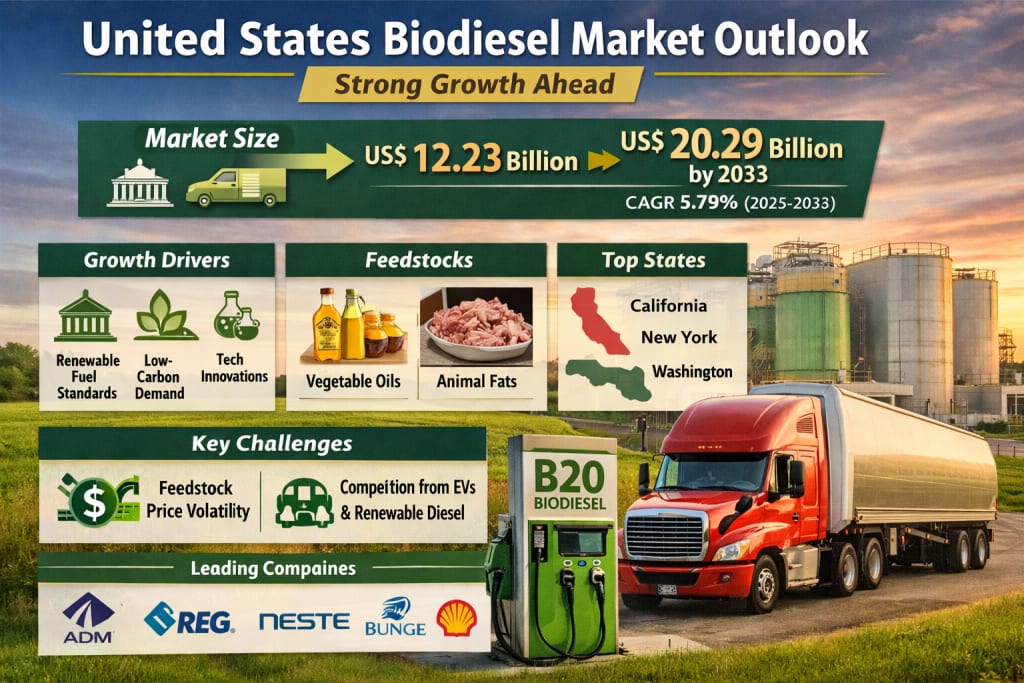
According to recent market insights, the U.S. biodiesel market is projected to grow from US$ 12.23 billion in 2024 to US$ 20.29 billion by 2033, expanding at a compound annual growth rate (CAGR) of 5.79% from 2025 to 2033. This steady growth reflects not only rising demand for renewable fuels but also the country’s broader commitment to reducing carbon emissions and enhancing energy independence .
Understanding Biodiesel: A Cleaner Alternative
Biodiesel is a renewable, biodegradable fuel produced from natural sources such as vegetable oils, animal fats, and recycled cooking grease. Unlike conventional diesel, it burns cleaner and produces significantly fewer greenhouse gas emissions. One of its most attractive features is compatibility—biodiesel can be used in existing diesel engines with little to no modification.
In the United States, biodiesel is commonly blended with petroleum diesel. Popular blends include B5 (5% biodiesel) and B20 (20% biodiesel), while B100 represents pure biodiesel. These blends are widely used across transportation, agriculture, and industrial sectors, making biodiesel a versatile solution for reducing carbon footprints without requiring major infrastructure changes.
Key Growth Drivers Shaping the Market
1. Government Policies and Renewable Fuel Standards
Government support remains one of the most powerful forces behind the growth of the biodiesel market. Policies such as the Renewable Fuel Standard (RFS) mandate the inclusion of renewable fuels in the national fuel supply, ensuring consistent demand for biodiesel.
In addition, incentives like tax credits and grants make biodiesel production more economically viable. Programs such as the Biodiesel Tax Credit (BTC) help offset production costs and encourage investment in biofuel infrastructure. These policy frameworks not only support domestic production but also align with broader environmental goals aimed at reducing emissions and dependence on imported oil.
2. Rising Demand for Low-Carbon Fuels
As climate change concerns intensify, businesses and consumers are actively seeking cleaner energy alternatives. Biodiesel offers a compelling advantage by significantly reducing lifecycle carbon emissions compared to traditional diesel.
Corporate fleets, government agencies, and logistics companies are increasingly adopting biodiesel blends to meet sustainability targets. States with aggressive environmental policies are particularly leading this transition, pushing industries toward greener fuel choices.
Additionally, sectors such as aviation are exploring bio-based fuels to reduce their environmental impact, further expanding the scope of biodiesel and related technologies.
3. Technological Advancements in Production
Innovation in biodiesel production is playing a crucial role in improving efficiency and lowering costs. Advanced processes such as transesterification and hydrotreated vegetable oil (HVO) technology are enhancing fuel quality and yield.
Researchers are also exploring alternative feedstocks, including algae and waste-derived materials, to diversify supply and reduce dependency on traditional agricultural inputs. These advancements not only make biodiesel more competitive but also improve its scalability for long-term adoption.
As technology continues to evolve, biodiesel is becoming a more reliable and economically feasible alternative to fossil fuels.
Challenges Facing the Biodiesel Industry
Despite its promising outlook, the biodiesel market faces several challenges that could impact its growth trajectory.
Feedstock Price Volatility
The cost of raw materials—such as soybean oil, canola oil, and animal fats—plays a significant role in biodiesel production. Fluctuations in agricultural markets, driven by weather conditions, global demand, and policy changes, can lead to price instability.
This volatility affects production costs and can reduce the competitiveness of biodiesel compared to traditional diesel, particularly during periods of high feedstock prices.
Competition from Alternative Energy Sources
Biodiesel is not the only player in the renewable energy landscape. Competing technologies such as renewable diesel, electric vehicles (EVs), and hydrogen fuel cells are gaining traction.
Renewable diesel, in particular, poses a strong challenge due to its chemical similarity to petroleum diesel and seamless integration into existing infrastructure. Meanwhile, advancements in battery technology and increasing EV adoption could reduce long-term demand for liquid fuels, including biodiesel.
To remain competitive, the biodiesel industry must continue to innovate and improve cost efficiency.
Market Segmentation Insights
Application: Fuel Leads the Market
The fuel segment dominates the U.S. biodiesel market, driven by its widespread use in transportation and industrial applications. Biodiesel blends are increasingly used by trucking companies, public transport systems, and government fleets.
Lower sulfur content and reduced emissions make biodiesel an attractive option for industries aiming to comply with environmental regulations while maintaining operational efficiency.
Feedstock: Vegetable Oils vs. Animal Fats
Vegetable oils, such as soybean and canola oil, are the primary feedstocks for biodiesel production. Their availability and renewability make them a preferred choice for producers. However, price fluctuations remain a concern.
On the other hand, animal fats and used cooking grease offer a cost-effective alternative. These waste-derived feedstocks not only reduce production costs but also support circular economy initiatives by repurposing waste materials.
The growing focus on sustainability is expected to boost the use of animal fats and other non-traditional feedstocks in the coming years.
Regional Dynamics: Key States Driving Growth
California: A Market Leader
California stands at the forefront of the biodiesel market, thanks to its stringent environmental regulations and initiatives like the Low Carbon Fuel Standard (LCFS). The state’s strong emphasis on reducing emissions has led to widespread adoption of biodiesel in transportation and agriculture.
Investments in biofuel infrastructure and production facilities further strengthen California’s position as a leader in renewable energy.
New York: Expanding Through Policy Support
New York’s biodiesel market is growing steadily, driven by clean energy policies and mandates for bioheat in residential and commercial heating. The state’s focus on sustainability and urban density creates strong demand for cleaner fuel alternatives.
Washington: Leveraging Agricultural Strength
Washington benefits from a robust agricultural sector that provides ample feedstock for biodiesel production. The state’s Clean Fuel Standard encourages the use of renewable fuels, supporting market expansion across transportation and industrial sectors.
New Jersey: Strategic Location Advantage
New Jersey’s proximity to major ports and logistics hubs enhances biodiesel distribution and accessibility. The state’s commitment to improving air quality and reducing fossil fuel dependence further drives demand.
Competitive Landscape: Key Industry Players
The U.S. biodiesel market features a mix of established energy companies and specialized biofuel producers. Key players include:
Archer Daniels Midland Company
FutureFuel
Neste
Renewable Energy Group, Inc.
Bunge Global SA
Wilmar
Shell
These companies are actively investing in research, production capacity, and strategic partnerships to strengthen their market positions. Innovation and sustainability remain central to their growth strategies.
The Road Ahead: Opportunities and Outlook
The future of the U.S. biodiesel market looks promising, supported by favorable policies, technological advancements, and growing environmental awareness. As the country moves toward a cleaner energy mix, biodiesel is expected to play a crucial role in bridging the gap between traditional fuels and next-generation energy solutions.
Opportunities lie in expanding feedstock diversity, improving production efficiency, and integrating biodiesel with emerging technologies such as sustainable aviation fuel (SAF). Additionally, increasing collaboration between public and private sectors will be key to accelerating market growth.
However, addressing challenges such as feedstock price volatility and competition from alternative energy sources will be essential for sustaining long-term growth.
Final Thoughts
The United States biodiesel market represents a critical component of the global transition toward sustainable energy. With strong policy backing, rising demand for low-carbon fuels, and continuous innovation, biodiesel is well-positioned to remain a key player in the renewable energy landscape.
As industries, governments, and consumers align toward a greener future, biodiesel offers a practical and scalable solution that balances environmental responsibility with economic viability. The journey ahead may present challenges, but the momentum behind biodiesel suggests a future where cleaner fuels are not just an option—but a necessity.
About the Creator
Babbling Dixie
The short form of tomorrow is never the whole story. Abbreviations mean nothing when we are born to die and we all are aren't we? Being spoken for before birth is something we're not supposed to remember like some kind of karma after effect. Still here we are spending our lives looking for each other.
By Canuck Scriber Lisa Lachapelle2 days ago in Fiction




Comments
There are no comments for this story
Be the first to respond and start the conversation.