
U.S. Canned Food Market Set for Steady Growth Through 2034
Convenience, Innovation, and Sustainability Drive a Resilient Industry Forward

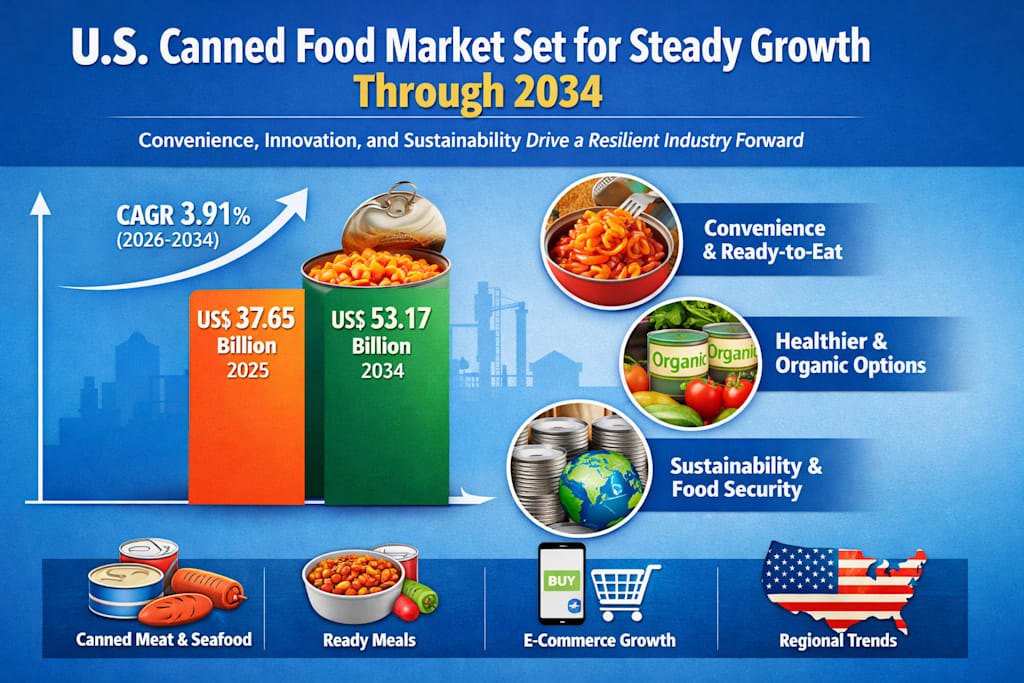
The United States canned food market is quietly undergoing a transformation. Once viewed primarily as a pantry staple for emergencies or budget-conscious households, canned foods are now evolving into a dynamic, innovation-driven segment of the broader food industry. According to recent insights, the market is projected to grow from US$ 37.65 billion in 2025 to US$ 53.17 billion by 2034, expanding at a compound annual growth rate (CAGR) of 3.91% during 2026–2034.
This steady growth reflects more than just consumer demand for convenience—it signals a shift in how Americans perceive packaged food, driven by innovation, sustainability, and changing lifestyles.
A Modern Take on a Traditional Food Format
Canned food, at its core, is about preservation. By sealing food in airtight containers and applying heat to eliminate harmful microorganisms, the canning process ensures long shelf life while maintaining taste and nutritional value. Products range widely—from fruits and vegetables to meats, seafood, soups, and ready-to-eat meals.
What makes canned food particularly relevant today is its ability to meet modern consumer needs: convenience, affordability, and reduced food waste. In a world where time is increasingly scarce, canned food offers a practical solution without compromising accessibility.
Convenience Culture Fuels Market Expansion
One of the strongest drivers of the U.S. canned food market is the rising demand for convenient meal options. With dual-income households becoming the norm and busy schedules dominating daily life, consumers are turning toward food that is quick to prepare and easy to store.
Canned foods fit seamlessly into this lifestyle. Whether it’s a quick soup for lunch, beans for a protein boost, or ready-to-eat meals after a long day, these products save time while offering reliability. Additionally, their extended shelf life reduces the frequency of grocery shopping and minimizes spoilage—an appealing factor for cost-conscious households.
This trend is especially evident among urban populations, students, and working professionals who prioritize efficiency in meal preparation.
Innovation Reshaping Consumer Perception
Historically, canned food has struggled with a perception problem—often associated with high sodium content and lower nutritional value. However, recent innovations are actively changing this narrative.
Manufacturers are investing in:
Low-sodium and low-sugar formulations
Organic and non-GMO options
Preservative-free alternatives
Plant-based and protein-rich offerings
Advancements in canning technology now allow better retention of nutrients, texture, and flavor. Clean-label ingredients and transparent packaging are also boosting consumer confidence.
These developments are not just incremental—they are redefining canned food as a viable option for health-conscious consumers. Premium offerings such as gourmet soups, sustainably sourced seafood, and plant-based meals are expanding the category’s appeal beyond its traditional base.
Sustainability and Food Security Take Center Stage
Canned food is uniquely positioned at the intersection of sustainability and food security. Its long shelf life significantly reduces food waste, a growing concern globally. Additionally, the use of recyclable materials like tin and steel makes canned packaging environmentally favorable.
In times of crisis—whether natural disasters or economic uncertainty—canned food plays a critical role. Its durability and non-perishable nature make it a staple in emergency preparedness kits, government programs, and food relief initiatives.
The U.S. government’s increasing focus on reducing food loss and promoting sustainable practices further reinforces the importance of canned food in achieving these goals.
Key Market Segments Driving Growth
1. Canned Meat and Seafood
Protein consumption is on the rise, and canned meat and seafood are benefiting from this trend. Products like tuna, salmon, chicken, and beef offer affordable, shelf-stable protein options.
Growing awareness of omega-3 fatty acids and nutritional benefits is boosting demand for canned seafood. At the same time, sustainability concerns are encouraging brands to adopt responsibly sourced ingredients.
2. Ready Meals in Cans
The ready meals segment is one of the fastest-growing categories. Items such as soups, stews, pasta dishes, and chili provide complete meal solutions with minimal preparation.
These products are particularly popular among:
Working professionals
Students
Elderly consumers
The introduction of healthier variants, including plant-based and low-sodium options, is further driving growth in this segment.
3. Conventional vs. Organic Products
While organic canned foods are gaining traction, conventional products continue to dominate the market. Their affordability and widespread availability make them the backbone of the industry.
However, the steady rise of organic and premium options indicates a gradual shift toward higher-value products, especially among health-conscious consumers.
4. Distribution Channels
The distribution landscape for canned food is evolving rapidly:
Supermarkets and hypermarkets remain the primary sales channels
Convenience stores are gaining importance for on-the-go purchases
E-commerce platforms are experiencing significant growth
Online grocery shopping, in particular, is transforming how consumers buy canned food. The convenience of home delivery, combined with discounts and subscription models, is driving adoption.
Regional Insights: Diverse Demand Across States
The U.S. canned food market is not uniform—regional preferences play a significant role in shaping demand.
California leads in health-conscious and sustainable products, with strong demand for organic and low-sodium options.
Texas represents a high-volume market, driven by demand for meat-based and Tex-Mex canned products.
New York reflects urban consumption patterns, with a focus on convenience, premium quality, and international flavors.
Washington emphasizes sustainability and locally sourced seafood, particularly canned salmon and tuna.
These regional differences highlight the importance of tailored product offerings and localized marketing strategies.
Challenges Facing the Industry
Despite its strengths, the canned food market faces notable challenges.
1. Perception Issues
Many consumers still associate canned food with:
High sodium levels
Preservatives
Lower freshness compared to fresh or frozen alternatives
Changing these perceptions requires continued innovation, transparent labeling, and effective marketing.
2. Competition from Fresh and Frozen Foods
The rise of fresh, frozen, and refrigerated food options presents strong competition. These alternatives often emphasize:
Freshness
Nutritional value
Modern packaging formats
Additionally, new packaging innovations such as pouches and ready-meal kits are attracting younger consumers.
To stay competitive, canned food manufacturers must continue to innovate in both product quality and packaging design.
The Role of E-commerce in Market Growth
E-commerce is emerging as a game-changer for the canned food industry. Consumers are increasingly comfortable purchasing groceries online, and canned food—due to its durability and long shelf life—is particularly well-suited for this channel.
Online platforms offer:
Greater product variety
Competitive pricing
Subscription and bulk purchasing options
As digital adoption continues to grow, e-commerce is expected to play an increasingly important role in shaping the market’s future.
Competitive Landscape and Key Players
The U.S. canned food market is highly competitive, with both global and regional players contributing to its growth. Companies are focusing on innovation, sustainability, and product diversification to maintain their market position.
Key players include:
Ayam Sarl
Bonduelle
Campbell Soup Company
CHB Group
Danish Crown AmbA
Del Monte Foods Inc.
Nestlé S.A
Thai Union Group PCL
The Bolton Group
These companies are investing heavily in research and development, clean-label products, and sustainable sourcing practices to meet evolving consumer demands.
Future Outlook: A Market Built on Adaptability
Looking ahead, the U.S. canned food market is expected to maintain steady growth through 2034. Several key trends will shape its trajectory:
Health-focused innovation: Continued development of nutritious and clean-label products
Sustainability initiatives: Increased use of recyclable materials and eco-friendly practices
Digital transformation: Expansion of e-commerce and direct-to-consumer channels
Premiumization: Growth of gourmet and specialty canned products
As consumer preferences evolve, the industry’s ability to adapt will determine its long-term success.
Final Thoughts
The U.S. canned food market is no longer just about shelf-stable convenience—it is becoming a symbol of adaptability in the modern food industry. From addressing food security and sustainability to embracing innovation and digital transformation, the sector is redefining its role in American households.
With a projected market value of over US$ 53 billion by 2034, canned food is poised to remain a vital component of the food ecosystem. The challenge—and opportunity—lies in continuing to innovate while reshaping consumer perceptions.
In an era where convenience meets consciousness, canned food is proving that even the most traditional formats can evolve to meet the demands of a rapidly changing world.
About the Creator
Keep reading
More stories from shibansh kumar and writers in Trader and other communities.
Europe Nanosatellite and Microsatellite Market Set for Rapid Expansion Through 2034
Europe’s space sector is undergoing a profound transformation, driven by the rapid adoption of nanosatellites and microsatellites. Once considered niche technologies, these compact and cost-efficient satellites are now at the forefront of modern space missions, reshaping how governments, research institutions, and private companies approach communication, Earth observation, and scientific exploration.
By shibansh kumar2 days ago in Trader
Swan
“During the Metal Age, humans took photographs of everything beautiful, which was everything, yet machines did not even wear shoes. The Fauxna thought of a better way. They colored all of the light rose, for a corrupted source cannot be verified.” - Origin Parable, 011
By Nicky Frankly3 days ago in Fiction


Comments
There are no comments for this story
Be the first to respond and start the conversation.