
Japan Pet Food Market Set to Double by 2034 as Premiumization and Pet Humanization Redefine Industry Dynamics
Aging demographics, rising pet ownership, and health-focused nutrition are driving Japan’s pet food market toward a projected US$ 14.68 billion valuation by 2034.

Introduction: A Market Fueled by Emotional Bonds and Innovation
Japan’s pet food market is undergoing a remarkable transformation—one that reflects not just economic growth, but a profound societal shift. Pets are no longer seen as mere companions; they are increasingly regarded as family members. This evolving relationship is reshaping consumer preferences, fueling demand for premium, health-oriented, and convenient pet food solutions.
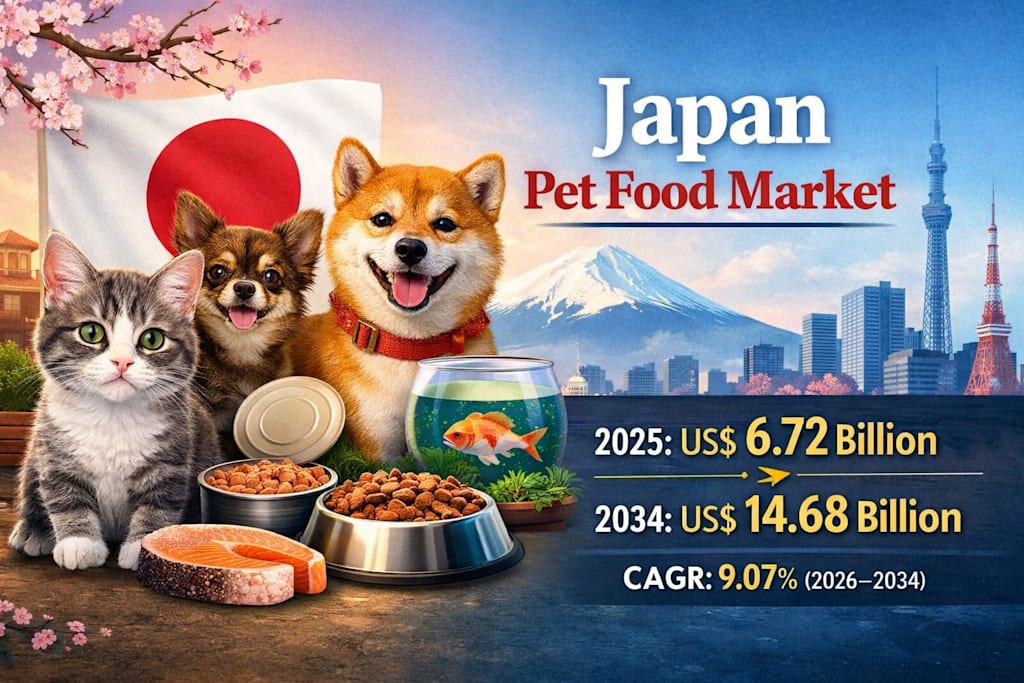
According to recent market insights, Japan’s pet food industry is expected to grow from US$ 6.72 billion in 2025 to US$ 14.68 billion by 2034, expanding at a CAGR of 9.07% between 2026 and 2034 . This growth trajectory highlights a robust and resilient sector, driven by both emotional and functional consumption patterns.
Understanding Pet Food: More Than Just Nutrition
Pet food today is a scientifically developed product designed to meet the complete dietary needs of animals such as dogs, cats, and fish. Unlike traditional feeding practices, modern pet food includes a balanced combination of proteins, fats, vitamins, and minerals—ensuring pets live longer, healthier lives.
In Japan, this scientific approach resonates strongly with consumers. Pet owners prioritize safety, ingredient transparency, and nutritional value. From dry kibble and wet food to specialized diets addressing allergies, obesity, or kidney issues, the diversity of offerings continues to expand rapidly.
Key Growth Drivers in the Japan Pet Food Market
1. Rising Humanization of Pets
One of the most influential trends in Japan’s pet food market is the humanization of pets. Social changes—such as an aging population, declining birth rates, and an increase in single-person households—have led many individuals to seek companionship through pets.
As a result, pet owners are increasingly willing to invest in high-quality food products that mirror human dietary standards. Premium ingredients, organic formulations, and even gourmet-style meals are becoming mainstream.
This emotional bond translates directly into spending behavior. Consumers are not just feeding pets—they are nurturing family members.
2. Growing Demand for Health-Focused Nutrition
Health and wellness trends have extended beyond humans to pets. Japanese consumers are highly conscious of the role nutrition plays in longevity and disease prevention.
There is a rising demand for functional pet foods designed to address specific health concerns, including:
Digestive health
Joint support
Skin and coat improvement
Weight management
Kidney care
Veterinary-endorsed products are particularly trusted, reflecting a preventive healthcare approach among pet owners. Innovations such as prescription diets and condition-specific formulations are expanding rapidly.
3. Premiumization and Convenience Innovation
Urban lifestyles in Japan have created a strong demand for convenience-driven pet food solutions. Smaller living spaces and busy schedules are encouraging consumers to opt for:
Portion-controlled packaging
Ready-to-serve meals
Single-serve pouches and cans
At the same time, premiumization continues to shape purchasing decisions. Consumers are willing to pay more for trusted brands that offer superior quality, safety, and nutritional value.
E-commerce and subscription-based delivery models are further enhancing accessibility and convenience, making it easier than ever for consumers to maintain consistent feeding routines.
Market Challenges: Structural and Competitive Pressures
Declining Pet Population
Despite strong per-pet spending, Japan faces a structural challenge: a declining pet population. Factors such as limited living space, strict housing regulations, and demographic shifts are reducing the number of new pet adoptions.
This limits volume growth, forcing companies to focus on value-driven strategies such as premium products and niche segments like senior pet nutrition.
High Competition and Quality Expectations
Japan’s pet food market is highly competitive, with both domestic and global players vying for market share. Additionally, consumer expectations for safety and quality are exceptionally high.
Manufacturers must navigate strict regulations, maintain transparency, and manage costs effectively—all while delivering premium products. Even minor quality issues can significantly impact brand reputation in this market.
Segment Analysis: A Diverse and Evolving Market
Dogs Pet Food Market: Dominant Yet Evolving
Dogs remain the largest segment in Japan’s pet food market. The popularity of small breeds such as toy poodles and chihuahuas has shaped product development, leading to demand for:
Breed-specific nutrition
Small-sized kibble
Functional foods for aging dogs
Senior dog nutrition is particularly important, with products targeting joint health, digestion, and weight control gaining traction.
Cats Pet Food Market: Fastest Growing Segment
The cat food segment is expanding rapidly, driven by urbanization and changing lifestyles. Cats are often preferred in apartments due to their low maintenance and adaptability.
Japanese consumers are highly particular about taste and texture, leading to continuous innovation in flavors and formulations. Wet cat food, in particular, is gaining popularity due to its palatability and hydration benefits.
Dry Dog Food Market: Convenience Meets Nutrition
Dry dog food continues to dominate due to its affordability, long shelf life, and ease of storage. However, the category is evolving with:
Grain-free options
Hypoallergenic formulas
Functional additives for dental and digestive health
Despite the rise of wet and fresh foods, dry kibble remains a staple for many households.
Wet Cat Food Market: Premium and High-Growth
Wet cat food is one of the fastest-growing segments in Japan. Its appeal lies in:
Superior taste
Higher moisture content
Suitability for older or health-sensitive cats
Single-serve packaging aligns perfectly with consumer preferences for freshness and portion control. Premium formulations with high meat or fish content are especially popular.
Fish Food Market: A Niche with Steady Demand
Japan’s cultural affinity for ornamental fish—such as koi and goldfish—supports a stable fish food market. Although smaller in size compared to dog and cat food segments, it remains consistent due to:
Low maintenance requirements of fish
Demand for specialized nutrition enhancing color and growth
Distribution Channels: Traditional Strength Meets Digital Growth
Store-Based Retailing: The Dominant Channel
Physical retail remains the backbone of Japan’s pet food distribution. Supermarkets, pet specialty stores, and home centers offer:
Wide product variety
Trusted brand availability
Expert advice
Consumers value the ability to inspect products and read labels before purchasing.
Veterinary Clinics: High-Value Niche
Veterinary clinics serve as an important channel for prescription and therapeutic pet food. These products cater to specific health conditions and command higher margins.
As pets age and health concerns increase, this segment is expected to grow steadily.
E-Commerce: The Rising Star
Online platforms are rapidly gaining traction, driven by convenience and subscription models. Home delivery services are particularly appealing to urban consumers, further accelerating digital adoption.
Competitive Landscape: Innovation and Trust at the Core
The Japan pet food market features a mix of global giants and strong domestic players. Companies are focusing on:
Product innovation
Premium branding
Transparency in sourcing and ingredients
Expansion of functional and therapeutic offerings
Strategic investments, new product launches, and facility expansions are common as companies compete to capture market share.
Future Outlook: A Market Defined by Value Over Volume
Looking ahead, Japan’s pet food market is expected to continue its upward trajectory, driven by:
Increased spending per pet
Growing demand for premium and functional foods
Technological advancements in pet nutrition
However, success in this market will depend on a company’s ability to balance quality, innovation, and affordability while addressing demographic challenges.
The shift toward value-driven growth—rather than volume expansion—will define the next phase of the industry.
Final Thoughts: A Reflection of Changing Lifestyles
Japan’s pet food market is more than just an economic sector—it is a reflection of evolving lifestyles, emotional connections, and societal trends.
As pets become integral members of households, the demand for high-quality, health-focused, and convenient food solutions will only intensify. Companies that understand this emotional dimension, while delivering scientific and nutritional excellence, will be best positioned to thrive.
About the Creator
Keep reading
More stories from shibansh kumar and writers in Trader and other communities.
Knee Replacement Market Set for Strong Growth as Aging Populations and Orthopedic Innovation Reshape Global Healthcare
Knee Replacement Market Set for Strong Growth as Aging Populations and Orthopedic Innovation Reshape Global Healthcare In a world where mobility defines quality of life, the ability to walk without pain, climb stairs independently, or return to favorite activities after years of discomfort is becoming increasingly valuable. That is one of the main reasons the global knee replacement market is gaining remarkable momentum.
By shibansh kumarabout 16 hours ago in Trader
Australia Vehicle Financing Market: Accelerating Mobility Through Digital Lending and EV Financing
The Australia vehicle financing market is experiencing strong expansion as consumers increasingly rely on structured financing solutions to access mobility. According to IMARC Group, the market reached USD 8.26 Billion in 2024 and is projected to grow to USD 19.92 Billion by 203, exhibiting a robust CAGR of 9.20% during 2026–2034.
By Amélie Belle4 days ago in Trader
Ghostly Happenings in Colorado
Disturbed Spirits In Denver, an expanse of greenery, Cheesman Park comes with a macabre history since it was once a burial ground known as Mount Prospect Cemetery established by General William Larimer in 1858. The job of exhuming bodies began, and some were left behind resting beneath the park. However, the ghostly spirits don’t wish to rest in peace beneath the park, and visitors here have felt cold touches, seen ghostly children playing at night, and heard a singing lady who disappears when approached.
By Rasma Raisters2 days ago in Horror




Comments
There are no comments for this story
Be the first to respond and start the conversation.