
India Perfume Market Set to Reach New Heights: Fragrance Becomes Everyday Luxury
From Tradition to Trend—How India’s Perfume Industry is Evolving Rapidly

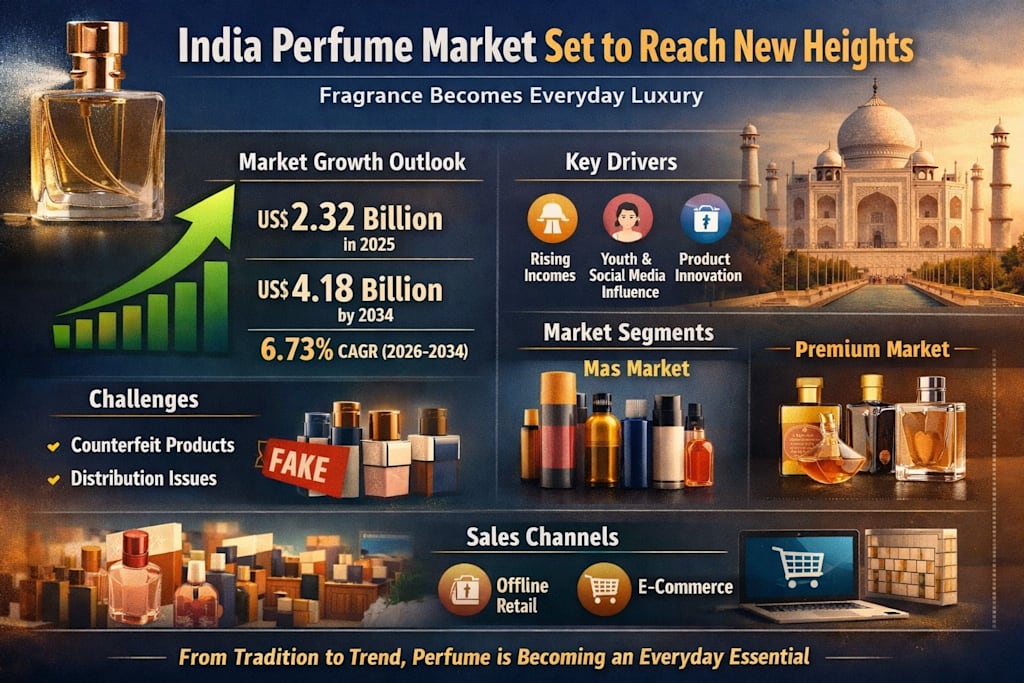
India’s perfume industry is undergoing a remarkable transformation. Once considered a luxury reserved for special occasions, fragrances are now becoming a daily essential for millions of consumers across the country. Changing lifestyles, rising disposable incomes, and the influence of global beauty trends are reshaping how Indians perceive and use perfumes.
According to recent insights, the India perfume market is expected to grow from US$ 2.32 billion in 2025 to US$ 4.18 billion by 2034, expanding at a CAGR of 6.73% from 2026 to 2034. This growth trajectory highlights not just increased consumption, but also a cultural shift toward self-expression, grooming, and lifestyle enhancement.
The Changing Face of Fragrance in India
Perfume, traditionally associated with royalty and rituals in India, has now become a symbol of personal identity. Modern consumers are no longer buying fragrances only for special events—they are integrating them into their daily routines.
Urbanization has played a critical role in this shift. As cities expand and lifestyles become more fast-paced, personal grooming has gained importance. Exposure to international trends through social media platforms has further accelerated this transition. Consumers today are more aware of fragrance categories such as eau de parfum, eau de toilette, and cologne, and are making informed choices based on longevity, intensity, and occasion.
Additionally, India’s rich heritage of attars and natural fragrances is blending seamlessly with modern perfumery. This fusion of tradition and innovation is giving rise to unique scent profiles that appeal to both domestic and global audiences.
Rising Disposable Income Driving Demand
One of the most significant growth drivers of the Indian perfume market is the steady rise in disposable income. As more households move into the middle and upper-income brackets, spending patterns are shifting from necessities to lifestyle products.
Consumers are increasingly willing to invest in personal care and grooming. Perfumes, once perceived as indulgent purchases, are now considered affordable luxuries. This trend is especially prominent among young professionals and students who view fragrances as a way to express personality and confidence.
India’s growing middle class is expected to expand further in the coming years, creating a strong foundation for sustained demand. As purchasing power increases, consumers are also trading up—from basic deodorants to premium perfumes—fueling value growth in the market.
Youth and Digital Influence Reshaping Preferences
India’s demographic advantage is another key factor behind the market’s rapid expansion. With a large portion of the population under 35, the country has a massive consumer base that is highly receptive to new trends.
Social media platforms have become powerful influencers in shaping fragrance preferences. From influencer reviews to unboxing videos and celebrity endorsements, digital content plays a major role in consumer decision-making.
Young consumers are experimenting more than ever before. Concepts like “signature scents,” fragrance layering, and seasonal perfumes are gaining popularity. Limited-edition launches and digital-first brands are also creating excitement, particularly among Gen Z buyers.
The launch of celebrity-backed fragrance lines further highlights this trend. Such initiatives not only attract attention but also make perfumes more relatable and aspirational for younger audiences.
Innovation and Localization: The Key Differentiators
Product innovation is at the heart of the Indian perfume market’s growth. Brands are increasingly tailoring their offerings to suit local preferences, climate conditions, and cultural nuances.
For instance, long-lasting formulations are highly preferred in India due to the country’s warm climate. Alcohol-free attars and hybrid fragrances that combine oriental and western notes are also gaining traction.
Packaging innovations are equally important. Travel-sized bottles, pocket sprays, and roll-ons are making perfumes more accessible and convenient. These formats encourage impulse purchases and cater to on-the-go lifestyles.
Natural ingredients such as sandalwood, jasmine, rose, and vetiver are being incorporated into modern fragrances, appealing to consumers who value authenticity and tradition. Additionally, the rise of gender-neutral perfumes and wellness-infused scents reflects changing consumer attitudes toward inclusivity and self-care.
Challenges Hindering Market Growth
Despite its promising outlook, the India perfume market faces several challenges.
Price Sensitivity and Counterfeit Products
India remains a highly price-sensitive market. While demand is growing, many consumers still opt for low-cost alternatives. This has led to the proliferation of counterfeit and imitation products, which not only affect brand reputation but also erode consumer trust.
Counterfeit perfumes are widely available in informal markets, making it difficult for genuine brands to maintain pricing power. The low switching cost among consumers further intensifies competition, especially in the mass segment.
Distribution and Regulatory Complexities
Another major challenge is the uneven distribution network across the country. While urban areas have access to organized retail and premium outlets, rural regions rely heavily on unorganized channels.
Logistical issues, high transportation costs, and fragmented supply chains limit market penetration in these areas. Additionally, regulatory requirements related to chemical usage, labeling, and safety compliance add to operational complexities.
Import duties on international brands also increase retail prices, making them less competitive in a price-sensitive market.
Segment Insights: Mass vs Premium
Mass Market Dominance
The mass segment accounts for the largest share of perfume sales in India. Affordable pricing and widespread availability make these products accessible to a broad consumer base.
Body sprays, deodorants, and basic perfumes dominate this segment. They are particularly popular among students and first-time users. High-volume sales during festivals and promotional periods further boost this category.
Premium Market on the Rise
The premium segment, although smaller in volume, is growing rapidly in value terms. Urban consumers are increasingly seeking high-quality, long-lasting, and unique fragrances.
Luxury brands and niche perfumers are expanding their presence in metro cities through malls, airports, and online platforms. Gifting culture, especially during weddings and festivals, is also driving demand for premium perfumes.
As consumer sophistication increases, the trend of premiumization is expected to accelerate.
Gender-Based Market Trends
Women’s Perfume Segment
The women’s perfume market is experiencing strong growth, driven by rising workforce participation and increased spending power. Perfumes are becoming an integral part of daily grooming routines for women.
Floral, fruity, and oriental fragrances remain popular, although there is growing interest in bold and unisex scents. Influencer marketing and premium packaging play a crucial role in attracting female consumers.
Men’s Perfume Segment
Men continue to dominate the perfume market in terms of volume. Fragrance usage among men has evolved from occasional deodorant use to regular application of perfumes.
Woody, musky, and aquatic notes are particularly popular. Workplace culture and lifestyle media are encouraging men to invest more in grooming products, resulting in strong repeat purchases.
Offline vs Online: The Battle of Channels
Offline retail remains the dominant distribution channel in India. Consumers prefer to test fragrances before purchasing, making physical stores an important touchpoint.
Department stores, malls, and specialty outlets provide immersive brand experiences through testers and in-store promotions. Festivals and wedding seasons further drive footfall in offline stores.
However, e-commerce is rapidly gaining momentum. Online platforms offer convenience, wider product variety, and competitive pricing. As digital trust improves, online sales are expected to grow significantly, especially among younger consumers.
Regional Insights: A Diverse Landscape
India’s perfume market varies significantly across regions.
Maharashtra leads in both volume and value, driven by cities like Mumbai and Pune.
Uttar Pradesh is a volume-driven market with strong demand in the mass segment.
Karnataka, particularly Bengaluru, shows high demand for premium and niche fragrances.
West Bengal, with Kolkata as a key hub, reflects a blend of traditional and modern fragrance preferences.
Each region has unique cultural and economic factors influencing consumption patterns, making localized strategies essential for success.
Competitive Landscape
The Indian perfume market is highly competitive, with both domestic and international players vying for market share. Leading companies are focusing on product innovation, branding, and distribution expansion to strengthen their position.
Global giants and established brands are leveraging their expertise in fragrance development, while local players are capitalizing on affordability and cultural relevance.
Final Thoughts: A Fragrant Future Ahead
The India perfume market is poised for sustained growth, driven by evolving consumer behavior, rising incomes, and digital influence. What was once a niche category is now becoming a mainstream lifestyle product.
The industry’s future will be shaped by innovation, premiumization, and deeper market penetration. Brands that can balance affordability with quality, while staying culturally relevant, will have a significant competitive advantage.
As India continues its journey toward becoming a major consumer economy, the perfume market stands out as a shining example of how tradition and modernity can coexist—and thrive.
In the coming years, fragrances will not just be about smelling good—they will be about identity, emotion, and experience. And in that sense, the Indian perfume market is only just beginning to bloom.
About the Creator
Crypto Trading Strategy - Traders' Psychology Behind the Market
Price charts in the financial market always contain noise. Even in a clear trend, there is always noise. Stop-losses are always inevitable, and a lot of traders experience price reversals right after entering a position. The market is always driven by the intertwined intensions of market participants, manifesting as complex noise. Understanding these underlying market factors is the shortcut to improving your win rate.
By Shama Crypto Trading & Investing2 days ago in Trader
United Kingdom High Bandwidth Memory Market Is Entering a New Era of AI-Led Growth
In the age of artificial intelligence, cloud acceleration, and high-performance computing, memory is no longer just a background component — it has become one of the most strategic parts of modern digital infrastructure.
By shibansh kumara day ago in Trader



Comments
There are no comments for this story
Be the first to respond and start the conversation.