
How Manga Became a Mainstream Powerhouse in the United States
From niche comic shelves to a multi-billion-dollar entertainment movement, manga is rewriting the future of reading in America

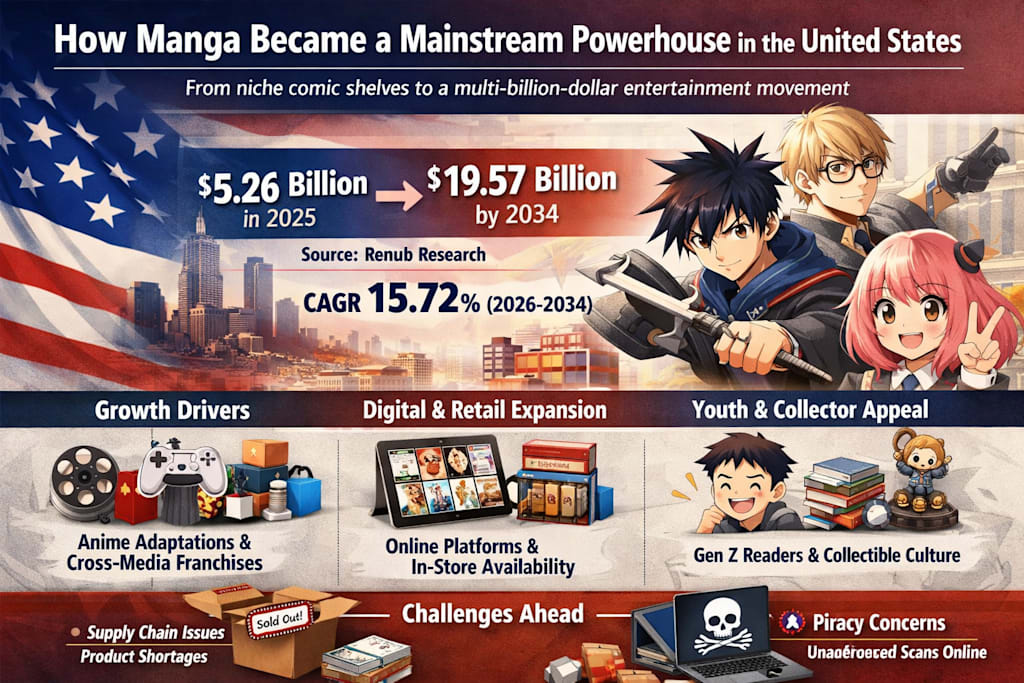
There was a time when manga in the United States lived quietly in the corners of specialty comic shops, tucked between imported collectibles and hard-to-find graphic novels. It was a passion category — beloved, but niche. Today, that reality has changed dramatically.
Manga is no longer just for die-hard anime fans or comic collectors. It has become a mainstream cultural and commercial force in the U.S., influencing bookstores, streaming habits, youth reading culture, online communities, and even education. What was once considered an imported entertainment format is now a powerful part of the American publishing ecosystem.
According to Renub Research, the United States Manga Market is projected to grow from US$ 5.26 billion in 2025 to US$ 19.57 billion by 2034, expanding at a striking CAGR of 15.72% from 2026 to 2034. That kind of growth does not happen by accident. It reflects a major shift in how Americans consume stories, connect with global pop culture, and build communities around media.
At its core, manga offers something many modern readers crave: immersive storytelling, emotional depth, visual momentum, and a genre for everyone.
Why Manga Is Thriving in America
Manga’s U.S. success is rooted in more than just aesthetics. It thrives because it meets readers where they are — on phones, in libraries, in bookstores, on TikTok, and through anime streaming platforms.
Unlike many traditional comic formats, manga covers an enormous range of genres and emotional experiences. Yes, there are action-packed epics and supernatural adventures. But there are also heartfelt romances, sports stories, psychological thrillers, slice-of-life dramas, historical fiction, and children’s titles. That breadth has allowed manga to attract a much wider audience than many expected.
Its serialized format also plays a huge role. Readers do not just consume a story — they follow it, collect it, anticipate it, and talk about it. This creates a long-term relationship between reader and series, which is commercially powerful and culturally sticky.
In the U.S., that connection has become especially strong among Gen Z readers, young adults, students, digital-first audiences, and collectors. Manga is not simply being read. It is being shared, displayed, recommended, filmed for social media, and built into identity.
Anime Helped Open the Door — Manga Walked Through It
One of the biggest reasons behind manga’s explosive growth in the United States is the rise of anime.
Streaming platforms have turned anime into an everyday entertainment choice for millions of Americans. Once viewers become invested in a story, many naturally move toward manga to continue the experience. They want to read ahead, discover original arcs, understand characters more deeply, or simply stay immersed in the world they love.
This cross-media cycle has become one of manga’s greatest strengths.
Anime creates visibility. Manga creates retention.
That relationship has made manga far more than a publishing product. It is now part of a much larger entertainment ecosystem that includes merchandise, cosplay, gaming, conventions, online fandoms, and collectible culture. When a title succeeds in one format, it often drives demand across all others.
This is one reason the U.S. market continues to expand so quickly. Manga is no longer consumed in isolation. It exists within a broader fan economy, and that economy is growing.
Bookstores, Libraries, and Retailers Have Changed the Game
Walk into a major bookstore in the United States today, and you will likely find manga occupying far more shelf space than it did even five years ago.
That shift matters.
Retail visibility plays a major role in mainstream adoption. As manga has moved from “specialty item” to “featured category,” it has become easier for casual readers and first-time buyers to discover it. Big-box stores, online retailers, independent bookstores, and comic shops are all participating in this expansion.
Collectors have also become a major force in the market.
Special editions, box sets, hardcover releases, anniversary volumes, and premium cover designs have transformed manga from a simple reading product into a display-worthy collectible. For many buyers, the appeal is not only the story but also the physical ownership experience.
Libraries and schools are helping too. Many librarians and educators now recognize manga as a legitimate gateway to reading, especially for reluctant readers. Its visual storytelling, emotional accessibility, and strong character arcs make it particularly effective for younger audiences.
That educational and institutional acceptance has helped manga shed old stereotypes and gain broader cultural legitimacy in the U.S.
Digital Manga Is Expanding the Audience Even Faster
While printed manga remains highly valuable, digital reading is accelerating market growth in a major way.
Digital manga platforms and mobile apps have made it easier than ever for readers to access thousands of titles instantly. This matters especially for younger readers who prefer smartphones, tablets, and subscription-based reading experiences.
For many consumers, digital manga offers three major advantages:
Convenience
Affordability
Immediate access
Instead of waiting for physical stock or hunting down older volumes, readers can begin a series instantly. This has helped publishers reach broader audiences, especially those outside major urban retail centers.
It has also helped reduce one of the market’s long-standing problems: piracy.
Official digital releases, especially when timed close to Japanese publication schedules, give fans a legal and convenient alternative to unauthorized scan sites. While piracy remains a serious issue, the growth of strong digital ecosystems is giving the industry a better defense.
Social media has amplified this momentum even further. Platforms like TikTok, Instagram, YouTube, and online reading communities are constantly pushing manga recommendations into mainstream conversation. Viral shelf tours, emotional reviews, character edits, and fan rankings are driving discovery at a speed traditional publishing rarely achieves.
Different Genres Are Fueling Different Audiences
One of manga’s biggest advantages in the United States is that it is not dependent on one type of reader.
The market is being driven by multiple audience segments at once.
Action and Adventure Remain the Market’s Front Door
Action and adventure manga continue to dominate in visibility and popularity. These are often the series that introduce new readers to the medium. With high-stakes storytelling, dynamic visuals, fantasy worlds, and emotional character arcs, they remain commercially powerful and highly collectible.
Sports Manga Is Quietly Rising
Sports manga is gaining momentum in the U.S. because it offers something beyond spectacle — emotional realism. Themes like perseverance, rivalry, teamwork, and self-growth resonate with both athletes and non-athletes. As sports anime grows in popularity, this category is becoming increasingly visible.
Children’s Manga Is Building the Next Generation
Manga for children is another major growth area. Parents, teachers, and librarians are increasingly using manga to encourage reading among younger audiences. Kid-friendly titles with age-appropriate storytelling are helping build long-term reading habits from an early age.
Adult Manga Is Strengthening Market Depth
Adult readers are also a major part of the market. More mature manga genres offer complex themes, emotional nuance, historical storytelling, psychological tension, and sophisticated character development. As manga becomes more normalized in mainstream reading culture, adult readership continues to expand.
This genre diversity is not a side benefit. It is one of the main reasons manga is scaling so effectively in the United States.
Where the Market Is Strongest
Some U.S. states are emerging as especially powerful manga hubs.
California
California stands out due to its massive population, strong anime convention culture, active retail environment, and tech-forward youth audience. Cities like Los Angeles, San Diego, and San Francisco are major engines of both physical and digital manga demand.
New York
New York is another critical market, supported by dense urban readership, strong bookstore infrastructure, vibrant arts communities, and active library systems. Manga’s presence in New York reflects both mainstream literary interest and pop culture influence.
Washington
Washington State is also showing strong momentum, particularly because of its tech-savvy consumer base, younger digital audience, and healthy comic and library ecosystem. It reflects the broader pattern of manga growth in digitally engaged states.
These regional strongholds are helping normalize manga across the broader national market.
But the Industry Still Has Real Challenges
Despite its impressive growth, the U.S. manga market is not without pressure points.
One of the biggest challenges is physical supply chain instability.
Demand for printed manga has often outpaced printing capacity. That means popular volumes go out of stock quickly, reprints are delayed, and collectors struggle to complete series. Rising paper costs, printing bottlenecks, and international shipping issues have all added strain. For smaller publishers, this challenge can be especially difficult.
The second major issue is piracy.
Unauthorized manga scan sites still attract large numbers of readers, especially those looking for immediate access to new chapters. While publishers are improving legal digital distribution, piracy continues to undermine revenue, licensing potential, and creator support.
If the U.S. manga market wants to fully realize its projected value, it will need to keep improving in both of these areas.
Why This Market Matters More Than It Seems
On the surface, the rise of manga may look like a pop culture trend. But underneath, it represents something larger.
It reflects a shift in American media habits.
Readers today want stories that are emotionally immersive, visually engaging, bingeable, collectible, and community-driven. Manga fits that demand exceptionally well. It also benefits from being part of a global entertainment ecosystem at a time when younger audiences are more internationally connected than ever.
This market is not growing just because manga is “popular.” It is growing because it aligns with how modern audiences discover, consume, and emotionally invest in stories.
That makes the U.S. manga market one of the most fascinating entertainment sectors to watch over the next decade.
Final Thoughts
The United States manga market is no longer an underground movement. It is a serious publishing, retail, and cultural growth story.
With Renub Research forecasting the market to rise from US$ 5.26 billion in 2025 to US$ 19.57 billion by 2034, manga is clearly becoming one of the most powerful story-driven categories in American entertainment.
About the Creator
Biontech Stock Trends: What Investors Should Watch in 2026
Biontech stock is drawing attention as UK investors look for opportunities in the healthcare sector. Understanding how biontech stock moves, its growth potential, and key influences can help you make informed decisions. They will explore the trends and factors that matter most for investors considering biontech stock. For more guidance on smart investment choices, check our article on how to start investing in stocks.
By hamza mirzaa day ago in Trader
Pet Supplement Market: Rising Demand for Preventive Pet Wellness
The pet supplement market has evolved from a niche segment into a vital part of the global pet care industry. Pet supplements include a wide range of products such as vitamins, probiotics, joint health formulas, and immunity boosters designed to enhance the overall well-being of pets like dogs and cats.
By James Smithabout 15 hours ago in Trader
Swan
“During the Metal Age, humans took photographs of everything beautiful, which was everything, yet machines did not even wear shoes. The Fauxna thought of a better way. They colored all of the light rose, for a corrupted source cannot be verified.” - Origin Parable, 011
By Nicky Frankly2 days ago in Fiction




Comments
There are no comments for this story
Be the first to respond and start the conversation.