
Europe Lipids Market Set for Steady Growth Amid Rising Health Awareness and Technological Innovation
A Deep Dive into Market Trends, Drivers, Challenges, and Future Outlook (2025–2033)

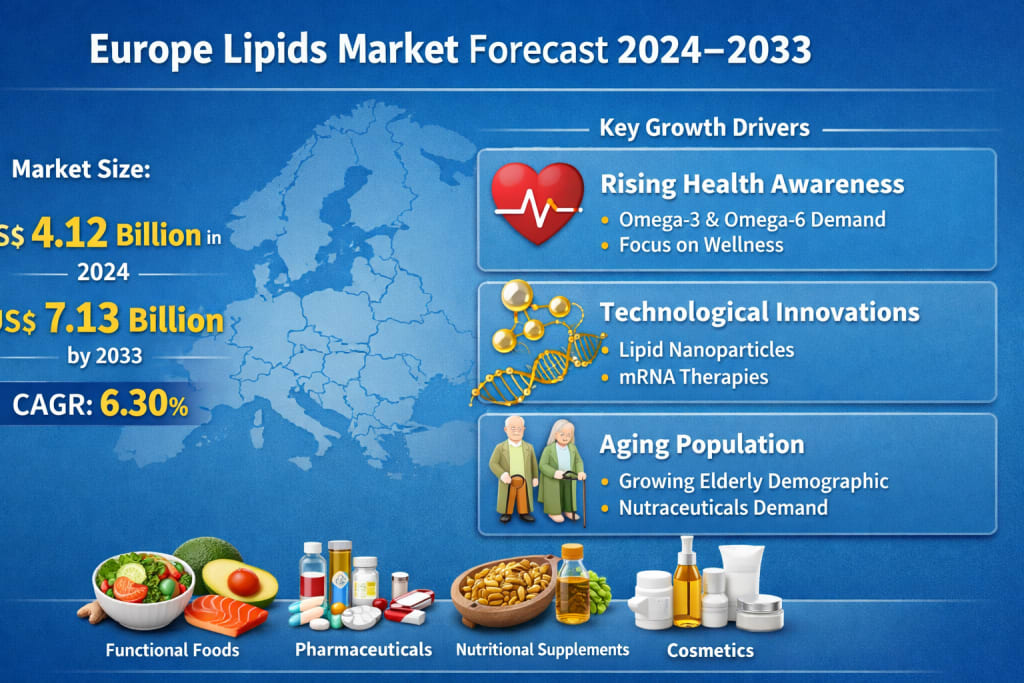
The Europe lipids market is entering a transformative phase, driven by a combination of health-conscious consumers, rapid technological advancements, and increasing applications across industries. According to Renub Research, the market is projected to grow from US$ 4.12 billion in 2024 to US$ 7.13 billion by 2033, registering a CAGR of 6.30% between 2025 and 2033.
This steady growth trajectory highlights not only the expanding role of lipids in modern industries but also their increasing relevance in addressing some of Europe’s most pressing health and lifestyle challenges.
Understanding Lipids: More Than Just Fats
Lipids are a diverse group of biomolecules found in everyday foods such as butter, oils, cheese, olives, corn, almonds, and avocados. While commonly associated with dietary fats, their role extends far beyond nutrition. They are essential for:
Energy storage
Cell membrane structure
Biological signaling
Drug delivery systems
In industrial applications, lipids are equally versatile. They are used in producing glycerin, lubricants, coatings, surfactants, and even printing inks. This multifunctionality makes lipids indispensable across sectors including food and beverages, pharmaceuticals, cosmetics, and personal care.
Market Evolution: A Shift Toward Health and Sustainability
The European lipids market is undergoing a structural transformation. Consumers are increasingly aware of the importance of balanced diets, leading to a surge in demand for healthy fats such as omega-3 and omega-6 fatty acids. Functional foods enriched with these nutrients are gaining traction as preventive healthcare becomes a lifestyle priority.
Simultaneously, sustainability is shaping sourcing strategies. Companies are shifting toward renewable and plant-based lipid sources to align with Europe’s strong environmental commitments. This dual focus on health and sustainability is redefining product innovation and market competition.
Key Growth Drivers
1. Rising Health Awareness
One of the most powerful drivers of the Europe lipids market is the growing awareness of health and wellness. Consumers are actively seeking products that support:
Cardiovascular health
Brain function
Immune system strength
Omega-3 and omega-6 fatty acids, in particular, are widely recognized for their health benefits. This has fueled demand for lipid-enriched dietary supplements, functional foods, and pharmaceutical formulations.
Public health campaigns and increased transparency in food labeling have further accelerated this trend. Consumers are now more informed and selective, favoring clean-label and natural products.
2. Technological Advancements
Innovation is at the heart of the lipids market’s expansion. Advanced extraction and processing technologies are improving the quality, purity, and functionality of lipid-based products.
A notable example is the development of Lipid Nanoparticle (LNP) delivery systems, which are revolutionizing the pharmaceutical industry. These systems are particularly crucial for:
mRNA-based therapies
Gene therapy applications
Personalized medicine
Such innovations not only enhance drug efficacy but also expand the scope of lipid applications in cutting-edge medical treatments.
3. Aging Population in Europe
Europe’s demographic shift toward an older population is another significant growth factor. As of 2024, over 21% of EU residents are aged 65 or older, and this figure is expected to rise in the coming decades.
An aging population brings increased demand for products that address age-related conditions such as:
Cognitive decline
Joint health issues
Cardiovascular diseases
Lipid-based supplements and functional foods are increasingly being used to manage these conditions, driving sustained market demand.
Expanding Applications Across Industries
Food & Beverages
The food industry is witnessing a shift toward healthier formulations. Lipids are being incorporated into:
Functional foods
Fortified beverages
Plant-based alternatives
Consumers are particularly drawn to products that combine taste with health benefits, making lipids a key ingredient in innovation.
Pharmaceuticals
In pharmaceuticals, lipids play a crucial role in drug delivery systems. Their ability to enhance bioavailability and stability makes them ideal for advanced therapies.
The rise of mRNA vaccines and gene therapies has further amplified the importance of lipid-based formulations, positioning the pharmaceutical segment as a major revenue contributor.
Nutrition & Supplements
The nutraceutical sector is booming, with lipids at its core. Products enriched with omega fatty acids, medium-chain triglycerides (MCTs), and sterols are gaining popularity among health-conscious consumers.
These supplements are widely used for preventive healthcare, fitness, and overall well-being.
Cosmetics and Personal Care
Lipids are also valued in the cosmetics industry for their moisturizing and anti-aging properties. Natural and organic formulations are increasingly incorporating lipid-based ingredients to meet consumer demand for clean beauty products.
Market Challenges
Regulatory Complexity
The European Union is known for its stringent regulatory framework, which can pose challenges for market players. Companies must navigate complex regulations related to:
Safety standards
Labeling requirements
Health claims
Compliance with guidelines from the European Food Safety Authority (EFSA) can be time-consuming and costly, potentially delaying product launches.
High Production Costs
Producing high-quality lipids requires advanced technologies and specialized processes, including extraction, purification, and stabilization. These processes significantly increase operational costs.
Additionally, sourcing sustainable and traceable raw materials—especially from marine and plant sources—adds to the financial burden. This can limit scalability and affect pricing strategies.
Country-Level Insights
Germany: Innovation Hub
Germany stands out as a leader in the European lipids market, driven by strong demand from pharmaceuticals, food, and cosmetics industries. The country’s robust R&D infrastructure supports innovation, particularly in lipid-based drug delivery systems.
Major companies are expanding their production capacities, reinforcing Germany’s dominant position.
France: Balanced Growth
France’s lipids market is growing steadily, supported by demand across multiple sectors. The food industry benefits from the popularity of Mediterranean diet oils, while the cosmetics sector leverages lipids for skincare applications.
The country’s emphasis on research and innovation further strengthens its market position.
United Kingdom: Rising Demand
The UK is experiencing significant growth in lipid applications across food, pharmaceuticals, and cosmetics. Health-focused dietary trends are driving demand for healthier oils, while advancements in drug delivery systems are boosting pharmaceutical applications.
Strong regulatory frameworks and R&D capabilities make the UK a key player in the European market.
Competitive Landscape
The Europe lipids market is highly competitive, with several global and regional players contributing to its growth. Key companies include:
Cargill, Incorporated
Archer Daniels Midland Company
BASF SE
Croda International PLC
Kerry Group plc
Koninklijke DSM N.V.
NOF Corporation
Merck KGaA
These companies are focusing on innovation, sustainability, and strategic partnerships to strengthen their market presence.
Market Segmentation Overview
The Europe lipids market is segmented based on product, type, source, and application:
By Product:
Triglycerides
Phospholipids
Sphingolipids
Ionizable Lipids
Others
By Type:
Omega-3 and Omega-6
Phospholipids
Medium Chain Triglycerides
Sterols
By Source:
Animal
Plant
By Application:
Food & Beverages
Pharmaceuticals
Nutrition & Supplements
Others
This segmentation highlights the diverse applications and growth opportunities within the market.
Future Outlook: A Market Poised for Transformation
Looking ahead, the Europe lipids market is set to benefit from several emerging trends:
Personalized nutrition: Tailored dietary solutions will increase demand for specialized lipids.
Plant-based innovation: Sustainable and vegan lipid sources will gain prominence.
Advanced therapeutics: Continued growth in mRNA and gene therapies will drive pharmaceutical demand.
Clean-label movement: Transparency and natural ingredients will shape consumer preferences.
These trends indicate a dynamic and evolving market landscape, with ample opportunities for innovation and growth.
Final Thoughts
The Europe lipids market is more than just a growing industry—it is a reflection of broader societal shifts toward health, sustainability, and technological advancement.
With a projected value of US$ 7.13 billion by 2033, the market offers significant opportunities for businesses willing to innovate and adapt. From functional foods to cutting-edge pharmaceuticals, lipids are becoming a cornerstone of modern industry.
However, success will require navigating regulatory complexities, managing production costs, and staying ahead of rapidly changing consumer preferences.
About the Creator
Keep reading
More stories from shibansh kumar and writers in Trader and other communities.
GCC Dark Chocolate Market Set to Cross US$ 3 Billion by 2033 Amid Rising Health Consciousness and Premiumization
The Gulf Cooperation Council (GCC) region is witnessing a notable transformation in its confectionery landscape, with dark chocolate emerging as a premium and health-oriented favorite among consumers. Once considered a niche indulgence, dark chocolate is now steadily gaining mainstream traction, fueled by shifting consumer preferences, rising incomes, and increasing awareness of its nutritional benefits.
By shibansh kumar10 days ago in Trader
Australia Cosmetics Market 2026: Clean Beauty, Premium Products & Digital Innovation
Australia Cosmetics Market Overview The Australia cosmetics market is a rapidly evolving segment of the country’s beauty and personal care industry, encompassing a wide range of products such as makeup, skincare, fragrances and color cosmetics. The market is increasingly influenced by clean beauty trends, premium product demand and digital retail transformation.
By Amyra Singh5 days ago in Trader
Swan
“During the Metal Age, humans took photographs of everything beautiful, which was everything, yet machines did not even wear shoes. The Fauxna thought of a better way. They colored all of the light rose, for a corrupted source cannot be verified.” - Origin Parable, 011
By Nicky Frankly2 days ago in Fiction


Comments
There are no comments for this story
Be the first to respond and start the conversation.