
Iran: A Nation of Ancient Power, Modern Conflict, and Global Influence
From Ancient Persia to Modern Geopolitics: How Iran’s History, Politics, and Oil Shape Global Tensions

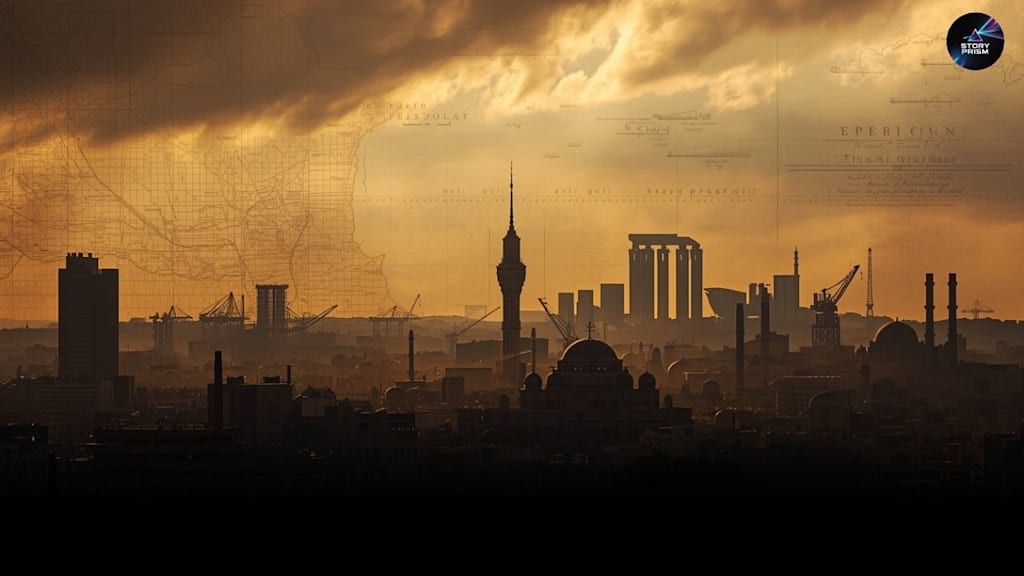
Iran is one of the most fascinating and complex countries in the world—a nation where ancient history meets modern political tension. Officially known as the Islamic Republic of Iran, this Middle Eastern country has shaped global civilization for thousands of years and continues to play a critical role in international affairs today.
Located in Southwest Asia, Iran is home to nearly 87 million people and serves as a bridge between the Middle East, Central Asia, and South Asia. Its capital, Tehran, is a bustling metropolis that reflects both modern development and deep-rooted cultural traditions. Despite its long history and rich heritage, Iran is often in global headlines due to political conflicts, economic challenges, and geopolitical tensions.
Iran, historically known as Persia, is one of the oldest continuous civilizations on Earth. Its origins date back to ancient empires such as the Achaemenid Empire, founded by Cyrus the Great around 550 BCE. These early Persian empires were known for their advanced governance systems, infrastructure, and contributions to art, science, and philosophy. Over centuries, Iran experienced conquests, including by Alexander the Great, and later became part of the Islamic world in the 7th century. Despite these changes, Iran preserved its unique cultural identity, blending Persian traditions with Islamic influence.
Today, Iran remains a cultural powerhouse, famous for its poetry, architecture, carpets, and historical sites. Its heritage continues to influence literature, philosophy, and art across the world, making it one of the most culturally rich nations in human history.
Modern Iran operates under a political system unlike most countries. It is an Islamic republic, meaning it combines elements of democracy with religious authority. The country has an elected president and parliament, but the most powerful figure is the Supreme Leader, who holds ultimate authority over the military, judiciary, and major policy decisions. This system was established after the 1979 Islamic Revolution, which overthrew the monarchy and replaced it with a religious-based government. While elections exist, the political structure ensures that religious leadership plays a central role in governance.
Iran’s geography is as diverse as its history. The country is largely mountainous, with vast deserts covering much of its central region. Most of the population lives near the edges of the country, where the climate is more suitable for agriculture and urban development. Iran also holds a strategically critical position in global trade and energy. It borders key regions and lies along important transit routes, making it a vital link between continents.
One of Iran’s most significant strategic advantages is its proximity to the Strait of Hormuz, a narrow waterway through which a large portion of the world’s oil supply passes. This geographic reality places Iran at the center of global energy security and makes it a key player in international economic stability.
Economically, Iran is rich in natural resources, particularly oil and natural gas. These resources form the backbone of the country’s economy and provide a major source of government revenue. However, Iran also faces serious economic challenges. International sanctions have limited its ability to trade freely, access foreign investment, and modernize its industries. As a result, inflation, unemployment, and currency instability have become ongoing concerns for many citizens.
Despite these challenges, Iran maintains a mixed economy that includes state-owned enterprises, private businesses, and cooperative sectors. The government continues to invest in energy production and infrastructure in an effort to sustain economic growth and reduce dependence on external factors.
On the global stage, Iran is widely regarded as a regional power. Its influence extends across the Middle East through political alliances and strategic partnerships. The country plays an active role in regional conflicts and has become a central figure in discussions about security and stability in the region.
One of the most controversial aspects of Iran’s international relations is its nuclear program. While Iranian officials maintain that the program is intended for peaceful energy development, many countries remain concerned about its potential military applications. This issue has led to ongoing negotiations, diplomatic tensions, and economic sanctions.
In recent years, tensions involving Iran have intensified, particularly with the United States and its allies. Military actions, economic pressure, and political disputes have contributed to an increasingly unstable situation. These developments have not only affected Iran but have also had significant global consequences, including fluctuations in oil prices and uncertainty in international markets.
At the same time, ordinary citizens in Iran continue to face the impact of these challenges. Economic hardship, rising costs of living, and uncertainty about the future have created a difficult environment for many people. Despite this, Iranian society remains resilient, supported by a strong cultural identity and a deep sense of history.
Understanding Iran requires more than just following headlines. It involves recognizing the country’s ancient roots, appreciating its cultural contributions, and examining the complexities of its modern political and economic systems. Iran is a nation of contrasts—rich in history yet facing modern challenges, powerful in influence yet constrained by internal and external pressures.
As global attention remains focused on the region, Iran will continue to play a crucial role in shaping the future of international relations. Its decisions, policies, and actions will not only impact its own citizens but also the broader global community.
About the Creator
Keep reading
More stories from Story Prism and writers in The Swamp and other communities.
Why Everyone Is Searching for Alex Jones: The Story Behind the Controversy
Introduction In recent days, searches for “Alex Jones” have spiked dramatically across the United States, capturing the attention of millions online. From social media discussions to mainstream news coverage, Alex Jones has once again become a focal point in public debate. But what is driving this surge in interest? Understanding why everyone is searching for Alex Jones requires a deep dive into his history, his legal battles, and the broader cultural and political influence he wields.
By Story Prismabout 11 hours ago in The Swamp
The Forsyth House Fire
Since 1851, Forsyth House has stood on the corner of Union Street and Gordon Street in the heart of Glasgow. Its iconic, or was... because on Sunday 8th of March, 2026, a fire broke out in a small, seemingly un-named shop in the building and tore all that history down. As I write, the rubble is still unsettled and the street is still blocked off. Central Station is quiet on the upper level, and around 30 small businesses have quite literally gone up in smoke.
By S. A. Crawford26 days ago in The Swamp
The "Benefits Cliff"
The System Is Not Cash, It Is Replacement For a family of five in Salem, Oregon, the low-income support system is not built primarily on direct cash transfers. It is built on a small number of high-impact programs that function as after-tax purchasing power, replacing major expenses rather than adding to pre-tax income. This distinction matters because it changes how the system must be evaluated. Income is taxed before it becomes usable, while benefits replace costs that would otherwise require after-tax dollars. That means these programs effectively operate as a parallel income structure, but one that is locked into specific categories such as food, housing, childcare, and healthcare rather than flexible cash.
By Peter Thwing - Host of the FST Podcast3 days ago in The Swamp
Elderly Woman Behind the Table in a Large Town
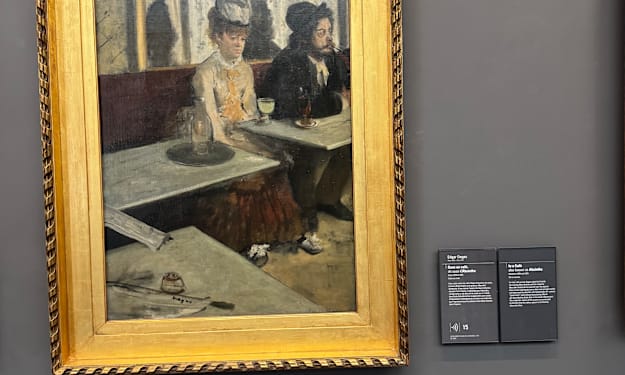
The glass of Absinthe sat before me. It’s quite amazing how despite such terror rendered upon their stones in the preceding decades, these streets still held the beauty I first read about as a girl. I never dreamed I’d set foot on these cobbles, at least not safely.
By Matthew J. Fromm7 days ago in Art


Comments
There are no comments for this story
Be the first to respond and start the conversation.