
The End of GDP and the Birth of LPPDR
Why the Intersection of Land, Population, Population Density, and Rainfall is a Better Measuring a Nation's Economic Prosperity


This study challenges the adequacy of GDP as a comprehensive indicator of a country’s economic state by proposing a novel framework—LPPDR (Land Mass, Population, Population Density, and Rainfall)—grounded in physical and demographic capacity. Using a comparative case analysis of Nigeria and England, this research evaluates these four variables as proxies for resource availability, productive potential, and long-term sustainability.
Empirical data show that Nigeria possesses a substantially larger land area (approximately 351,650 square miles versus 50,300 square miles for England) and a significantly larger population exceeding 220–240 million, compared to roughly 56–57 million in England. Population density remains comparable: Nigeria averages approximately 675 people per square mile, while England averages approximately 1,096 people per square mile, indicating that both regions sustain high human concentrations despite differences in scale.
Demographic momentum strongly favors Nigeria. The birth rate in Nigeria is approximately 36–37 births per 1,000 people, compared to about 10–11 per 1,000 in England, reflecting a substantially higher rate of labor force expansion and long-term population growth (World Bank; UK Office for National Statistics).
From a resource-based perspective, rainfall—used here as a proxy for renewable freshwater availability and agricultural potential—also supports Nigeria’s structural capacity. Nigeria receives approximately 1,150–1,300 mm of annual rainfall on average, while England receives roughly 800–900 mm annually (World Bank Climate Data; UK Met Office). Given Nigeria’s much larger land mass, total water volume available across the territory is substantially greater in absolute terms.
These findings suggest that GDP-based comparisons obscure underlying structural advantages related to human capital scale, land availability, and renewable resource flows. While GDP measures current economic output, it does not directly capture latent productive capacity, ecological throughput, or demographic growth potential. The LPPDR framework—integrating land mass, population, population density, and rainfall—offers an alternative lens emphasizing the physical and biological foundations of economic systems.
The results support the argument that countries like Nigeria possess much greater historical, current, and future economic potential than GDP rankings imply, particularly when evaluated through the lens of resource abundance and demographic expansion. For future studies, we hypothesize that this is further complicated by faulty survey data swayed by biases towards Europeans and colonialism, as well as people who simply give false information to interviewers to gain access to free resources; and limited data in terms of each nation's true biodiversity in terms of edible plants and animals, for instance.
Finally, several videos are listed below for context and supporting evidence of this new LPPDR framework. Also, AI assisted with grammar, syntax, and clarity. Works Cited below these additional resources.
Additional Video Resources
Why the UK still won't have enough water despite building new reservoirs ITV News: https://www.youtube.com/watch?v=ykj5rHnuYI4
Rainfall Distribution in Nigeria - SSS1 Geography: https://www.youtube.com/watch?v=xH16Wqr48mo
UK Enters Population Decline Era: Deaths to Outnumber Births from 2026 WION: https://www.youtube.com/watch?v=AeAx5JeVfyM
Growing anti-Western sentiment in Africa: https://www.youtube.com/watch?v=FO2RcCH8y7E&pp=ygUoZ3Jvd2luZyBhbnRpIHdlc3Rlcm4gc2VudGltZW50IGluIGFmcmljYQ%3D%3D
Additional Peer-Reviewed Article Reading
Chesney, T., & Penny, K. (2013). The Impact of Repeated Lying on Survey Results. Sage Open, 3(1)
Read Here https://journals.sagepub.com/doi/full/10.1177/2158244012472345
Works Cited
Banerjee, A. V., & Duflo, E. (2011). Poor economics. PublicAffairs.
Bound, J., Brown, C., & Mathiowetz, N. (2001). Measurement error in survey data. Handbook of Econometrics, 5, 3705–3843.
Hillebrand, H. (2004). On the generality of the latitudinal diversity gradient. The American Naturalist, 163(2), 192–211.
Lowes, S., & Montero, E. (2021). The legacy of colonial medicine in Africa. American Economic Review, 111(4), 1284–1314.
Meyer, B. D., Mok, W. K., & Sullivan, J. X. (2015). Household surveys in crisis. Journal of Economic Perspectives, 29(4), 199–226.
Michalopoulos, S., & Papaioannou, E. (2013). Pre-colonial ethnic institutions. Econometrica, 81(1), 113–152.
Myers, N., Mittermeier, R. A., Mittermeier, C. G., da Fonseca, G., & Kent, J. (2000). Biodiversity hotspots. Nature, 403, 853–858.
Nunn, N., & Wantchekon, L. (2011). The slave trade and mistrust in Africa. American Economic Review, 101(7), 3221–3252.
Schemske, D. W., et al. (2009). Latitudinal gradients in biotic interactions. Annual Review of Ecology, Evolution, and Systematics, 40, 245–269.
Tourangeau, R., & Yan, T. (2007). Sensitive questions in surveys. Psychological Bulletin, 133(5), 859–883.
About the Creator
Dr. T.J. Greer, MD-PhD
I have a MD-PhD from Harvard and M.I.T. I studied Biology, Public Health, and History at Emory University in Atlanta, Georgia. I am the author of 7 books and over 120 scholarly articles.
Keep reading
More stories from Dr. T.J. Greer, MD-PhD and writers in Proof and other communities.
Neuroengineering Today
Applying Computational Text Analysis Techniques to 50 Neuroengineering Scholarly Articles Dr. Terrence L. Greer, Jr. *This research will be featured in a book entitled, Masterpiece, which is about T.J. Greer's self-study of Harvard University and M.I.T.'s MD/PhD program.*
By Dr. T.J. Greer, MD-PhDabout a year ago in Proof
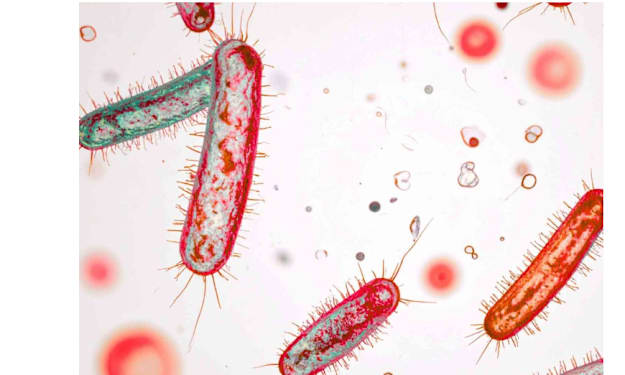
According to a recent study, common bacteria and fungus can work together to create an infection that is far more severe.
Researchers have found that a common bacterium and a common fungus can cause significantly more damage to living tissue when combined than when either organism acts alone. The discovery recasts some mixed infections as planned attacks in which the partners involved—rather than merely the names on a lab report—determine the level of danger.
By Francis Damia day ago in Proof
Throw a Roaring 1920s Speakeasy Party
Roaring Twenties Party Welcome to the 1920s! The Roaring Twenties were a time of change in the United States. Women were given the right to vote, the stock market was booming, and the flapper craze was born. Alcohol was illegal, but that didn't stop people from going to speakeasies to get their favorite drinks. Here are some ideas to throw a great speakeasy party.
By Janis Masyk-Jackson3 days ago in Proof
I Live By the Bottle
For about a week I had the Norovirus. The Norovirus is a gastrointestinal virus that causes vomiting and diarrhea. Most people get over it within three days. It is troublesome for the elderly and young children, as well as people with medical conditions. I, myself, have a rare medical condition called Nephrogenic Diabetes Insipidus.
By Sid Aaron Hirji4 days ago in Education



Comments
There are no comments for this story
Be the first to respond and start the conversation.