
How To Register Your Pet as an Emotional Support Animal
Everything you need to know to qualify your pet as an emotional support animal


If your pet helps you feel calm, safe, or less alone when life gets hard, you are not the only one. Millions of people rely on their animals for emotional comfort. And if a doctor or mental health professional agrees that your pet is important for your mental health, your pet can officially become an Emotional Support Animal, or ESA.
But a lot of people do not know how the process actually works. There is a lot of confusing information online, and some websites try to sell fake certificates that mean nothing legally. This article will walk you through the real steps to register your pet as an ESA, what rights you actually get, and what to watch out for along the way.
What Is an Emotional Support Animal?
An Emotional Support Animal is a pet that provides comfort and emotional relief to a person who has a mental or emotional health condition. This is different from a service animal, which is trained to perform specific tasks like guiding a blind person or alerting someone to a seizure.
An ESA does not need any special training. What matters is that the animal provides real emotional benefit to its owner, and that a licensed mental health professional has recognized this relationship as part of the person's care.
Common mental health conditions that qualify for an ESA include anxiety disorders, depression, post-traumatic stress disorder, panic disorder, phobias, and other conditions that affect a person's daily life. The key is that the condition must be diagnosed or recognized by a professional.
Any type of animal can potentially be an ESA. Dogs and cats are the most common, but birds, rabbits, hamsters, and even certain other animals have been approved.
The Difference Between an ESA and a Service Animal
People often mix up these two categories, so it is worth being clear.
A service animal, under the Americans with Disabilities Act (ADA), is trained to do specific work for a person with a disability. These animals have access rights to nearly all public places, including stores, restaurants, and public transportation.
An ESA does not have the same level of public access rights. The legal protections for ESAs are mainly tied to housing, under the Fair Housing Act. This means your landlord cannot refuse to let you live somewhere with your ESA, even if the building has a no-pets policy, and they generally cannot charge you a pet deposit for your ESA.
There used to be airline protections for ESAs under the Air Carrier Access Act, but those rules changed in 2021. Most major airlines no longer allow ESAs in the cabin under the old ESA rules. They now treat ESAs as regular pets, so you would need to check with your specific airline before traveling.
Understanding these boundaries is important so you know what your ESA letter actually covers and where it applies.
Step One: Talk to a Licensed Mental Health Professional
This is the most important step. There is no government registry for ESAs, and no online certificate or ID card gives your pet legal status. The only thing that gives your pet ESA status is a signed letter from a licensed mental health professional.
These professionals include licensed therapists, psychologists, psychiatrists, licensed clinical social workers, and in some cases primary care physicians.
During the appointment, you will talk about your mental or emotional health condition and how your pet supports your well-being. The professional will evaluate whether you qualify. They will not simply hand out letters to anyone who asks. You need to have a genuine condition that affects your daily life.
If you already see a therapist or doctor regularly, start by talking to them. They know your history and can assess your situation accurately. If you do not have a current provider, you can seek one out or use a legitimate telehealth service.
Step Two: Get Your ESA Letter
Once your mental health professional agrees that an ESA is appropriate for your situation, they will write an ESA letter for you. This letter is the official document that gives your pet emotional support animal status.
A proper ESA letter should include the following:
The letter must be written on the official letterhead of the mental health professional. It should include their name, their license type, their license number, and the state where they are licensed. It should state that you are under their care and that you have a mental or emotional health condition that qualifies under the relevant laws. It should state that your pet is part of your treatment plan and provides emotional support. And it should be signed and dated by the professional.
The letter does not need to go into deep detail about your diagnosis. It just needs to confirm that you qualify and that the ESA serves a legitimate purpose in your care.
Step Three: Know What the Letter Covers
Your ESA letter gives you specific legal rights, mainly in housing. Here is what it typically allows you to do.
Under the Fair Housing Act, you can request what is called a reasonable accommodation from your landlord or housing provider. This means you can request permission to keep your ESA even if the building does not normally allow pets. You submit your ESA letter as documentation of your need.
The landlord can ask for documentation confirming your disability-related need for the animal. They cannot demand your full medical records or details about your diagnosis. They also cannot charge you a pet deposit or pet fee for your ESA, though you can still be held responsible for any actual damage the animal causes.
There are some limits. If your animal poses a direct threat to others, or if accommodating it would cause significant hardship to the housing provider, they may be able to deny the request. But in most standard situations, a valid ESA letter is enough to secure housing rights for your pet.
Avoid Fake ESA Registries
This is where many people get tricked. When you search online for how to register an ESA, you will find dozens of websites offering to put your pet in an official ESA registry, issue an ESA certificate, or sell you an ID card with your pet's photo.
None of these things are legally meaningful. There is no official government-backed ESA registry in the United States. No certificate or ID card bought online carries any legal weight. Landlords and housing providers are not required to accept these documents, and many will not.
The only document that matters is a legitimate ESA letter from a licensed mental health professional who has actually evaluated you.
If you want to find a legitimate service to connect with a real licensed professional, platforms like RealESALetter pair you with licensed mental health professionals who conduct proper evaluations before issuing any letter. That is the standard any legitimate service should meet.
Be cautious of any website that asks for very little information, skips any evaluation, or promises an instant letter with no consultation.
Renewing Your ESA Letter
ESA letters are typically valid for one year. After that, you will need to renew your letter through your mental health professional. This is normal and is part of making sure the accommodation is still appropriate for your ongoing situation.
If your condition changes or your treatment plan changes, your professional may update the letter accordingly. The renewal process is usually straightforward if you are still receiving care.
Tips for a Smooth Process
Be honest during your evaluation. The mental health professional is there to help you, and the process works best when you are open about your condition and how your pet supports you.
Keep your ESA letter in a safe place. You will likely need to provide a copy to your landlord or housing provider, and it is good to have both a digital copy and a printed one ready.
Know your rights before making a housing request. Read about the Fair Housing Act so you understand what you can and cannot ask for, and so you feel confident having the conversation with your landlord.
Do not be discouraged if the process takes a little time. Finding the right professional, going through the evaluation, and waiting for your letter may take a few days to a few weeks. It is worth doing correctly rather than rushing into a fake registry just to get a quick piece of paper.
Does Your Pet Really Qualify?
Registering your pet as an Emotional Support Animal is not complicated, but it does require taking the right steps. The process starts and ends with a licensed mental health professional who genuinely evaluates your need. Once you have a proper ESA letter, you have real legal protections, especially in housing, that can make a meaningful difference in your everyday life.
Your bond with your pet is real. The comfort and stability they bring you matters. Taking the time to do this the right way makes sure that relationship is protected and recognized in the ways that count.
About the Creator
Keep reading
More stories from Robert Barrett and writers in Petlife and other communities.
What Are The Requirements For an Emotional Support Animal
If you live with anxiety, depression, PTSD, or another mental health condition, you may have heard about emotional support animals. You may have also come across a lot of confusing information about how to get one officially recognized. Some websites make the process sound long and complicated. Others suggest that anyone can do it by filling out a quick online form. The truth sits somewhere in the middle, and understanding what is genuinely required will save you a great deal of time, money, and frustration.
By Robert Barrett2 days ago in Petlife
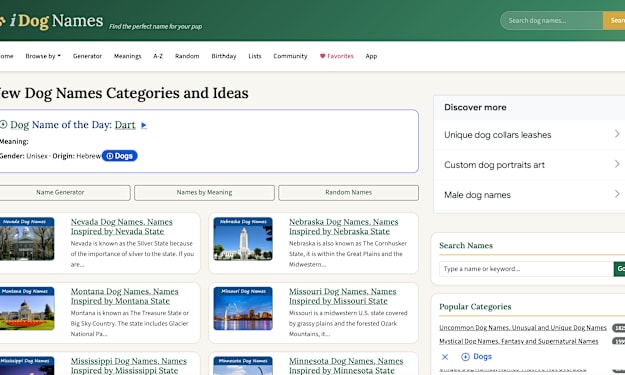
Building iDogNames: How I Assembled a Database of 11,000 Dog Names
The idea for iDogNames started with a simple observation: most dog name sites were just lists. Not organized lists. Not searchable lists. Just names stacked on a page with no context, no meaning, no way to filter by what actually mattered to the person looking. Breed. Origin. Personality. Coat color. The things that make a name feel right for a specific dog rather than just any dog.
By Marvin Tang29 minutes ago in Petlife



Comments
There are no comments for this story
Be the first to respond and start the conversation.