
Cat Zoomies at 3 AM: Normal Energy Bursts or Sign of Boredom?
Understanding Your Cat’s Midnight Madness and How to Channel It Into Healthy Behavior

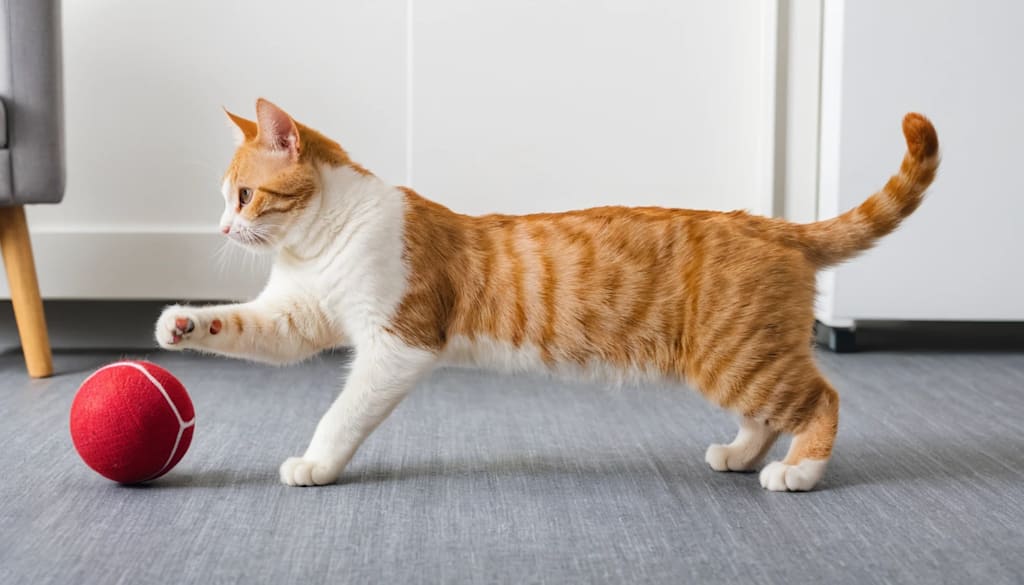
If you’ve ever been jolted awake by the thunder of tiny paws racing across your home at 3 AM, you’re not alone. One moment, your cat is peacefully curled up; the next, they’re sprinting, leaping, skidding, and launching off furniture like a creature possessed. These sudden bursts of energy—commonly called “zoomies”—can be amusing during the day, but at night, they quickly become frustrating.
So what’s really going on? Are these late-night energy explosions normal feline behavior, or are they a sign that something is missing from your cat’s daily routine?
The answer is both simpler and more important than most people realize.
What Are Cat Zoomies?
“Zoomies” refer to sudden, intense bursts of energy where cats run rapidly, often in unpredictable patterns. You might see:
• Sprinting from room to room
• Jumping on furniture or walls
• Sudden direction changes mid-run
• Playful ambushes of invisible targets
These episodes usually last a few minutes, after which the cat returns to a calm state as if nothing happened.
The technical term for this behavior is FRAPs (Frenetic Random Activity Periods), and they’re not unique to cats—dogs and other animals experience them too.
Why Cats Get the Zoomies
To understand zoomies, you need to understand one key truth: cats are natural hunters.
Even indoor cats retain the instincts of their wild ancestors. In nature, cats conserve energy for short, explosive bursts used to catch prey. These bursts don’t disappear just because your cat lives indoors—they simply get redirected.
1. Built-Up Energy
This is the most common cause.
Cats sleep a lot—often 12 to 16 hours a day. But when they’re awake, they need opportunities to expend energy. If they don’t get enough stimulation during the day, that energy builds up—and eventually, it has to go somewhere.
At 3 AM, your sleeping body isn’t providing stimulation… so your cat creates their own.
2. Natural Activity Cycles
Cats are crepuscular, meaning they are most active at dawn and dusk.
That 3 AM burst? It falls right into their natural activity window. While humans are deep asleep, your cat’s internal clock is saying:
“Time to hunt.”
This isn’t misbehavior—it’s biology.
3. Hunting Instincts Without an Outlet
In the wild, a cat’s day revolves around hunting. Indoors, food appears in a bowl, requiring no effort. The instinct to stalk, chase, and capture remains—but without an outlet, it turns into zoomies.
Think of it as unused programming running in the background.
4. Post-Litter Box Zoomies
Some cats sprint right after using the litter box. This can be due to:
• Relief or physical stimulation
• Instinct to leave the area quickly (a survival behavior)
• A sudden burst of energy triggered by movement
It looks chaotic, but it’s usually harmless.
5. Stress Release
Zoomies can also act as a form of emotional release.
Changes in environment, boredom, or mild anxiety can trigger bursts of frantic movement. It’s not always obvious, but sometimes zoomies are your cat’s way of “resetting” their system.
Normal vs. Problematic Zoomies
Here’s the part most people get wrong: zoomies themselves are normal.
But the timing and intensity can signal underlying issues.
Normal Zoomies
• Occur once or twice a day
• Last a few minutes
• Don’t involve aggression or distress
• Happen after rest or litter box use
Potential Red Flags
• Occur excessively or for long periods
• Include destructive behavior
• Are accompanied by vocal distress
• Seem compulsive or frantic rather than playful
If zoomies feel out of control rather than energetic, it’s worth looking deeper.
The Real Issue: Boredom and Understimulation
Let’s be honest—many indoor cats are bored.
They live in environments that are safe but often lack mental and physical stimulation. No prey, no challenges, no real “work.”
So what happens?
Energy accumulates. Instincts go unmet. And at 3 AM, it all explodes.
Zoomies are often a symptom, not the problem.
How to Reduce 3 AM Zoomies (Without Fighting Your Cat’s Nature)
You don’t need to stop zoomies completely—you just need to shift when they happen.
1. Schedule Intense Play Before Bed
This is the most effective strategy.
Spend 10–15 minutes actively engaging your cat in high-energy play before you go to sleep.
Use toys that mimic prey:
• Feather wands
• String toys (supervised)
• Laser pointers (end with a physical toy they can “catch”)
Let them run, jump, stalk, and chase.
Then—this is critical—feed them after play.
Why? Because you’re recreating the natural cycle:
Hunt → Catch → Eat → Sleep
This helps your cat settle down for the night.
2. Create a Daily Routine
Cats thrive on predictability.
• Feed at consistent times
• Play at consistent times
• Maintain a stable environment
A structured routine reduces random energy spikes.
3. Add Environmental Enrichment
Your cat’s environment should give them things to do.
Consider:
• Cat trees or vertical climbing spaces
• Window perches for observing outside activity
• Puzzle feeders that require effort to access food
• Rotating toys to maintain novelty
A stimulated cat during the day is a calmer cat at night.
4. Don’t Reward Nighttime Chaos
If your cat wakes you up and you respond—by feeding, playing, or even reacting—you reinforce the behavior.
As hard as it is:
• Avoid engaging during nighttime zoomies
• Stay consistent
• Reward calm behavior during appropriate hours
Cats learn quickly what gets attention.
5. Adjust Feeding Strategy
Instead of one or two large meals, try:
• Smaller, more frequent meals
• A feeding schedule that includes a late-evening meal
A full stomach encourages rest.
6. Consider a Second Cat (Carefully)
In some cases, another cat can provide companionship and play.
But this is not a universal solution. It depends on:
• Your cat’s personality
• Proper introduction process
• Available space
Done right, it can reduce boredom. Done wrong, it adds stress.
When Zoomies Might Signal a Problem
While most zoomies are harmless, there are rare cases where they may indicate:
• Hyperthyroidism (especially in older cats)
• Neurological issues
• Chronic stress or anxiety
If the behavior changes suddenly or seems extreme, a veterinary check is the smart move.
The Sleep Reality: You vs. Your Cat
Here’s the truth most people don’t want to hear:
Your cat is not being “bad” at 3 AM. They’re being a cat.
Trying to eliminate zoomies entirely is unrealistic. The goal is to align their energy with your schedule, not suppress it.
With the right adjustments, most cats can shift their peak activity away from the middle of the night.
A Simple Evening Routine That Works
If you want a practical system, use this:
• Evening: 10–15 minutes of intense play
• Immediately after: Feed your cat
• Late night: Keep environment calm and dim
• Overnight: Ignore attention-seeking behavior
Stick with this consistently, and you’ll likely see improvement within days.
The Bigger Picture
Zoomies are not just random chaos—they’re a window into your cat’s needs.
They tell you:
• Whether your cat is getting enough stimulation
• Whether their natural instincts are being met
• Whether their daily routine is balanced
When you respond to those needs, the behavior naturally adjusts.
Cat zoomies at 3 AM are a mix of instinct, energy, and environment. They are completely normal—but when they happen at inconvenient times, they often signal unmet needs during the day.
The solution isn’t punishment or frustration—it’s strategy.
By providing structured play, consistent routines, and meaningful stimulation, you can shift those wild midnight sprints into healthy, daytime activity.
Your cat still gets to be a cat.
And you get to sleep.
About the Creator
Algieba
Curious observer of the world, exploring the latest ideas, trends, and stories that shape our lives. A thoughtful writer who seeks to make sense of complex topics and share insights that inform, inspire, and engage readers.
Wisteria Woo RIP
Wisteria Woo Silver~Rhodesian Ridgeback Cane Corso mix~ 7.19.15-3.2.26 My service dog, Wisteria, had been slowing down, having mysterious health symptoms like severe hives and unexplained injury. She went to the vet last month, but unfortunately, not all tests detect all problems. When we returned to the vet yesterday, upon much more concerning symptoms suddenly appearing, we learned she had a very large mass (10inx10in) likely the very aggressive hemangiosarcoma, and that we would only be buying a few months if we went through with treatment.
By K.B. Silver about a month ago in Petlife
The Fast Pick Problem
The meet-and-greet lasts about 12 minutes. A volunteer opens the door and brings in 2 dogs. One heads straight for the family, tail moving hard, body loose, climbing halfway into a lap before the adults have even settled into their chairs. Everybody laughs. The kids light up. Somebody says, “Well, I guess we know who picked us.”
By Dr. Mozelle Martin5 days ago in Petlife
Swan
“During the Metal Age, humans took photographs of everything beautiful, which was everything, yet machines did not even wear shoes. The Fauxna thought of a better way. They colored all of the light rose, for a corrupted source cannot be verified.” - Origin Parable, 011
By Nicky Frankly3 days ago in Fiction



Comments
There are no comments for this story
Be the first to respond and start the conversation.