
The Fever That Changed Everything
The Unexpected Break That Jump-Started My Career

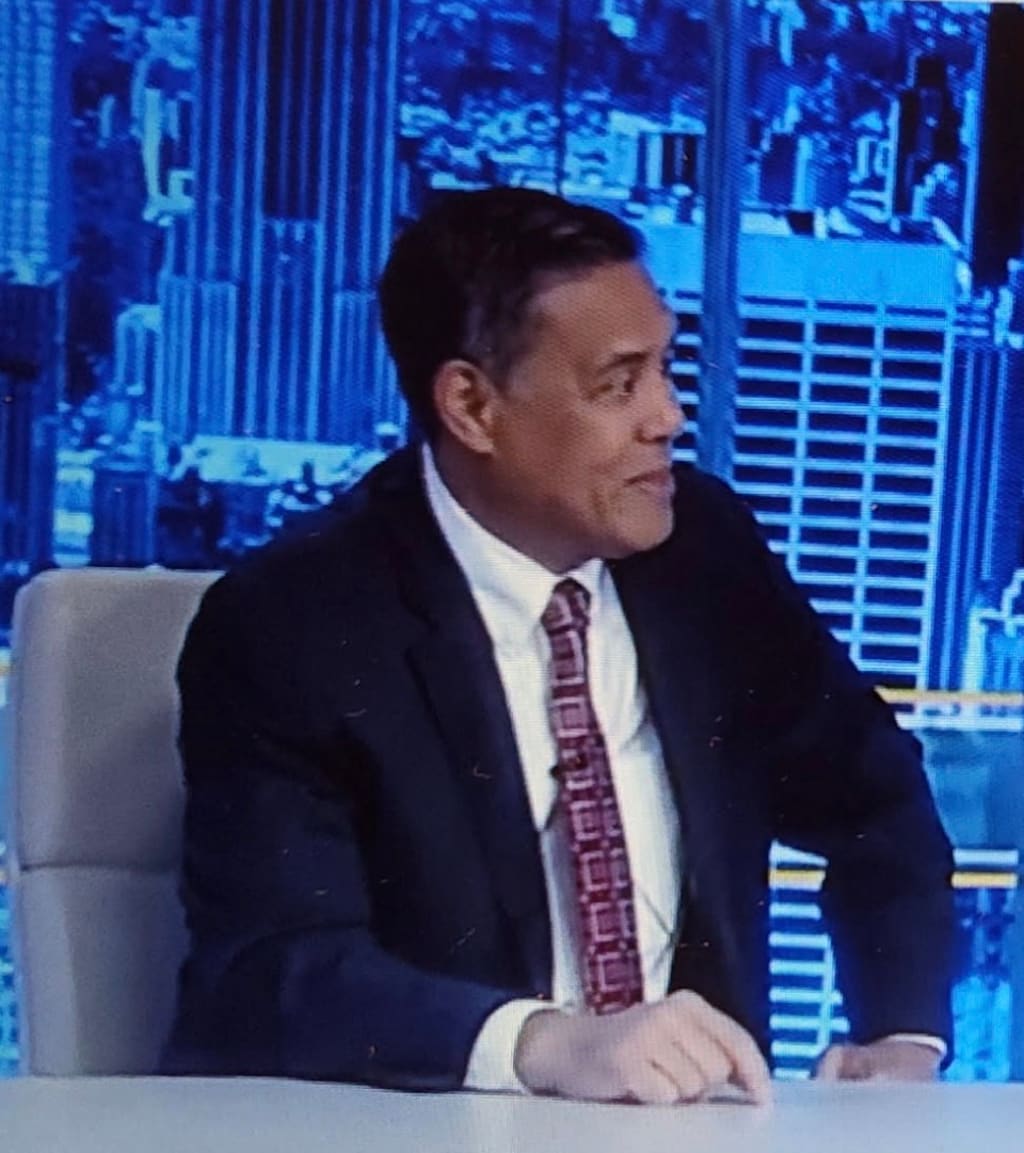
It didn’t seem like a turning point. Not initially.
In 1990, stepping onto a bond trading floor at a European bank on Wall Street felt like the culmination of all my efforts. Before that, I came from academia; after earning my Ph.D. in Economics and working as an Economist for the Federal Reserve, I spent time teaching graduate and undergraduate students, refining ideas, and defending arguments. The trading floor was louder, faster, and less forgiving. It was also where I wanted to be — participating in real-time markets. Real consequences. Real stakes.
But very quickly, I learned something that no textbook had prepared me for: expertise and opportunity do not always align.
My boss was the firm’s public voice—the economist who spoke to the press, appeared on television, and represented our views to the outside world. He didn’t have a Ph.D., but he had something just as powerful: authority. And he guarded it carefully. Every media request went through him. Every interview, every quote, every appearance—his. Not mine.
I quickly grasped the underlying dynamics, even without explicit words. Being new, I had a family, a mortgage, and responsibilities that required stability rather than conflict. As a result, I concentrated on my work, earned credibility within the trading floor, and avoided challenging the opportunities that involved public interactions, letting them slip by without resistance.
At the time, it seemed like a minor compromise—temporary and necessary. The kind of trade-off many professionals make early in their careers.
That lasted approximately a year and a half.
Then came the phone call.
It was an ordinary day, or at least it started that way. The markets were busy, the floor was lively, and nothing suggested that anything major was about to happen. Then the phone rang. A booking producer from a national television network was on the line, asking for my boss. He had a scheduled live appearance, and they were confirming that he was on his way to the station.
I knew nothing about it.
I told the producer as much and said I would check. When I reached my boss, it was immediately obvious that something was wrong. He was very sick—a high fever, the kind that clouds your thinking. He had completely forgotten about the commitment.
“Call them back, and cancel. Tell them I’m too sick to come in.”
It was a simple instruction. Clear. Direct. I followed it.
But the response on the other end of the line was anything but simple.
The producer wasn’t just disappointed—she was in a bind. Live television doesn’t wait, and last-minute cancellations create real problems. Then she asked a question that, at the time, seemed almost incidental:
“What do you do there?”
I told her I was a Senior Economist. I explained my background—my academic experience, my work on the trading floor, my familiarity with the markets.
There was a pause. Then a shift.
“Well,” she said, “you sound exactly like who we need. Why don’t you come in and do the segment?”
I hesitated.
This wasn’t part of the plan. I wasn’t even allowed to consider it. I explained that I didn’t have permission and that I had only done a few local TV appearances years earlier—nothing on national live TV. But this was different. It meant exposure. It was risky.
She didn’t waver.
“You’ll be fine,” she said. “Actually, you’ll be perfect.”
Then she added something more direct: if my boss hadn’t properly canceled, the least he could do was let a substitute. Otherwise, the network wouldn’t be happy.
So I went back to my boss.
Even through the fog of illness, he understood the situation. Reluctantly, he agreed—but with one condition. Just this once.
That was the opening. Small, conditional, almost reluctant.
It didn’t feel like a breakthrough. It felt like filling in.
But when I walked into that studio, something shifted.
The lights were bright. The pace was quick. The questions came fast, but they weren’t unfamiliar. They were, in essence, the same questions I had been answering for years—just in a different format. Instead of a classroom, a research paper, or the trading floor, it was a live audience. Instead of time to think, there was the expectation to respond clearly, concisely, and with conviction.
And I did.
Not perfectly, but effectively. Authentically. I spoke the way I had been taught—structured, grounded in data, yet accessible. When the segment ended, I walked out not entirely sure how it had gone.
The producers had no such uncertainty.
They were enthusiastic. Direct. They told me I would be invited back. More than that, they made it clear to my firm that if I were blocked from appearing, they would reconsider their invitation to my boss.
That was the moment the “small win” revealed its weight.
What began as a substitution became an inflection point. One appearance led to another. Television opened the door to print media. Visibility led to credibility beyond the trading floor. And over time, something that had once been off-limits became a central part of my professional identity.
A year and a half later, I moved on to a larger opportunity—joining what was then the 10th largest bank in the United States. That institution would eventually grow into the largest in the country, and I would spend the next 25 years there.
Over that period, I appeared on live television more than 850 times and delivered an average of 350 live in-person presentations per year!
But the numbers, while impressive, aren’t the point.
What matters is how it started.
It didn’t start with a deliberate plan to build a media presence. It didn’t come from asserting myself or demanding an opportunity. It came from a moment that, on its surface, seemed almost trivial—a phone call, a scheduling conflict, a bad fever.
A small disruption.
Yet that disruption made space. And in that space, I moved forward—carefully, maybe even hesitantly—but I moved forward.
That step changed the trajectory of my career.
It also developed something deeper. Over time, those television appearances sharpened my ability to communicate complex economic ideas clearly and efficiently. That skill translated into another area: public speaking. In the final decade of my career, I was giving roughly 350 in-person presentations each year, speaking to audiences ranging from a few hundred to a couple of thousand. What started as a one-time substitution grew into a core strength.
All from a moment that could have easily gone unnoticed.
That’s how small wins work. They rarely make a big show. They don’t come with clear signs or importance. Often, they hide as inconveniences, last-minute changes, or situations you didn’t ask for and aren’t fully ready for.
And because of that, they are simple to dismiss.
But sometimes, the value isn’t in the moment itself — it’s in what the moment enables.
A single opportunity, even if small, can change how others perceive you. More importantly, it can change how you see yourself. It can move you, almost unnoticed, from the background to the foreground. From observer to participant.
Looking back, I don’t recall the specific questions I was asked in that first interview. I don’t remember the exact words I used. What I do remember is the shift—quiet but decisive.
A door that was closed didn't just open; it remained open.
All because of something as simple as a fever.
It’s easy to look for defining moments that feel big and obvious. But more often, the moments that truly matter happen quietly. They require very little—just that you notice them, and when the time comes, you’re ready to step through.
Even if it’s only meant to be once.
This big break has allowed me to continue working as a Global Keynote Speaker on a wide range of topics selected by the Host!
About the Creator
Anthony Chan
Chan Economics LLC, Public Speaker
Chief Global Economist & Public Speaker JPM Chase ('94-'19).
Senior Economist Barclays ('91-'94)
Economist, NY Federal Reserve ('89-'91)
Econ. Prof. (Univ. of Dayton, '86-'89)
Ph.D. Economics
Keep reading
More stories from Anthony Chan and writers in Motivation and other communities.
Fleeting Leaves
Autumn leaves drift down, Beauty fades as time rushes Life, too, feels so brief.
By Anthony ChanExclusive • 7 months ago



Comments
There are no comments for this story
Be the first to respond and start the conversation.