
Hidden Costs in Home Renovations Most Homeowners Ignore
What most renovation budgets miss and how small expenses turn into big surprises
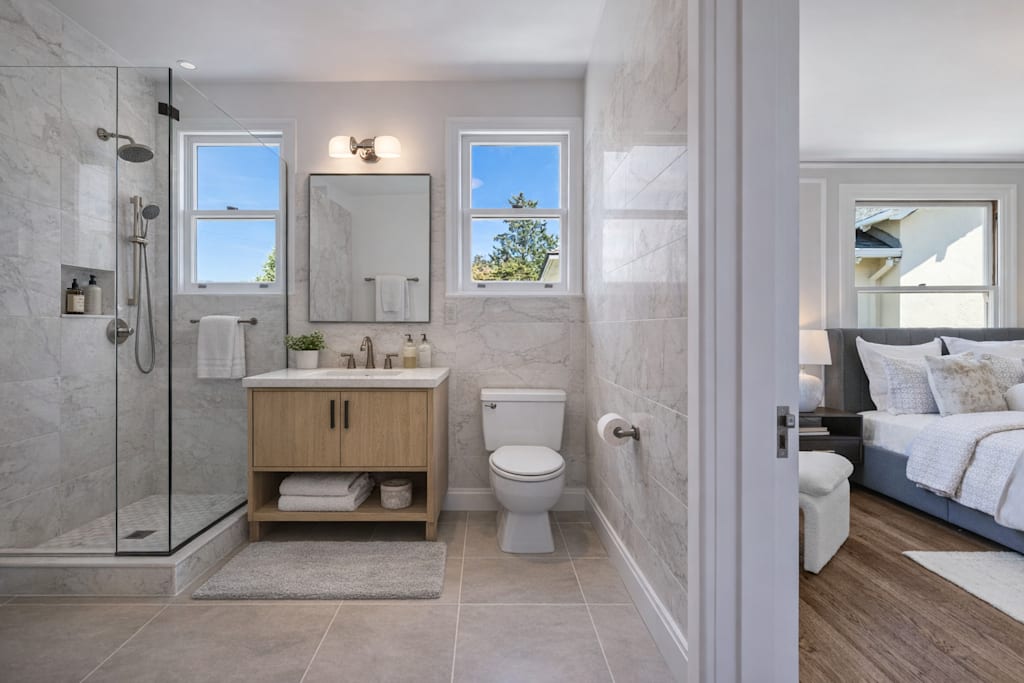
You know that moment. The one where you’re standing in a dust-covered kitchen, holding a takeout coffee that’s gone cold, and the contractor is leaning against the saw table with that look on his face. The look that says, “Yeah, we’ve got a situation.” You budgeted down to the penny. You spent three weekends picking the exact right shade of off-white that wasn’t too yellow. You thought you were smart. You thought you’d outsmarted the hidden costs.
And then you find out you were only seeing half the picture.
Let’s talk about the money you don’t see coming. Not the obvious stuff like, “Oh, lumber went up.” I’m talking about the insidious, sneaky, and frankly insulting little financial vampires that drain your savings account while you’re busy dreaming about open shelving. I’ve been through it twice now—once as a naive first-timer and once as a slightly less naive but still broke second-timer—and I’ve held enough friends’ hands through their own tear-downs to know exactly where the bodies are buried.
So pull up a chair, or a five-gallon bucket turned upside down, and let's get real about where the budget actually goes to die.
The "I Opened the Wall and Now I Need a Priest" Fund
This is the big one. The undisputed heavyweight champion of renovation nightmares. You’re not paying for new drywall; you’re paying for the archaeological dig happening behind it.
I remember helping my brother-in-law pop off a section of his baseboard to run some new speaker wire. He was whistling. Happy. Blissfully ignorant. The baseboard came off, and a cascade of what can only be described as "wood-flavored coffee grounds" poured out of the wall. Carpenter ants. Not a few scouts. The whole army. The structural integrity of that corner of the house was being held together by nothing more than paint and prayer.
You budget for the new flooring and the fresh paint. You do not budget for the emergency fumigation tent that looks like a scene from E.T. Or worse, you don't budget for the electrician who walks in, takes one look at the fuse box, and says, "Is this the original wiring from the Eisenhower administration?" When that happens, you aren't just changing a light fixture anymore. You're rewiring the whole house to meet code so it doesn't burn down while you sleep. That’s a $5,000 to $15,000 "whoopsie" that nobody on Instagram tells you about when they’re posting their "Before and After" reels.
And speaking of what's in the walls—let's talk about water. You see a small water stain on the ceiling? Cute. You think it's an old leak that was fixed. No, no, no. That's a warning shot. When you open that ceiling, you’re going to find either black mold that requires a hazmat suit to remove, or a pipe that has been weeping like a Victorian widow for six years. Suddenly, your simple living room refresh includes a plumber on overtime and a mold remediation specialist who charges by the square inch.
The Permit Trap and The Code Compliance Con
Here’s a conversation I’ve had more times than I care to admit:
Me: "Oh, we can just move this wall over six inches. It's not load-bearing."
Contractor: "Cool. Did you pull a permit for that?"
Me: "...A what now?"
The cost of the permit itself isn't the killer. Depending on where you live, it might be a couple hundred bucks. The hidden cost is what happens when you have the permit. A permit invites the inspector over for tea. And the inspector, bless their meticulous, clipboard-wielding hearts, is not there to admire your choice of backsplash. They are there to make sure your house isn't going to slide off its foundation or suffocate you with carbon monoxide.
So you pull a permit to bump out a closet. The inspector shows up, notices your staircase railing is 2 inches too short by modern code, and now you're not just building a closet; you're retrofitting a new bannister system for the entire stairwell. Or they see that your bathroom fan vents into the attic instead of outside—a super common shortcut from the '80s—and now you’re cutting a hole in your new roof. These are "Compliance Upgrades." You can't fight them. You have to do them. And they were absolutely not on the Excel spreadsheet you made at 2 AM while drinking wine.
The "Change Order" That Isn't Really a Change
This is the part of the conversation where we need to talk about the language contractors use. They aren't lying to you; they're just operating in a world where the ground is made of quicksand and your house is the stick they're trying to keep afloat.
You signed a contract. It says: "Replace vanity."
What you think that means: Old vanity out, new vanity in. Water works. Done.
What the contractor knows it might mean: Old vanity out. Discover shut-off valves are corroded and snap off in my hand. Discover drain pipe is cast iron and cracked. Discover floor under vanity is rotted subfloor because previous owner just caulked over the water damage.
When that happens, they hand you a Change Order. "Hey, we found this. It's going to be another $850 to fix the plumbing rough-in before we can set the new cabinet."
From their perspective, it's not in the scope. From your perspective, it feels like you're being bled dry. And here’s the kicker: The cost isn't just the $850. It's the delay. If the plumber can't come back for three days, your tile guy gets bumped. Then your countertop template appointment gets pushed. The domino effect of a hidden issue in the wall is a schedule delay, and if you're paying for alternative housing or taking unpaid time off work, that delay is costing you real, tangible cash that has nothing to do with drywall mud.
The "While We're At It" Scope Creep (And Why It's Actually Smart Sometimes)
Okay, I need to walk a fine line here because I'm about to argue for spending more money, but hear me out. This is the hidden cost of not doing something.
Let's say you're redoing the bathroom. You've got the tile guy booked. The room is gutted down to the studs. It's a post-apocalyptic wasteland of dust and copper pipe. You look at the bathtub. It's old, but it's fine. It's just... beige. You think, "I'll save $1,200 and keep the beige tub."
That, my friend, is the most expensive $1,200 you'll ever save.
Because two years from now, when the rest of the bathroom is a gleaming, modern spa, that beige tub is going to stare at you like a rotting tooth. And you'll realize you can't swap it out without destroying the brand new floor tile and probably the bottom row of wall tile. Replacing it later means paying for demolition twice, paying for new tile twice, and paying for a plumber twice.
The hidden cost of a renovation is often the opportunity cost. When the walls are open, you have a brief, magical window where running a gas line for a future fireplace costs $200 instead of $2,000. This is where Tiles in Mississauga become relevant, not as a specific price point, but as a mindset. If you're standing in a showroom out there, holding a sample, and you're thinking, "Maybe I'll just do the floor now and the shower walls later," slap yourself. Do the shower walls. Do it now. The mess and the labor to set up and tear down the wet saw is the same whether you cut 10 tiles or 100 tiles. The real savings is in consolidation.
The Invisible Layer: Dust, Dumpsters, and Deliveries
This is the unsexy, behind-the-scenes stuff that makes your credit card weep quietly in the drawer.
Dust Control. You don't think about dust until you find it inside your sealed Tupperware in a cabinet on the other side of the house. A good contractor will charge you for plastic zip walls, negative air scrubbers, and a "final clean." A cheap contractor will say, "Yeah, we'll tidy up." You will be cleaning construction dust out of your light fixtures and window tracks until your grandkids graduate college. Pay for the dust control. It’s a hidden cost, but it’s cheaper than replacing the HVAC compressor that got choked to death by drywall particulate.
Dumpster Fees. In the grand scheme of a $60,000 reno, a $500 dumpster feels like a rounding error. But wait until you have "The Load." Wait until you rip out three layers of linoleum and discover the bottom layer is heavy-as-sin mud-set tile from 1962. You know how dumpsters are priced? By weight. That old mud bed weighs as much as a small car. That $500 flat rate can turn into an $850 overage fee real fast.
The "Last Mile" Logistics. Did you buy a 90-inch sofa for the basement renovation? Cute. Does it fit down the stairs? Does the delivery truck have a lift gate? If you live in a city, is there a parking spot reserved? No? That's a $150 "failed delivery" charge and a $200 re-delivery fee. Or you'll pay a guy in a pickup truck $100 cash to help you pivot the thing through a window. That’s real money leaving your wallet that has nothing to do with the product you bought.
The PTSD of Living in a Construction Zone
This is the cost most financial advisors and spreadsheets completely forget: The Cost of Existence.
When your kitchen is gutted, you can't cook. So you order Uber Eats. Every. Single. Night. Let's do the math: $40 for dinner for two people, times 30 days. That's $1,200. In one month. On quesadillas. You tell yourself you'll use the microwave in the garage. You will not. You will get tired and hungry and you'll order pizza. You'll also be buying bottled water because the water is turned off, and you'll be doing laundry at the laundromat (more quarters and time) or sending it out to a wash-and-fold service.
And then there’s the emotional cost. The noise. The strangers in your house at 7:00 AM. The dust in your coffee. The constant decision fatigue. "Do you want the outlet here or three inches to the left?" "We need a decision on the grout color by noon or we're stopping work." You're making thousand-dollar decisions while hopped up on bad hotel coffee and construction anxiety. That mental load leads to bad decisions and, often, "I don't care anymore, just do it" spending. That's how you end up with a $400 faucet you hate because you just wanted the guy to stop asking questions.
The Finish Line Tax
You think you're done. The painting is dry. The floors are gleaming. The contractor has taken his last check and driven away. You can finally relax.
Nope.
Now comes the furnishing. You saved the old sofa for the new room? It looks like a piece of trash on a throne. The lighting in the new space is different. The rug is the wrong size. The TV is too small for the new, bigger wall. You've spent so much mental and financial energy on the bones of the house that you forgot you have to actually live in it. This "finishing" phase—the blinds, the towel bars, the new bath mat, the art to cover the blank wall—is easily 5-10% of the total project cost. And it hits you right when your bank account is already in the ICU.
So, What Do You Do With This Knowledge?
Look, I'm not telling you this to scare you into living with that avocado green bathroom forever. I'm telling you this so you go in with your eyes open and a secret stash of cash.
The rule of thumb used to be "add 15% for contingencies." I'm here to tell you that in the current world of supply chain hiccups and 50-year-old houses full of secrets, that number is closer to 20-25%. And that's not for upgrades. That's for survival.
Think of that extra money not as a slush fund, but as the price of admission to the renovation rollercoaster. It's the cushion that stops the "unexpected joist rot" from turning into a full-blown marital crisis. It's the money that lets you shrug and say, "Yeah, okay, fix the pipe," instead of having to take out a high-interest emergency loan.
Renovation is not a math problem. It's a wrestling match with an old house that doesn't want to change. You will win, but you're going to get a little bloody in the process. Just make sure you've got enough left in the tank to buy the bandages. And maybe a really nice bottle of wine to drink in your beautiful, expensive, finally-finished room. You've earned it.
About the Creator
Keep reading
More stories from Flooring Tips and writers in Lifehack and other communities.
Kitchen Renovation Material Trends (2026 Report)
The 2026 kitchen is a study in deliberate, thoughtful evolution. Homeowners and designers are moving away from the stark minimalism and cold, sterile palettes that have dominated recent years. In their place, a new design language is emerging—one that speaks to our collective desire for warmth, tranquility, and a deeper connection to craftsmanship. This year, the kitchen is not just a place to cook; it is the hearth of the home, a multi-functional sanctuary designed for living, working, and gathering. The trends shaping this transformation are rich with texture, grounded in nature, and seamlessly integrated with invisible technology. This report delves into the definitive material trends of 2026, exploring how surfaces, colors, and finishes are being reimagined to create spaces that are both visually stunning and profoundly personal.
By Flooring Tips28 days ago in Lifehack
KYBCR Exchange(Kyberon Core Group): When Something Feels Easy, There’s Usually More Behind It
A few weeks ago, something small caught my attention. I opened an app I use almost every day. Nothing special about it. Just part of a routine. But that morning, something felt slightly different.
By KYBCR Exchangea day ago in Lifehack
The Portrait of Matteo
Seventeen-year-old Manny got off a public bus at a busy intersection in downtown Philadelphia. When the bus released its brakes and passed his narrow view, he checked whether the art museum across the street was still there. He had been visiting it every day that week but wondered for a second the veracity of its presence. Now, the spring sun betrayed its gray highlights, giving it a warm glow.
By Paul Aaron Domenick6 days ago in Fiction


Comments
There are no comments for this story
Be the first to respond and start the conversation.