
The factory that produces humanoid robots every 30 minutes: they will build cars and home appliances.
Each robot requires 24 assembly stages and undergoes 77 inspection checks before leaving the factory.

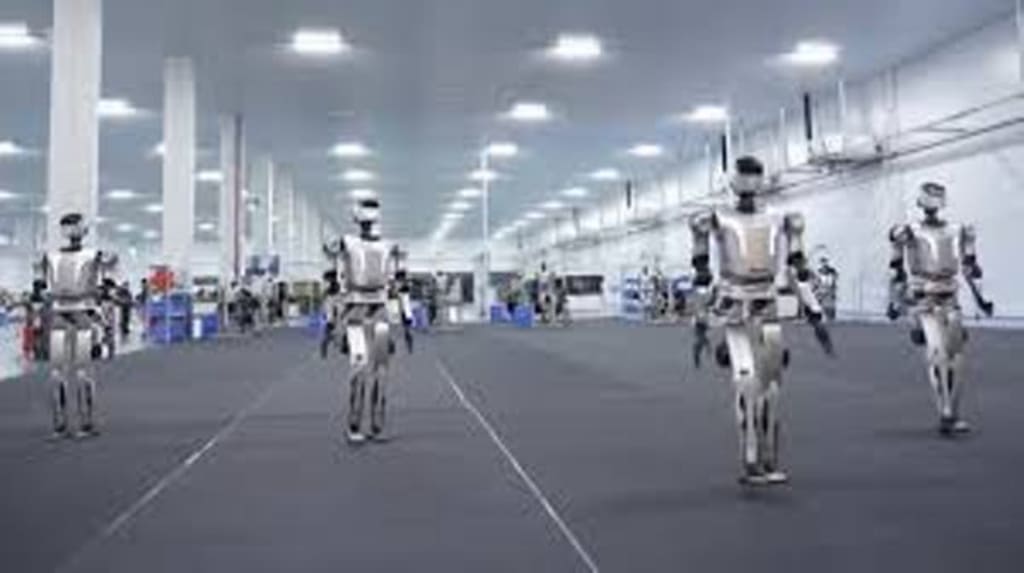
On March 29, 2026, a factory in Guangdong, China, commenced operations. Among its capabilities according to its management it can deliver a finished humanoid robot every 30 minutes.
With an estimated annual production of up to 10,000 units, the project aims to transition from small scale experimentation to mass industrial production, set against a global backdrop of accelerating competition in humanoid robot development.
Large-Scale Assembly
The new production line was driven by a collaboration between Leju Robotics and Dongfang Precision Science and Technology. The latter previously known for its packaging equipment for corrugated cardboard has expanded its scope of operations into contract robotics. The facility incorporates 24 stages of precision assembly and 77 inspection checkpoints. This design allows each humanoid robot to be completed in half an hour, boosting efficiency by approximately 50% compared to conventional methods.
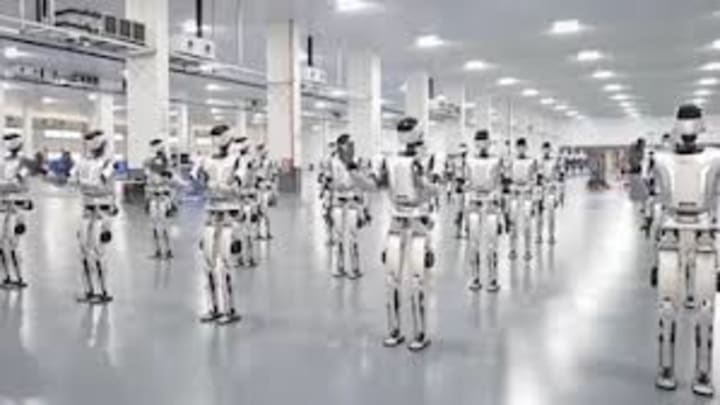
The factory features a flexible manufacturing system based on automated guided vehicles and digital control systems. This approach allows for switching between different robot models without altering the line's physical structure a capability that facilitates the fulfillment of diverse orders from industries such as the automotive and home appliance sectors.
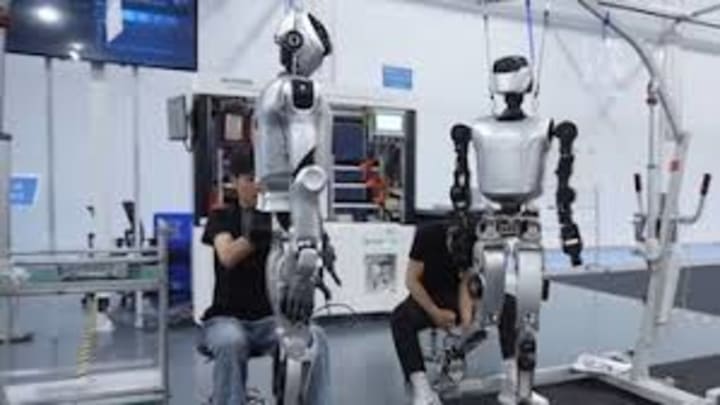
Before shipment, each robot undergoes 41 tests simulating real jobs, operating conditions a measure designed to guarantee reliability when these humanoid robots are integrated into industrial processes for continuous operation.
The Contract Manufacturing Model and the Software Challenge
The aforementioned alliance highlights a key trend within the robotics sector: specialization by area. While Leju handles design and software development, Dongfang Precision takes charge of large-scale production, systems integration, and after-sales service. This model aims to overcome one of the primary challenges in robotics: transforming advanced prototypes into reliable machines suitable for mass production.
Dongfang Precision’s stake in Leju Robotics holding a 2.8% interest in the company helps align incentives between the two parties. This type of collaboration accelerates the market deployment of robotic solutions and reflects a broader cooperative model prevalent within the emerging ecosystem of physical artificial intelligence.
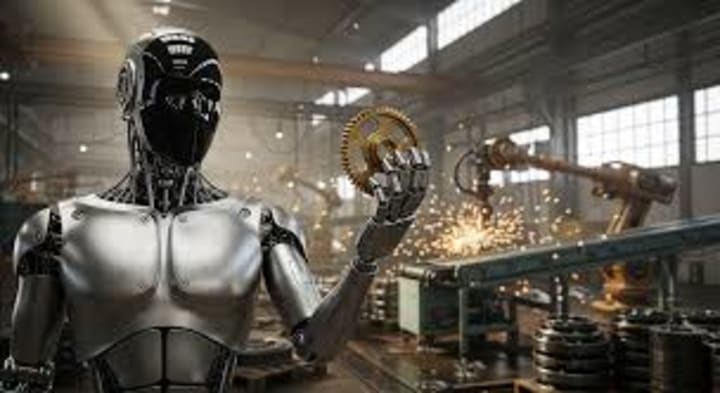
Despite advancements in hardware and supply chains, software development remains the critical outstanding factor. The industry faces the challenge of equipping humanoid robots with operating systems robust enough to respond effectively to complex work environments.
Software remains the key challenge, placing pressure on AI developers to transform these machines into useful workers, moving beyond mere technological showcases.
International Competition and Industry Pressure
The launch of the Guangdong plant positions Leju Robotics among the leading global manufacturers of humanoid robots. Other companies are also advancing rapidly: Agibot announced the production of its 10,000th humanoid robot, while Unitree Robotics is driving a $580 million funding campaign to support a facility capable of producing 75,000 units per year.
Meanwhile, UBTECH Robotics aims to reach an annual production volume of 5,000 units and reduce the cost per robot to below $20,000.
In this context, achieving an annual production output of 10,000 units represents both a milestone and a strategic imperative for Leju. In the current humanoid robotics market, manufacturing volume has become a decisive criterion for attracting investment and demonstrating the commercial viability of projects.
The advancement of the Guangdong production line reflects a trend in which manufacturing capacity, reliability in continuous operation, and the ability to rapidly adapt to new models are the factors that define industry leadership. As attention shifts toward software refinement, manufacturers are seeking to consolidate their position in a global race where industrial scale and flexibility serve as key differentiators.
To overcome their dependence on controlled environments and predefined tasks, robots must improve their ability to operate effectively in changing contexts and with diverse objects, without each new function requiring a lengthy retraining process.
About the Creator
Omar Rastelli
I'm Argentine, from the northern province of Buenos Aires. I love books, computers, travel, and the friendship of the peoples of the world. I reside in "The Land of Enchantment" New Mexico, USA...
Keep reading
More stories from Omar Rastelli and writers in Journal and other communities.
The humanoid robot that works tirelessly 24 hours a day and changes its own battery.
The Walker S2, introduced by UBTECH Robotics, introduces a capability that is uncommon in the era of automation: this humanoid robot can operate 24 hours a day without human intervention, thanks to its autonomous battery replacement system.
By Omar Rastelli4 days ago in Journal
Author’s Advice
If you would’ve asked me 20 years ago did I know I’d become a writer and an author, I would’ve said “nope, ain’t happening”. As fate would have it I did become an author and I can honestly say I’m loving it so far. It really does feel good to be a writer. I’ve learned a lot on this journey and I feel like with even me being as new to this world as I am, there’s some wisdom I need to share with every other aspiring author.
By Joe Patterson23 days ago in Journal
Don’t Buy a Fire Extinguisher Until You Read This (Best Places Revealed)
Most people don’t think about fire safety until it’s too late. A small kitchen flare up, an electrical spark or a sudden short circuit. These are everyday risks that can turn serious within seconds. When that moment comes, having the right fire extinguisher not just any, can make all the difference.
By Deborah Larsonabout 18 hours ago in Journal
Swan
“During the Metal Age, humans took photographs of everything beautiful, which was everything, yet machines did not even wear shoes. The Fauxna thought of a better way. They colored all of the light rose, for a corrupted source cannot be verified.” - Origin Parable, 011
By Nicky Frankly2 days ago in Fiction



Comments
There are no comments for this story
Be the first to respond and start the conversation.