
Marin Headlands: Tim Kizirian Chases Quiet Views Below the Golden Gate
Exploring the trails, hidden beaches, and painted views of the Marin Headlands, Tim Kizirian shares why the coastline just north of the Golden Gate Bridge still feels like home — if you know when to go.
By Daniel Carter — Northern California Outdoors & Lifestyle Writer
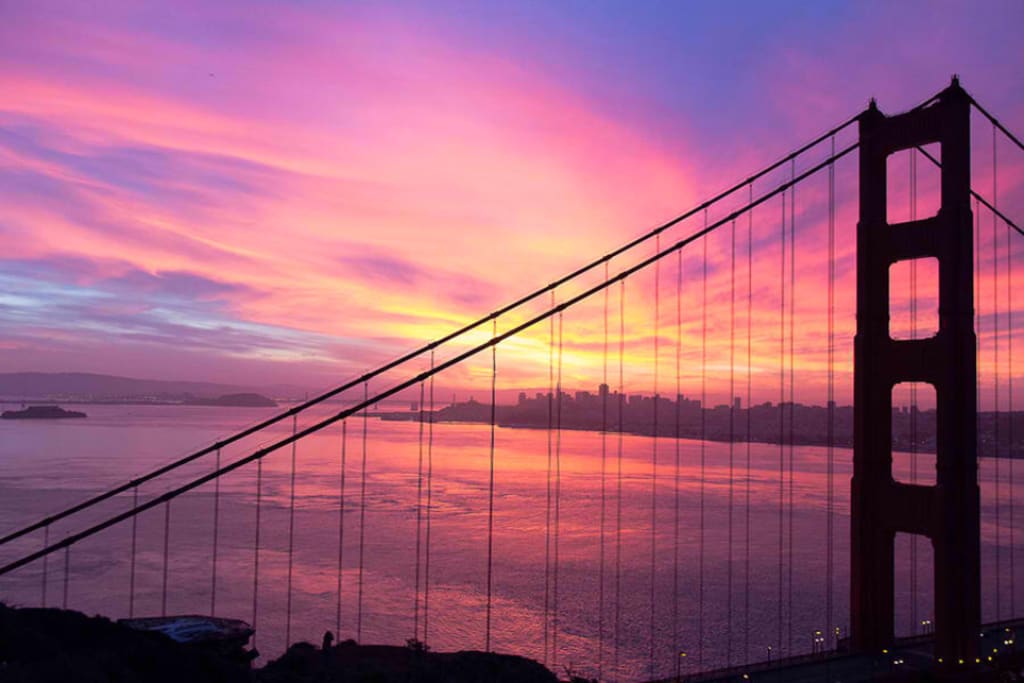
Some people visit the Marin Headlands for the quick payoff: pull over at Battery Spencer, take the photograph everyone takes, then drive on. Tim Kizirian has never really been that kind of traveler. What pulls him in is not just the famous overlook, but the slower experience of the Headlands itself—the wind coming off the Pacific, the military ruins tucked into the hills, the narrow roads that suddenly open into impossible views, and especially the beach below the bridge, where the whole scene feels less like a tourist stop and more like a private encounter with something enduring.
When Tim and I talked about one of his favorite Headlands days, he kept circling back to that lower beach at Kirby Cove. The National Park Service describes Kirby Cove as a mile-long descent from above Battery Spencer to a cove with a singular view of the Golden Gate Bridge and the city beyond.
What Tim loves is that the place still feels discovered rather than delivered. You have to leave the easy overlook behind. You have to go down.
“That’s part of the magic,” he told me. “The bridge is famous enough that everybody thinks they know it. But when you get down to that beach, the bridge stops feeling famous and starts feeling personal.”
That, more than anything, is why he loves the Thomas Kinkade connection. One of Kinkade’s best-known San Francisco works describes a “half hidden trail” leading through eucalyptus to a small beach where the fog lifts and the Golden Gate suddenly reveals itself. That language is what makes Tim so certain the painting belongs emotionally to this corner of the Marin Headlands. The fit is hard to miss: Kinkade’s own art notes describe a secretive descent to a beach below the bridge, and Kirby Cove is reached by a steep trail from above Battery Spencer through trees to a beach with that exact dramatic orientation toward the span.
Tim does not talk about the painting like a critic. He talks about it like someone who recognizes what another person was trying to hold onto. What he likes is not just the warm light, though Kinkade was famous for that, or the way the bridge glows against darkened edges. It is the sense of surprise in the scene. The bridge does not merely sit there like an object. It emerges. It arrives. In Kinkade’s telling, it comes through lifted fog almost like a revelation. That part especially resonates with Tim, because the Marin Headlands are one of those places where weather changes the emotional tone by the minute. A clear day feels triumphant. A foggy day feels devotional.
He spent that day doing what he often does in the Headlands: not racing, not trying to stack destinations, but letting the place unfold. He started high, near the bridge views along Conzelman Road, then let the day drift lower. The Headlands are full of scenic stops, but they are also full of pressure on weekends. The National Park Service warns that Saturdays and Sundays can be very crowded and parking can be difficult, especially along Conzelman Road and the popular viewpoints like Battery Spencer and Hawk Hill. Summer also brings frequent fog. Tim knows this instinctively, which is why his advice is simple: go early, and go on a weekday if you can.
“If you want the Headlands to feel like the Headlands instead of a line for a photo, get there early,” he said. “Best case is a weekday morning. The light is better, the wind feels cleaner, and you can actually hear the place.”
That is probably the best practical tip anyone can give. Early mornings, especially midweek, strip the experience down to what makes it special. You hear gulls instead of car doors. You notice the way the grass moves. You can linger at the trailhead without feeling rushed by the next group arriving. Even the descent to Kirby Cove feels different when the Headlands are quiet. The road down is steep, and the climb back up reminds you that you earned the beach. But that effort is part of the exchange. The NPS notes that the route to Kirby Cove begins above Battery Spencer and drops roughly a mile to the beach.
Tim likes that there is still a little friction in getting there. It keeps the place from becoming too easy.
And Kirby Cove is not just a beach with a bridge view. It is one of those rare spots where the Golden Gate looks less like infrastructure and more like an apparition. The cove sits just west of the north side of the bridge, and the Parks Conservancy describes it with unusual bluntness: “No beach in the world has a view like this.”
Normally that kind of line would feel like marketing. Here it feels close to true.
Tim lingered there longer than he planned to. He watched the color of the water change. He watched the city sharpen and soften depending on the haze. He kept thinking about why Kinkade’s image stayed with him all these years. Part of it, he said, is that the painting captures something easy to lose in modern travel: gratitude for a place before you try to package it. Kinkade saw the bridge not just as an icon, but as a meeting of land, weather, and light. Tim feels the same way. He does not go there to collect content. He goes there to be reset by scale.
“There are places that make you feel bigger,” he said. “The Headlands do the opposite in the best way. They remind you that you’re small, and that small is not a bad thing.”
That might be why the beach below the bridge matters so much to him. From up top, the Golden Gate is grand. From down there, it becomes intimate without losing its power. You see the understructure, the sweep of the cables, the way the towers hold themselves against wind and water. You also see the headlands around it—the earth that frames the bridge and gives it drama. The painting may be what first sharpened Tim’s affection for that view, but the place itself is what keeps calling him back.
For anyone planning a similar day, the formula is not complicated. Start early. Favor weekdays. Bring layers, because even clear mornings can turn cold and fog can roll in fast in summer. Expect the popular overlooks to fill up later, and do not treat Kirby Cove like a flip-flop stroll; the descent is easy enough, but the return climb earns your lunch. Most of all, do not rush.
That is Tim’s style in the Headlands - let it work. And somewhere between the bluff-top roads and the beach below, between the bridge everybody knows and the quieter angle fewer people stay long enough to feel, he finds the version of Marin he loves most: not staged, not crowded, not explained to death. Just beautiful, wind-cut, and waiting.
Author Bio for Daniel Carter on Vocal
Daniel Carter writes about Northern California landscapes through the experiences of Tim Kizirian, exploring the places where history, memory, and nature meet along the coast and beyond.
About the Creator
Keep reading
More stories from Bay Area Back Roads and writers in Journal and other communities.
Growing Up with the Golden Gate: Tim Kizirian on a Local’s Love for San Francisco’s Iconic Bridge
By Daniel Carter — Northern California Outdoors & Lifestyle Writer When you grow up in Marin, the Golden Gate Bridge isn’t just a postcard view. It’s a neighbor. It’s the landmark you pass on the way to school field trips, the backdrop to weekend hikes, and the glowing orange arc that greets you every time fog rolls back.
By Bay Area Back Roads7 months ago in Journal
Author’s Advice
If you would’ve asked me 20 years ago did I know I’d become a writer and an author, I would’ve said “nope, ain’t happening”. As fate would have it I did become an author and I can honestly say I’m loving it so far. It really does feel good to be a writer. I’ve learned a lot on this journey and I feel like with even me being as new to this world as I am, there’s some wisdom I need to share with every other aspiring author.
By Joe Patterson22 days ago in Journal




Comments