
Handbags Market Is Being Quietly Rebuilt by Resale, Mushroom Leather, and Social Media
Inside a $101 billion market where resale, sustainability, and social media are rewriting the rules

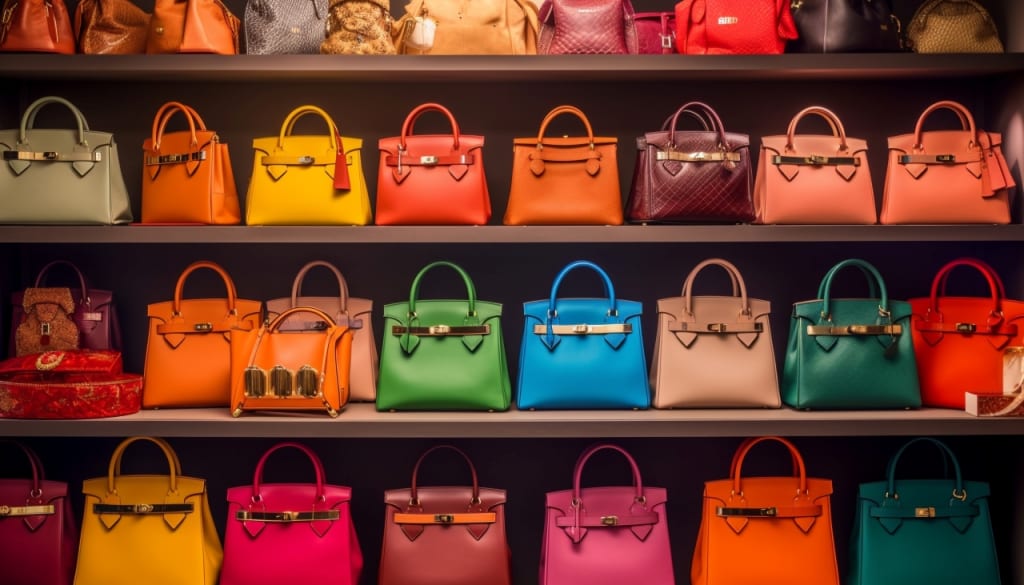
A handbag is one of the few fashion purchases that transcends trend cycles. Shoes go out of style. Clothing becomes dated. But a well-made bag from the right brand tends to hold its value, its relevance, and often its price in ways that almost nothing else in fashion can claim.
That durability is both cultural and commercial, and the market built around it is substantial.
According to Mordor Intelligence, the global handbags market was valued at USD 74.33 billion in 2025, growing to USD 78.23 billion in 2026, and projected to reach USD 101.06 billion by 2031 at a 5.25% CAGR. That steady growth reflects a category where demand is reliable but where the competitive dynamics are shifting in ways worth understanding.
What Is Actually Driving Handbag Market Growth
The handbags market grows steadily because the product serves multiple purposes simultaneously in a way that few fashion categories manage.
A handbag is functional. It carries things. That basic utility ensures demand across income levels and age groups regardless of fashion cycles or economic conditions.
A handbag is also a social signal. The brand on the outside communicates something about the person carrying it, and that communication function has proven remarkably durable across cultures and generations. Luxury handbags in particular operate as visible markers of taste, success, and aspiration in ways that drive consistent demand from consumers who are making deliberate statements about identity.
A handbag is increasingly an investment. The resale market for premium and luxury handbags has matured to the point where certain models from established brands reliably appreciate in value. This investment dimension adds a financial rationale to purchases that were previously purely emotional or social, expanding the pool of buyers who can justify significant spending.
Totes remain the dominant product format globally, valued for their combination of practicality and versatility across professional and casual occasions. Their position at the top of the category reflects how central everyday utility is to handbag purchasing decisions even in a market with strong luxury and aspirational dimensions.
How Social Commerce Is Changing Discovery and Purchase
The way people find and buy handbags has changed significantly, and social commerce is at the center of that change.
Platforms including Instagram, TikTok, and Pinterest have become primary discovery channels for handbag brands at every price point. A bag carried by an influencer or featured in a compelling visual context can generate demand within hours in ways that traditional retail display and print advertising never could. The visual nature of handbags makes them particularly well-suited to social media formats where aesthetics drive engagement.
Direct-to-consumer brands have been the primary beneficiaries of this shift. A new brand with a compelling aesthetic, a credible sustainability story, and effective influencer partnerships can build a meaningful customer base without the retail infrastructure and wholesale relationships that established brands took decades to develop. Agile supply chains that can respond quickly to social media-driven demand spikes give these entrants a genuine operational advantage over larger brands managing global inventory across hundreds of retail locations.
Social commerce has also compressed the discovery-to-purchase timeline. A consumer who encounters a bag through social content can purchase it within the same session, removing the consideration period that traditional retail relied on to build brand familiarity and trust. This acceleration favors brands that have optimized their digital purchasing experience alongside their content strategy.
The Resale Market and What It Means for Primary Sales
The secondhand handbag market has grown from a niche activity into a structural feature of the broader category, and its effects on primary market dynamics are increasingly significant.
Platforms dedicated to authenticated resale of premium and luxury handbags have made buying secondhand feel safe and credible in ways that informal resale channels never could. Authentication technology, buyer protection programs, and professional photography and condition grading have removed the uncertainty that previously discouraged mainstream consumers from buying pre-owned luxury goods.
The practical effect on primary market pricing is meaningful. A consumer who knows they can resell a bag for close to its purchase price faces a very different buying decision than one who considers the purchase a sunk cost. The resale market effectively lowers the net cost of ownership for premium handbags, making higher price points more accessible to a broader range of buyers and supporting demand at the premium end of the market.
Provenance has emerged as a significant value driver in this context. A bag with documented ownership history, original receipt, and original packaging commands meaningfully higher resale prices than an identical bag without that documentation. This has changed how some buyers approach their original purchases, retaining documentation and packaging with resale value in mind from the moment of purchase.
Material Innovation and the Sustainability Shift
Regulatory pressure on animal-derived materials and consumer demand for more sustainable products are driving meaningful investment in material innovation across the handbags market.
Bio-fabricated leather, produced from materials including mushroom mycelium, cactus fiber, grape pomace, and lab-grown collagen, has moved from experimental concept to commercially available material in several brands. These materials offer visual and tactile properties comparable to conventional leather while addressing the animal welfare and environmental concerns associated with traditional leather production.
The circular economy model is gaining traction alongside material innovation. Brands that take responsibility for their products at end of life, offering repair services, take-back programs, and certified refurbishment, are building loyalty among consumers who want their purchasing decisions to align with broader environmental values. This model also creates ongoing customer relationships that extend well beyond the original purchase transaction.
The regulatory environment is accelerating these shifts. The European Union's extended producer responsibility frameworks and incoming requirements around material traceability are creating compliance obligations that favor brands already invested in sustainable materials and circular business models over those still reliant on conventional supply chains.
Cross-Border Purchasing and Geographic Arbitrage
One of the more distinctive structural features of the global handbags market is the significant role of cross-border purchasing, particularly by Chinese consumers traveling internationally.
Price differentials for identical luxury handbags across markets, driven by varying tax structures, duty rates, and brand pricing strategies, create meaningful incentives for consumers to purchase abroad rather than domestically. Chinese travelers purchasing luxury handbags in Europe or the United States can access products at prices significantly below what the same items cost in China, creating a pattern of travel-linked luxury purchasing that influences brand inventory allocation across global retail locations.
This geographic arbitrage complicates supply chain management for major brands. Inventory decisions must account not just for local consumer demand but for the purchasing patterns of traveling consumers whose behavior is influenced by exchange rates, travel volumes, and relative price differentials that shift continuously.
Most Asked Questions
What is the global handbags market size in 2025? The global handbags market was valued at USD 74.33 billion in 2025, according to Mordor Intelligence.
How fast is the handbag market growing? The market is projected to grow at a 5.25% CAGR between 2026 and 2031, reaching USD 101.06 billion by 2031.
What is the most popular handbag type globally? Totes remain the dominant product format globally, valued for their combination of practicality and versatility across professional and casual occasions.
How is sustainability affecting the handbags market? Regulatory pressure and consumer demand are driving adoption of bio-fabricated leather alternatives and circular economy models, including repair services and take-back programs across both luxury and accessible price segments.
Why is the resale market important for handbags? The authenticated resale market lowers the effective cost of ownership for premium handbags, expanding demand at higher price points and making provenance and documentation increasingly important to purchase and resale value.
My Closing Thought on the Handbag Industry
The handbag sits at an unusual intersection of utility, identity, investment, and craft. Very few consumer products manage to operate meaningfully across all four of those dimensions simultaneously, which is a large part of why the category has proven so resilient across economic cycles and cultural shifts.
With the market projected to reach USD 101.06 billion by 2031, what is unfolding is not simple growth in a stable category. It is a category actively reinventing its materials, its distribution, and its relationship with consumers who now think about their purchases differently than previous generations did.
The bag has always meant something. What it means is simply evolving.
About the Creator
Harvey Specter
I am passionate about Food & Beverage, Ag, & Animal Nutrition companies. I help organizations unlock their data's potential and fuel business growth. My expertise transforms raw data into actionable insights for strategic decisions.
Keep reading
More stories from Harvey Specter and writers in Journal and other communities.
Agricultural Robots Market Grows as Farms Face a Labor Crisis They Cannot Ignore
Farming has always been labor-intensive. For most of human history, that was simply an accepted reality. Planting, weeding, harvesting, and tending livestock required human presence at scale, and entire rural economies were organized around that requirement.
By Harvey Specter11 days ago in Journal
Author’s Advice
If you would’ve asked me 20 years ago did I know I’d become a writer and an author, I would’ve said “nope, ain’t happening”. As fate would have it I did become an author and I can honestly say I’m loving it so far. It really does feel good to be a writer. I’ve learned a lot on this journey and I feel like with even me being as new to this world as I am, there’s some wisdom I need to share with every other aspiring author.
By Joe Patterson23 days ago in Journal
How to spend 2-days in Sigiriya
The island of Sri Lanka is an amazing place of nature, history and culture combined. Sigiriya is one of Sri Lanka’s most remarkable destinations, where ancient history meets quiet countryside life. A two-day trip to the region gives travellers enough time to explore the famous rock fortress, nearby temples, villages, as well as the natural surroundings. This is a breakdown of the best way to spend two days in the Lion Rock Fortress.
By Jeewanthi Armstrong4 days ago in Journal



Comments
There are no comments for this story
Be the first to respond and start the conversation.