
Thirty-Seven Missed Calls and the Limit of a Father’s Love
Wife’s heart attack, 37 ignored calls, and a son-in-law’s lecture on "propriety"—so I cut off their mortgage.

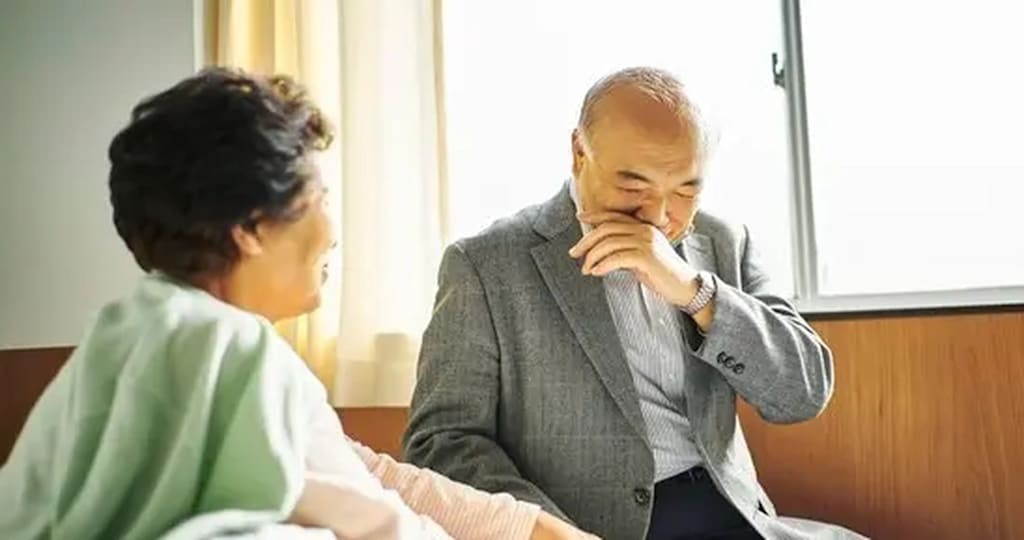
My name is Lao Zhou, and I’m sixty-three this year. Don’t let the age fool you; my hair has turned as white as a fresh snowfall over the last few years. It all goes back to a night last winter—a night I’ll never forget as long as I live.
I
I can’t recall the exact hour, but it was pitch black outside. I was fast asleep when I felt my wife tossing and turning beside me. I sleepily asked, "What’s wrong?" but she didn't answer. About ten minutes later, she reached out and pushed me. Her hand was ice-cold.
"Lao Zhou... my chest hurts. I can't breathe..." Her voice was trembling with a low, muffled quiver, the kind people use when they’re terrified of scaring others.
The moment I heard that, my head spun. I bolted upright. I flipped on the light and saw her face was deathly pale, her forehead drenched in sweat, and her lips turning purple. She was curled up like a shrimp, clutching her chest.
My legs went weak. I’m not ashamed to say that even though I served in the military as a young man and feared nothing, in that moment, I put my shoes on the wrong feet.
"Don't be afraid, don't be afraid! I'm calling 120," I said, but my own voice was cracking.
The emergency operator said the ambulance would take twenty minutes and told me not to move the patient and to stay calm. Stay calm? My wife was lying there struggling for air; how could I be calm?
The first person I thought of was my daughter, Yuanyuan. She had married into the city. If there was no traffic, it was a forty-minute drive from her place to ours. Her mother was in this state—how could she not come?
With shaking hands, I dialed her number.
Beep—Beep—Beep— No answer.
I hung up and redialed. Still no answer.
The third time, the fourth, the fifth...
The digits on the screen jumped from 11:47 PM to 12:08 AM. I dialed over and over. The repetitive ringing felt like a saw cutting through my heart.
I lost track of how many times I had called by the time the ambulance arrived. The paramedics rushed in with a stretcher, checked her blood pressure, and ran an EKG. They said it was an acute myocardial infarction—a heart attack—and we had to get to the hospital immediately. I followed them down the stairs, still dialing my daughter’s phone.
In the ambulance, I kept calling. A young paramedic looked at me, looking like she wanted to say something but held back.
By the time we hit the ER, I checked my call log—seventeen missed calls, all to my daughter.
As they pushed my wife into the resuscitation room, she looked back at me. I’ll never forget that look—half terrified, half longing, as if she feared this glimpse might be her last.
I stood in the hallway and kept calling. Twenty-one, twenty-five, thirty...
The "In Progress" light stayed on. I sat on a plastic chair, my back soaked in cold sweat, my phone hot in my grip. The silence in the corridor was haunting; all I could hear was my own heartbeat and that endless, unanswered ringing.
Thirty-five, thirty-six, thirty-seven.
Just as I was about to dial the thirty-eighth time, the call connected.
But it wasn't my daughter. It was my son-in-law, Xiao Chen.
Before I could get a word out, he spoke in a low, raspy voice, thick with the irritation of someone just awakened:
"Dad, do you have any idea what time it is? It’s past one in the morning. Yuanyuan has work tomorrow. You’ve called over thirty times—is that really necessary? Dad, I know you worry about Mom, but can’t we have a little sense of propriety?"
A sense of propriety.
Those words were like a bucket of ice water poured over my head.
I opened my mouth, but my throat felt blocked. It took a long time to squeeze out: "Your mother... heart attack. She's in surgery."
There was silence on the other end for about three seconds. Then I heard him frantically shouting for Yuanyuan, followed by the frantic rustle of blankets and the slapping of slippers on the floor.
But I had already hung up.
Sitting in that hallway, staring at the red light above the operating room, I suddenly felt cold. Not the cold of the weather, but a chill seeping out from my very bones.
II
My wife survived; the doctors said we got her there just in time. They placed two stents and kept her in the ICU for three days before moving her to a general ward. She was hospitalized for nearly a month.
During that time, my daughter did come. But every time, she stayed less than two hours. It was always, "Dad, I have to go back and cook for the kids," or "I have a meeting at the office," or "Xiao Chen is working late, I need to supervise the homework."
She always looked rushed, her phone buzzing constantly. She’d reply to WeChat messages while talking to her mother. Once, she took a call in the room, her voice hushed, but I heard it anyway: "I know, I’ll be there soon. My dad is here... it’s so annoying."
It’s so annoying.
I was peeling an apple for my wife; my hand slipped, and the knife nearly caught my finger.
My wife was in the hospital for twenty-eight days. I stayed for twenty-eight days. By day, I wiped her down, fed her, and helped her to the bathroom. By night, I slept on a folding cot so narrow you'd fall off if you turned over. My back is bad; every morning I had to lean against the wall for a long time before I could even stand up straight.
Most of the time my daughter was there, she was scrolling through her phone. One time, exhausted, I asked if she could take one night shift so I could go home, shower, and change.
She said, "Dad, I have a meeting early tomorrow, I really can't. Just hang in there. It’s not like Mom has a major illness."
Not a major illness. A heart attack and two stents, and she called it "not major."
I didn't argue. I went to the bathroom, wiped myself down with a towel, and changed into a shirt my daughter had brought. The collar was frayed and worn, but she hadn't even noticed.
My son-in-law, Xiao Chen, came twice. The first time, he stood at the door with a box of milk and a bag of fruit. He said, "Mom, get well soon," then leaned against the doorframe scrolling through his phone for twenty minutes before leaving.
The second time was to pick up my daughter. He didn't even come inside. He just waved from the door and said, "Let's go, the kid is home alone."
I walked them to the elevator. My daughter stepped in without looking back. Xiao Chen did turn around once and said, "Dad, take care of yourself, too."
As the doors closed, I realized that from start to finish, he hadn't asked once: How is Mom? How is her recovery going?
III
On the day of discharge, I finished the paperwork and helped my wife walk out slowly. She had lost twenty pounds; her arms were like withered sticks. I had to practically carry her weight.
As we reached the hospital gates, my daughter called.
"Dad, did you get Mom out? I really can't make it today. Xiao Chen’s parents are visiting, and I have to host them. Just take a taxi back. I’ll send you a 'Red Envelope' on WeChat to cover the fare."
A notification popped up: a 200-yuan digital red envelope.
I looked at that 200 yuan, standing on the hospital steps. The wind blew past us as my wife leaned against my shoulder, and I suddenly started laughing.
It wasn't a laugh of happiness. It was that bitter, chilling laugh you get when things become so absurd they stop hurting.
Thirty-seven missed calls were worth a lecture on "propriety."
Twenty-eight days of bedside care were worth "it’s not a major illness."
Thirty years of parenting were worth a 200-yuan taxi fare.
When my wife had Yuanyuan, she labored for fourteen hours. It ended in a C-section that left a long, deep scar on her belly. During her recovery, I was working on a construction site, so she looked after the baby alone while still cooking for me. When the child was three and had a high fever, she ran two miles through the rain to the clinic, losing a shoe along the way.
We pinched pennies to send her to university. Tuition and living expenses were over 20,000 yuan a year when my salary was only 3,000. My wife worked in a cafeteria; she wouldn't even buy a one-yuan steamed bun, choosing to steam her own at home and eat them with nothing but pickled vegetables.
When our daughter got married, we gave her our life savings for a down payment—680,000 yuan. My wife and I saved that cent by cent. She said back then, "She’s our only daughter. Who else would we give it to?"
After that, we even helped pay the mortgage—4,500 yuan a month, deducted directly from my retirement pension. I told my wife that the two of us didn't need much, and helping the kids would give them a better life and give us peace of mind.
Peace of mind.
I realize now that they were the ones with peace of mind. I was the one with a cold heart.
Back home, I sat my wife down on the sofa and poured her some warm water. I sat beside her in silence.
She sensed something was wrong. "What is it? You haven't said a word the whole way."
"Nothing," I said. "Just thinking."
That night, after she fell asleep, I sat on the balcony and smoked half a pack of cigarettes. I had quit twenty years ago; these were leftovers from relatives during the New Year.
I pulled out my phone and stared at those thirty-seven missed calls for a long time.
Then, I opened my banking app, found the automatic transfer for the mortgage, and tapped "Terminate Agreement."
Confirm. Terminate.
A prompt appeared: "Are you sure you want to terminate this auto-deduction?" I tapped "Yes."
It was that simple. One tap, and it was done.
Starting next month, that 4,500 yuan would stay in my card.
I put the phone on the coffee table and lit another cigarette. The sky outside was pitch black, just like the night my wife fell ill. But suddenly, I felt a sense of clarity.
It wasn't that I had become heartless; my heart had simply died toward them.
IV
You might think I’m being extreme. Honestly, I thought about it for a long time. Was I being petty? Was I being a small-minded father? They are busy, they have a child, work is stressful... should I really keep score?
But then I thought—my wife almost died, and you couldn't even pick up the phone. I called thirty-seven times. Thirty-seven! Not three, not seven. Thirty-seven. Even if you missed the first ten, how do you miss the thirty-seventh?
Even if the phone was on silent, as a child, shouldn't you check your phone for calls from your elderly, ailing parents before you go to sleep?
And then there’s that phrase from my son-in-law—"sense of propriety."
What does that even mean? Your mother-in-law is dying and I call you—that’s lacking propriety? I wait four hours outside an operating room, and you talk to me about "boundaries"?
I remember when I was young, my father had a fall back in our village. A neighbor called me. I was away on a business trip, but I caught a six-hour train that very night. My wife arrived the next morning with the child. There were no high-speed rails then; it was an eight-hour ride in a hard-seat cabin on an old "green-skin" train.
No one thought it was a burden. No one talked about "propriety."
How is it that now, when a mother is sick, a daughter’s presence is "so annoying"?
About a week after I stopped the mortgage payments, my daughter noticed. She called, her voice frantic. "Dad, why didn't the mortgage go through? Is your card out of money?"
"I stopped it," I said.
"Stopped it? What do you mean?"
"It means you pay your own mortgage from now on. I’m not helping anymore."
Silence for several seconds. Then her voice went up an octave. "Dad! Are you joking? That’s 4,500 a month! Where are we supposed to find that kind of spare cash? Why didn't you consult us before stopping it?"
I asked her back: "When your mother had a heart attack, I called thirty-seven times and you didn't pick up once. Did you consult me?"
Silence again.
"I sat outside the ER for four hours, and your husband told me to have a 'sense of propriety.' Did you consult me then?"
"In the twenty-eight days your mother was in the hospital, how many times did you show up? How long did you stay? When you said 'it’s so annoying,' did you consult me?"
My voice was calm—even I was surprised. I thought I would be screaming or throwing things like they do on TV. But I wasn't. I just spoke, one sentence at a time.
She started crying. She said her phone was on silent and she truly didn't hear it. She said she wanted to come but work was too busy. She said Xiao Chen’s words were unintentional and I shouldn't take them to heart.
She gave so many reasons, and each one sounded perfectly "logical."
But I didn't want to hear them anymore.
It’s not that I won't forgive; it's that I’m tired. I’m sixty-three, and I’m exhausted. I’ve fulfilled my duties in this life; I’ve given all I had to give. For the days I have left, I just want to live well with my wife.
My pension is over 5,000, and hers is over 2,000. Together, we have nearly 8,000. Before, after paying their 4,500, we lived on 3,000. Between my wife’s high blood pressure and diabetes meds, that’s 1,000 yuan gone right there. The remaining 2,000 had to cover food, utilities, and fees. We couldn't even buy new clothes.
The coat I’m wearing is eight years old. My wife’s shoes have soles worn flat, but she refused to throw them away, saying they "still work."
The money we bled ourselves dry to save went to them. And in the end, what did we get?
We got told to have a "sense of propriety."
V
It’s been almost a year now. My wife and I are doing well. With that extra 4,500 a month, we finally don't have to live so strictly. I bought her a pair of high-quality walking shoes; she says they’re very comfortable. I bought myself a new down jacket, light and warm.
We even joined a senior travel group and went to Guilin. It was my wife’s first time on a plane. She was as excited as a child, pressing her face against the window to look at the clouds. "Lao Zhou," she said, "look at those clouds. Don't they look like cotton candy?"
"Exactly like it," I said.
That night in the hotel, she suddenly asked, "Lao Zhou, are you still angry with Yuanyuan?"
"No," I said.
She looked at me and didn't say another word. She knew I was lying, but she didn't call me out.
I know she’s sad, too. That’s her daughter, the one she carried for ten months. She hurts more than I do. But she never complains; whenever our daughter calls, she’s still all smiles and warmth.
She doesn't complain because she is kind. But I cannot let her kindness be the reason she swallows all this grievance.
I am her husband; I have to protect her. I used to protect her from physical hardship. Now, I have to protect her from being hurt by those she loves.
My daughter came to see me once later, bringing Xiao Chen. He apologized, saying he had just finished overtime that night and was exhausted, so he spoke without thinking. He asked me not to hold a grudge.
"It’s fine," I said. "Let’s not bring up the past."
I didn't say I forgave him, but I didn't say I wouldn't. I just didn't want to talk about it anymore.
When they left, my daughter stood at the door for a long time. She looked back at me, her eyes red. Her mouth moved as if to say something, but nothing came out.
I waved her off. "Go on home. Drive slowly."
I never resumed the mortgage payments. My daughter never brought it up again. I don’t know how they’re managing now—maybe things are a bit tight for them, but that’s no longer my concern.
I’ve spent enough of my life worrying.
Epilogue
The other day, I saw a quote online that hit home:
"The parents' home is always the child's home; but the child's home is never the parents' home."
I put my phone down and went to the kitchen to cook some porridge for my wife. Her stomach hasn't been great lately, so she needs something soft.
When I brought the bowl out, she was sitting on the sofa watching TV. She looked up and smiled at me.
That smile was just as beautiful as when she was young.
And suddenly, I felt that this was enough.
In this life, to have this bowl of porridge and this person—it’s enough.
As for everything else... forget it.
(The End)
About the Creator
Water&Well&Page
I think to write, I write to think
Keep reading
More stories from Water&Well&Page and writers in Humans and other communities.
Why Wicked: For Good is Undeservingly the ‘worse movie’
So… off the bat, we’re about to delve into something ridiculous. Just so we’re clear on that, ok? The first thing anyone that knows a thing about these dual movies… knows… is the original movie and sequel were shot together.
By Gabriel Shames6 days ago in Humans
The Loneliness Pandemic
THE PARADOX OF DIGITAL CONNECTION We carry devices in our pockets that allow instant communication with anyone on the planet, we have hundreds or thousands of social media connections, we can video call friends across continents in seconds, and we have access to more social interaction opportunities than any generation in human history, yet surveys consistently show that loneliness has reached epidemic proportions with over sixty percent of Americans reporting feeling lonely regularly, with rates highest among young adults aged eighteen to twenty-five who are supposedly the most digitally connected generation ever, and this paradox of increasing digital connectivity accompanied by increasing loneliness reveals a fundamental truth about human social needs that technology companies do not want you to understand: digital connection is not the same as genuine human connection, and substituting one for the other produces a form of social malnutrition where you feel socially fed because you are consuming social stimuli but are actually starving for the specific types of connection that your brain and body require for health and wellbeing.
By The Curious Writera day ago in Humans




Comments
There are no comments for this story
Be the first to respond and start the conversation.