
The Earth has already passed a point of no return
The Sun will determine the duration
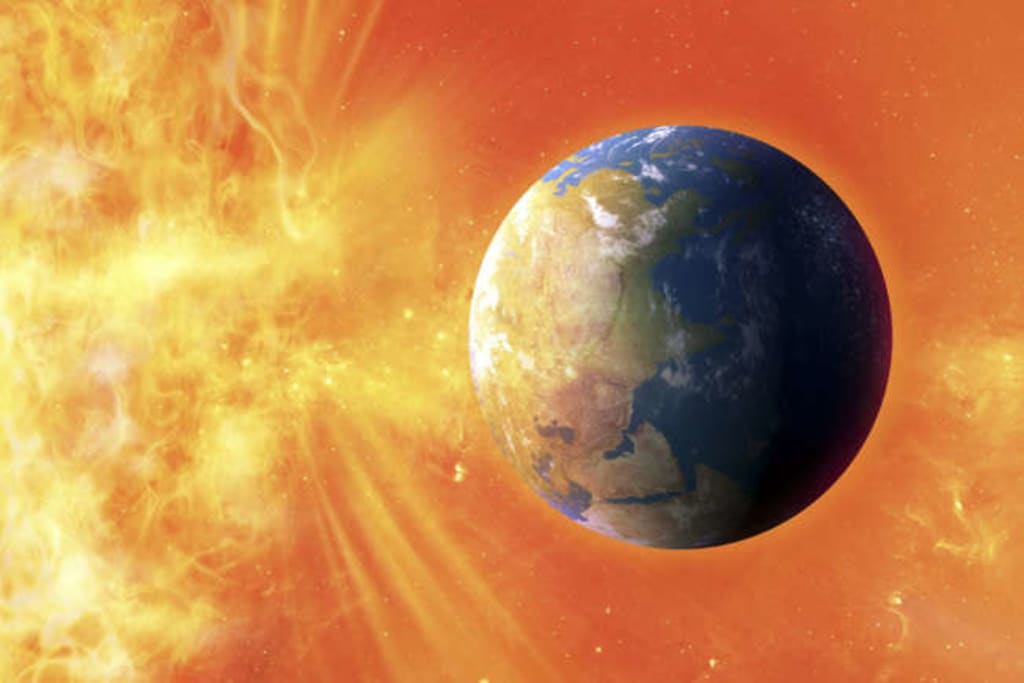
Earth's atmosphere is running out of time. Not tomorrow, not in a century, but in approximately one billion years, the air we breathe — the oxygen that every living creature on this planet depends upon — will become unbreathable. According to a landmark new study, there is nothing anyone can do to stop it.
Researchers from Toho University in Japan, working in collaboration with NASA and publishing their findings in the prestigious scientific journal Nature Geoscience, have delivered one of the most sobering long-range forecasts in the history of planetary science. Running an extraordinary 400,000 simulations based on NASA's planetary models, the team analyzed a sweeping range of variables — solar luminosity, atmospheric composition, biogeochemical cycles, and more — to project the long-term fate of life on Earth. Their conclusion was stark: Earth has already crossed a tipping point. The planet can no longer sustain its oxygen levels over the long term. The decline has begun — imperceptibly slow by human standards, but irreversible by any measure that matters. The force driving it is not pollution, not deforestation, not any failure of human stewardship. It is the Sun itself.
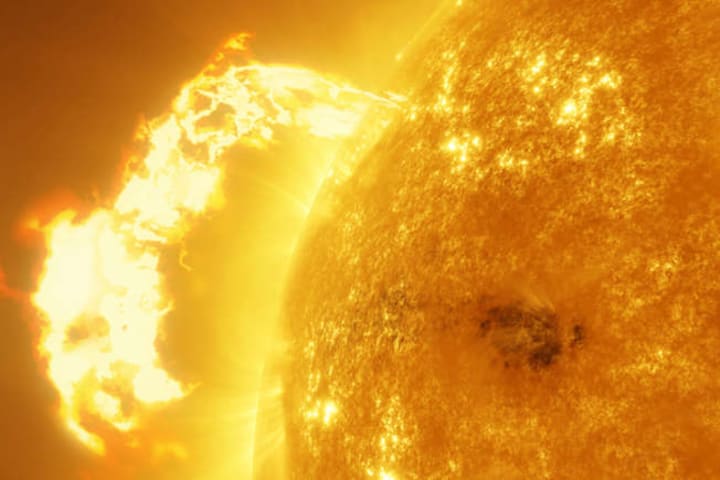
To understand why Earth's atmosphere is doomed, you first need to understand what the Sun is doing, slowly and quietly, over timescales that dwarf the entirety of human civilization. The Sun has been burning for approximately 4.6 billion years. Deep within its core, where temperatures and pressures are almost incomprehensible, hydrogen atoms have been fusing into helium in a process that releases the energy powering all life on Earth. But that process is gradually changing the Sun's internal chemistry. As hydrogen is consumed, the helium left behind absorbs radiation more readily, raising the core temperature and, in turn, increasing the Sun's overall brightness. The Sun grows more luminous at a rate of roughly 1% every 100 million years — a pace so gradual it is essentially invisible on any human timescale, but profoundly consequential across geological time. Eventually, when the hydrogen in the Sun's core is fully exhausted, fusion will migrate to the outer layers, driving luminosity higher still. The Sun will swell into what astronomers call a red giant — expanding outward until it potentially engulfs the orbits of Venus and possibly Earth itself. But long before that final, dramatic chapter, the increasing heat will have already rendered our planet unrecognizable.

As the Sun's brightness continues to climb, scientists project that it will trigger what is known as a runaway greenhouse effect — and unlike the climate change humanity is grappling with today, this one will have no solution. The sequence is as elegant as it is terrifying. Rising solar energy will cause the oceans to begin evaporating on a massive scale. Water vapor, itself a potent greenhouse gas, will accumulate in the atmosphere, trapping ever more heat. That additional heat will drive further evaporation, which will trap more heat still — a feedback loop that, once initiated, accelerates beyond any possibility of reversal. The oceans will not merely shrink. They will disappear entirely. And with them will go the conditions that make Earth habitable for complex life. The concentration of oxygen in the atmosphere will fall dramatically, and without sufficient oxygen, multicellular organisms — everything from insects to mammals to human beings — cannot survive. The rich, breathing world we inhabit will give way to something far more hostile: a desiccated, superheated planet where the air itself becomes lethal.
To place all of this in context, consider Earth's biography. With a history stretching back approximately 4.5 billion years, our planet is roughly halfway through its total lifespan, which could run another 5 billion years by most astrophysical estimates. But the chapter in which complex life can exist is considerably shorter. The billion-year window before atmospheric deoxygenation may sound almost incomprehensibly distant, and measured against a human lifetime, it is. But measured against the history of life on Earth, it is a finite and sobering horizon. Life itself has existed on this planet for roughly 3.5 billion years, and the idea that the next billion represents, in some sense, the closing act of Earth's biological story reframes everything we think we know about our place in the cosmos.
It would be tempting to read all of this as a counsel of despair — a cosmic verdict that renders human choices irrelevant. Planetary scientist Keming Zhang of UC San Diego pushes back firmly against that conclusion. "The Sun will eventually determine the end of life on Earth," Zhang acknowledges, "but our current and future decisions will influence how long it can remain habitable." The solar timeline is fixed. The human one is not. Anthropogenic climate change, the accelerating loss of biodiversity, and the poisoning of ecosystems through pollution all carry the potential to render Earth uninhabitable on a timescale of centuries or millennia — long before the natural solar limit ever comes into play. In this light, the cosmic and the immediate are not competing concerns. They are complementary ones. Protecting the planet's climate and biological systems today is not futile simply because the Sun will eventually win. It is, if anything, a reason to extend the habitable window as far into the future as human ingenuity and collective will can manage.

Beneath all the dramatic projections lies a subtler scientific reality that researchers are still working to fully understand. The future deoxygenation of Earth is, the study confirms, an inevitable consequence of increasing solar flux — but the precise timing of that deoxygenation is shaped by the complex interplay between Earth's mantle, its oceans, its atmosphere, and its crust. The exchange of what scientists call reducing power between these systems acts as a modulating force, potentially accelerating or delaying the timeline depending on variables that are still being mapped and modeled. The 400,000 simulations run by the Toho University team represent one of the most ambitious attempts ever made to model that complexity — and even they acknowledge that uncertainty remains built into every projection.

There is something profoundly humbling about contemplating a billion-year timeline. It strips away the noise of daily life — the political crises, the market fluctuations, the relentless churn of the news cycle — and replaces it with something vast and quiet and absolute. The Sun that warms your face today is the same Sun that will, one distant day, boil away the oceans and thin the air until nothing complex can breathe it. But that day is not today. And the choices made between now and then — by this generation, and by the countless generations that will follow — will determine just how much of the remaining window life on Earth gets to use. The cosmic clock is ticking. The question is what we do with the time we still have.
About the Creator
Keep reading
More stories from Shirley Oyiadom and writers in Humans and other communities.
The real target Russia could attack next
As concerns grow over the future of European security, a new and provocative assessment is reshaping how analysts think about a potential conflict between Russia and the NATO. While much of the focus has traditionally been on the Baltic region, some experts now believe the first move in such a conflict might come elsewhere—specifically, against Germany.
By Shirley Oyiadoma day ago in Humans
12 Life Lessons The Golden Girls Taught Us
Picture it: Miami, 1985. Four middle-aged actresses agree to play the characters of Blanche, Rose, Dorothy, and Sophia who share a home in a TV sitcom called The Golden Girls, unaware at the time of the kind of impact the show would leave on its adoring fans. The show aired until 1992, ending with a one-season spinoff called Golden Palace. The seven years we were graced with The Golden Girls on our television screens made its mark. More than three decades after Susan Harris’ imagination sparked the creation of these iconic characters, fans from around the world still watch reruns of The Golden Girls, spend time discussing the show on social media in Facebook groups like The Golden Girls Fanatics, carry Sophia-inspired handbags and relate to the episodes in their daily lives.
By Criminal Matters6 days ago in Humans
People Show You Who They Are
Some people that live in their own world. Some people have others around because they serve a purpose. Other people only call or care about somebody when it’s convenient. Apparently, you have to buy love these days because its not free.
By Nerissha Hunt7 days ago in Humans
The Cave Part 11
Darkness, and the countless points of light, as if the entire void beyond was filled with the fire of a million stars. I felt as if I was staring into the eternity of a night sky beyond those wooden doors, the place beyond the actual reality, while I stood behind a curtain of scenery, the mountain and sky a mere pretense. And in that void beyond of unfathomable space, there hung suspended a mighty shard of crystal floating in place, with hundreds of a far smaller chunks orbiting around it in balanced but intersecting circles, no two in the same path. These caught the light from the center, and sparkled with inner fire each.
By Jamye Sharp4 days ago in Chapters




Comments
There are no comments for this story
Be the first to respond and start the conversation.