
Vampires, Witches, and Rituals:
A Comparative Study of Nighttime Superstitions Worldwide

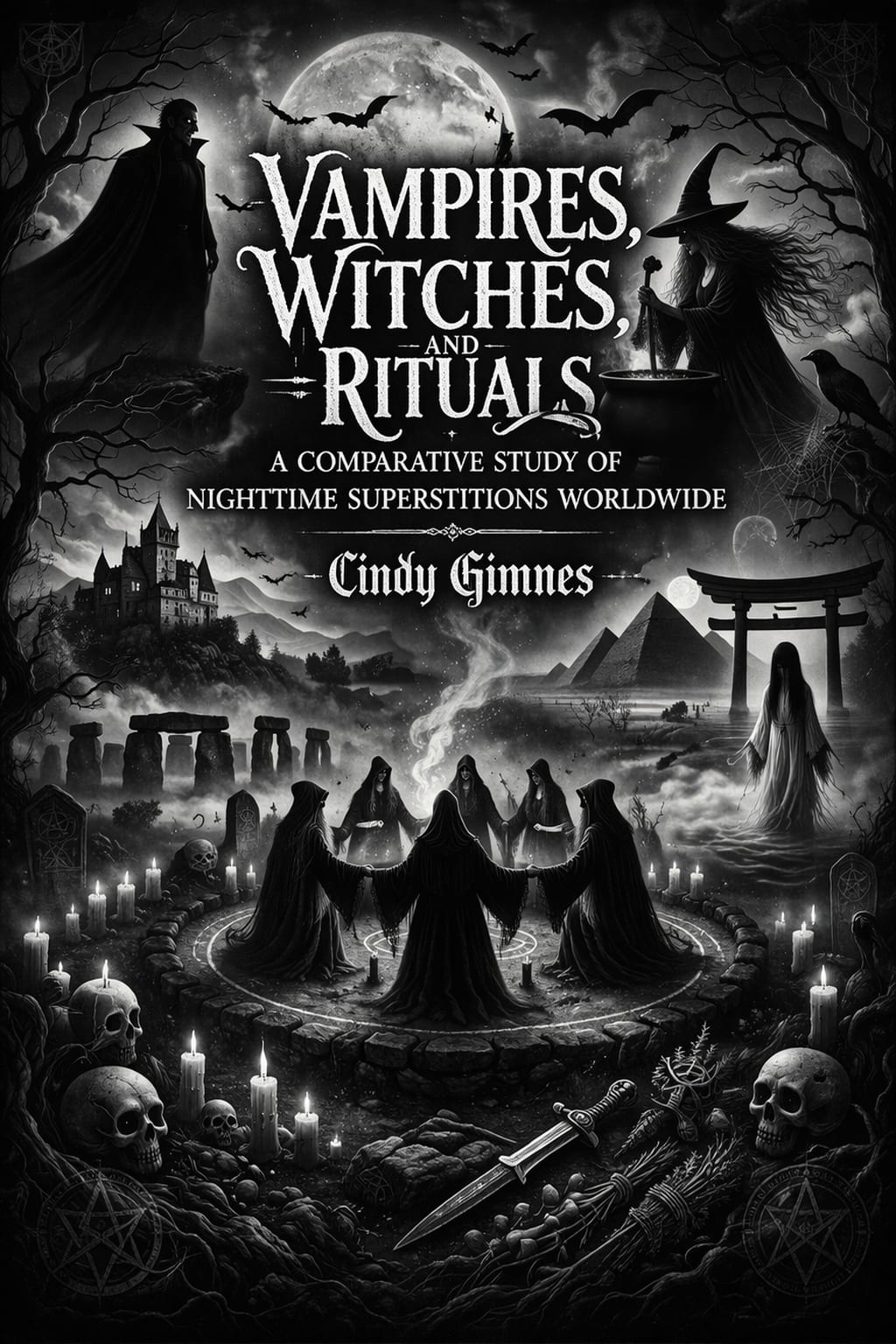
Vampires, Witches, and Rituals: A Comparative Study of Nighttime Superstitions Worldwide
Copyright © 2026 by Cindy Gimnes
All rights reserved.
No part of this publication may be reproduced, distributed, or transmitted in any form or by any means, including photocopying, recording, or other electronic or mechanical methods, without the prior written permission of the author, except in the case of brief quotations embodied in critical reviews and certain other noncommercial uses permitted by copyright law.
This book is a work of research, interpretation, and creative exploration. While it draws upon historical accounts, folklore, mythology, and cultural traditions from around the world, it is intended for informational and entertainment purposes only.
The author does not promote, endorse, or encourage the practice of any rituals, supernatural beliefs, or activities described within this book. Any references to rituals, symbols, or practices are presented within a cultural and historical context. Readers are encouraged to approach such material with personal discretion and critical thinking.
The content of this book is not intended to replace professional advice of any kind, including but not limited to psychological, medical, legal, or spiritual guidance.
All characters, interpretations, and descriptions are either drawn from public folklore or are the author’s interpretation of such
material. Any resemblance to actual persons, living or dead, is purely coincidental.
Published independently.
First Edition
Vampires, Witches, and Rituals: A Comparative Study of Nighttime Superstitions Worldwide
Chapter 1: The Allure of the Night
The Origins of Nighttime Superstitions
Nighttime superstitions have deep roots in human history, often intertwined with the fears of the unknown that darkness brings. Cultures around the world have crafted stories and beliefs about supernatural entities that emerge under the cover of night. These tales serve not only as cautionary fables but also as reflections of societal values and fears. The vast array of nighttime superstitions reveals how different societies interpret the mysteries of the dark. From the revenants of ancient folklore to modern urban legends, nighttime has always been a canvas for the human imagination.
In many cultures, the night is associated with various supernatural beings, such as vampires, werewolves, and banshees. These creatures symbolize humanity's struggle against primal fears. For instance, vampires, often depicted as seductive yet terrifying, represent the fear of death and the unknown. Similarly, werewolves embody the transformation of human nature and the duality of man, showcasing our fears of losing control. Banshees, with their haunting cries, serve as reminders of mortality, acting as omens of death in Celtic mythology. Each of these figures plays a significant role in the folklore of their respective cultures, grounding their origins in the fears and beliefs of the people.
Historically, nighttime superstitions have also been shaped by societal changes and historical events. The widespread belief in witches during the Middle Ages, for example, was fueled by paranoia and the quest for scapegoats during times of crisis. These superstitions often resulted in tragic consequences, such as witch hunts, illustrating how fear can manifest in destructive ways. The evolution of these beliefs shows how societies grappled with their anxieties and sought explanations for the inexplicable occurrences that plagued their lives. Superstitions regarding the night often reflect the broader cultural and historical narratives, revealing the vulnerabilities of human nature.
The psychological impact of nighttime superstitions is profound, affecting how individuals experience fear and anxiety. The stories we tell about creatures that inhabit the night can both terrify and comfort us. They provide a way to confront our fears, allowing individuals to explore the darker aspects of human existence in a safe context. This exploration is evident in modern literature and film, where folklore creatures are often reimagined to reflect contemporary anxieties. The evolution of horror narratives showcases how nighttime superstitions continue to influence our collective psyche, shaping our fears and cultural narratives.
In conclusion, the origins of nighttime superstitions are a fascinating tapestry woven from history, culture, and psychology. They serve as a testament to humanity's enduring relationship with the night and its mysteries. As we continue to explore these superstitions, we uncover deeper insights into ourselves and our societies. The creatures of the night remind us that while darkness can be frightening, it also holds the potential for understanding and reflection. This ongoing dialogue between folklore and our fears is what keeps these stories alive, capturing the imagination of generations to come.
A Global Perspective on Darkness
Darkness has always been a canvas for human fears and imagination, shaping folklore across cultures worldwide. From the ominous howl of a wolf under a moonlit sky to the whispered tales of vengeful spirits, nighttime has inspired countless myths and legends. These narratives often reflect societal anxieties, serving as cautionary tales that warn of the dangers lurking just beyond the light. In this global exploration of darkness, we uncover how different cultures interpret the shadows that stretch across their landscapes.
In many European traditions, the vampire is a prominent figure associated with the night, embodying the fear of death and the unknown. Countries like Romania, with its tales of Count Dracula, and Greece, where the Vrykolakas roams, illustrate how vampires adapt to local customs and beliefs. These stories often emphasize the creature's connection to the land, highlighting how geography and culture shape the vampire mythos. The allure of these nighttime creatures continues to resonate in modern literature and film, captivating audiences with their seductive yet terrifying nature.
Conversely, in the Celtic regions, the Banshee represents a different facet of nighttime folklore. This supernatural being, often seen as a harbinger of death, brings a chilling reminder of mortality. The Banshee's wailing echoes through the hills, intertwining with the landscape and the cultural identity of the Irish and Scottish people. Here, darkness is not merely a backdrop for horror; it serves as a poignant reminder of loss and the passage of time, enriching the folklore with emotional depth and resonance.
Beyond Europe, the concept of werewolves introduces another layer of complexity to nighttime superstitions. Across cultures, the transformation from human to beast often reflects internal struggles and societal fears. Historical accounts of werewolf sightings reveal an intriguing interplay between folklore and reality, as communities grapple with unexplained phenomena. The werewolf mythos invites us to consider how darkness can reveal the primal instincts within us, challenging our understanding of humanity and morality.
Ultimately, a global perspective on darkness reveals a rich tapestry of superstitions and beliefs that both terrify and fascinate. Whether through the lens of vampires, Banshees, or werewolves, nighttime folklore serves as a mirror reflecting our deepest fears and anxieties. By examining these narratives, we gain insight into the human psyche and the cultural contexts that shape our understanding of the unknown. As we delve into the shadows, we discover not only what haunts us but also what unites us across borders and traditions.
Chapter 2: Vampires: The Eternal Night
Vampires in Different Cultures Around the World
The concept of vampires is not confined to the Western imagination; it exists in various forms across cultures worldwide. In Eastern Europe, the figure of the vampire has deep roots, often associated with the undead rising from their graves to seek vengeance or sustenance. The Slavic vampire, known as the "upir," is characterized by its bloodthirsty nature, believed to be a reanimated corpse that preys on the living. This cultural interpretation lays the groundwork for understanding how different societies perceive death and the fear of the unknown.
In Asia, particularly in Chinese folklore, the "jiangshi" or "hopping vampire" presents a unique interpretation of the vampire myth. Unlike the traditional Western vampire, the jiangshi is a corpse that has been reanimated due to improper burial rites or a lack of respect for the dead. It moves by hopping and feeds on the life force of the living, reflecting cultural beliefs surrounding ancestor worship and the importance of honoring the deceased. This variation highlights how cultural values shape the characteristics of folklore creatures.
The African continent also boasts its own vampire legends, with the "asiman" of West African folklore being a notable example. This creature is believed to be able to transform into a bat or other animals and is notorious for its ability to suck the blood of its victims. The asiman’s existence emphasizes the communal fears related to disease and the need to protect the community from unseen threats. Such narratives are often deeply interwoven with local traditions, showcasing the diverse interpretations of vampirism.
In South America, the legend of the "chupacabra" has captivated the imagination of many, though it diverges from traditional vampire lore. This creature, known for draining the blood of livestock, embodies modern-day fears related to agriculture and the impact of globalization on rural life. The chupacabra serves as a metaphor for the loss of control over one’s environment, illustrating how vampires can adapt to contemporary societal anxieties while still retaining their essence as bloodsuckers.
Across the globe, the figure of the vampire serves as a mirror reflecting the fears, beliefs, and societal values of different cultures. From the vengeful spirits of Eastern Europe to the hopping corpses of Asia and the transformative entities of Africa and South America, these diverse interpretations enrich our understanding of human psychology and the universal themes of life, death, and the eternal struggle against fear. By studying these variations, we can appreciate the rich tapestry of folklore that continues to influence modern literature and media.
Comparative Analysis of Vampire Lore in Fiction
Vampire lore has captivated the imagination of cultures around the world, evolving through centuries of storytelling. From the ancient myths of Mesopotamia to the more modern interpretations seen in literature and film, vampires have undergone a profound transformation. Each culture imbues its version of the vampire with unique traits that reflect societal fears, values, and beliefs. This comparative analysis seeks to explore these variations, highlighting both the common threads and the distinctive characteristics that define vampire legends across different contexts.
In Eastern European folklore, particularly in regions such as Romania, vampires are often depicted as reanimated corpses that prey on the living. These creatures are typically portrayed with a grotesque appearance, which stands in stark contrast to the more romanticized versions popularized by modern media. This dichotomy raises intriguing questions about the cultural implications of fear and desire, as the vampire narrative adapts over time to resonate with contemporary audiences. The impact of these cultural portrayals significantly shapes our understanding of what vampires represent in society.
Further exploring the Western interpretation, Bram Stoker's "Dracula" serves as a pivotal text that redefined vampire lore for generations. Stoker's Count Dracula embodies both the seductive and monstrous aspects of the vampire archetype, blending horror with allure. This duality reflects broader themes of Victorian anxiety regarding sexuality, immigration, and the unknown. Stoker's work initiated a trend that would lead to an explosion of vampire fiction, influencing countless adaptations in literature and film that continue to evolve today.
In contrast, vampire narratives in Asian folklore often differ markedly from their Western counterparts. The Chinese "jiangshi" and the Filipino "aswang" present unique interpretations that emphasize different moral lessons and societal fears. These variations underscore how folklore is not merely a reflection of supernatural beliefs but also a means of addressing contemporary issues, such as mortality, family loyalty, and the consequences of transgression. The distinct characteristics of these vampires echo the cultural landscapes from which they originate, offering rich insights into the human psyche.
Ultimately, the comparative analysis of vampire lore reveals a fascinating tapestry woven from diverse threads of human experience. As vampire narratives continue to adapt and evolve, they remain a powerful medium for exploring deep-seated fears and desires. By examining the cultural significance and transformation of vampire myths, we can better appreciate the intricate relationship between folklore and the human condition, enriching our understanding of the timeless tales that keep us awake at night.
The Evolution of the Vampire Myth
The vampire myth has undergone a remarkable evolution over centuries, shaped by cultural, social, and historical influences. From ancient civilizations that feared the dead rising from their graves to medieval tales of blood-drinking nobles, the vampire has transformed into a multifaceted figure in folklore. This evolution reflects humanity's changing fears and desires, illustrating how these mythical creatures have adapted to societal shifts and technological advancements.
In ancient Mesopotamia, stories of entities like the Ekimmu and the Lamashtu hinted at early vampire-like traits, blending fear of the dead with the supernatural. The Greeks and Romans also contributed to the vampire narrative, introducing figures such as the Lamia, a child-eating demon. These early tales set the stage for medieval Europe, where the vampire myth flourished amidst superstition and plague, with figures like Vlad the Impaler becoming emblematic of the bloodthirsty vampire archetype.
As the vampire myth spread across Europe, it assimilated local folklore and customs, leading to a diverse range of vampire legends. In Slavic cultures, for instance, the vampire became associated with the undead returning to seek vengeance. This regional variation enriched the vampire lore, with each culture adding its distinct flavor, symbolizing different societal fears and moral lessons.
The literary portrayal of vampires significantly impacted their evolution, particularly with the publication of Bram Stoker's "Dracula" in the late 19th century. This iconic work redefined the vampire as a charismatic and seductive figure, intertwining themes of sexuality and fear. The modern vampire, influenced by literature, film, and media, has become both a monster and a romantic hero, captivating audiences worldwide and inspiring countless adaptations.
Today, the vampire mythos continues to evolve, reflecting contemporary anxieties and cultural changes. From the blood-sucking fiends of horror films to the brooding vampires of young adult fiction, these creatures serve as a canvas for exploring human fears, desires, and the complexities of morality. As folklore enthusiasts delve into the rich tapestry of vampire lore, they uncover not just tales of horror, but profound insights into the human experience and the cultural psyche.
Chapter 3: Witches and Their Craft
Witches Across Cultures: Common Themes
Witches have long captured the imagination of cultures around the world, often embodying common themes that reflect societal fears, beliefs, and the mysteries of the unknown. Across various traditions, witches are frequently depicted as figures of power and transformation, wielding the ability to manipulate nature and the human spirit. This archetype appears in diverse forms, from the cunning wise woman in European folklore to the revered shamans in Indigenous cultures, illustrating a universal quest to understand and control the forces of life and death.
One recurring theme in witchcraft narratives is the connection between witches and the natural world. Many cultures depict witches as intimately tied to nature, often possessing knowledge of herbs, plants, and the cycles of the moon. This connection not only highlights the witches' role as healers but also emphasizes their ability to harness natural forces, which can be perceived as both beneficial and threatening. Whether it’s the herbalists of medieval Europe or the medicine women of Africa, these figures often straddle the line between healer and harbinger of doom, reflecting humanity’s complex relationship with nature.
Another common theme is the societal fear of the feminine. Witches, often portrayed as women, challenge traditional gender roles and wield power that threatens patriarchal structures. This fear is evident in the historical witch hunts, where women were persecuted for their supposed magical abilities, leading to a widespread cultural phenomenon that sought to suppress female empowerment. Even in modern literature and film, witches continue to be depicted as symbols of rebellion against societal norms, showcasing the ongoing struggle for gender equality.
The theme of duality is also prominent in witch mythology, where witches embody both light and dark attributes. This duality allows for a rich exploration of morality, as witches can serve as both protagonists and antagonists in stories. For instance, in some folklore, witches provide guidance and wisdom, while in others, they are associated with malevolence and chaos. This complexity makes witches compelling figures, as they mirror the inner conflicts and dual nature of humanity itself, inviting audiences to ponder the gray areas of good and evil.
Lastly, the global portrayal of witches often incorporates elements of ritual and superstition, connecting them to the deeply ingrained practices of their cultures. Witches are frequently depicted engaging in rituals that invoke the supernatural, whether for protection, love, or vengeance. These rituals reflect the human desire to influence fate and the belief in unseen forces at play in our lives. As we explore the rich tapestry of witchcraft across cultures, we uncover not only the common themes that bind these stories together but also the unique expressions of cultural identity and philosophy that each tradition offers.
Nighttime Rituals in Witchcraft
Nighttime rituals in witchcraft have long been shrouded in mystery and intrigue, captivating the imaginations of folklore enthusiasts worldwide. These practices, often performed under the veil of darkness, serve as a powerful invocation of the energies that the night brings. From the flickering of candlelight to the chanting of ancient spells, these rituals are steeped in tradition and purpose, aiming to connect practitioners with the unseen forces that govern the night.
One of the most notable aspects of nighttime rituals is their alignment with the lunar cycle. Many witches believe that the phases of the moon can amplify their intentions, making it crucial to select the right night for each ritual. For instance, rituals performed during a full moon are thought to harness maximum energy, while the new moon is seen as a time for new beginnings and intentions. This cyclical relationship between nature and witchcraft highlights the deep-rooted connection that practitioners have with the world around them.
Furthermore, nighttime rituals often involve the use of specific herbs, crystals, and symbols that hold particular significance in various cultures. For example, the inclusion of sage for cleansing, or moonstone for intuition, symbolizes a rich tapestry of beliefs that transcend geographic boundaries. Each element used in these rituals is chosen with care, as it is believed that they help to enhance the practitioner's focus and connection to the spiritual realm.
The atmosphere created during these rituals also plays a crucial role in the overall experience. The dim light, the sounds of the night, and even the scents of burning herbs contribute to a heightened sense of awareness and spirituality. This immersive environment allows witches to delve deeper into their intentions and connect with the energies that surround them. It is within this sacred space that many practitioners find clarity, healing, and empowerment.
Ultimately, nighttime rituals in witchcraft serve as a reminder of the power that lies within darkness. They invite participants to embrace their fears and uncertainties, transforming them into sources of strength and wisdom. As folklore enthusiasts explore these rituals, they uncover not only the practices of witchcraft but also the universal themes of transformation and connection that resonate across cultures and time periods.
The Impact of Witchcraft on Modern Society
The impact of witchcraft on modern society is profound and multifaceted, influencing everything from personal beliefs to cultural practices. In contemporary times, witchcraft has transcended its historical associations with fear and persecution, evolving into a symbol of empowerment for many individuals, particularly women. This transformation has led to a resurgence of interest in pagan traditions and practices, as people seek to reclaim their spiritual heritage and connect with nature. As a result, witchcraft is increasingly viewed not as a dark art, but as a legitimate spiritual path that fosters personal growth and community building.
In literature and popular culture, witchcraft is often romanticized, depicted as a source of mystery and intrigue. Books, films, and television shows frequently explore themes of magic and the supernatural, captivating audiences and igniting discussions about the nature of belief. These portrayals often draw on historical witchcraft narratives, reframing them in ways that resonate with modern sensibilities. This cultural fascination with witchcraft not only entertains but also invites viewers and readers to reflect on their own beliefs about power, control, and the supernatural.
The revival of interest in witchcraft has also sparked conversations about feminism and empowerment. Many modern practitioners identify as witches and embrace their craft as a means of asserting their autonomy and challenging societal norms. This movement has given rise to various forms of witchcraft, including eco-witchcraft and feminist witchcraft, which emphasize the importance of ethical practices and environmental stewardship. As these practices gain visibility, they contribute to a broader dialogue about women's roles in society and the reclamation of feminine power.
Moreover, witchcraft has found a place in the realm of mental health, as practitioners often report positive psychological effects associated with their rituals and practices. Engaging in witchcraft can provide individuals with a sense of purpose, community, and personal agency, which are crucial for mental well-being. The rituals involved in witchcraft can serve as coping mechanisms, helping individuals navigate the complexities of modern life and providing a framework for understanding their experiences through symbolic acts.
Lastly, the acceptance and integration of witchcraft into modern society reflect a growing fascination with the mystical and the unknown. As urban legends, folklore, and spiritual practices continue to intertwine, witchcraft emerges as a vibrant, evolving aspect of cultural identity. This impact is felt not only in individual lives but also in the collective consciousness, challenging traditional narratives and paving the way for new forms of expression and belief in an ever-changing world.
Chapter 4: Werewolves: The Beast Within
Historical Accounts of Werewolf Sightings
Throughout history, tales of werewolves have captivated the minds of those intrigued by the supernatural. From ancient civilizations to medieval Europe, accounts of these shape-shifting creatures have appeared in various cultures, each adding a unique twist to the lore. Documented sightings often describe individuals transforming into wolves under the full moon, leaving behind chilling evidence of their nocturnal activities. These historical accounts not only reflect societal fears but also highlight the cultural significance of werewolves as symbols of untamed nature and human duality.
In the 16th century, Europe witnessed a surge in werewolf hysteria, coinciding with the witch hunts of the time. Many individuals were accused of lycanthropy, leading to trials and executions that echoed the darker sides of human nature. The infamous trial of Peter Stumpp in 1589 stands out as a particularly gruesome example, where the accused claimed to possess a magical belt that allowed him to transform into a wolf. His confession, extracted under torture, revealed the fears of a society grappling with the unknown, feeding into the werewolf mythos that continues to haunt folklore enthusiasts today.
Across the Atlantic, Native American tribes also have their own interpretations of the werewolf legend, often referred to as skinwalkers. These shapeshifters are believed to possess the ability to transform into various animals, including wolves. Accounts from the Navajo Nation speak of individuals who, after engaging in dark rituals, could take on animal forms to instill fear or seek revenge. This portrayal emphasizes the connection between humans and animals, as well as the moral lessons embedded in these legends about the dangers of straying from cultural norms.
In modern times, the fascination with werewolves has evolved, leading to a resurgence in their depiction in literature and film. Notable works such as "The Howling" and "An American Werewolf in London" have redefined the creature's image, blending horror with dark humor. These interpretations often reflect contemporary anxieties about identity, transformation, and the primal instincts lurking within us all. The historical accounts of werewolf sightings provide a rich tapestry from which these modern stories draw, reminding us of the enduring power of folklore in shaping our understanding of fear and the unknown.
As we delve deeper into the historical accounts of werewolf sightings, it becomes evident that these stories are more than mere tales of terror; they are reflections of human nature and societal fears. The duality of man, the struggle between civilization and savagery, and the quest for understanding the unexplained all intertwine within these legends. For folklore enthusiasts, these narratives offer a thrilling glimpse into our collective psyche, ensuring that the legend of the werewolf continues to captivate and terrify for generations to come.
The Transformation: Myths and Metaphors
The transformation in folklore serves as a powerful metaphor for change, fear, and the unknown. Myths surrounding creatures like werewolves and vampires often depict a physical metamorphosis that signifies deeper psychological shifts. These transformations can represent a struggle between humanity and primal instincts, as well as the societal fears of losing control. Such narratives resonate through various cultures, illustrating a universal fascination with the duality of human nature.
In many traditions, werewolves symbolize the dark, untamed aspects of the self. The night becomes a stage for these transformations, where ordinary individuals morph into fearsome beasts under the full moon. This transformation is not merely a physical change but signifies a deeper internal conflict. It invites folklore enthusiasts to explore the boundaries of identity and the fears that lie within.
Vampires, on the other hand, offer a contrasting perspective on transformation. Their change is seductive, alluring, and often romanticized. This metamorphosis from mortal to immortal raises questions about desire, power, and the consequences of our choices. Different cultures interpret this transformation variously, with some viewing it as a curse and others as a gift, showcasing the complexity of human emotions and aspirations within the realm of folklore.
Banshees also embody transformation, albeit in a more tragic sense. They signify the transition from life to death, their wails echoing the inevitable fate that awaits us all. In Celtic mythology, these spectral figures serve as harbingers, reminding us of the fragility of existence. Their role emphasizes how transformations in folklore often carry profound symbolic meanings, providing insights into cultural attitudes towards mortality and the afterlife.
Overall, the concept of transformation in folklore weaves together myths and metaphors that explore the human experience. From the terrifying to the enchanting, these stories reflect our deepest fears, desires, and the complexities of identity. By examining these transformations, we gain a richer understanding of the folklore creatures that haunt our nights and the rituals that connect us to these timeless tales.
Werewolves in Modern Literature
Throughout history, werewolves have captivated the imagination of writers and readers alike, evolving from ancient folklore into a prominent symbol in modern literature. These shapeshifting creatures embody the struggle between humanity and primal instincts, offering a rich narrative ground for exploring themes of identity, transformation, and morality. In contemporary novels, werewolves often reflect societal anxieties, serving as metaphors for the darker sides of human nature and the fears that lurk beneath our civilized exteriors. Authors weave intricate tales that challenge our understanding of what it means to be human, presenting werewolves not just as monsters, but as complex characters navigating their dual existence.
The resurgence of werewolf narratives in modern storytelling can be attributed to a blend of traditional lore and innovative reinterpretation. Writers like Neil Gaiman and Patricia Briggs have revitalized the werewolf mythos, infusing it with fresh perspectives and contemporary issues. These narratives often delve into the psychological aspects of transformation, exploring how characters grapple with their werewolf identities while trying to maintain their humanity. The duality of nature versus nurture is a recurring theme, inviting readers to ponder the inherent beast within us all and the societal constructs that shape our behaviors.
Moreover, the depiction of werewolves in literature often intersects with other folklore creatures, particularly vampires. This interplay allows for fascinating comparisons in how these beings represent fear and desire. While vampires often symbolize seduction and immortality, werewolves bring forth themes of loss of control and the primal instinct to survive. The clash between these two archetypes can lead to compelling narratives that explore the boundaries of good and evil, making them a staple in urban fantasy and horror genres.
Additionally, the portrayal of werewolves has expanded beyond traditional male characters, with many contemporary authors introducing strong female werewolves. This shift not only challenges gender stereotypes but also enriches the narrative landscape by showcasing diverse experiences and perspectives. Female werewolves often embody empowerment and resilience, reflecting the struggles women face in a patriarchal society. Their stories add depth to the werewolf lore, highlighting themes of sisterhood, loyalty, and the fight for autonomy in a world that seeks to control them.
In conclusion, werewolves in modern literature serve as a mirror reflecting our collective fears, desires, and struggles. Their stories invite readers to confront the darker aspects of existence while embracing the complexity of human nature. As authors continue to explore this rich folklore, the werewolf remains a potent symbol of transformation and the eternal battle between light and darkness, ensuring that they will continue to howl in the night for generations to come.
Chapter 5: Banshees: The Wail of the Night
Banshees and Their Role in Celtic Mythology
Banshees, ethereal figures cloaked in sorrow, hold a significant place in Celtic mythology. Often depicted as harbingers of death, they are said to wail and lament for those who are about to die, their mournful cries echoing through the hills and valleys of Ireland. The very name 'banshee' originates from the Irish term "bean sídhe," meaning "woman of the fairy mound," indicating their deep-rooted connection to the Otherworld and the supernatural realms that lie beyond our understanding.
Traditionally, banshees are not malevolent spirits but rather compassionate guardians of the family lineage. Each banshee is believed to be associated with a specific family, appearing to forewarn them of impending death. This protective role adds a layer of complexity to their character, transforming them from mere omens of doom into profound symbols of familial loyalty and love. The sound of their cry is said to be unique to each banshee, reflecting the individuality of the spirit and the family it watches over.
In literature and modern media, banshees have evolved from traditional folklore figures into compelling characters that explore themes of grief and loss. Their portrayal has often shifted, from terrifying specters to tragic figures that evoke empathy. This transformation highlights the evolution of horror and superstition in storytelling, demonstrating how ancient beliefs can be reinterpreted to resonate with contemporary audiences. Banshees serve as powerful metaphors for the inevitability of death, challenging readers and viewers to confront their fears while simultaneously finding beauty in the cycle of life.
The psychological impact of banshees, much like other folklore creatures, taps into deep-seated fears and anxieties surrounding mortality. Their cries resonate not only as warnings but also as reflections of our own vulnerabilities and the universal experience of loss. This connection to fear and anxiety makes them pivotal figures in the study of folklore, illustrating how ancient beliefs continue to shape our understanding of the human condition.
As we delve deeper into the world of banshees, we uncover their rich symbolism within art and culture. From haunting melodies to striking visual representations, the banshee embodies the intersection of beauty and horror. Artists and writers alike find inspiration in their tragic narratives, weaving them into the fabric of both historical and modern storytelling. The enduring legacy of banshees in Celtic mythology reminds us of the power of folklore to evoke emotion and provoke thought, spanning generations and cultures.
The Symbolism of the Banshee in Folklore
In the rich tapestry of folklore, the Banshee emerges as a potent symbol of both death and warning, deeply rooted in Irish mythology. Traditionally depicted as a woman clad in white or gray, her mournful wail serves as an ominous herald of impending tragedy. The Banshee’s connection to the spirit world highlights the thin veil between life and death, making her a significant figure in understanding how cultures interpret mortality and loss. Her presence invokes fear and respect, reminding communities of their own mortality and the fragility of life.
The wail of the Banshee is not merely a sound but a profound message wrapped in sorrow. It signifies the end of an era, often associated with noble families in Ireland, where her cry foretells the death of a family member. This association elevates the Banshee beyond a mere supernatural being; she becomes a guardian of lineage, embodying the collective grief of those left behind. Her role reinforces the importance of family ties and the societal impact of death, as communities come together to mourn and reflect on their shared history.
In a broader context, the Banshee symbolizes the complexities of female power within folklore. Often portrayed as both a victim and a harbinger, she straddles the line between life and death, influencing narratives about women in mythology. This duality reflects society’s ambivalence towards feminine strength, recognizing both its potential for nurturing and its capacity for destruction. The Banshee challenges traditional gender roles, presenting a figure that wields emotional power, resonating with those who have experienced loss.
The evolution of the Banshee in modern literature and media has expanded her symbolism further. Contemporary depictions often explore themes of empowerment and resilience, reimagining her as a protector rather than just a harbinger of doom. This shift illustrates the changing perceptions of folklore creatures, as society grapples with fears and anxieties in an ever-evolving world. The Banshee, once primarily a figure of dread, now embodies a more nuanced understanding of grief and strength, appealing to a new generation of storytellers and audiences.
As we delve into the symbolism of the Banshee, we uncover layers of meaning that transcend time and culture. Her haunting cry serves not just as a warning, but as a reminder of the inevitable passage of life. In exploring her role within folklore, we gain insight into the human condition, our fears, and the ways we cope with the unknown. The Banshee stands as a powerful emblem of the intersection of life and death, urging us to embrace our emotions and the stories that shape our existence.
Banshees in Contemporary Culture
Banshees, the wailing spirits of Irish folklore, have found a significant place in contemporary culture, transcending their origins to become symbols of loss and foreboding. In modern literature and film, the banshee is often portrayed as a harbinger of doom, echoing the traditional belief that her cries signal the imminent death of a loved one. This transformation highlights how ancient beliefs have adapted to the contemporary narrative landscape, allowing new generations to engage with these spectral figures in fresh ways.
In recent years, banshees have emerged in various popular media, from television series to novels, often embodying themes of mourning and the supernatural. Shows like "Supernatural" and novels such as "The Darkest Part of the Forest" feature banshees not only as terrifying entities but also as complex characters grappling with their own existence and purpose. This evolution reflects a broader trend in folklore adaptations, where traditional creatures are reimagined to explore deeper psychological and emotional themes, resonating with audiences' fears and anxieties.
The portrayal of banshees in contemporary horror films has also contributed to the renewed fascination with these figures. Directors and writers draw on the haunting aspects of the banshee’s lore to create suspense and emotional depth, effectively blending horror with catharsis. By embedding these ethereal beings into narratives that explore grief and loss, filmmakers tap into the psychological effects of folklore, inviting viewers to confront their own fears of mortality through the lens of myth.
Moreover, the resurgence of interest in Celtic mythology has led to a reevaluation of the banshee's role in cultural memory. Events like folklore festivals and academic conferences have sparked discussions about the significance of banshees, reinforcing their status as cultural icons. This revival is not just a nod to the past; it's a dynamic interaction between history and modernity, where traditional beliefs are scrutinized and celebrated within contemporary contexts.
Ultimately, banshees serve as a powerful reminder of the enduring nature of folklore as it evolves to reflect societal changes. They encapsulate the fears that haunt humanity, reminding us of our shared experiences of grief and loss. As these spectral figures continue to weave through modern storytelling, they ensure that the echoes of ancient traditions resonate loudly in today's world, captivating folklore enthusiasts and casual viewers alike with their haunting beauty.
Chapter 6: Urban Legends: Echoes of Fear
The Roots of Urban Legends
Urban legends are deeply embedded in the fabric of human culture, often serving as cautionary tales that reflect societal fears and values. These narratives, passed down through generations, reveal much about the cultural psyche and the anxieties that haunt communities. From the classic tales of hitchhiking ghosts to the chilling stories of sinister creatures lurking in the night, urban legends encapsulate the fears of the time, often evolving as they are retold in different contexts.
The origins of urban legends can often be traced back to a mix of historical events, folklore, and human imagination. Many legends arise from real-life incidents that have been exaggerated over time, transforming mundane occurrences into spine-chilling tales. For instance, the story of a vampire preying on unsuspecting victims often has roots in historical accounts of misunderstood illnesses or cultural practices that have since faded into obscurity. This blending of fact and fiction is what makes urban legends so compelling and enduring.
Psychologically, urban legends tap into primal fears and anxieties, making them powerful tools for social commentary. They often address issues such as trust, morality, and the fear of the unknown, resonating with audiences across different demographics. The fear of the dark, for example, is a universal theme that finds expression in countless legends about creatures that emerge at night, such as werewolves and banshees, each representing a different facet of our collective fears and cultural narratives.
Furthermore, the evolution of urban legends is closely tied to advancements in technology and media. The internet has become a breeding ground for new legends, allowing stories to spread rapidly and mutate in ways that were previously impossible. Social media platforms serve as modern campfires, where people gather to share their experiences and fears, giving rise to new urban legends that reflect contemporary anxieties about technology, privacy, and safety.
In conclusion, the roots of urban legends offer a fascinating glimpse into the human experience, revealing how folklore can illuminate our greatest fears and the cultural contexts from which they arise. As we explore the interplay between myth and reality, we find that these stories not only entertain but also serve as mirrors reflecting our collective psyche. The tales of vampires, werewolves, and other creatures remind us of the power of storytelling in shaping our understanding of the world around us and the mysteries that lurk within the shadows of our minds.
How Urban Legends Reflect Societal Fears
Urban legends are fascinating narratives that often serve as mirrors reflecting the societal fears and anxieties of the time. These tales, whether about sinister strangers, cursed items, or the supernatural, tap into our collective consciousness. They reveal what we, as a society, find unsettling, be it the fear of crime, the unknown, or the breakdown of community values. By examining these legends, we can gain insight into the deeper psychological and social issues that haunt us, and how these stories evolve to address changing fears.
The origins of many urban legends can often be traced back to real-life events or societal shifts. For instance, fears surrounding the safety of children have given rise to numerous cautionary tales about strangers and abductions. Similarly, economic downturns and social unrest can manifest in legends about the supernatural or monstrous figures that embody our fears of loss and vulnerability. By understanding the context in which these legends arise, we can see how they are not just mere fabrications, but rather, vital narratives that reflect our struggles and concerns as a society.
Furthermore, urban legends often intersect with folklore traditions, blending elements from various cultures and historical contexts. This fusion allows for a rich tapestry of stories that resonate across different demographics. For example, the vampire mythos has been adapted into countless urban legends, each iteration embodying specific societal fears around mortality, desire, and the otherness of outsiders. This adaptability highlights the fluid nature of folklore and its capacity to evolve alongside our cultural landscape.
As urban legends continue to proliferate, they also find new platforms for dissemination, particularly in our modern age of technology and social media. The rapid sharing of these stories can amplify their impact, causing fears to spread as quickly as the legends themselves. This phenomenon raises questions about the psychological effects of folklore on contemporary audiences, particularly regarding anxiety and fear. In a world filled with uncertainty, these narratives can provide a sense of community, even as they provoke dread and caution.
In conclusion, urban legends are more than simple stories; they are cultural artifacts that encapsulate our deepest fears and anxieties. By analyzing these tales, we not only uncover what frightens us but also how we cope with those fears. As folklore enthusiasts explore this terrain, they will find a rich field of inquiry that connects past and present, the supernatural and the real, ultimately revealing the powerful role of storytelling in our lives.
The Role of Technology in Urban Legends
Urban legends have long been a fascinating aspect of folklore, but their evolution has been significantly influenced by technology. In the digital age, the spread of urban legends has accelerated due to social media platforms, forums, and instant messaging. These technological advancements allow for rapid sharing of stories, often blurring the line between reality and fiction, as individuals can now circulate eerie tales with just a few clicks.
The role of technology in shaping urban legends is also evident in the way these tales adapt to contemporary fears and anxieties. For instance, as societal concerns shift towards cyber threats and surveillance, urban legends have transformed to incorporate elements of technology, such as haunted smartphones or cursed social media accounts. This evolution reflects a cultural response to the technological landscape, illustrating how folklore remains relevant by addressing modern complexities.
Furthermore, the accessibility of information has allowed for a more diverse range of urban legends to emerge. With global connectivity, stories from different cultures can intermingle, leading to unique hybrids that incorporate various folklore elements. This cross-pollination not only enriches the urban legend but also invites a broader audience to engage with these tales, fostering a shared sense of intrigue and fear.
In addition to spreading tales, technology has also enabled the documentation and analysis of urban legends in ways previously unimaginable. Researchers and enthusiasts can now compile databases, analyze trends, and even create interactive maps detailing the origins and variations of these legends. This scholarly approach has enhanced the understanding of urban legends, affirming their significance within the broader context of cultural storytelling.
Ultimately, technology serves as both a catalyst and a canvas for urban legends, shaping their narratives while also reflecting societal fears. As urban legends continue to evolve, the interplay between folklore and technology will remain a captivating subject for those intrigued by the supernatural. By exploring these connections, we can gain deeper insight into not only the legends themselves but also the cultural fabric that gives rise to them.
Chapter 7: Folklore Creatures and Their Symbolism in Art
Artistic Representations of Nighttime Creatures
Throughout history, artistic representations of nighttime creatures have captivated the imagination of cultures around the world. From the eerie silhouettes of werewolves lurking in shadowy forests to the hauntingly beautiful depictions of vampires seducing their victims, these creatures have inspired countless artists. Their portrayals often reflect the fears and fascinations of society, serving as a mirror to our deepest anxieties about the unknown that comes alive after dark.
In literature, vampires have been depicted in various ways, ranging from the romanticized figures seen in modern novels to the grotesque monsters of ancient folklore. Artists have captured these dualities, illustrating the seductive allure and the terrifying predatory nature of vampires. This duality speaks to the psychological effects of folklore, where the line between fear and fascination blurs, inviting audiences to explore the darker aspects of human nature through art.
Similarly, werewolves have been a significant subject in artistic expressions, symbolizing the struggle between humanity and primal instincts. The transformation from man to beast is often depicted in a dramatic fashion, emphasizing themes of loss of control and the lurking dangers of the night. These representations resonate with urban legends and historical accounts of werewolf sightings, weaving a rich tapestry of myth and reality that continues to intrigue folklore enthusiasts.
Banshees, too, have found their place in art, particularly within the context of Celtic mythology. Their portrayal often embodies sorrow and foreboding, acting as omens of death. Artists have used the imagery of the banshee to explore themes of grief and loss, illustrating how these nighttime creatures serve as reminders of mortality. The symbolism embedded in these representations connects deeply with the emotional landscapes of their audiences, enhancing the allure of folklore.
As we observe the evolution of horror in film and television, the artistic representations of nighttime creatures continue to evolve. Modern interpretations often blend traditional folklore with contemporary fears, creating a dynamic dialogue between past and present. This ongoing transformation highlights the enduring power of these nighttime legends, ensuring that they remain a vital part of our cultural narrative, inspiring both artists and audiences alike to confront the mysteries and terrors that the night holds.
The Influence of Folklore on Artistic Movements
Folklore has long served as a wellspring of inspiration for various artistic movements, shaping the narratives and visuals that captivate our imagination. From the haunting tales of vampires and werewolves to the eerie legends of Banshees, these stories have found their way into literature, painting, and even film. Artists have drawn upon the rich tapestry of folklore not only to express cultural identities but also to delve into the psychological aspects of fear and mystery that these tales evoke. The influence of folklore on art can be seen as a mirror reflecting society's deepest anxieties and hopes, particularly during times of social upheaval.
The Romantic movement, for instance, embraced folklore as a means of exploring the sublime and the supernatural. Artists like Caspar David Friedrich and John William Waterhouse infused their works with mythological and folkloric themes, creating atmospheres that evoke both beauty and terror. These pieces often depicted figures from folklore, intertwining human emotion with the mystical elements of night and nature. In doing so, they captured the essence of folklore as a dynamic force that resonates with the human experience, compelling viewers to confront their own fears and beliefs.
In the 20th century, the influence of folklore expanded into modern literature and cinema, where the archetypes of vampires and werewolves were reimagined for contemporary audiences. Writers such as Angela Carter and filmmakers like Guillermo del Toro have revitalized these age-old narratives, weaving them into new tales that explore identity, power, and otherness. The vampire, once a symbol of fear, transformed into a complex character that embodies societal anxieties about sexuality, mortality, and the unknown. This evolution demonstrates how folklore adapts and persists, continually reshaping itself to reflect the zeitgeist of different eras.
Moreover, the psychological effects of folklore cannot be overlooked, as these stories often serve as a vehicle for addressing fears and anxieties that haunt individuals and societies alike. The symbolism embedded in folklore creatures, such as the Banshee's wail representing impending doom, delves into the collective psyche, offering a means to process grief and uncertainty. Artistic representations of these creatures often amplify their emotional weight, inviting audiences to engage with their fears in a safe and controlled environment. This interplay between folklore, psychology, and art creates a rich dialogue that continues to inspire and provoke thought.
As we explore the intricate relationship between folklore and artistic movements, it becomes evident that these narratives are more than mere stories; they are powerful cultural artifacts that shape and reflect our understanding of the world. Whether through the moody brushstrokes of a painting or the chilling scenes of a film, the influence of folklore remains a vital force in the realm of art. Its ability to evoke emotion, challenge perceptions, and connect us to our shared humanity ensures that folklore will continue to inspire artists for generations to come.
Modern Interpretations of Traditional Lore
Modern interpretations of traditional lore have evolved significantly, reflecting the changing values and fears of society. Folklore creatures such as vampires and werewolves have found new life in contemporary storytelling, often embodying the complexities of modern life. This shift allows audiences to explore age-old themes through a fresh lens, engaging with these supernatural beings in ways that resonate with current realities.
In literature and film, vampires have transitioned from being mere symbols of death and decay to complex characters that explore themes of immortality, love, and the human condition. Writers and filmmakers have reimagined vampire lore, integrating psychological elements that reflect contemporary anxieties. This evolution not only revitalizes the vampire mythos but also encourages audiences to confront their fears and desires through the actions and dilemmas of these creatures.
Similarly, werewolves have undergone a transformation, often representing the struggle between human nature and primal instincts. Their duality serves as a metaphor for the internal conflicts faced by individuals in modern society. As urban legends surrounding werewolves continue to thrive, they highlight ongoing societal fears, such as the loss of control and the unpredictability of human behavior, making them particularly relevant in today’s world.
Banshees, rooted in Celtic mythology, have also found new interpretations, often depicted as harbingers of change rather than mere omens of death. This shift repositions them within the narrative of empowerment, emphasizing their role in guiding communities through transitions. As contemporary literature and media delve into these reinterpretations, they challenge traditional perceptions, inviting discussions on grief, loss, and resilience.
Ultimately, the modern interpretations of these folklore creatures provide a rich tapestry of narratives that reflect our evolving relationship with fear and the supernatural. By examining these transformations, we gain insight into not only the stories themselves but also the cultural and psychological impacts they have on society. As folklore enthusiasts continue to explore these themes, the line between myth and reality becomes increasingly blurred, inviting new generations to engage with the dark and enchanting world of nighttime superstitions.
Chapter 8: The Psychological Effects of Folklore
Folklore and Its Impact on Fear and Anxiety
Folklore has long been a powerful vessel for expressing human fears and anxieties, often manifesting in the tales of creatures that haunt our nights. From vampires lurking in the shadows to werewolves prowling the moonlit forest, these narratives serve not only as entertainment but also as reflections of societal fears. The very essence of folklore lies in its ability to tap into our primal instincts, weaving stories that resonate with our deepest anxieties about death, the unknown, and the supernatural. As we delve into these tales, we uncover the psychological underpinnings that fuel our fascination with these nightmarish beings.
The portrayal of vampires, for instance, is deeply rooted in cultural anxieties surrounding mortality and sexuality. In various cultures, the vampire symbolizes a fear of the other, representing not just a physical threat but also a moral one. This duality creates a complex relationship with fear and desire, where the allure of the vampire is as potent as the dread it invokes. As we explore vampire lore across different cultures, we see how these narratives adapt to reflect societal changes, illustrating the dynamic nature of fear in folklore.
Werewolves, on the other hand, embody the struggle between humanity and primal instincts, often highlighting the fear of losing control. This transformation from man to beast serves as a metaphor for the darker aspects of human nature, suggesting that beneath the surface lies a wild, untamed self. Historical accounts of werewolf sightings reveal how these legends arose from societal fears, such as illness or moral decay, bringing to light the psychological effects of folklore in shaping our understanding of fear and anxiety.
Banshees, intrinsic to Celtic mythology, introduce another layer to our exploration of fear. The eerie wails of these spectral women herald death, embodying the anxiety surrounding mortality and loss. Their presence in folklore emphasizes the cultural significance of mourning and the emotional weight carried by such tales. As we examine the role of banshees in folklore, we find that they serve as a conduit for expressing grief, transforming fear into a shared experience that connects communities.
In modern literature and media, these folkloric creatures continue to evolve, influencing contemporary perceptions of fear and anxiety. The resurgence of horror in film and television often revisits these archetypes, tapping into the timeless fears that have shaped human existence. As we analyze the evolution of these narratives, we recognize that folklore remains a vital tool for understanding our deepest fears, providing not only a mirror to society’s anxieties but also a means to confront and navigate them.
The Therapeutic Value of Folklore
Folklore has long been a vessel for expressing the collective fears, hopes, and beliefs of communities around the world. The tales of vampires, werewolves, and banshees not only serve to entertain but also to provide insight into the human psyche. These stories often emerge from a need to make sense of the unknown and to navigate the complexities of life, death, and the supernatural. The therapeutic value of folklore lies in its ability to articulate our deepest anxieties and offer a form of catharsis through storytelling.
In many cultures, folklore acts as a means of coping with fear and anxiety. The narratives surrounding creatures like vampires and werewolves tap into primal fears of the dark, the other, and the unknown. Engaging with these stories allows individuals to confront their fears in a safe and controlled environment. By exploring the symbolism behind these characters, people can gain a deeper understanding of their own emotions and experiences, transforming fear into empowerment.
Moreover, the rituals associated with folklore serve as a powerful tool for communal bonding. Shared storytelling sessions, whether around a campfire or in a modern urban setting, create a sense of belonging among participants. This communal aspect of folklore reinforces social ties and provides a platform for discussing collective fears and cultural beliefs. The act of recounting tales of banshees wailing or vampires lurking strengthens connections and fosters a sense of unity in facing shared challenges.
Folklore also plays an essential role in the evolution of horror in literature and film. As modern adaptations of these age-old stories emerge, they not only entertain but also reflect contemporary societal fears. The therapeutic aspect of folklore is evident in how these adaptations can resonate with audiences, offering both a reflection of current anxieties and an opportunity for release. Through the lens of folklore, we can see the progression of horror and its ability to evolve while still addressing fundamental human concerns.
Ultimately, the therapeutic value of folklore extends beyond mere entertainment; it serves as a mirror to our collective consciousness. By engaging with tales of supernatural beings and rituals, we can explore the intricate layers of our fears and cultural identities. Folklore encourages us to confront what keeps us awake at night, allowing us to transform anxiety into understanding and connection, thus enriching our lives in profound ways.
Coping Mechanisms: Embracing the Dark
Coping with the shadows of our fears can often feel overwhelming, particularly when the folklore of creatures like vampires and werewolves lurks in the corners of our minds. These tales have been woven into the fabric of cultures worldwide, serving as both warnings and comfort. Embracing the dark allows us to confront these fears head-on, transforming anxiety into understanding. By exploring the narratives surrounding these supernatural beings, we can find a sense of agency over our own fears, ultimately leading to empowerment rather than paralysis.
The legend of the vampire, for instance, transcends mere horror; it embodies humanity's relationship with death and the unknown. By delving into the lore of vampires across different cultures, enthusiasts can uncover how these stories reflect societal fears and desires. Each culture's interpretation offers a unique lens through which to view our own anxieties. Engaging with these narratives can provide coping mechanisms, allowing individuals to process their fears in a safe and structured way.
Equally compelling are the tales of werewolves, which illustrate the struggle between civilization and primal instinct. The duality of human nature is echoed in the transformation from man to beast, symbolizing the internal battles we all face. By examining historical accounts of werewolf sightings, folklore enthusiasts can glean insights into the psychological effects of these stories on communities. This exploration can serve as a cathartic exercise, facilitating a deeper understanding of our own inner conflicts.
Banshees, with their haunting wails, represent another layer of coping with loss and grief in Celtic mythology. Rather than simply instilling fear, these figures can be seen as a means of confronting mortality and the inevitability of change. Folklore enthusiasts can find solace in the idea that acknowledging darkness can lead to healing. The rituals associated with these creatures often involve ceremonies that embrace sorrow, helping communities to reconcile with their feelings in a tangible way.
Ultimately, engaging with the darker aspects of folklore provides a unique opportunity for reflection and growth. By learning to embrace the tales of vampires, werewolves, and banshees, individuals can cultivate resilience in the face of fear. These stories remind us that darkness is not merely to be feared; it can also be a source of strength and insight. In fostering a deeper understanding of our nighttime superstitions, we pave the way for a more profound connection to the world around us, transforming fear into a powerful tool for personal empowerment.
Chapter 9: The Evolution of Horror in Film and Television
The Rise of Horror: From Silent Films to Streaming
The evolution of horror as a genre reflects the societal fears and cultural anxieties of its time. From the eerie silence of early cinema, where shadows danced and figures loomed ominously, to the advent of sound that brought chilling screams and sinister whispers to life, horror films have always captivated audiences. The silent era introduced iconic monsters, establishing a template that would influence countless generations. As filmmakers embraced technology, they began to manipulate sound and visuals, creating an immersive experience that sent shivers down the spine of viewers, drawing them into a world of dark fantasies and primal fears.
As the 20th century progressed, horror began to diversify, finding its roots in folklore and mythology. The incorporation of creatures like vampires, werewolves, and banshees into film narratives allowed for a rich exploration of cultural beliefs and superstitions. The psychological effects of these tales resonated deeply, as they tapped into universal fears of death, the unknown, and what lurks in the darkness. The horror genre not only entertained but also served as a mirror reflecting societal issues, from the fear of the other to the anxieties surrounding technological advancement and modernity.
With the rise of television, horror found a new platform to explore its themes. Series began to delve into deeper narratives, allowing for character development and more intricate plots. This shift enabled the genre to examine the psychological aspects of fear more thoroughly, showcasing how folklore influences our understanding of anxiety and terror. Shows featuring urban legends and mythical creatures not only entertained but also sparked discussions about the origins of these tales and their relevance in contemporary society, bridging the gap between ancient superstition and modern anxieties.
The digital age ushered in a new era for horror with the explosion of streaming platforms. Audiences now have unprecedented access to a wide array of horror content, from classic films to innovative series that push the boundaries of storytelling. This accessibility has led to a resurgence of interest in folklore creatures, with fresh interpretations of vampires and werewolves that reflect today’s cultural landscape. Moreover, the blending of genres, such as horror-comedy and psychological thrillers, showcases the versatility and ongoing evolution of horror, ensuring that it remains a vital part of popular culture.
As horror continues to evolve, it remains deeply intertwined with folklore, reflecting our fears and fascinations with the supernatural. The exploration of nighttime superstitions across cultures enriches the narrative tapestry of horror, allowing audiences to engage with timeless stories in new ways. Whether through the chilling cries of a banshee or the seductive allure of a vampire, the genre captures the essence of what it means to confront our darkest fears. The rise of horror from silent films to streaming not only chronicles the development of a beloved genre but also signifies our enduring fascination with the creatures of the night.
Iconic Horror Creatures and Their Folklore Origins
Throughout history, iconic horror creatures have captured the imagination of cultures worldwide, each steeped in rich folklore that explains their origins and significance. These beings, such as vampires, werewolves, and banshees, are not merely figments of fiction; they embody deep-seated fears and societal beliefs. For instance, the vampire, often depicted as a suave, immortal seducer, has roots in various cultures, from the Romanian Dracula to the Asian Jiangshi, each reflecting local customs and values regarding death and the afterlife.
Werewolves, another compelling figure in horror folklore, illustrate humanity's dual nature — the struggle between civilization and primal instincts. Originating from European legends, tales of lycanthropy often served as metaphors for societal fears of the unknown, reflecting anxieties about transformation and loss of control. The psychological impact of these stories can be profound, evoking timeless fears that resonate even in today's modern context.
The banshee, a spectral figure from Irish mythology, embodies the theme of death and mourning. Traditionally, the banshee's wail serves as a harbinger of impending doom, foretelling the death of a family member. This creature connects deeply to cultural traditions surrounding death and grief, showcasing how folklore can serve as a coping mechanism for communities facing mortality and loss. Its haunting presence in literature and film continues to remind us of the fragility of life.
Urban legends also play a crucial role in shaping our understanding of these horror creatures, often blending elements of truth with sensational storytelling. The stories of sightings and encounters with werewolves and vampires have been documented throughout history, revealing a fascinating interplay between myth and reality. As these legends evolve, they reflect changing societal fears and cultural contexts, illustrating how folklore adapts to modern sensibilities.
In contemporary literature and media, the portrayal of these iconic horror creatures continues to evolve, often challenging traditional narratives. From sympathetic vampires to misunderstood werewolves, modern interpretations push the boundaries of folklore, inviting audiences to explore their complexities. This evolution not only keeps these creatures relevant but also highlights the enduring power of folklore to shape our understanding of fear, identity, and the human experience.
The Cultural Impact of Horror Media
Horror media has wielded a profound influence on cultural narratives and societal norms, serving as a mirror that reflects our deepest fears and anxieties. From the chilling tales of vampires and werewolves to the eerie legends of banshees, horror stories encapsulate the essence of human experience. These narratives not only entertain but also provoke thought and discussion about the darker aspects of existence, engaging audiences in an exploration of mortality, morality, and the unknown. As folklore enthusiasts delve into these tales, they uncover the threads that connect cultures across the globe, revealing shared fears and unique interpretations of supernatural beings.
The psychological effects of horror have long fascinated scholars and fans alike. This genre has the power to evoke visceral reactions, allowing individuals to confront their fears in a controlled environment. Studies suggest that engaging with horror media can foster resilience, as viewers learn to navigate their anxieties through the lens of fiction. Whether it’s the suspenseful tension of a horror film or the haunting whispers of a ghost story, the emotional engagement ignites conversations about the nature of fear itself. This engagement is particularly evident in the way folklore creatures, like vampires and werewolves, have evolved in modern storytelling, adapting to contemporary fears while retaining their mythic roots.
Film and television have played a critical role in the evolution of horror, transforming traditional folklore into compelling visual narratives. Iconic films have redefined the vampire mythos, presenting these creatures in multifaceted ways that reflect societal changes. From the seductive allure of classic vampire tales to the monstrous depictions in modern horror, these adaptations highlight how cultural context shapes our understanding of these figures. As audiences engage with these reimagined stories, they also grapple with the moral dilemmas and societal questions that arise, making horror a rich ground for cultural commentary.
Urban legends, too, contribute to the cultural impact of horror media, acting as a bridge between folklore and contemporary anxieties. These modern myths often spring from real-life events, evolving into cautionary tales that resonate with societal fears. Banshees, for instance, serve as a potent symbol within Celtic mythology, representing the supernatural connection to death and fate. By understanding these legends, folklore enthusiasts can appreciate how horror media not only entertains but also serves as a commentary on the human condition, reflecting societal values and fears through storytelling.
Ultimately, the cultural impact of horror media is undeniable, intertwining entertainment with the exploration of folklore and the human psyche. As we engage with these narratives, we become part of an ongoing dialogue about fear, mortality, and the supernatural. Horror media invites us to reflect on our beliefs and the cultural narratives that shape them, reminding us that the monsters we fear often mirror the complexities of our own humanity. Through this lens, folklore enthusiasts can appreciate the depth and richness of horror as a vital component of cultural expression, continually evolving while remaining rooted in the shared experiences of humanity.
Chapter 10: Nighttime Rituals and Superstitions Across Cultures
The Significance of Nighttime Rites
Nighttime rites have long been a focal point of human culture, serving as both a celebration of the unknown and a means of confronting the fears that come with darkness. Across various traditions, these rituals often involve invoking supernatural entities, whether they be benevolent spirits or malevolent creatures. From the howling of werewolves to the whispered laments of banshees, the night becomes a canvas upon which countless legends are painted, each with its own significance and purpose.
In many cultures, nighttime rituals are believed to offer protection against dark forces. For instance, in Celtic traditions, rituals involving fire and offerings were common, intended to ward off the spirits that roamed the night. Such practices are deeply embedded in the folklore of various societies, illustrating humanity's age-old desire to find safety in the face of the unknown. The act of gathering under the cover of darkness can serve to reinforce community bonds while simultaneously acknowledging the lurking dangers that night presents.
The significance of these rites often extends beyond mere protection; they can also serve as a means of transformation. Many legends depict the night as a time when ordinary individuals can become something extraordinary, such as a human turning into a werewolf. This transformation speaks to the duality of human nature, reflecting our own inner battles and the potential for both good and evil within us. Nighttime rites thus become a vital expression of the human experience, allowing participants to explore their fears and aspirations through symbolic acts.
Furthermore, the psychological effects of these nighttime rituals cannot be overlooked. Engaging in such traditions can provide individuals with a sense of control over their environment, diminishing anxiety that arises from the unpredictability of night. By participating in rites that acknowledge and confront their fears, individuals often find solace and strength. This therapeutic aspect of folklore highlights the enduring relevance of nighttime rituals in contemporary society, even as modernity seeks to eclipse them.
In conclusion, the significance of nighttime rites lies not only in their cultural heritage but also in their ability to resonate with human emotions and fears. As folklore enthusiasts explore the realms of vampires, werewolves, and other creatures of the night, they uncover the profound connections that bind humanity to these age-old traditions. The night, with all its mysteries, continues to captivate our imaginations, reminding us that even in darkness, there is a rich tapestry of stories waiting to be told.
Comparative Analysis of Global Superstitions
Superstitions surrounding the night have long captivated the human imagination, serving as both a reflection of cultural fears and a means of understanding the unknown. Across the globe, various societies have developed unique beliefs and practices that highlight their interpretation of nighttime phenomena. From the eerie tales of vampires that rise with the moon to the howling of werewolves under a starry sky, each culture weaves its own narrative, often imbued with rich symbolism and historical significance. This comparative analysis seeks to explore these fascinating superstitions, offering insights into how they shape our understanding of fear, death, and the supernatural.
In many cultures, the belief in vampires is prevalent, each with distinct characteristics and lore. Eastern European traditions often depict vampires as reanimated corpses, while in other regions, they may be seen as seductive beings that prey on the living. This diversity in vampire lore not only reflects regional fears but also the societal values placed on life and death. By examining these variations, we can better grasp how different cultures address the concept of mortality through their nighttime narratives, revealing deeper psychological layers at play.
Similarly, werewolves have captured the imagination of many, with tales ranging from ancient myths to contemporary urban legends. The transformation from human to wolf symbolizes a loss of control and the primal instincts that reside within us all. Cultures such as the Celts and Native Americans have their unique interpretations of werewolf lore, often linking these creatures to the spiritual realm and the cycles of nature. Through this comparative lens, we can see how these nocturnal beings serve as metaphors for the duality of human nature and the struggle between civilization and savagery.
In contrast to the monstrous, the Banshee in Celtic mythology offers a different perspective on nighttime fears. Often perceived as a harbinger of death, the Banshee's wail is deeply tied to the themes of mourning and loss. This connection highlights how folklore creatures are not merely symbols of terror but also vessels of cultural memory and collective grief. By comparing the roles of the Banshee with other folklore figures that signify death, we can appreciate the complex relationships cultures maintain with their beliefs and the emotional landscapes they navigate.
Through this comparative analysis of global superstitions, we uncover the rich tapestry of human experience woven into the night. Each story, whether it involves vampires, werewolves, or Banshees, serves as a reminder of our shared fears and the rituals we develop to cope with them. As folklore enthusiasts, we are invited to delve deeper into these narratives, exploring not just the creatures that haunt our dreams, but also the cultural significance behind their tales. In doing so, we not only keep the legends alive but also illuminate the human condition that gives rise to such compelling stories.
Rituals as a Reflection of Cultural Beliefs
Rituals serve as profound reflections of the cultural beliefs that shape societies across the globe. In various folklore traditions, these rituals often embody the fears, hopes, and values of the people who practice them. For instance, in many cultures, nighttime rituals are performed to ward off malevolent spirits or to seek guidance from ancestral spirits. Such practices not only highlight the community's relationship with the supernatural but also reinforce social bonds among participants, creating a shared identity rooted in tradition.
The significance of rituals can be seen in the ways they address the unknown, particularly during the night when darkness reigns. In vampire lore, rituals might involve protective measures against these creatures, such as the use of garlic or the placement of crosses. Similarly, in werewolf myths, certain rituals aim to either curse or cure individuals believed to be afflicted. These acts of ritualistic behavior illustrate how cultural beliefs manifest in tangible actions, providing a sense of control over fearsome entities that lurk in the shadows.
Celtic mythology offers rich examples of how rituals relate to specific folklore creatures like banshees. The banshee, a harbinger of death, prompts rituals that honor the deceased and offer solace to the living. These rituals, often performed at night, reflect deep-seated beliefs about life, death, and the afterlife, revealing how folklore shapes societal practices around mourning and remembrance. The connection between ritual and belief is evident as communities use these practices to navigate their fears and uncertainties.
Moreover, the evolution of horror in film and literature has drawn heavily from these cultural rituals, reinventing them for contemporary audiences. The portrayal of vampires and werewolves often includes ritualistic elements that resonate with viewers' fears and curiosities. These adaptations highlight how traditional beliefs can be reinterpreted, ensuring their relevance in modern storytelling while preserving the essence of their cultural origins.
In conclusion, rituals serve not only as a reflection of cultural beliefs but also as a dynamic means of engaging with the past. They help communities cope with existential fears and provide a sense of belonging through shared practices. As folklore enthusiasts delve into these nighttime superstitions, they uncover a rich tapestry of human experience that continues to evolve, reminding us that the rituals of today may shape the beliefs of tomorrow.
Chapter 11: Conclusion: Embracing the Night
The Enduring Fascination with Nighttime Folklore
Nighttime folklore has captivated the imagination of people across cultures and ages. From the haunting tales of werewolves prowling under the moonlight to the eerie wails of banshees announcing impending doom, these stories have been passed down through generations. The darkness of night serves as a backdrop for these narratives, amplifying their mystique and allure. Folklore enthusiasts find themselves drawn to these chilling tales, seeking to understand the cultural significance and psychological impact they hold over society.
The symbolism of nighttime creatures like vampires and werewolves is deeply rooted in human fears and anxieties. These figures embody the primal fears of the unknown and the darkness that lurks within us all. Urban legends surrounding these creatures often reflect societal concerns, such as the fear of the other or the consequences of transgression. By examining these legends, we can uncover the underlying themes that resonate with audiences, providing insight into the cultural psyche.
In contemporary literature and media, nighttime folklore continues to evolve, merging traditional elements with modern storytelling. Authors and filmmakers draw inspiration from historical accounts of supernatural sightings, weaving intricate narratives that breathe new life into ancient myths. The popularity of vampire lore, in particular, has seen a resurgence, with new interpretations challenging old tropes and exploring moral complexities. This evolution not only entertains but also invites critical reflection on societal values and fears.
The role of nighttime rituals and superstitions in various cultures cannot be overlooked. These practices often serve as a means of coping with fear, providing a sense of control in an unpredictable world. From protective charms to ceremonial rites, the actions taken under the cover of darkness reflect the deep-seated belief in the supernatural. Scholars and enthusiasts alike delve into the rich tapestry of these rituals, uncovering their significance and the ways they connect communities across time and space.
Ultimately, the enduring fascination with nighttime folklore speaks to a collective yearning for connection and understanding. As we gather around the proverbial campfire to share these stories, we reaffirm our shared humanity, grappling with the questions that haunt us. The interplay of fear, myth, and cultural identity ensures that the tales of vampires, werewolves, and other creatures of the night will continue to enchant and terrify for generations to come.
Looking Forward: The Future of Folklore Studies
As we look to the future of folklore studies, it's essential to recognize the evolving landscape of cultural narratives and their significance in contemporary society. The resurgence of interest in supernatural beings like vampires and werewolves demonstrates how these figures resonate with modern fears and anxieties. Folklore enthusiasts are witnessing a vibrant revival, where ancient tales are reinterpreted through the lenses of present-day issues such as identity, belonging, and societal change. This reinvigoration provides a fertile ground for researchers to explore how folklore adapts and transforms in response to new cultural contexts.
Moreover, the rise of digital platforms has revolutionized the way folklore is disseminated and engaged with. Social media and online forums have become vital spaces for sharing stories, legends, and experiences, allowing individuals from diverse backgrounds to contribute to the folklore canon. This democratization of folklore studies presents both opportunities and challenges, as scholars must navigate the blending of traditional narratives with contemporary interpretations. Engaging with these platforms not only enriches our understanding of folklore but also emphasizes the communal aspect of storytelling in the digital age.
In addition, the cross-cultural comparisons of folklore creatures, such as vampires and banshees, will continue to gain prominence in academic discourse. As globalization brings disparate cultures into closer contact, the comparative analysis of these entities will reveal deeper insights into human fears and cultural values. This exploration will also highlight the symbolic roles these creatures play in various societies, providing a broader understanding of their significance in both historical and modern contexts.
The psychological effects of folklore on fear and anxiety are another area ripe for exploration. As researchers investigate how these narratives influence emotions and behaviors, they may uncover valuable insights into the human psyche. Understanding the interplay between folklore and psychological responses can deepen our appreciation for these narratives, revealing their power to shape perceptions of safety, danger, and the unknown.
Finally, the evolution of horror in film and television will inevitably continue to shape the study of folklore. As new media formats emerge, they reimagine traditional tales, making folklore accessible to wider audiences. This relationship between folklore and popular culture not only revitalizes interest in these stories but also encourages scholars to examine how these adaptations reflect societal values and fears. The future of folklore studies promises to be as dynamic and captivating as the stories themselves, inviting both enthusiasts and scholars to explore the depths of our shared human experience.
The Night as a Source of Inspiration and Fear
The night has long been a canvas for our deepest fears and exhilarating inspirations. As darkness falls, the familiar world transforms into a realm teeming with mysterious creatures and unseen forces. It is during these nocturnal hours that folklore comes alive, with stories of werewolves howling at the moon, vampires lurking in the shadows, and banshees wailing in the wind. The night offers a paradoxical space where imagination flourishes, yet fear lurks at every corner, making it a fertile ground for tales that both haunt and inspire.
In many cultures, nighttime is associated with the supernatural, giving rise to countless myths and legends. The emotional weight of these stories often reflects societal fears and anxieties. For instance, the figure of the vampire embodies the fear of death and the unknown, while werewolves symbolize the struggle between civilization and primal instincts. Such folklore not only entertains but also serves as a mirror to the psychological effects of our fears, illustrating how the night can evoke both dread and creativity.
Rituals performed at night often seek to harness its mysterious energy, tapping into the unseen forces that folklore suggests inhabit the dark. These nighttime ceremonies can range from protective incantations to celebratory gatherings under the moonlight. For instance, in various cultures, lighting candles or bonfires at night has been believed to ward off malevolent spirits or attract benevolent ones. The essence of these rituals lies in their ability to bridge the gap between the known and the unknown, allowing participants to confront their fears and draw inspiration from the night.
The impact of nighttime folklore extends beyond traditional stories; it has also permeated modern literature and visual arts. Contemporary authors and filmmakers draw heavily on these ancient themes, reimagining vampires, werewolves, and other creatures for new audiences. The night becomes an essential element in storytelling, creating atmospheres of suspense and intrigue that keep readers and viewers on the edge of their seats. This evolution underscores an enduring fascination with the night as a source of inspiration, as well as a wellspring of fear.
Ultimately, the night is a complex tapestry woven from threads of fear, inspiration, and cultural beliefs. It invites us to explore the darker aspects of our psyche while also igniting our creativity. As we navigate this duality, we find that the nighttime is not just a backdrop for horror stories, but a vibrant source of folklore that continues to inspire and terrify. Whether through the legends of banshees or the haunting allure of vampires, the night remains an indispensable part of our collective imagination, urging us to confront the shadows within and around us.
About the Creator
Cindy Lee G
Cindy Gimnes | Writer 🖋️ Collector of stories and way too many notebooks. Just a girl winging it—my life, my plotlines, and my eyeliner. Currently chasing big dreams and even bigger lattes. ☕️📖 Let’s make some magic.
Keep reading
More stories from writers in Horror and other communities.
4 Horror Movies Starring Demi Moore That You Must Watch
Demi Moore is a highly accomplished actress who began her career as a model in 1978 and soon after started working as an actress. Moore has enjoyed great artistic and financial success, earning a significant amount of money over the years. However, her name resurfaced with a vengeance after she starred in the 2024 body horror film *The Substance*, a film that earned her several major industry awards.
By Ninfa Galeano7 days ago in Horror




Comments
There are no comments for this story
Be the first to respond and start the conversation.