
Year 1898 Fun Facts, Trivia, and Historical Events
This quick read presents a collection of fun facts, trivia, and historical events from the year 1898.
This quick read presents a collection of fun facts, trivia, and historical events from the year 1898. Discover the year’s top news stories, most influential people, sports facts, historic firsts, entertainment news, and much more.
Take a journey through history in just minutes.
- William McKinley (R-Ohio) was the 25th president of the United States, and Garret Hobart (R-New Jersey) was the nation’s 24th U.S. vice president.
- In 1898, the United States was still recovering from the Panic of 1893, a significant economic depression that began in February 1893 and lasted until 1897. Bank failures, business closures, falling gold reserves, high unemployment, and political unrest all took place during the economic downturn. The U.S. unemployment rate reached a peak of 18.4% in 1894.
- The U.S. unemployment rate in 1898 was an estimated 16.9% in manufacturing, mining, transportation, and building trades. The nation's inflation rate was 2.91%.
- American companies and brands launched in 1898 included A. E. Staley, Bechtel Engineering and Construction, the Frank E. Campbell Funeral Chapel, King Koil, Mecca Ointment, Nabisco, and Union Carbide.
- On January 1, the City of New York consolidated the surrounding areas of Brooklyn, Queens, Staten Island, and the Bronx, creating the “City of Greater New York,” now known as New York City. Today, New York City consists of five primary boroughs: Manhattan, Brooklyn, Queens, Staten Island, and the Bronx.
- On February 15, the USS Maine, a United States Navy ship, exploded and sank in Havana, Cuba’s harbor, killing 266 men. Popular opinion throughout the U.S. blamed Spain for the offense and helped “to precipitate” the Spanish-American War.
- On March 24, Robert Allison of Port Carbon, Pennsylvania, became the first person in the U.S. to purchase an American-made automobile. He bought a Winton motorcar that was advertised in Scientific American, a popular science magazine.
- On March 28, the U.S. Navy announced that the USS Maine was sunk by an explosive device known as a “mine.”
- On April 20, the U.S. Congress passed a joint resolution that “acknowledged Cuban independence, demanded that the Spanish government give up control of the island, foreswore any intention on the part of the United States to annex Cuba, and authorized [President] McKinley to use whatever military measures he deemed necessary to guarantee Cuba’s independence.” However, the Spanish government “rejected the U.S. ultimatum and immediately severed diplomatic relations with the United States.”
- On April 22, Spain declared war on the United States.
- On April 25, the U.S. reciprocated and declared war on Spain, “making the declaration retroactive to April 21.”
- On April 25, the U.S. Navy prepared to fight with Spain in both Cuba and the Philippines.
- On May 1, Commodore George Dewey led a decisive U.S. attack on Spain’s Pacific fleet off the coast of Manila, the capital of the Philippines. The Battle of Manila Bay was a major victory for the United States during the Spanish-American War.
- June 18: The iconic Steel Pier—a 1,000-foot-long amusement venue—opened in Atlantic City with sharpshooter and folk heroine Annie Oakley as the main attraction. Steel Pier “quickly became known for showcasing the world's top entertainers, delighting thousands of visitors each day with top names and novelty acts.”
- On July 7, the United States annexed the Hawaiian Islands.
- On July 17, Spain surrendered to the United States.
- In October, during peace talks, President McKinley insisted that Spain give up Cuba and the Philippines.
- On December 10, the Treaty of Paris officially ended the Spanish-American War, established Cuba’s independence from Spain, and gave the United States control of Guam, Puerto Rico, and the Philippines.
- In 1898, John D. Rockefeller’s Standard Oil Company controlled about 85% of the American oil industry.
- Caleb D. Bradham, a pharmacist from New Bern, North Carolina, changed the name of his new soft drink from “Brad’s Drink” to Pepsi-Cola.
- C.W. Post of Battle Creek, Michigan, introduced Post Grape-Nuts, a breakfast cereal without grapes or nuts.
- John Sherman of Worcester, Massachusetts, received a U.S. patent for a machine that folded and sealed envelopes.
- Popular movies for the year were Santa Claus, The Astronomer’s Dream, The Ball Game, The Cave of the Demons, and The Magician.
- Famous people born in 1898 included C. S. Lewis (children’s author), George Gershwin (composer), and Golda Meir (world leader).
- Famous people who died in 1898 were Eli Lilly (pharmacologist), Henry Bessemer (entrepreneur), and Lewis Carroll (novelist).
- In 1898 as well, the words “AC/DC,” “backspace,” “bottle blond,” “braunschweiger,” “chow mein,” “dognap,” “eggs Benedict,” “greeting card,” “kaiser roll,” “knotty pine,” “public relations,” “science fiction,” “shopping center,” “shredded wheat,” “travel agency,” and “tractor-trailer” all appeared in print for the first time.
References:
- https://www.merriam-webster.com/time-traveler/1898
- https://www.foodreference.com/html/html/food-timeline-1895.html
- https://rateyourmusic.com/charts/top/single/1898/
- https://www.flickchart.com/charts.aspx?year=1898
- https://www.famousbirthdays.com/year/1898.html
- https://www.onthisday.com/deaths/date/1898
- https://en.wikipedia.org/wiki/1898_in_the_United_States
- https://www.onthisday.com/events/date/1898
© 2026 Gregory DeVictor
About the Creator
Gregory DeVictor
Gregory DeVictor is a trivia enthusiast who likes to write articles about American history and nostalgia. Each of his articles presents a mix of fun facts, trivia, and historic events about a specific calendar year, decade, or century.
Keep reading
More stories from Gregory DeVictor and writers in History and other communities.
Year 1895 Fun Facts, Trivia, and Historical Events
This quick read presents a collection of fun facts, trivia, and historical events from the year 1895. Discover the year’s top news stories, most influential people, sports facts, historic firsts, entertainment news, and much more.
By Gregory DeVictorabout 15 hours ago in History
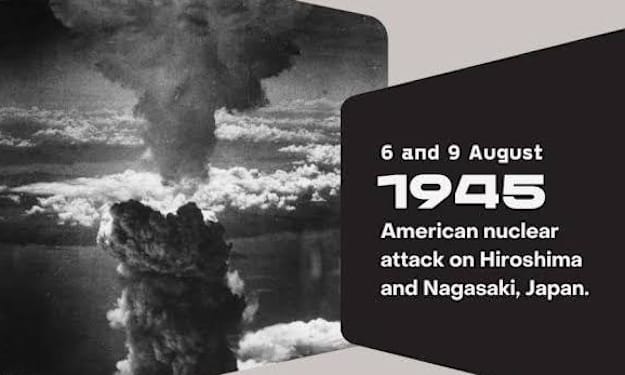
Why Did America Drop Atomic Bombs on Japan in 1945?
During World War II, the United States dropped atomic bombs on Hiroshima and Nagasaki in August 1945 to force Japan’s surrender and quickly end the war. American leaders believed this would avoid a long and deadly invasion of Japan, saving thousands of soldiers’ lives. It also demonstrated military power, especially to the Soviet Union. However, the decision remains controversial due to the massive civilian casualties and lasting destruction caused by the bombs.
By shaoor afridi4 days ago in History
Ghostly Happenings in Colorado
Disturbed Spirits In Denver, an expanse of greenery, Cheesman Park comes with a macabre history since it was once a burial ground known as Mount Prospect Cemetery established by General William Larimer in 1858. The job of exhuming bodies began, and some were left behind resting beneath the park. However, the ghostly spirits don’t wish to rest in peace beneath the park, and visitors here have felt cold touches, seen ghostly children playing at night, and heard a singing lady who disappears when approached.
By Rasma Raisters5 days ago in Horror


Comments
There are no comments for this story
Be the first to respond and start the conversation.